Colors That Make You LookTrustworthy
Trustworthiness is communicated in the first seven seconds of any interaction. Discover which shades flatter you most — and which to skip.
Trustworthiness is communicated in the first seven seconds of any interaction — and color is doing more of that work than most people realize. Certain hues trigger psychological associations with reliability, competence, and honesty — a pattern documented across color psychology and consumer behavior. But the colors that communicate trust most effectively for you depend as much on your natural coloring as on the color itself. A shade that reads as authoritative and credible on one person can look uncomfortable or off on another.


3,000+
happy clients
Why Color Communicates Credibility
Trustworthiness is communicated in the first seven seconds of any interaction — and color is doing more of that work than most people realize. Certain hues trigger psychological associations with reliability, competence, and honesty — a pattern documented across color psychology and consumer behavior. But the colors that communicate trust most effectively for you depend as much on your natural coloring as on the color itself. A shade that reads as authoritative and credible on one person can look uncomfortable or off on another.
Color perception is processed in the limbic system — the emotional brain — before we consciously evaluate it. This means color associations operate below the level of rational thought. When someone sees you, their brain has already filed an emotional assessment of your colors before they have processed anything you have said. Trustworthiness, like most emotional attributions, is heavily influenced by this pre-rational color processing.
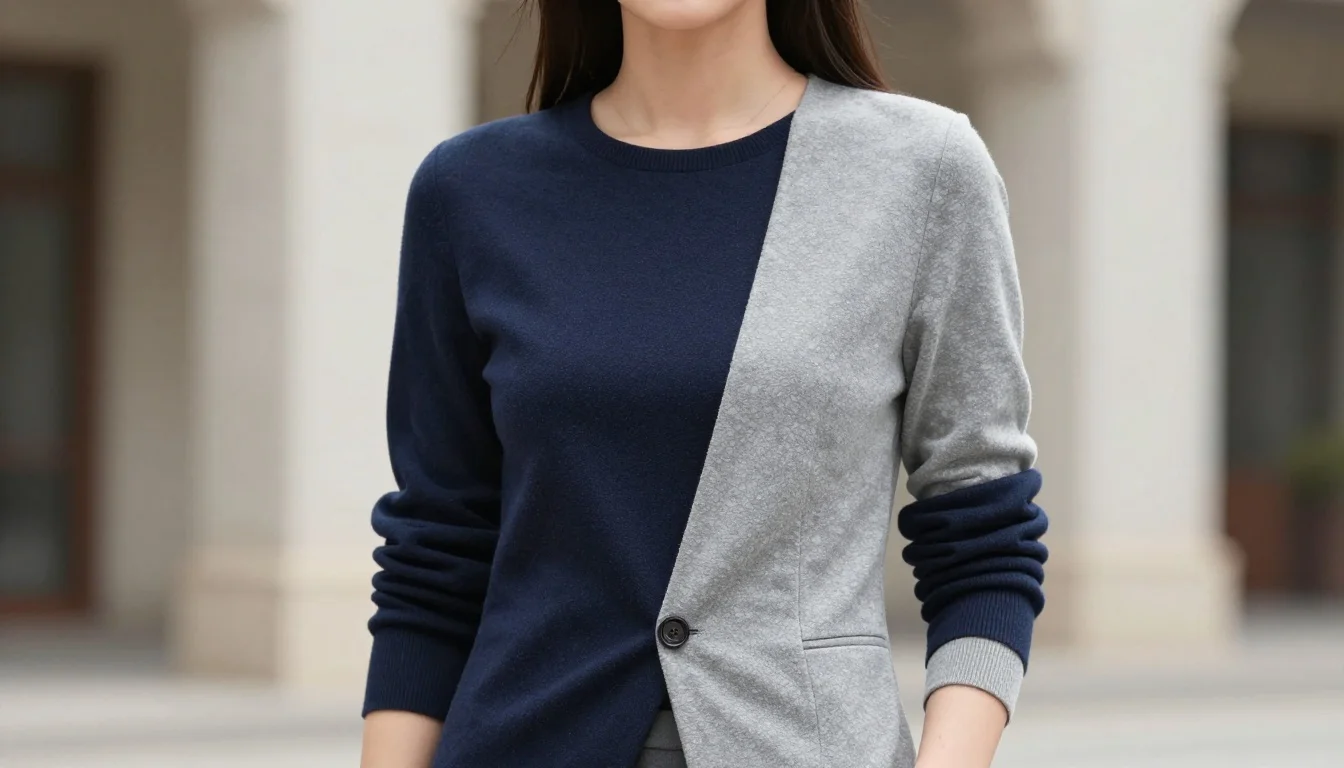
Across corporate psychology, political science, and consumer behavior, the same color attributes consistently emerge as trust signals: coolness over warmth, depth over brightness, and clarity over muddiness. Colors that sit in the blue-navy-grey spectrum carry the strongest trust associations because they read as calm, controlled, and rational rather than emotional or impulsive. Chaotic, overly stimulating colors read as unpredictable — the opposite of trustworthy.
The nuance that most style guides miss: trust colors work differently based on your natural coloring. A bright cobalt that looks authoritative and crisp on someone with high-contrast cool coloring can look jarring and aggressive on someone with warm, muted features. Trust is also communicated by congruence — when your outfit looks right for your coloring, you project ease and confidence, which is itself a trust signal.

What color makes you look most trustworthy?
Navy blue is the most scientifically documented color for trust — research in political campaigns, business settings, and consumer psychology consistently identifies it as the strongest trust signal. Charcoal grey is a close second. The exact shade that works best for you depends on your skin undertone: cool-toned people wear classic navy most effectively, while warm and olive complexions often do better with teal or warm navy.
Trust-Building Colors for Every Complexion
Navy and Deep Blue (Cool Undertones)
Navy is the most universally trusted color in professional and social research — it carries authority without aggression, depth without intimidation. For cool undertones, the blue-pink or blue-neutral quality of fair to medium cool skin creates natural harmony with navy's cool wavelengths. The result reads as polished and credible rather than effortful. Midnight navy is the most powerful; classic navy is more approachable; slate blue softens for less formal trust-building.
Warm Navy and Deep Teal (Warm and Olive Undertones)
Warm and olive complexions need blue-family trust colors that don't fight their golden or green-brown undertones. Pure cool navy can create a subtle conflict. Deep teal, petrol blue, and warm-leaning navy solve this: they carry the same reliability associations as navy while harmonizing with warm or neutral-olive skin. The result is credible and cohesive rather than color-conflicted. Teal is particularly strong for olive skin — it shares green tones that create natural harmony.
Charcoal and Soft Black (High Contrast Coloring)
Charcoal and deep grey communicate trust through understated authority — they are the business equivalent of "let my work speak." For high-contrast coloring (dark hair with pale or medium skin, for example), charcoal creates harmonious contrast that reads as put-together and reliable. Soft black is less stark than pure black and still projects the same credibility. These neutral darks work universally but are most effective when the contrast level of the garment matches the contrast level of the wearer.
Warm Medium Blues and Chambray (Light and Warm Coloring)
Lighter coloring — blonde hair, pale or fair warm skin — can be overwhelmed by very deep navy. Medium-depth blues in the cornflower-to-soft-indigo range carry the same trust associations as navy in a lighter register that works better with lighter natural coloring. The trust signal comes from the blue wavelength, not the darkness. A chambray shirt on someone with warm blonde coloring reads as reliably approachable in the same way navy reads as reliably authoritative.

Not sure yet? See it on your face
Start my color analysisWearing Trust Colors with Intention
Job interviews and negotiations
Navy or deep charcoal are the two most reliable choices for high-stakes trust situations. Navy projects competence and calm; charcoal projects authority without the warmth-conflict risk of black. Keep the palette simple — trust is not built by complexity. A navy blazer over a white or pale shirt is near-universally effective. The fewer visual distractions, the more your face and words are doing the trust-building.
Client-facing and sales environments
The trust color that works in your coloring palette is always better than the 'correct' trust color in a shade that doesn't suit you. Choose your best version of navy or blue-grey — whether that's rich teal, deep slate, or petrol blue for warm undertones, or classic navy for cool ones. Looking at ease in your clothing is itself a trust signal: it communicates self-knowledge and confidence.
Everyday credibility dressing
You don't need to wear navy every day to project trustworthiness. Incorporate trust-signal colors as anchors in your outfit — a navy blazer over other colors, a charcoal trouser with a warmer top. The key garment near your face (collar, neckline area) carries the most perceptual weight in first impressions. Lead that area with a trust color and let the rest of the outfit reflect your personality.
Balancing trustworthiness with personality
Trust colors don't have to be boring. The goal is cool-calm depth, not visual silence. A deep teal-blue can read as both trustworthy and creative. A rich navy paired with an unexpected texture or subtle pattern signals reliability with personality. The risk of going too conservative with trust colors is looking stiff or inaccessible — especially in creative or collaborative environments where approachability is also a trust factor.
Colors That Undermine Trust Signals
Bright or neon yellow
Yellow at high saturation reads as attention-seeking and unstable — it activates rather than calms the emotional brain. In trust-sensitive situations, bright yellow can signal someone who prioritizes visibility over reliability. A muted gold or olive-yellow in the right context is different, but pure bright yellow is the most scientifically documented color for reducing perceived trustworthiness.
Overly bright or garish patterns
Trust is communicated in part through visual calm. Loud, busy patterns with multiple competing colors create visual noise that reads as chaotic — the antithesis of the controlled, predictable quality that trust requires. Subtle patterns (fine stripes, tonal textures) are neutral-to-positive for trust; bold multi-color patterns work against it.
Hot orange and orange-red
Orange triggers excitement and stimulation in the limbic system — useful for energy and enthusiasm contexts, counterproductive for trust and reliability. Orange-red at high brightness reads as aggressive, which is the opposite of trustworthy. Even warm, muted burnt oranges are risky in high-stakes trust situations like job interviews or client meetings.
Colors in poor condition or clearly wrong for your coloring
Incongruence undermines trust more than any specific color. A color that reads as wrong for your natural coloring — that makes your face look sallow, drained, or off — signals an unconscious disconnect that people interpret as lack of self-awareness. The trust signal isn't just about the color family; it's about how congruent and settled you look in what you're wearing.
Stop guessing — discover your exact palette
See myself in my colorsSwaps That Build Credibility
Trading colors that read as unpredictable for ones that signal reliability.
Red reads as dominant and attention-seeking — useful for some contexts, counterproductive for trust. Navy and charcoal read as calm and reliable with the same authority.
Orange activates the brain's excitability response. Teal and petrol blue carry the same vibrancy with cool-calm wavelengths that register as trustworthy.
High-saturation primaries read as energetic but unpredictable. Chambray and cornflower carry the blue trust signal at an accessible, approachable level.
Visual complexity fragments attention and reads as chaotic. Subtle texture in a trust color adds personality without undermining the reliability signal.
A color that reads wrong for your coloring undermines trust through incongruence. Your most flattering trust-signal color communicates self-awareness and ease.
White overexposes on video and creates distraction. Blues read clearly on camera and carry the reliability signal effectively in digital environments.
Your Trust-Color Season
The most trustworthy color for you is always the one that harmonizes with your natural coloring. Here's how the most common seasonal palettes translate trust colors.
Cool Winter / Cool Summer
Learn moreClassic and midnight navy are your strongest trust colors — the cool undertone harmonizes naturally with cool-toned skin and hair. Charcoal and deep slate grey are equally strong. Your trust palette is the most universally recognized because it aligns with cultural expectations of professional color.
Deep Autumn / Warm Autumn
Learn moreDeep teal, petrol blue, and warm-leaning navy are your best trust colors. Pure cool navy can fight your warm undertones. Deep forest green also carries trust associations for warm coloring — it reads as grounded and reliable with the same calm depth as navy.
Light Spring / Light Summer
Learn moreMedium cornflower, periwinkle, and soft chambray carry trust signals without overwhelming lighter natural coloring. The trust association comes from the blue wavelength, not the depth — your best trust shade is lighter but equally effective.
Find Your Most Credible Color Palette
The colors that make you look most trustworthy are the ones that sit in the reliable-calm part of the spectrum AND harmonize with your natural coloring. When both conditions are met, you project effortless credibility — the kind that comes from looking at ease in your own skin. A personalized color analysis identifies exactly which blues, greys, and trust-signal colors work for your specific undertone, contrast level, and coloring type.
Stop guessing — preview every color on you
Preview Yourself In Your Palette
Get my personalized analysisStop guessing — preview every color on you
Preview Yourself In Your Palette

Related Guides for Colors That Make You Look Trustworthy
Explore more personalized color advice based on your features.
Want to see these colors on you? What Colors Look Good on Me — free to try.
Frequently Asked Questions About Colors That Make You Look Trustworthy
What color makes you look most trustworthy?
Navy blue is the most scientifically documented color for trust — research in political campaigns, business settings, and consumer psychology consistently identifies it as the strongest trust signal. Charcoal grey is a close second. The exact shade that works best for you depends on your skin undertone: cool-toned people wear classic navy most effectively, while warm and olive complexions often do better with teal or warm navy.
Why does blue make you look trustworthy?
Blue wavelengths have a calming effect on the autonomic nervous system — they lower perceived excitability and activate associations with stability, loyalty, and calm. These are exactly the attributes the brain maps onto trustworthy people. Blue also appears frequently in authoritative institutional contexts (uniforms, corporate logos), which reinforces the association through conditioning.
Is black trustworthy to wear?
Black reads as authoritative and professional but can project dominance or distance rather than warmth-based trust. It's more 'respect' than "reliability." Charcoal grey carries similar authority with slightly more approachability. For contexts where trust AND likability matter (client relationships, team leadership), charcoal or navy usually outperforms pure black.
What colors undermine trust?
Bright yellow is the most trust-negative color in research — it reads as attention-seeking rather than reliable. Bright orange has similar associations. Very complex, busy patterns undermine trust through visual chaos. Colors that read as clearly wrong for your complexion also signal a lack of self-awareness that people unconsciously interpret as untrustworthy.
Can warm colors ever look trustworthy?
Yes — deep forest green, warm olive, and even a muted burgundy can read as grounded and reliable. The key attributes for trust are depth (not bright) and calmness (not stimulating), which are achievable in warm tones too. Deep warm colors read as stable and rooted rather than the excitable associations of bright warms. For warm-undertoned people, these are often better trust choices than fighting against cool navy.
Does dressing trustworthy mean dressing boringly?
No — trust comes from visual calm and cohesion, not from the absence of personality. A beautifully textured navy blazer, an interesting deep teal in a quality fabric, or a subtle pattern in slate grey all communicate trustworthiness AND visual sophistication. The enemy of trust is not personality; it's visual chaos and incongruence.