Colors That Make You LookThinner
Certain colors and color combinations genuinely create a slimming visual effect. Discover which shades flatter you most — and which to skip.
There's real science behind why certain colors make you look slimmer. It's not magic — it's contrast, value, and how the eye reads visual information. Understanding these principles lets you use color strategically to elongate and streamline your silhouette.


3,000+
happy clients
The Science of Visual Slimming
There's real science behind why certain colors make you look slimmer. It's not magic — it's contrast, value, and how the eye reads visual information. Understanding these principles lets you use color strategically to elongate and streamline your silhouette.
The eye reads dark colors as receding and light colors as advancing. This is the core principle: darker shades on the body appear to take up less visual space than lighter shades. A dark torso appears narrower than a light one; dark trousers appear slimmer than white ones. This isn't about the actual size — it's about what the eye perceives.
Monochromatic dressing amplifies the effect. Wearing a single color from head to toe creates an unbroken vertical line that reads as taller and leaner — the eye travels up and down rather than across. Breaking the line with a contrasting color at the waist or hips draws attention to width instead of height.
Beyond dark vs. light, the placement of contrast matters. High-contrast combinations (black top + white skirt) draw the eye to the dividing line — which is often the waist or hip. Low-contrast outfits (navy top + dark trousers) keep the eye moving vertically. The most slimming outfits use contrast strategically: at the vertical, not the horizontal.

What color makes you look thinner?
Deep, dark colors — especially navy, charcoal, dark forest green, and deep brown — create a visually slimming effect because dark colors appear to recede, taking up less visual space. But the most powerful slimming technique is monochromatic dressing: wearing a single color from head to toe creates an unbroken vertical line that the eye reads as taller and leaner.
Colors That Visually Slim the Silhouette
Deep Navy (The Most Universally Slimming)
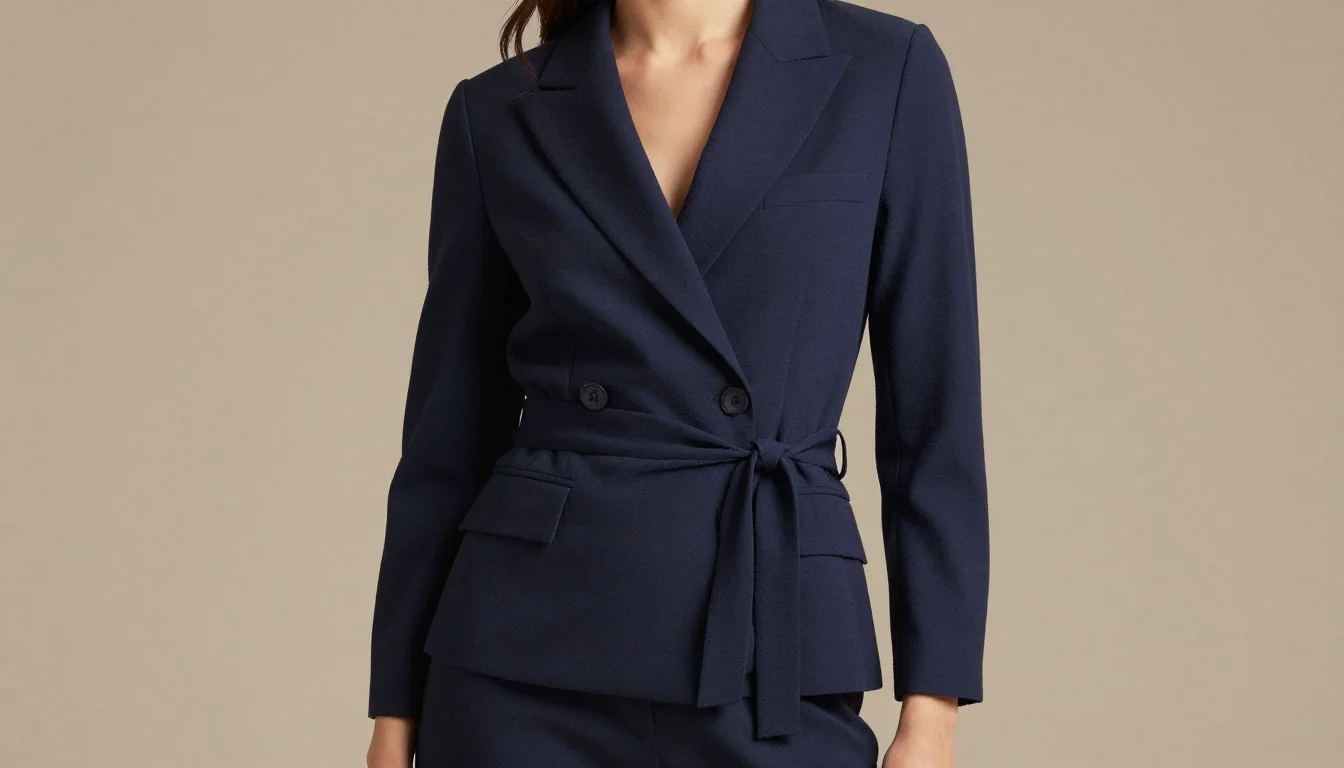
Navy is broadly considered more universally slimming than black because it has the visual receding quality of dark colors without black's harsh contrast against most skin tones. The slight blue warmth in navy avoids the jarring boundary that stark black can create, meaning the eye reads the silhouette more smoothly. Navy trousers, a navy dress, or a full navy look all create an elongated effect.
Rich Dark Neutrals (Deep and Streamlined)
Any deep, rich neutral creates a slimming visual effect through the receding-color principle. Charcoal works slightly less harshly than black. Deep forest green creates the same slimming effect as black or navy but with a color interest that prevents the outfit from looking like a slimming uniform. Chocolate brown has a particular benefit: it's close to many warm skin tones, which softens the visual boundary between body and clothing.
Tonal Monochromatic Outfits (The Elongation Strategy)
The most powerful slimming tool isn't a single color — it's wearing one color or closely related shades from head to toe. Monochromatic dressing creates an unbroken vertical line that the eye reads as height. It doesn't have to be dark: all-camel or all-grey creates the same elongating effect. The key is avoiding a horizontal break in the color that draws the eye across your width.
Strategic Vertical Elements
Vertical color elements — pinstripes, vertical seam details, center-front color panels — guide the eye up and down rather than across. A narrow pinstripe navy suit is more slimming than a plain navy one because the vertical lines reinforce the elongating direction. Similarly, color-blocked vertical panels on the sides of a dress create a 'column' effect that visually narrows width.
Not sure yet? See it on your face
Start my color analysisThe Visual Slimming Strategy in Practice
The most effective slimming outfit
The single most effective visual-slimming formula: a monochromatic outfit in a deep or muted color with a single-color vertical element. Navy top + slightly darker or same-toned navy trousers + a long pendant necklace creating a vertical line. The unbroken color column reads as taller; the pendant reinforces the vertical direction. Add a well-fitted structured layer (blazer) to create defined shape without horizontal breaks.
Using color to redirect attention
Draw the eye toward your best features with your most vivid color. Bright colors draw attention; dark colors recede. A vivid coral scarf or cobalt blue statement earrings draw the eye to your face and away from the body. A bright top with dark trousers draws attention to the upper body. Use color placement as a visual redirector: put your most vivid colors where you want the eye to go.
The dark-bottom formula
If you prefer not to do head-to-toe dark, the next most effective approach is dark on the bottom with a more neutral or slightly lighter top. Dark trousers or skirt + medium-tone top creates a visual grounding effect — the dark bottom anchors the silhouette and the lighter top doesn't draw attention downward. This is more slimming than a light bottom with a dark top, which reverses the weight.
Prints and patterns: the rules
If you want to wear prints, choose them strategically. Small-scale, tone-on-tone, or low-contrast prints have a much smaller visual-expanding effect than large-scale or high-contrast ones. Vertical stripes elongate; horizontal stripes widen. A small, tone-on-tone all-over print in dark navy creates almost the same slimming effect as a solid, while adding visual interest.
Colors That Visually Widen the Silhouette
Stark white or very pale colors on areas you want to slim
White and very light colors advance — they appear to take up more visual space. White trousers, a pale skirt, or a white top all make those areas look larger than the same silhouette in a dark color. If you love light colors, place them away from areas you want to minimize — a white top with dark trousers places the advancing color away from the hips.
High-contrast horizontal color breaks
A high-contrast dividing line (black top + white skirt, or any sharp color break at the waist or hip) draws the eye to the horizontal — specifically to your width at that point. The most slimming outfits are either monochromatic or introduce contrast vertically rather than horizontally.
Very bright saturated colors on the areas you want to slim
High-saturation bright colors (vivid orange, electric blue, hot pink) draw attention — the eye goes to the brightest area first. If your brightest color is at the hip or midsection, that's where the eye lands. Use bright colors near the face (as tops, necklaces, or scarves) to draw attention upward and away from areas you want to minimize.
Large-scale high-contrast prints
Large prints with high contrast (bold black-and-white check, large floral with strong contrast) read as visually expanding — the sharp edges of the print are perceived as the edges of the figure, making the overall silhouette look wider. If you love prints, choose smaller-scale or lower-contrast options, or confine bold prints to areas you want to highlight rather than minimize.
Stop guessing — discover your exact palette
See myself in my colorsSlimming Color Swaps
Replace visually-expanding choices with options that streamline your silhouette.
Light colors advance (look larger); dark colors recede. Dark trousers create a slimmer visual line.
High-contrast horizontal breaks draw the eye to your width. Monochromatic dressing creates an elongating vertical line.
Bright colors attract the eye. Direct attention toward your face with vivid color rather than toward the midsection.
Large high-contrast prints visually expand the silhouette. Small or tonal prints create interest without width.
A single dark-color suit creates the most slimming professional look — the unbroken column effect is maximally elongating.
These darks create the same slimming effect as black but are more flattering for warm or soft undertones.
Which Palette Gets the Most Slimming Options?
Every seasonal palette has its own version of deep, slimming darks — the key is choosing the version that also flatters your undertone.
Deep Winter
Learn moreYour palette includes true black, deep navy, and deep charcoal — the most classically slimming colors. Monochromatic dark outfits are your power move.
Deep Autumn
Learn moreYour slimming darks are warm: deep espresso, dark forest green, dark cognac. Monochromatic earth-tone looks create the same elongating effect with your undertone's warmth.
Cool Winter
Learn moreYour palette's deep darks are cool-clear: deep sapphire, dark charcoal, navy. These create striking slimming effect and complement your naturally high contrast.
Find Your Most Flattering Colors
Slimming dressing isn't just about dark colors — it's about understanding your specific undertone, contrast level, and seasonal palette so you can choose colors that work with your natural coloring while also creating the silhouette you want. A personalized color analysis identifies your season and gives you a complete palette that's both flattering to your features and strategic for your body goals.
Stop guessing — preview every color on you
Preview Yourself In Your Palette
Get my personalized analysisStop guessing — preview every color on you
Preview Yourself In Your Palette

Related Guides for Colors That Make You Look Thinner
Explore more personalized color advice based on your features.
Want to see these colors on you? What Colors Look Good on Me — free to try.
Frequently Asked Questions About Colors That Make You Look Thinner
What color makes you look thinner?
Deep, dark colors — especially navy, charcoal, dark forest green, and deep brown — create a visually slimming effect because dark colors appear to recede, taking up less visual space. But the most powerful slimming technique is monochromatic dressing: wearing a single color from head to toe creates an unbroken vertical line that the eye reads as taller and leaner.
Does black or navy look more slimming?
They're comparable in slimming effect, but navy is often more universally flattering because its slight warmth creates a softer boundary against most skin tones than stark black. Black looks more slimming on those with cool undertones and high natural contrast. For warm undertones, dark navy, deep forest green, or rich charcoal can look equally slimming without the cool clash.
Do vertical stripes really make you look thinner?
Yes — vertical stripes guide the eye up and down rather than across, creating an elongating effect. The narrower the stripe and the lower the contrast between the stripe colors, the more subtle the effect. A tone-on-tone narrow pinstripe in navy is more slimming than a bold black-and-white stripe, which has enough contrast to draw the eye sideways.
Does wearing all one color make you look thinner?
Yes — monochromatic dressing is one of the most effective visual-slimming techniques. Wearing a single color or closely related tones from head to toe creates an unbroken vertical line that reads as height. It doesn't have to be dark: all-camel or all-grey has the same elongating effect, though darker monochromatic looks also benefit from the receding-color principle.
What colors should you avoid if you want to look slimmer?
Avoid very light or bright colors on areas you want to minimize (they advance visually), high-contrast horizontal color breaks (they draw the eye to your width), and large-scale high-contrast prints (they visually expand the silhouette). The key principle: anything that draws horizontal attention or advances visually counteracts the slimming effect.
Is there a color that makes your waist look smaller?
A high-contrast color panel at the waist — like a dark side panel with a lighter center — can create a 'column' effect that suggests a narrower waist. More effectively, wearing a single color with a structured belt in the same or similar color creates a defined waist without a high-contrast horizontal break. Avoid wide contrasting belts or waist-defining color breaks in a significantly different shade.