Colors That Make You LookPowerful
Discover the exact colors that project power, authority, and gravitas. Discover which shades flatter you most — and which to skip.
Power isn't just communicated through titles or words — it's read from color before you speak a single sentence. The moment you enter a room, the depth, saturation, and weight of your clothing's color transmits a signal: this person commands attention, or this person is asking for it. Power dressing with color isn't about following fashion rules. It's about understanding which colors have always signaled authority and using them with intention.


3,000+
happy clients
Why Color Is a Power Signal
Power isn't just communicated through titles or words — it's read from color before you speak a single sentence. The moment you enter a room, the depth, saturation, and weight of your clothing's color transmits a signal: this person commands attention, or this person is asking for it. Power dressing with color isn't about following fashion rules. It's about understanding which colors have always signaled authority and using them with intention.
Status and power have been communicated through color for thousands of years. Purple was reserved for Roman emperors. Black-and-gold was the uniform of luxury. Deep crimson indicated wealth and military rank. These associations don't disappear — they persist as psychological shorthand that modern observers still read, instantly and below conscious awareness.
Contemporary research confirms this. Studies show that people in darker, richer colors are consistently rated as more authoritative, competent, and powerful than the same person in pale or muted tones. The effect is particularly strong in professional and social contexts where status hierarchies are present — job interviews, client meetings, first dates, public speaking. Your color signals your position before you say a word.
The colors that project power share specific qualities: visual weight (they're not pale or lightweight), decisiveness (they're not muddy or ambiguous), and contrast (they create presence rather than blending in). Deep navy, true black, rich emerald, vivid cobalt, and deep burgundy all have these qualities. They occupy visual space with authority, and that occupancy reads as power.
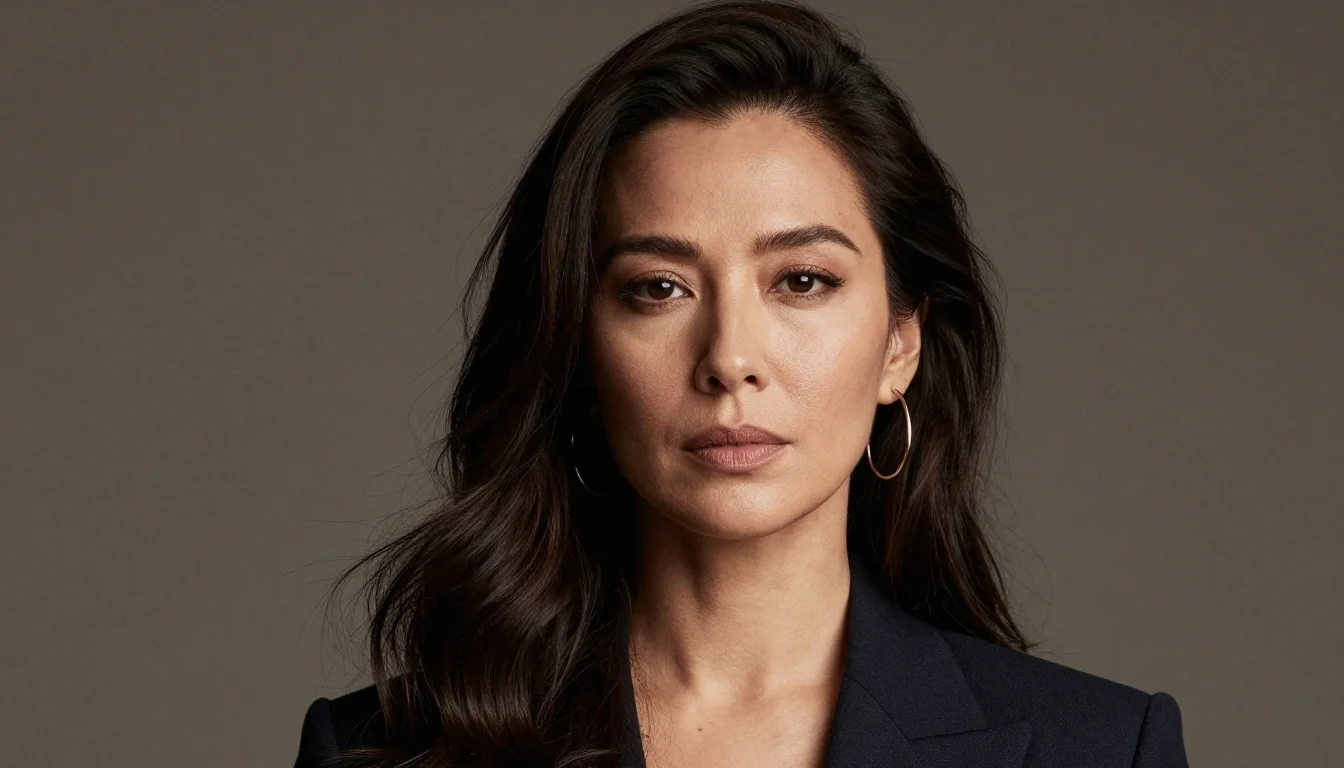
What is the most powerful color to wear?
Black is the single color most universally associated with power, authority, and presence. It has the highest visual contrast and directs attention to the person rather than the clothing. Deep navy is a close second — particularly in professional contexts where it projects authority with more approachability than pure black.
Colors That Project Power
True Black and Deep Charcoal
Black is the ultimate power color. It has the highest contrast of any shade, eliminates visual distraction, and directs attention toward the person wearing it rather than the clothing itself. In power terms, black says: 'I am the statement.' Charcoal and graphite carry the same authority with more dimension — they absorb light rather than reflecting it, which creates visual weight and gravitas. When you need to project maximum power with minimum noise, black and deep charcoal are your strongest tools.
Deep Navy and Midnight Blue
Navy is the power color of choice for those who want authority without severity. It's the dominant shade of boardrooms, courtrooms, and executive suites for a reason: it reads as both intelligent and decisive, commanding without aggression. Deep navy has more visual weight than medium blue because it doesn't reflect light back at the observer — it absorbs and holds, which is exactly what power looks like. Navy communicates settled certainty: I am completely at ease with being in charge.
Rich Emerald and Deep Forest Green
Deep, saturated greens project a distinctive kind of power: wealth, exclusivity, and natural authority. Green at depth carries the associations of abundance and premium quality — historically, rich green dyes were expensive and therefore rare, making deep green an automatic signal of status. Emerald and hunter green project power differently from navy or black: they're slightly less corporate, more personal, and highly distinctive. In a room of dark navy and black, a rich emerald makes you immediately memorable.
Deep Burgundy and Oxblood
Burgundy and deep red tones project dominance with sophistication. Red is the most psychologically activating color for authority signals — it's the color of warning, stopping, and commanding attention. At depth, in burgundy and oxblood, that activation is refined into gravitas rather than alarm. You project power that doesn't need to shout. Research on color and dominance consistently shows deep reds outperform both pure reds and neutrals for perceived authority in sophisticated professional contexts.
Not sure yet? See it on your face
Start my color analysisHow to Wear Power Colors Strategically
Lead from the top
The most powerful placement for a power color is at the top of your outfit, near your face — a blazer, a structured shirt, a rich coat. The head and face are where people look when assessing authority. A deep navy blazer or black structured jacket immediately frames your face with power signals before your expression, posture, or words register. Ground the rest of your outfit in dark or clean neutrals so the power color isn't competing for attention.
Use contrast to amplify authority
High contrast — a black blazer over white, a deep navy suit with crisp white — projects more power than low-contrast, tone-on-tone looks. Contrast reads as decisive and intentional, two qualities directly associated with authority. The classic power combination of dark top, white shirt, dark trousers creates a sharp visual hierarchy that unconsciously signals 'this person is in charge.'
Quality signals power more than quantity
A single, well-cut piece in a true power color projects more authority than multiple pieces in approximate versions of those colors. A perfectly tailored charcoal blazer is a more powerful signal than a vaguely similar grey jacket in cheaper fabric. Power colors amplify whatever quality signal the garment itself sends — they work with precision, not approximation.
Reserve maximum power for maximum stakes
Full black, full deep navy, and high-contrast power combinations are most effective when you need them most — not as daily default. Wearing your highest-impact power colors consistently dilutes the signal. Use deep emerald, oxblood, or vivid jewel tones as everyday variations that still project authority while remaining distinctive and memorable.

Colors That Dilute Your Power Signal
Pale pastels and chalky soft tones
Pastel pink, lavender, powder blue, and mint green project gentleness and approachability — which are wonderful qualities, but they actively work against projecting power. These colors have low visual weight, which translates to low perceived authority. When power is the goal, pastels signal submission rather than command.
Greige, taupe, and muddy mid-tones
Colors that can't commit to being warm or cool, dark or light, project the indecision they visually embody. Greige and taupe are sophisticated neutrals for many purposes, but they lack the visual authority of black or navy. Power requires visual decisiveness — and muddy, in-between tones don't deliver it.
Washed-out or faded versions of otherwise strong colors
Faded navy looks like you used to be powerful. Acid-washed black looks like you're avoiding commitment. The difference between a color that projects power and one that doesn't is often simply the depth and clarity of the shade. The exact same hue at low saturation loses its authority entirely.
High-energy neons and novelty brights
Neons attract attention and project energy, but energy and power are different signals. Neons read as someone seeking attention; power reads as someone who commands it without effort. If people are looking at your clothes rather than listening to what you say, your color is working against you.
Stop guessing — discover your exact palette
See myself in my colorsSwaps That Upgrade Your Power Signal
From colors that suggest to colors that command.
Light grey is sophisticated but soft — it projects competence without authority. Deep navy and black have visual weight that commands the room the moment you walk in. The swap costs nothing stylistically and adds significant presence.
Soft, light colors project approachability but not power. Rich emerald and deep burgundy have the visual depth that signals status and intentionality. You'll hold eye contact longer and be remembered more clearly.
Pale gold and champagne project elegance but not authority. Deep navy and burgundy project both simultaneously — the rare combination of power and polish that makes someone the most memorable person in the room.
Camel is classic and warm but lacks visual weight. Dark, deep coats project authority the moment you're spotted across a parking lot or entrance hall. First impressions start before you arrive.
The difference between a casual outfit that looks powerful and one that looks forgettable is almost always shade depth. Deep navy and black in quality fabric project the same authority in casual contexts that a blazer does in professional ones.
Accessories punctuate your outfit's power signal. Nude and beige recede; black and oxblood anchor. When your power color is in your outfit, dark accessories complete the authority signal rather than softening it.
Which Palette Might Be Yours?
Power colors work for everyone, but which specific shades within each power color family look most commanding on you depends on your natural coloring. Your undertone, contrast level, and season determine whether you project maximum power in cool navy, warm burgundy, or vivid emerald.
Deep Winter
Learn moreDeep winters have the high contrast and cool-neutral undertones that make pure black, midnight navy, and jewel-toned blues look naturally authoritative. These are your native colors — wearing them isn't a stretch, it's coming into your full visual power.
Deep Autumn
Learn moreDeep autumns project power most effectively in warm-depth versions: cognac, deep forest green, rich tobacco brown, and warm burgundy. These colors carry the same visual weight as cool power colors but harmonize with warm undertones, making you look both powerful and radiant simultaneously.
Cool Winter
Learn moreCool winters command the room in clear, cool-toned power colors: true black, cool navy, vivid cobalt, and deep cool burgundy. The clarity of your natural coloring is amplified by the clarity of these high-contrast shades.
Find Your Most Powerful Colors
The most commanding power colors are the ones that both project authority and work with your natural coloring. When you wear a color that does both simultaneously — projects power AND flatters your skin tone, eyes, and hair — you don't just look powerful, you look powerfully yourself. A personalized color analysis identifies the exact shades within each power color family that maximize your presence: the specific navy, the particular emerald, the exact burgundy that makes you walk into a room and own it.
Stop guessing — preview every color on you
Preview Yourself In Your Palette
Get my personalized analysisStop guessing — preview every color on you
Preview Yourself In Your Palette

Related Guides for Colors That Make You Look Powerful
Explore more personalized color advice based on your features.
Want to see these colors on you? What Colors Look Good on Me — free to try.
Frequently Asked Questions About Colors That Make You Look Powerful
What is the most powerful color to wear?
Black is the single color most universally associated with power, authority, and presence. It has the highest visual contrast and directs attention to the person rather than the clothing. Deep navy is a close second — particularly in professional contexts where it projects authority with more approachability than pure black.
Does wearing dark colors make you look more powerful?
Yes — depth and saturation are the primary factors in how much authority a color projects. Dark, rich, saturated colors have more visual weight than pale or muted versions, and that visual weight reads as authority. The key is that the color should be deep and clear, not dark and muddy.
Can bright colors project power?
Vivid, saturated jewel tones — cobalt, emerald, vivid sapphire — project a distinctive kind of power through decisiveness and presence. They attract commanding attention rather than submissive attention. However, neons and novelty brights attract attention without projecting authority, which is a different signal entirely.
What colors do powerful people wear?
Analysis of executive, political, and judicial dress consistently shows high concentration of deep navy, black, charcoal, and deep burgundy. These colors are not accidental choices — they're the result of generations of professional culture selecting for colors that project authority. When you wear them, you're borrowing that accumulated power signal.
How do I use power colors without looking unapproachable?
Balance power colors with softening elements: a deep navy blazer over a white or light grey shirt, an oxblood accessory against a softer neutral outfit, a rich emerald top with relaxed-fit trousers. The power color does the authority work; the supporting pieces maintain approachability. Accessories, posture, and expression do more for approachability than color choices.