Colors That Make You LookConfident
Discover which colors project confidence before you say a word. Discover which shades flatter you most — and which to skip.
You already know that what you wear changes how others perceive you. What's less obvious is how much a single color choice shifts that perception — before your posture, voice, or body language even register. Confidence reads in fractions of a second, and color is the fastest signal your clothing sends. The right colors don't just complement your complexion; they communicate authority, certainty, and presence the moment you walk into a room.


3,000+
happy clients
The Science Behind Color and Confidence
You already know that what you wear changes how others perceive you. What's less obvious is how much a single color choice shifts that perception — before your posture, voice, or body language even register. Confidence reads in fractions of a second, and color is the fastest signal your clothing sends. The right colors don't just complement your complexion; they communicate authority, certainty, and presence the moment you walk into a room.
Certain hues trigger automatic associations in observers — deep, saturated, and high-contrast colors signal status and certainty, while pale and muted colors read as uncertainty. This happens below conscious processing: the person across the table hasn't yet registered your handshake or your pitch, but they've already read your color as either 'this person knows what they're doing' or 'this person is unsure.'
There's also an inward dimension: wearing colors associated with confidence tends to increase your own sense of it. The effect is bidirectional — you look more confident, and you feel more confident, which makes you perform more confidently. Color becomes a feedback loop.
The colors most reliably associated with confidence share certain characteristics: depth (they're not pale or faded), saturation (they have real color energy), and clarity (they're not muddy or uncertain). Black, deep navy, rich burgundy, vivid cobalt, and deep forest green all share these qualities. These aren't arbitrary choices — they're the colors that signal 'I meant to wear this' because they require intention to choose and wear well.

What is the most confident color to wear?
Deep navy is consistently ranked as the most confidence-projecting color across cultures and professions. It carries the authority of black with more approachability, and the intelligence of blue without the diffidence of pale shades. For maximum authority and boldness, deep burgundy and vivid cobalt are strong alternatives.
Colors That Project Confidence
Deep Navy and Midnight Blue
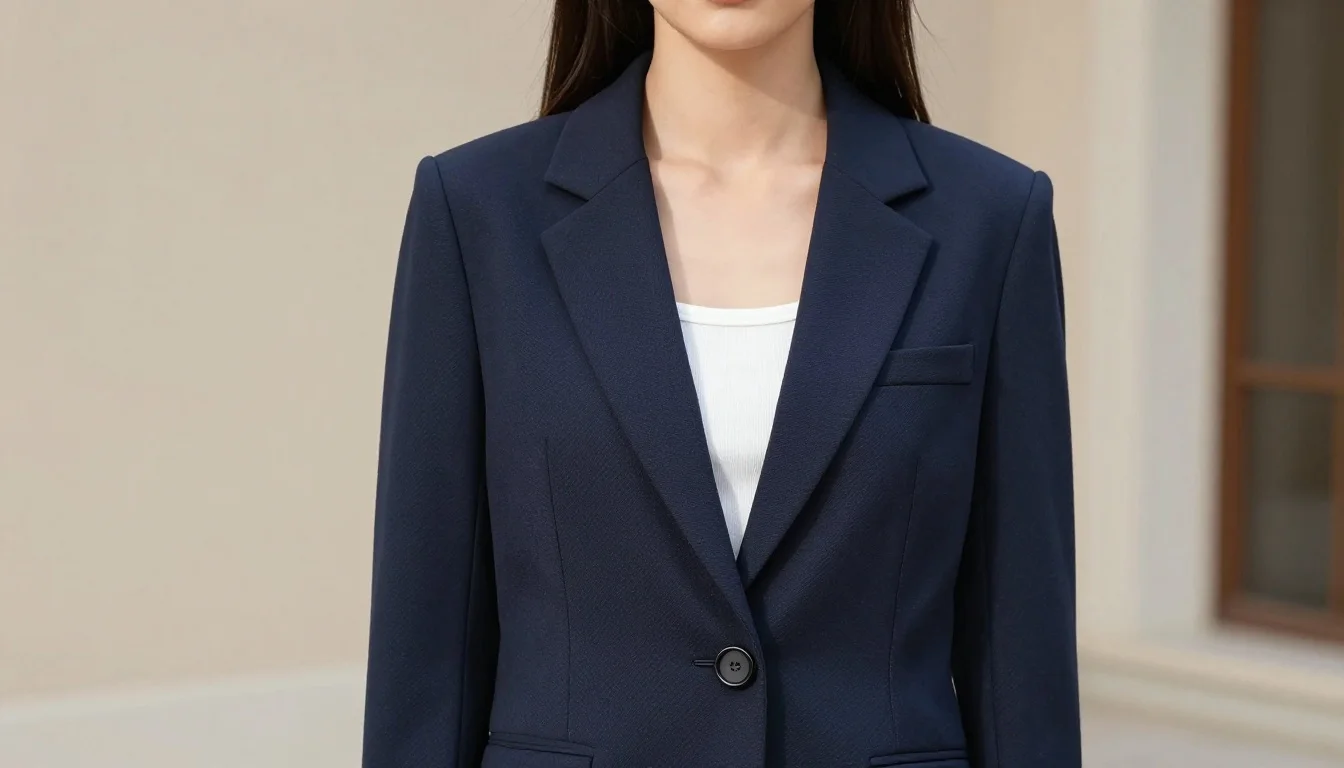
Navy is the single most universally confidence-projecting color. It reads as authoritative without the severity of black, intelligent without the aloofness of grey, and certain without the aggression of red. Psychologically, blue communicates reliability and calm certainty — the confidence of someone who doesn't need to shout. Navy works across industries and occasions, which is why it's the dominant color in boardrooms, courtrooms, and high-stakes meetings worldwide.
True Black and Deep Charcoal
Black is the highest-contrast, highest-authority color in the Western wardrobe. It signals that you've edited your choices down to what matters — the color equivalent of a definitive statement. In confidence terms, black communicates: 'I don't need to prove myself with color.' Charcoal gives the same authority with slightly more approachability. Both colors demand that your presence fills the room rather than your clothing — which is exactly the confidence signal you want.
Rich Burgundy and Deep Red
Red and its deeper relatives are the most psychologically activating colors for confidence projection. Red is consistently associated with dominance, energy, and status across cultures. Deep burgundy and oxblood carry all of red's confidence signal with more sophistication and less aggression — you project authority without triggering defensiveness in others. These are the colors to choose when you want to signal that you take up space and own it.
Vivid Cobalt and Jewel Blues
Saturated, vivid cobalt and jewel blues project a different kind of confidence: creative certainty, modern authority, forward-looking sureness. These aren't the colors of someone hedging their bets. Vivid blue says 'I made this choice deliberately and I stand behind it.' The saturation is key — the vibrancy of the color itself communicates confidence in the same way a clear, unhesitating voice does. Wear these when you want to project vision and conviction alongside authority.

Not sure yet? See it on your face
Start my color analysisHow to Wear Confidence Colors for Maximum Impact
High-stakes meetings and presentations
Lead with your most authoritative color at the top of your outfit — the garment closest to your face. A deep navy or charcoal blazer over anything signals leadership the moment you're seen. For presentations where you want to be remembered, consider rich burgundy or vivid cobalt — they're visually distinctive without being distracting. The goal is that people focus on what you're saying, not your clothing, while your clothing is silently vouching for your authority.
Job interviews and first impressions
Navy, black, and deep charcoal are the most reliable confidence signals for professional first impressions. These colors say 'I understand the context and I belong here' before a word is spoken. Pair a deep navy blazer with a crisp white shirt for maximum contrast — high contrast inherently projects confidence. Avoid anything that requires explanation or creates visual noise: stick to clear, decisive color choices.
Building a confidence wardrobe
Start with one statement confidence piece — a well-cut navy blazer, a vivid cobalt dress, a rich burgundy coat. These are the garments you reach for when the stakes are high. Build supporting pieces in deep neutrals (charcoal, black, deep camel) that don't dilute the confidence message. The goal is that even your casual pieces in this wardrobe have visual authority: nothing faded, nothing indecisive.
Confidence colors in casual settings
Confidence isn't only for boardrooms. A deep navy crewneck, a rich burgundy t-shirt in quality fabric, or a vivid cobalt knit all project sureness in casual settings without looking overdressed. The key is quality and fit — confidence colors in cheap or ill-fitting clothes actually undermine confidence more than pale colors in well-fitting ones. Confidence signals from color and fit together, not separately.
Colors That Undermine Confidence
Washed-out pastels and pale neutrals
Chalky pastels, blush, powder blue, and pale lavender read as tentative. Their low saturation and visual softness signal uncertainty and diffidence — the color equivalent of ending every statement as a question. On someone projecting confidence, these colors work against you. They're not flattering or strategic choices here.
Muddy mid-tones and greige
Colors that can't decide what they are — warm grey, greige, taupe, murky olive — project exactly the uncertainty you're trying to avoid. They have no visual authority because they're compromises. There's a useful rule: confident colors make a decision. Muddy mid-tones don't.
Neon and novelty colors
Neons and very loud novelty colors project energy but not authority. They attract attention without commanding respect — the difference between a performance and a presence. Confidence is gravitas. Neon is spectacle. These are different signals, and confusing them undermines the effect you're trying to create.
Faded, washed, or distressed tones
Any color that looks like it's lost its strength — acid-washed, faded, or heavily distressed — projects exhaustion rather than confidence. Color confidence requires commitment to color. A faded navy signals the opposite of what true navy does.
Stop guessing — discover your exact palette
See myself in my colorsSwaps That Shift Your Color Signal to Confident
Trading colors that hedge for colors that commit.
Light grey and beige are neutral but not authoritative. Navy and charcoal have visual weight that commands attention — the difference between being present and being decisive.
Pale, soft colors signal approachability but not authority. Vivid cobalt and deep burgundy project the confident certainty of someone who made a deliberate color choice.
Faded denim reads as casual and slightly tentative. Deep indigo has the depth that signals intention — you chose this color, it didn't just happen.
Prints diffuse visual focus across your outfit. A solid, saturated color centers focus on you — which is exactly what you want when you're presenting or speaking.
Tan and camel are elegant but soft. Navy and charcoal have the visual authority that says you're arriving with intention. First impressions often start at the coat.
High contrast (navy blazer, white shirt) projects more confidence than a low-contrast, all-pale combination. The contrast itself reads as decisive and self-assured.
Which Seasonal Palettes Naturally Align with Confidence Colors
Confidence colors work across all seasonal palettes — but the specific shades that project confidence while also flattering your natural coloring depend on whether your undertone is warm, cool, or neutral.
Deep Winter / Cool Winter
Learn moreCool, high-contrast winters look most powerful in pure black, true navy, and vivid jewel tones. These are your natural palette colors — wearing them isn't a stretch, it's an expression of what suits you best. Your confidence colors are also your most flattering colors.
Deep Autumn / Warm Autumn
Learn moreWarm-toned types project confidence best in rich, earthy versions of deep colors: cognac, deep forest green, warm burgundy, rich tobacco. Your confidence colors are warm-saturated rather than cool-vivid — they carry the same visual authority with undertones that flatter your complexion.
Cool Summer
Learn moreCool summers project confidence in deep, cool-toned colors at muted saturation: slate navy, cool burgundy, deep rose, and sophisticated grey-blue. Your confidence colors are softer in saturation than winters but still have the depth and commitment that signals authority.
Find Your Personal Confidence Colors
The most powerful confidence colors are the ones that both project authority and genuinely flatter your natural coloring. When a color does both simultaneously, you don't just look confident — you feel it. A personalized color analysis identifies the exact shades within each confidence color family that work specifically with your undertone, contrast level, and natural coloring, giving you a precision palette of colors that make you look and feel your most powerful.
Stop guessing — preview every color on you
Preview Yourself In Your Palette
Get my personalized analysisStop guessing — preview every color on you
Preview Yourself In Your Palette

Related Guides for Colors That Make You Look Confident
Explore more personalized color advice based on your features.
Want to see these colors on you? What Colors Look Good on Me — free to try.
Frequently Asked Questions About Colors That Make You Look Confident
What is the most confident color to wear?
Deep navy is consistently ranked as the most confidence-projecting color across cultures and professions. It carries the authority of black with more approachability, and the intelligence of blue without the diffidence of pale shades. For maximum authority and boldness, deep burgundy and vivid cobalt are strong alternatives.
Does wearing red make you look more confident?
Yes — red and its deep relatives (burgundy, crimson, oxblood) are the colors most strongly associated with dominance and confidence in psychological research. Red increases both how confident others perceive you and your own sense of confidence. Deep, rich reds project power; bright, intense reds project energy and boldness.
What colors should I avoid if I want to look confident?
Pale pastels, muddy mid-tones, greige, and washed-out colors all project tentativeness rather than confidence. Colors that lack visual commitment — that seem neither here nor there — signal uncertainty. Confident colors make a clear, decisive statement.
Can lighter colors project confidence?
Crisp white projects confidence through high contrast and clarity — it's clean and decisive. Pure ivory in a well-cut piece can project similar certainty. The key is that the color reads as intentional. A crisp white shirt projects confidence; a pale greige one doesn't, because greige hedges while white commits.
How does color confidence work psychologically?
Color influences perception in two ways: externally (how others see you) and internally (how you see yourself). Wearing colors associated with confidence tends to increase your sense of assertiveness and authority as well — the effect is strongest when you understand why you chose the color.