Colors That MakeSkin Look Clearer
Discover which clothing colors optically reduce redness, even out skin tone. Discover which shades flatter you most — and which to skip.
You've probably noticed that some outfits make your skin look better than others — your complexion seems more even, less red, less sallow, more luminous. This isn't luck or lighting. The colors you wear near your face interact optically with your skin tone, either amplifying issues (like redness or unevenness) or neutralizing them. Understanding which colors work in your favor is one of the most underutilized tools in dressing. It's the closest thing to free skincare.


3,000+
happy clients
How Clothing Color Affects How Your Skin Looks
You've probably noticed that some outfits make your skin look better than others — your complexion seems more even, less red, less sallow, more luminous. This isn't luck or lighting. The colors you wear near your face interact optically with your skin tone, either amplifying issues (like redness or unevenness) or neutralizing them. Understanding which colors work in your favor is one of the most underutilized tools in dressing. It's the closest thing to free skincare.
Color creates optical effects through contrast, reflection, and complementary relationships. When you hold a color near your face, it doesn't just exist next to your skin — it interacts with it. Colors that share your skin's undertone amplify it; colors that contrast with your skin's undertone neutralize it. This is the core mechanic behind why some colors make your skin look flawless and others make the same skin look blotchy or dull.
Redness is the most common skin concern clothing color can influence. Red and pink tones in skin are amplified by clothing with red, orange, or warm pink undertones — everything looks more flushed. The same red skin next to cool, neutral, or muted colors sees the redness visually recede. This is a well-documented optical principle: the more a background color resembles the feature you want to minimize, the more it makes that feature pop.
Sallowness — the yellowy-grey dullness that can settle in skin especially with warm undertones or under artificial lighting — is worsened by yellow-adjacent clothing. Cool-undertoned colors neutralize sallowness by providing contrast. Dullness overall is typically worsened by colors that match the skin tone too closely in value and undertone, creating a monochromatic flatness with no contrast and no luminosity.
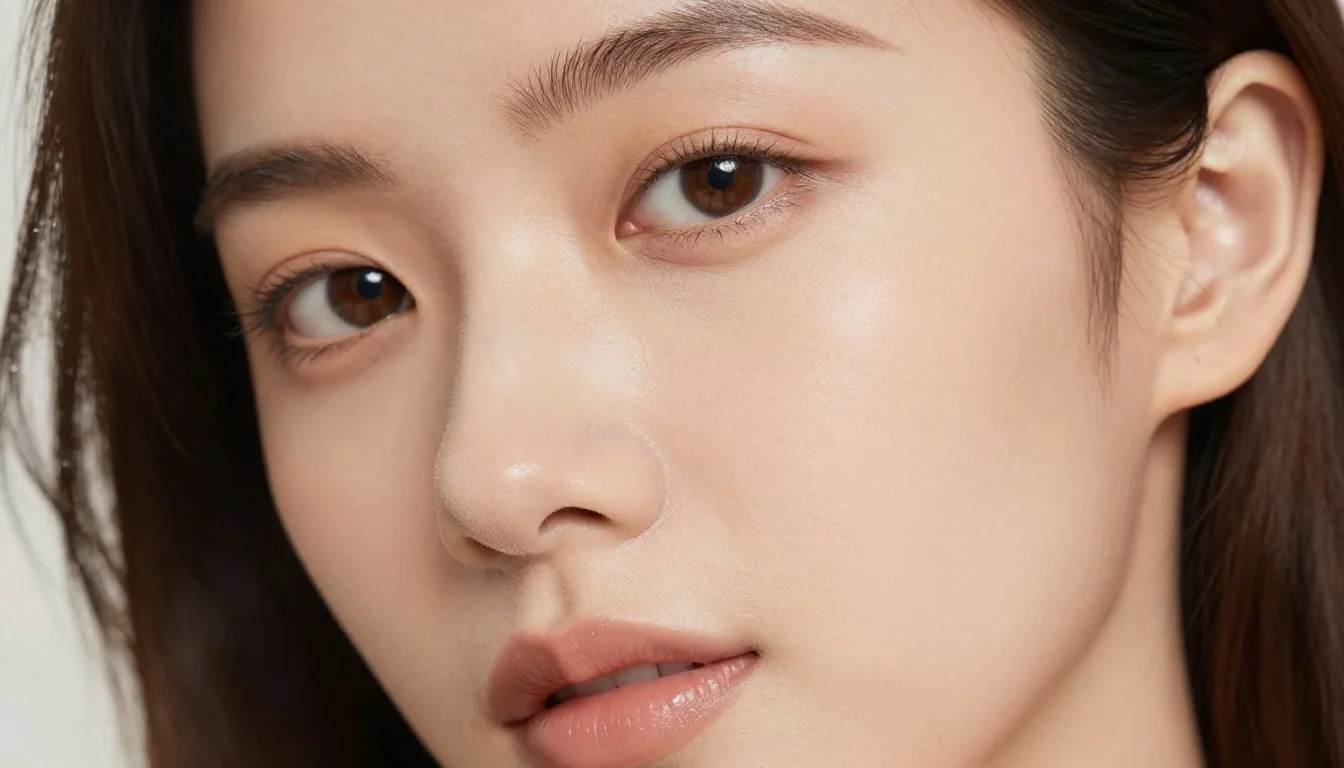
What colors make skin look clearer?
Colors that make skin look clearer typically have the opposite undertone to your main skin concern: cool colors neutralize redness and flushing, while contrasting cool colors neutralize sallowness. Deep colors create the contrast that makes fair and medium skin look bright. The most reliably clarifying colors for most skin tones are: midnight navy, dusty rose, muted cool mauve, sapphire blue, and crisp cool white. But your specific skin undertone determines the exact optimal palette.
Colors That Optically Improve Skin Clarity
Cool, Clear Jewel Tones
Cool jewel tones create high-clarity contrast against most skin tones without the skin-washing effect of bright white. The cool undertone in sapphire, teal, and violet neutralizes redness and creates the perception of even, clear skin. They also create enough contrast with medium and pale skin tones to make the face appear brighter without harsh shadows. For cool-undertoned skin in particular, these are among the most clarifying colors possible.
Muted Rose and Cool Berry
Muted rose and cool berry tones are particularly effective at making skin look clearer because they share undertone with the natural pinkness in skin while being distinct enough in value to create contrast. They complement rather than amplify redness. On fair skin with pink undertones, dusty rose and cool mauve make the complexion look porcelain and even. On medium skin, muted plum creates a beautiful clarity. These colors work because they're harmonious without being matchy.
Deep, Clear Navy and Blue-Black
Dark, cool-navy colors provide the maximum contrast for fair and medium skin tones while their cool undertone neutralizes redness and sallowness. Navy in particular is effective because it creates depth without the harshness of pure black. The cool-blue quality of deep navy makes warm or ruddy skin look more even by optical contrast. For anyone whose main skin concern is redness or flushing, a deep navy piece near the face is reliably clarifying.
Soft Ivory and Cool White
Cool white and crisp ivory create luminosity near the face by providing maximum brightness contrast against skin. The key word is 'cool' — warm creams and yellow-ivory pick up yellowy tones and can create sallowness, while cool whites and bright ivories make skin look fresher and clearer. Best for cool and neutral undertones; use carefully if you have very yellow-olive undertones, where cool white can heighten the contrast between your skin's yellow and the fabric's blue-white.

Not sure yet? See it on your face
Start my color analysisHow to Use Color to Improve Your Skin's Appearance Daily
Identify your main skin concern
Redness and flushing respond best to cool, neutral, or muted colors near the face — they optically neutralize the pink-red tones. Sallowness and yellow dullness respond best to cool-temperature colors with some brightness contrast — they counteract the yellow cast. General dullness responds to any color with sufficient contrast to the skin — something that creates visual depth and structure. Each concern has a slightly different optimal color strategy.
Prioritize the near-face garment
The garment closest to your face — the top, the inner layer, the scarf collar — has the highest impact on how your skin reads. A clarifying color at the neckline does more for your skin than the same color in trousers. When choosing what color to wear near your face, think about it as part of your visible presentation rather than just a clothing item. The optical work happens at the neckline.
Use depth to create skin contrast
Medium-deep to deep colors near the face create contrast that makes skin look brighter, clearer, and more luminous — especially for fair and medium skin tones. The skin appears brighter against a darker background. If you tend to wear light colors near the face, experiment with a deep navy or rich violet knit and observe the difference in how your skin reads. The contrast effect is often dramatic.
Test with and without makeup
If you wear makeup, test clarifying colors both with and without it. The garment color that makes your bare skin look clearest may be slightly different from what looks best with a full face. Some colors that look excellent with makeup (vivid warm tones, for example) look too warm on bare skin if you have redness. Knowing both helps you dress optimally for no-makeup days vs. full makeup.

Colors That Make Skin Look More Uneven
Warm orange, rust, and copper near the face
Orange and rust have the same red-yellow wavelengths as flushed or ruddy skin. Wearing orange near your face optically amplifies any redness in your complexion, making it look more uneven and inflamed. The effect is most pronounced on fair skin with any pink or redness, but it can affect medium and olive skin too. Even warm-undertoned people whose palette includes terracotta should steer clear of bright orange near the face if redness is a concern.
Yellow and warm gold
Yellow and warm gold amplify the yellow tones in skin, intensifying sallowness and the appearance of unevenness in anyone with yellow or olive undertones. Even on warm-undertoned skin that looks beautiful, bright yellow near the face can make the skin appear more yellow-cast and less fresh. This is why golden-yellow is consistently one of the least flattering near-face colors — it doesn't create contrast, it amplifies whatever yellow exists in the skin.
Warm cream and yellow-ivory
Warm, yellow-based cream picks up yellow tones from both warm-undertoned skin and from indoor lighting, creating a sallow, slightly jaundiced effect near the face. The same garment in a cooler ivory — with white rather than yellow in its base — looks significantly fresher. This is one of the most common mistakes: buying 'cream' without specifying whether it's warm cream (yellow-ivory) or cool cream (white-ivory). Cool cream flatters almost everyone; warm cream flatters fewer people near the face.
Colors that too closely match your skin tone in value
When your clothing and skin are a similar tone — medium beige clothing against medium beige skin, for example — there's no contrast, and therefore no visual structure to the face. The face appears flat and feature-less. This is the 'invisible' effect that comes from wearing your skin tone rather than complementing it. The clearest-looking skin appearances come from clothing that creates enough contrast to give the face dimension.
Stop guessing — discover your exact palette
See myself in my colorsSwaps for Clearer-Looking Skin
Replace colors that amplify skin concerns with ones that optically minimize them.
Orange and coral share red-yellow wavelengths with flushed skin, amplifying redness. Navy and teal's cool undertone optically neutralizes redness and creates a cleaner, more even appearance.
Warm cream and yellow amplify sallowness. Cool white creates brightness contrast that makes dull or sallow skin look fresher and more alive.
Beige and pale blush are too close to fair skin's value to create contrast, making the face look flat. Dusty rose and cool mauve have enough depth and cool undertone to provide clarifying contrast.
Warm gold amplifies the yellow in medium skin. Cool cobalt and teal create contrasting freshness — the same skin looks clearer and more vivid next to cool jewel tones.
Deep-dark colors near dark skin create no contrast and can make the complexion look flat. Vivid warm tones create contrast and warmth that make dark skin glow with richness rather than disappear.
Yellow and beige amplify olive's yellow-green quality, worsening unevenness. Deep jewel tones with warm-cool balance complement olive skin's complexity and make it look even and luminous.
Your Season Determines Your Clearest Colors
The colors that make skin look clearest are always within your seasonal palette — because seasonal palettes are built on your specific skin undertone and coloring. Here's how this works for the most common skin-clarity concern by seasonal type.
Cool Summer
Learn moreCool Summer types with any pinkness or redness in their fair skin find that their palette's cool, muted tones are ideal for skin clarity. Dusty rose, powder blue, cool mauve, and soft teal all neutralize redness while providing the light, cool clarity their complexion needs. Warm oranges and yellows are their skin clarity enemies.
Deep Winter
Learn moreDeep Winter types with high natural contrast need deep, cool colors to make their skin look clearest. The high-contrast quality of their coloring means medium tones look flat — deep navy, vivid cobalt, and cool-clear jewel tones create the right structural contrast for skin to look sharp and defined.
Warm Autumn
Learn moreWarm Autumn types with golden or olive skin actually look clearest in their warm, earthy palette — not in cool colors. The warmth of terracotta and rich olive resonates with their skin's golden undertone, making it look even and rich rather than sallow. Cool colors can make Warm Autumn skin look dull by contrast.
Find Your Specific Skin-Clarifying Palette
The colors that make your skin look clearest are specific to your undertone, depth, and skin concerns — not universal. A personalized color analysis identifies your exact seasonal palette, which gives you the precise colors that interact best with your individual complexion. The difference between wearing your palette versus random colors near your face is visible to everyone, including you.
Stop guessing — preview every color on you
Preview Yourself In Your Palette
Get my personalized analysisStop guessing — preview every color on you
Preview Yourself In Your Palette

Related Guides for Colors That Make Skin Look Clearer
Explore more personalized color advice based on your features.
Want to see these colors on you? What Colors Look Good on Me — free to try.
Frequently Asked Questions About Colors That Make Skin Look Clearer
What colors make skin look clearer?
Colors that make skin look clearer typically have the opposite undertone to your main skin concern: cool colors neutralize redness and flushing, while contrasting cool colors neutralize sallowness. Deep colors create the contrast that makes fair and medium skin look bright. The most reliably clarifying colors for most skin tones are: midnight navy, dusty rose, muted cool mauve, sapphire blue, and crisp cool white. But your specific skin undertone determines the exact optimal palette.
Does clothing color really affect how skin looks?
Yes — there's a documented optical effect. Colors near your face interact with your skin through contrast, reflection, and complementary color relationships. The right colors next to your face make skin look more even, fresher, and more luminous. The wrong colors amplify redness, sallowness, or dullness. The effect is most visible in photographs and under bright light.
What colors minimize redness in skin?
Cool, neutral, and muted colors minimize redness in skin because they provide contrast to the red-pink wavelengths rather than amplifying them. Midnight navy, dusty blue, cool teal, cool grey, and muted rose are all effective at optically reducing redness. Avoid warm oranges, corals, and vivid warm reds near the face if redness is a concern.
What colors make skin look less sallow?
Cool-toned colors — particularly blues, cool whites, and cooler mauves — create contrast with sallow skin's yellow tones and make the complexion look fresher. Bright, contrasting colors at the neckline are more effective than pastels. Avoid yellow, warm cream, and golden tones if sallowness is a concern.
Do these rules apply to dark skin as well?
Yes, though the mechanics differ slightly. For dark skin tones, the main clarity concerns are usually an ashy flatness or uneven tone. Vivid, warm colors with contrast create depth and warmth that make dark skin glow. Very dark colors near dark skin can create a flat, no-contrast effect. Vivid jewel tones — warm or cool depending on undertone — are typically most clarifying for dark complexions.