Best Colors forWomen Over 50
Discover the colors that make women over 50 look vibrant, youthful, and polished. Discover which shades flatter you most — and which to skip.
After 50, your coloring has shifted — and so should your palette. Hair may be greying or silver, skin tone may have softened, and the colors that looked incredible at 30 might now wash you out. The good news: this is not about wearing less color. It is about wearing the right colors — the ones that bring light to your face and make your features look vibrant and defined.


3,000+
happy clients
How Coloring Changes After 50 — And Why It Matters
After 50, your coloring has shifted — and so should your palette. Hair may be greying or silver, skin tone may have softened, and the colors that looked incredible at 30 might now wash you out. The good news: this is not about wearing less color. It is about wearing the right colors — the ones that bring light to your face and make your features look vibrant and defined.
After 50, several things shift. Natural pigment in hair fades toward grey or white, reducing the contrast in your overall coloring. Skin can become more sallow or pinker depending on your undertone. The colors that once created perfect harmony with dark hair and high-contrast features may now fall flat against softer, lower-contrast coloring.
This does not mean you need to wear muted, boring colors. It means you need colors that create the right amount of contrast and warmth near your face. Medium-depth jewel tones often replace the very dark or very pale shades that worked earlier. Rich teal, warm berry, soft coral, and deep amethyst bring color and light without overpowering.
The single biggest mistake women over 50 make is retreating into beige and grey. These neutral non-colors can drain the face of all vitality. The solution is not neon brights — it is rich, mid-depth colors with enough saturation to create energy near your face while remaining sophisticated.
What colors look best on women over 50?
Rich jewel tones — deep teal, warm berry, amethyst, sapphire — are universally flattering after 50. They provide enough saturation to brighten the face without being harsh. Warm rich neutrals like cognac and navy are excellent foundations. The key is avoiding washed-out beige and using color with depth.
Your Most Flattering Color Families
Rich Jewel Tones
Mid-depth jewel tones are universally flattering on mature coloring because they provide enough saturation to bring warmth and life to the face without the harshness of very vivid shades. Deep teal brightens both warm and cool undertones. Warm berry adds healthy color. These are your power colors after 50.
Warm Rich Neutrals
Warm neutrals with depth replace the pale beige and flat grey that age most women. Cognac and warm chocolate create a luxurious, polished look. Rich olive adds earthy sophistication. These colors work as the foundation of a wardrobe that looks expensive and intentional rather than faded.
Soft Brightening Tones
These lighter shades worn near the face act as a natural brightener — they reflect light upward and create a fresh, rested appearance. Soft coral is particularly effective for warm undertones. Periwinkle flatters cool undertones. These are your scarves, blouses, and neckline colors.
Classic Elegant Shades
When you need a dark anchor, these shades provide depth without the harshness of jet black. True navy is the most universally flattering dark for women over 50 — it provides structure without draining the face. Deep plum adds richness. If you love black, choose a soft black and always add a brighter color near your face.

Ready to see teal & berry on your face?
Start my color analysisHow to Wear Your Best Colors
The face-framing rule
The most important color in your outfit is the one closest to your face. A rich teal blouse, a coral scarf, a berry necklace — these are the pieces that determine whether you look vibrant or washed out. You can wear any neutral below the waist. But near your face, always choose a flattering, saturated shade.
Building around navy
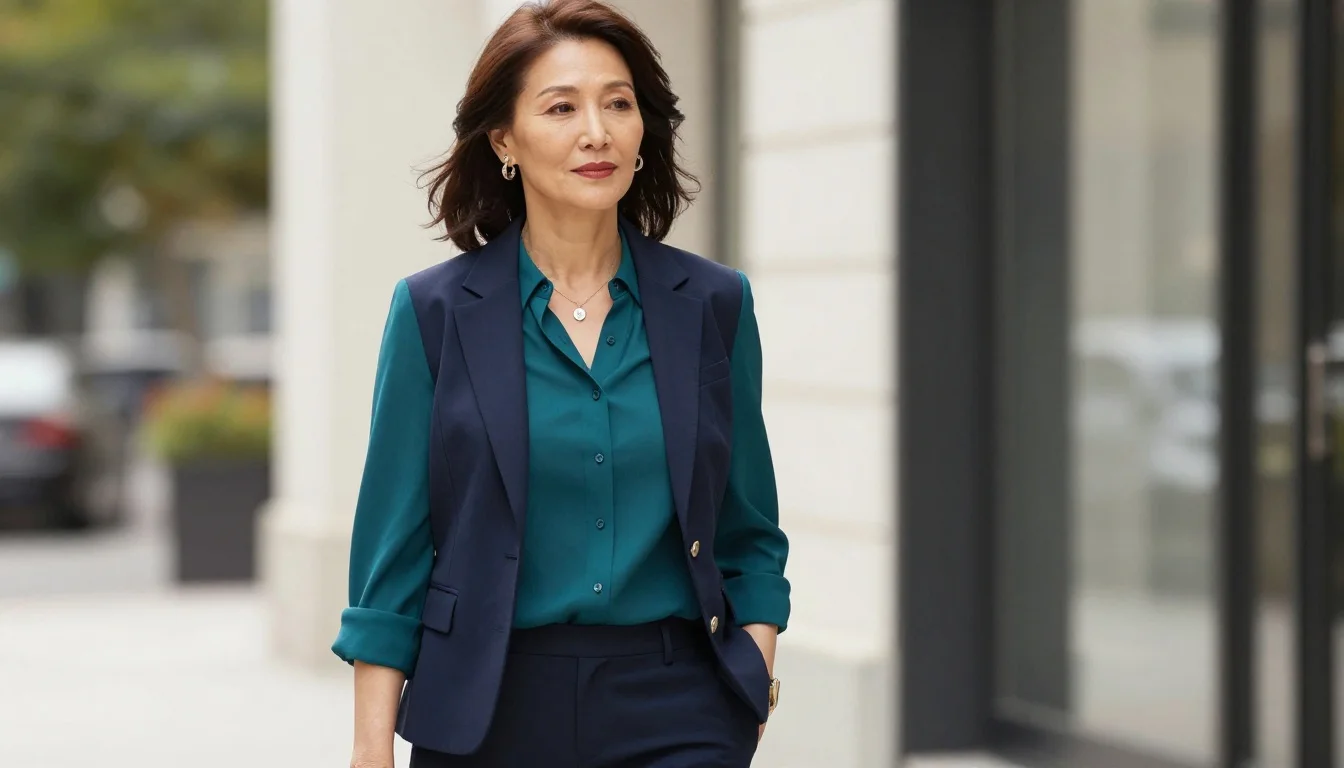
True navy is the most versatile foundation color for women over 50. It provides structure and elegance without the harshness of black. A navy blazer with a coral top. Navy trousers with a teal blouse. Navy works with every jewel tone and every warm neutral in your palette.
Silver and grey hair advantage
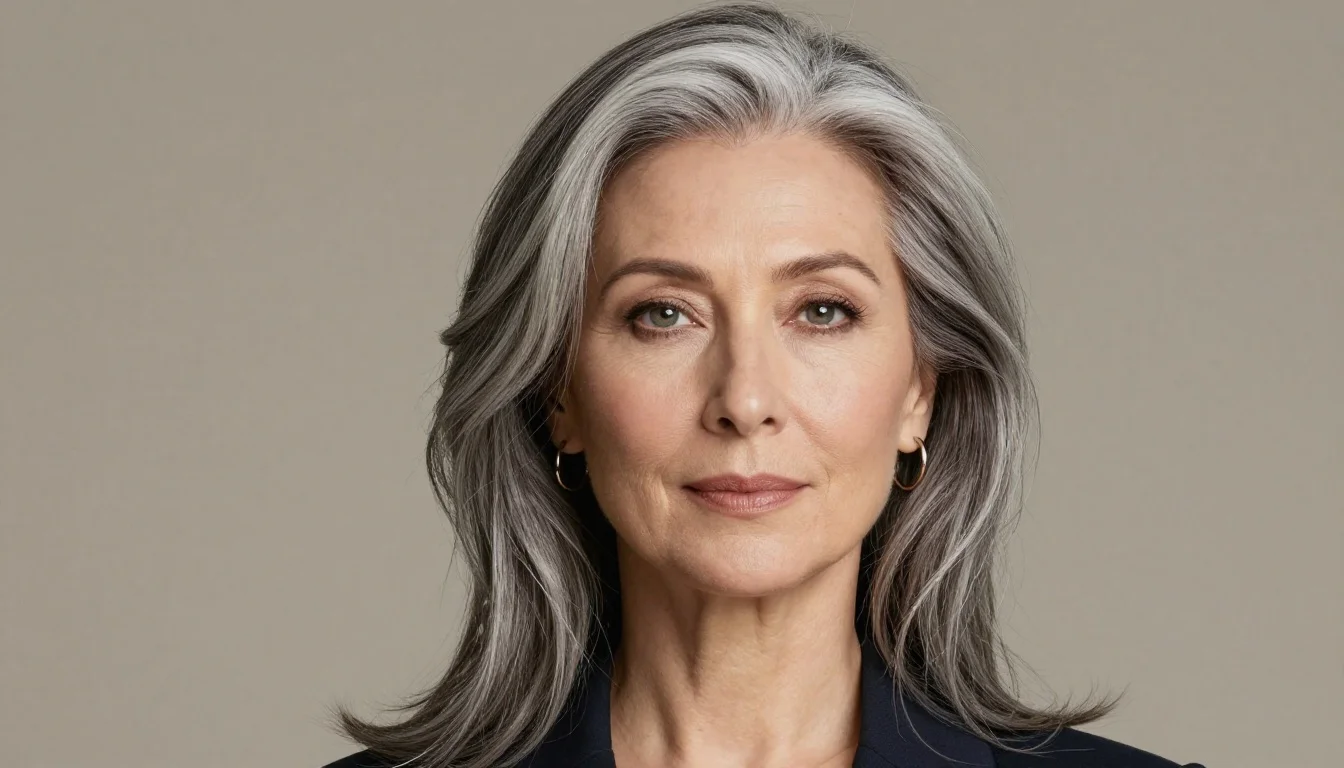
Silver and grey hair is actually a styling superpower — it creates a natural cool neutral frame for your face that makes jewel tones pop. Deep teal, rich plum, sapphire blue, and warm berry look especially striking against silver hair. Lean into bold colors rather than retreating from them.
Mixing warm and cool strategically
If your undertone has become harder to read with age, use medium-depth colors that bridge warm and cool: teal, periwinkle, dusty rose, and amethyst work across most undertones. Test colors by holding them near your face in natural light — the right shade will make your skin look clear and bright.
Colors That Can Age You
All-beige and washed-out neutrals
Head-to-toe beige, pale grey, and faded khaki create a monochromatic blending effect that makes mature skin look flat and lifeless. Neutrals need either warmth (cognac, chocolate) or depth (navy, charcoal) to provide enough contrast to define your features.
Harsh black near the face
As contrast in your coloring decreases with age, jet black next to the face can create an unflattering stark effect that emphasizes shadows and fine lines. Wear black below the waist or layer it with a brightening color near the neckline.
Very pale, cool pastels
Baby blue, pale lilac, and icy pink can make mature skin look washed out and grey. If you love pastels, choose versions with slightly more saturation — periwinkle instead of baby blue, dusty rose instead of icy pink.
Neon and electric brights
Very vivid, electric colors can overwhelm softened mature coloring and draw attention to the clothing rather than the face. Your best brights are the rich mid-tones — jewel tones rather than fluorescents.
Stop guessing — preview every shade on you
See myself in my colorsColor Swaps That Refresh Your Wardrobe
Simple replacements that bring life back to outfits that may have started looking flat.
Pale beige blends into mature skin and creates a washed-out effect. Cognac and chocolate have enough depth and warmth to define your features.
Jet black near the face emphasizes shadows on mature skin. Navy provides the same authority with a softer, more flattering frame.
Grey fades into low-contrast coloring. Coral and teal add healthy color that brightens the face and creates definition.
Very pale pastels wash out mature skin. The deeper, richer versions of the same colors provide elegance with vitality.
A neutral scarf adds nothing near the face. A jewel-toned scarf acts as an instant brightener that makes your complexion look fresh and vibrant.
All black can look severe on softened coloring. Deep plum and burgundy provide the same drama with warmth and richness that flatters mature features.
Which Palette Might Be Yours?
Your color season does not change with age, but the way you express it may shift. Understanding your season helps you choose the exact right depth and temperature after 50.
Soft Summer
Learn moreIf your coloring has softened to cool, muted tones — ash grey hair, cool pink skin, gentle contrast — Soft Summer may be your season. Your best shades are dusty rose, soft teal, muted lavender, and cool taupe.
Soft Autumn
Learn moreIf your colouring has a warm, golden-muted quality — warm grey or warm silver hair, golden skin — Soft Autumn may be closer. Your best shades are warm sage, muted coral, cognac, and warm olive.
Deep Winter
Learn moreIf you have maintained strong contrast — dark hair with greying, cool skin, striking features — Deep Winter may still be your season. Your palette includes vivid jewel tones and high-contrast pairings.
Find Your Exact Best Colors
The colors that flatter you at 50+ depend on your specific undertone, contrast level, and how your coloring has evolved. A personalized analysis identifies your precise palette — not general guidelines, but the exact shades of teal, berry, navy, and coral that make you look your most vibrant.
Stop guessing — preview every color on you
Preview Yourself In Your Palette
Get my personalized paletteStop guessing — preview every color on you
Preview Yourself In Your Palette

Related Guides for Best Colors for Women Over 50
Explore more personalized color advice based on your features.
Want to see these colors on you? What Colors Look Good on Me — free to try.
Frequently Asked Questions About Best Colors for Women Over 50
What colors look best on women over 50?
Rich jewel tones — deep teal, warm berry, amethyst, sapphire — are universally flattering after 50. They provide enough saturation to brighten the face without being harsh. Warm rich neutrals like cognac and navy are excellent foundations. The key is avoiding washed-out beige and using color with depth.
Should women over 50 avoid bright colors?
No — color is your friend after 50. The right bright colors make you look more vibrant and youthful. The key is choosing rich, mid-depth brights (teal, coral, berry) rather than neon or electric shades. Retreat into beige and you look older, not younger.
Can women over 50 wear black?
Yes, but strategically. Jet black near the face can emphasize shadows and create harsh contrast against softened coloring. Wear black below the waist or pair it with a brightening color — a berry scarf, a teal necklace — near your face. Navy is often a better alternative.
What colors should women over 50 avoid?
Washed-out beige, faded grey, very pale pastels, and neon brights tend to work against mature coloring. Beige drains the face. Pale pastels wash you out. Neons overwhelm. Choose rich mid-tones instead.
Do the best colors change as your hair goes grey?
Grey and silver hair actually opens up jewel tone possibilities. The cool neutral frame of silver hair makes deep teal, sapphire, plum, and berry look especially striking. Many women find they can wear bolder colors with grey hair than they could with their natural color.
How do I find my best colors after 50?
Hold colors near your face in natural daylight. The right shade will make your skin look clear, bright, and healthy. The wrong shade will make it look flat, sallow, or grey. A personalized color analysis can identify your exact season and palette for precise guidance.