Lipstick forWomen Over 50
After 50, lips need color that restores vibrancy without settling into lines. Discover which tones look natural on you — and which to skip.
After 50, your relationship with lipstick shifts. Colors that once flattered may now drain your face or bleed beyond the lip line. Bare lips look paler than they used to because natural pigment fades decade by decade. The temptation is to reach for the boldest shade in the drawer or give up color altogether. Neither works. What does work is a recalibrated approach — specific shades, specific finishes, and a two-minute prep routine that makes any formula perform beautifully.


3,000+
happy clients
What Changes About Lips After 50
After 50, your relationship with lipstick shifts. Colors that once flattered may now drain your face or bleed beyond the lip line. Bare lips look paler than they used to because natural pigment fades decade by decade. The temptation is to reach for the boldest shade in the drawer or give up color altogether. Neither works. What does work is a recalibrated approach — specific shades, specific finishes, and a two-minute prep routine that makes any formula perform beautifully.
Between 40 and 60, lips undergo measurable changes. The vermillion border — the sharp edge where lip meets skin — softens and blurs. Lips thin as collagen depletes. The natural pink or mauve pigment that gave bare lips color in your twenties fades noticeably. Fine vertical lines develop around the mouth. These are not cosmetic complaints; they are structural changes that alter how lipstick performs on your mouth.
These changes mean that formulas and shades that worked perfectly at 35 behave differently at 55. Liquid mattes dry and crack on thinner, drier lips. Dark shades make thinning lips look even smaller. Glosses without structure bleed into those vertical lines within minutes. And a bare lip — which still looked fresh and pink at 40 — now looks undefined and washed out. Your lips need color more than they ever have; they just need it applied differently.
The good news is that women over 50 often have features that actually benefit from the right lip color. Bone structure is more defined. Silver or white hair creates beautiful contrast with a warm lip. Skin that has settled into a natural palette — less ruddy, less variable — creates a cleaner canvas for a well-chosen shade. A woman over 50 wearing exactly the right lipstick looks polished in a way that reads as effortless.
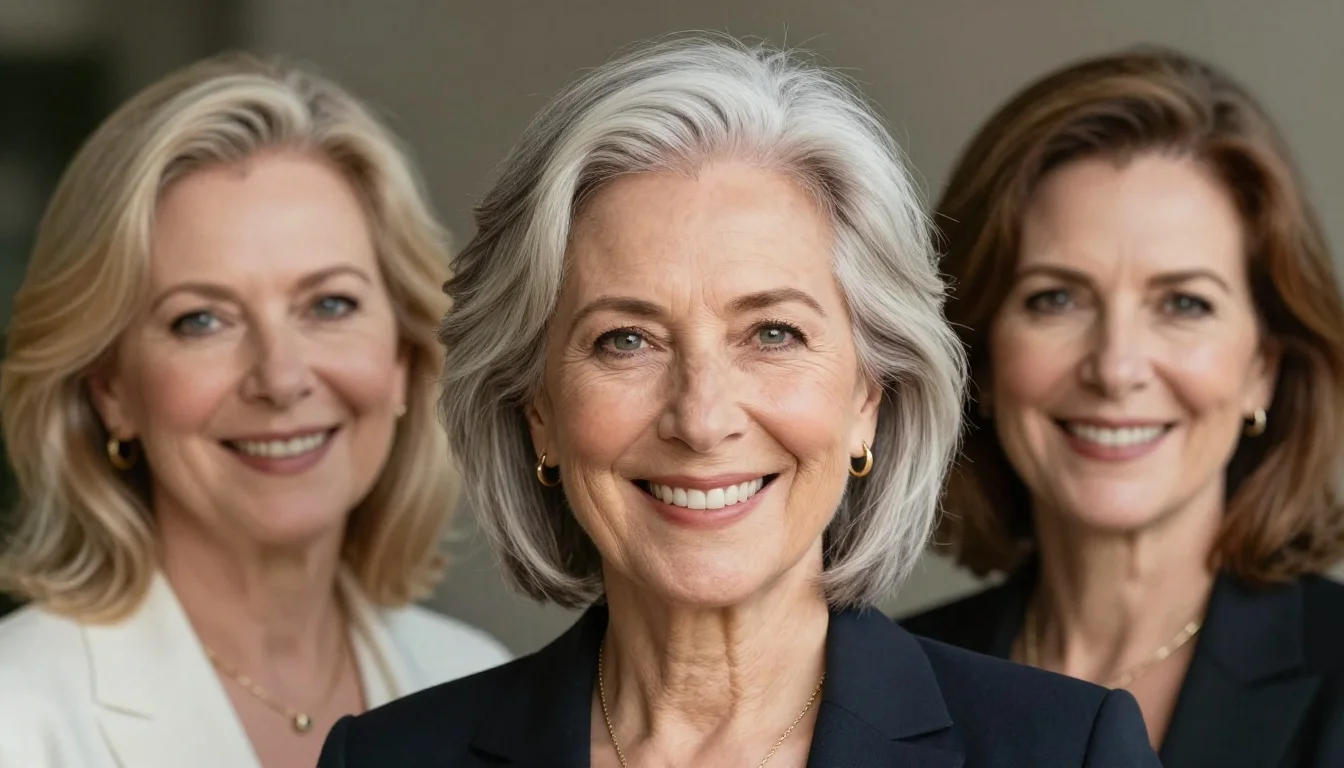
What is the best lipstick color for a 50 year old woman?
The most universally flattering shades for women over 50 are medium-depth rose-pinks, warm mauves, and dusty corals in hydrating cream formulas. These restore the natural lip color that fades with age while looking fresh and effortless. Choose warm tones if your undertone is warm, cool rose or berry if cool. The key is a creamy satin finish rather than matte.
The Best Lipstick Shades After 50
Your Everyday Heroes: Rosy Neutrals
These are the shades you'll reach for five mornings out of seven. Rose-pink restores the natural lip color that fades after 50 — it looks like your lips used to look, just polished. Warm mauve is the elegant neutral that works for lunch, errands, and dinner without changing. Dusty pink is the shade that makes people say you look well without knowing why. Soft rose-brown anchors the lip against silver or grey hair beautifully.
Warm & Radiant: Corals & Peaches
After 50, warm skin tones can develop a sallow or grey quality as circulation changes. Coral and peach-family lipsticks counteract this instantly by reintroducing warmth to the center of the face. Dusty coral is vibrant without being loud. Warm peach-pink suits golden undertones beautifully. Soft terracotta rose has an earthiness that complements women who've spent decades in warmer neutral tones. These shades wake up the face.
Cool & Elegant: Berries & Wines
Cool-undertoned women over 50 — typically those with silver hair that reads ash rather than gold, and pink or neutral skin — look stunning in muted berry tones. Muted raspberry provides color energy without harshness. Soft cranberry serves as the evening shade that feels special without being severe. Cool rose is the daily cool-toned counterpart to warm mauve. Gentle plum adds depth for occasions when you want something richer than a pink.
Special Occasion: Softened Reds
Red lipstick doesn't expire at 50. But the reds that flatter shift toward softer, warmer, more muted versions. Rose-red — a red with visible pink softness — is the most flattering red for most women over 50 because it reads as vibrant without harsh edges. Warm berry-red splits the difference between berry and red. Muted classic red in a creamy satin formula feels celebratory without looking like you're trying too hard. A soft cherry with a slight sheen is red for women who want to feel bold but approachable.

Ready to see yourself in rose pink & mauve?
Start my color analysisHow to Apply Lipstick After 50
The two-minute prep that changes everything
Every morning, apply a hydrating lip balm while you do the rest of your makeup. By the time you reach for lipstick — five minutes later — your lips are soft and primed. Blot the excess balm with a tissue, leaving a thin moisturized layer. This takes two minutes of passive time and completely transforms how any lipstick sits on your lips. Without it, even the best formula will crease and flake by noon.
Lip liner is now non-negotiable
After 50, lip liner isn't about making your lips look bigger. It's about rebuilding the border that nature has softened. Choose a liner that exactly matches your lipstick — not darker, not a trendy contrasting shade. Trace your natural lip line precisely. This creates a clean edge that prevents feathering into those vertical lines. Fill in the entire lip lightly with the liner before applying lipstick. This doubles the wear time and prevents the lipstick from sliding.
Apply with a brush for precision
Applying directly from the bullet works fine on young, full lips with defined edges. After 50, a lip brush gives you control over exactly where the color goes. Load the brush, start at the center of the upper lip, and work outward. The precision prevents over-application at the corners where feathering starts. It also creates a thinner, more even layer that sits better than a heavy swipe from the tube.
Blot, reapply, then leave it alone
Apply one layer, press your lips together on a tissue to blot, then apply a second thin layer. This two-layer approach creates a stain-like base that lasts even as the surface layer wears off. Resist the urge to keep checking and reapplying throughout the day — overworking lipstick on mature lips leads to buildup that looks cakey. Two deliberate layers in the morning, a quick touch-up after lunch, and you're set.
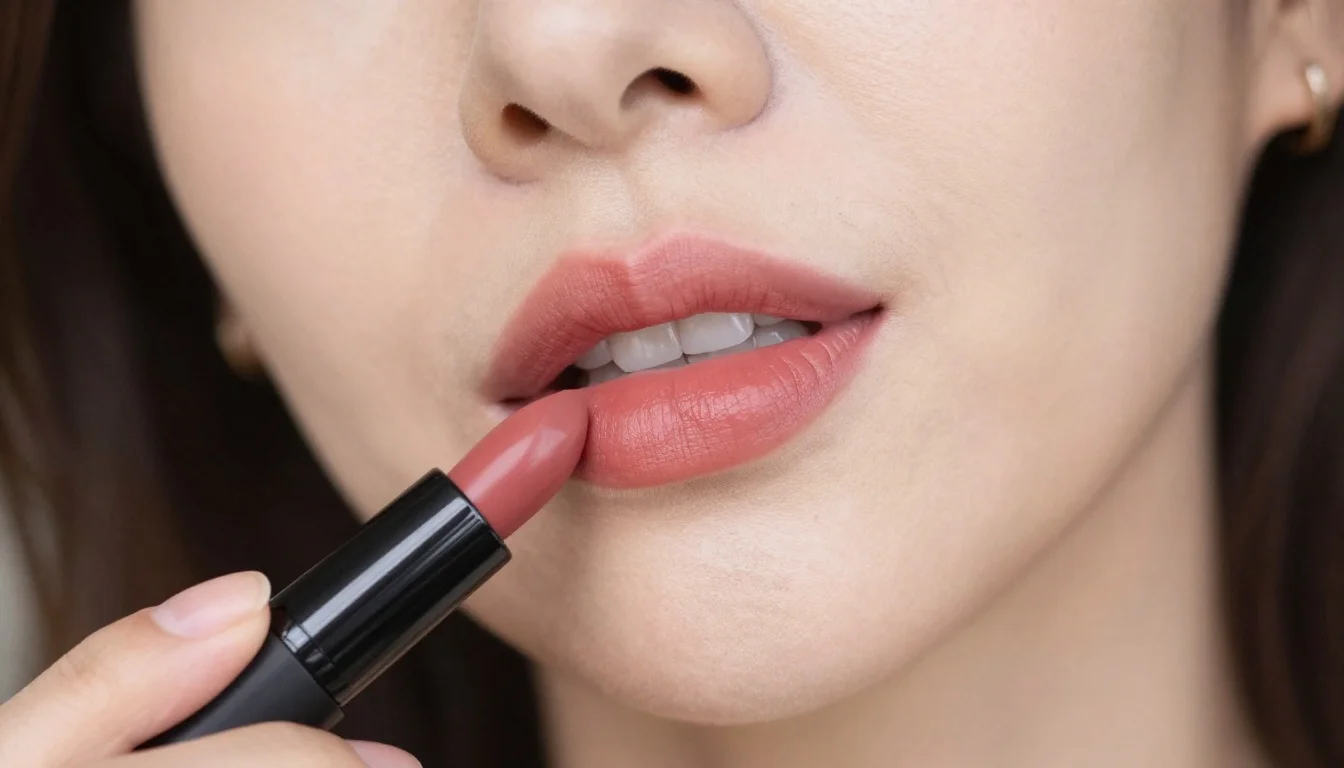
Lipstick Mistakes After 50
Long-wear liquid matte formulas
Liquid mattes are engineered to dry completely and lock in place. On lips over 50, which are drier and more lined, this creates a cracked, dehydrated look within an hour. The formula grips every line and flake. If you need longevity, choose a hydrating cream formula and reapply — it will look better at hour four than a liquid matte looks at hour one.
Very dark shades without softness
Deep burgundy, dark plum, and near-black lipstick create severe contrast against aging skin that can look aging rather than dramatic. These shades also make thinning lips appear even thinner because dark colors visually recede. If you love depth, choose muted cranberry or gentle plum — you get richness with some inherent softness that prevents harshness.
Frosted or iridescent finishes
Frost was everywhere in the 1980s, and reaching for it now can look dated rather than luminous. More practically, visible shimmer particles in lipstick highlight vertical lip lines by catching light unevenly across the lip surface. The modern alternative is a satin or balmy sheen — reflective enough to look healthy, smooth enough to not emphasize texture.
Concealer-nude or barely-there beige
After 50, bare-looking lips make the whole face look flat and tired. A nude that matches your skin rather than restoring lip definition removes the one point of color contrast the lower face needs. Your nude should always have visible warmth — pink, rose, peach — and sit at least one shade deeper than your actual lip color to maintain definition.
Stop guessing — preview every shade on you
See myself in my shadesLipstick Upgrades for Women Over 50
Trading the shades and habits that no longer serve you for ones that flatter beautifully.
Gloss alone provides no definition for lips that have lost natural pigment. A creamy lipstick restores color and structure while feeling equally comfortable.
Liquid mattes crack and dehydrate within an hour on lips over 50. Cream satins stay smooth, wear gracefully, and look better as they fade.
Same color depth, less severity. The muted tone and creamy texture read as sophisticated rather than harsh against skin over 50.
Skin-matching nudes make lips disappear entirely after 50. A nude with pink or rose dimension keeps the lip defined and the face alive.
A softer red with sheen flatters more than a stark matte at this stage. The color is still undeniably red; it just has warmth and forgiveness.
Precision application prevents feathering and creates a polished result. The extra 60 seconds of lining and brushwork is visible in how long the color lasts and how clean it looks.
Finding Your Lip Color Palette After 50
Your seasonal color palette provides the roadmap for exactly which lip shades flatter you most. As hair color changes with age, your seasonal placement may shift — and with it, your ideal lip colors. The palettes below are the most common for women over 50.
Soft Summer
Learn moreSilver-grey hair with cool-pink or neutral skin and soft blue or grey eyes often points to Soft Summer. Your best lip shades are muted and cool: dusty pink, cool rose, mauve, and soft berry. Anything too vivid or too warm looks dissonant with your gentle, cool coloring.
Soft Autumn
Learn moreIf your silver has a golden cast, your skin is warm-beige, and your eyes are hazel or warm brown, Soft Autumn suits you. Your lip shades run warm and muted: dusty coral, warm mauve, peach-pink, and soft terracotta rose. Cool berries will look out of place on your warm coloring.
Deep Winter
Learn moreIf you have high contrast even after 50 — striking dark eyes, strong features, and silver hair that reads dramatic rather than soft — Deep Winter may still be your season. You can carry more saturated lips than other women your age: muted classic red, cranberry, and rich berry. Your coloring demands presence, not retreat.
Discover Your Ideal Lip Colors
The perfect lipstick shade for you after 50 depends on your specific undertone, the warmth or coolness of your silver or grey hair, and the natural contrast between your features. A personalized color analysis pinpoints your seasonal palette and identifies the exact lip color families — from your everyday neutral to your special-occasion statement — that enhance your coloring as it is now, not as it used to be.
Related Guides for Lipstick for Women Over 50
Explore more personalized color advice based on your features.
Want to see these colors on you? What Colors Look Good on Me — free to try.
Frequently Asked Questions About Lipstick for Women Over 50
What is the best lipstick color for a 50 year old woman?
The most universally flattering shades for women over 50 are medium-depth rose-pinks, warm mauves, and dusty corals in hydrating cream formulas. These restore the natural lip color that fades with age while looking fresh and effortless. Choose warm tones if your undertone is warm, cool rose or berry if cool. The key is a creamy satin finish rather than matte.
Should women over 50 wear red lipstick?
Yes — but shift toward softer reds. A rose-red or warm berry-red in a creamy satin formula looks radiant on women over 50. Avoid stark, matte true reds which can look harsh. The softened red reads as confident and polished. Pair it with a matching lip liner and keep the rest of your makeup understated to let the lip be the statement.
How do I stop lipstick from feathering into lines?
Three essentials: First, always line your lips with a matching lip liner before applying color — this creates a physical barrier at the lip edge. Second, apply lipstick in thin layers with a brush rather than heavy swipes from the tube. Third, choose cream or satin formulas over very slippery glosses. An invisible lip liner pencil around the outside of the lip line provides extra insurance.
What lipstick finish is best for older lips?
Satin or cream finishes are the most flattering. They have enough moisture to sit smoothly on drier lips without drying and cracking like mattes, but enough hold to stay in place unlike sheer glosses. Look for formulas containing shea butter, vitamin E, or hyaluronic acid. Avoid ultra-matte liquids and heavy frost finishes — both emphasize texture on lips over 50.
What lipstick shade makes you look younger?
Medium-depth warm tones — rose-pink, dusty coral, warm mauve — are the most rejuvenating because they restore the natural color and warmth that lips lose with age. Very dark and very pale shades both age the face. The specific shade depends on your undertone: warm skin looks youngest in peach-rose and coral, cool skin in cool rose and muted raspberry.
Is lip liner necessary after 50?
Practically speaking, yes. After 50, the lip border softens and fine lines develop around the mouth — both of which cause lipstick to migrate and feather. Lip liner rebuilds that border and acts as a barrier. Choose a liner that matches your lipstick exactly, line your natural edge, and fill in lightly. This alone doubles how long your lipstick lasts and how clean it looks.