Natural Makeup forDark Skin
Natural makeup on dark skin means enhancing its natural richness, not covering it. Discover which tones look natural on you — and which to skip.
Natural makeup on dark skin does not mean what it means on lighter skin. It does not mean covering, lightening, or neutralising the complexion. It means making rich, deep skin look like the most luminous, even, glowing version of itself — skin that appears cared-for and alive, not made up. The no-makeup makeup look on dark skin is built on one perfectly matched foundation, a deep nude lip that reads as your lips, the subtlest eye definition, and a golden glow that looks like sunlight landing on your skin from the inside.


3,000+
happy clients
What "Natural Makeup" Actually Means on Dark Skin
Natural makeup on dark skin does not mean what it means on lighter skin. It does not mean covering, lightening, or neutralising the complexion. It means making rich, deep skin look like the most luminous, even, glowing version of itself — skin that appears cared-for and alive, not made up. The no-makeup makeup look on dark skin is built on one perfectly matched foundation, a deep nude lip that reads as your lips, the subtlest eye definition, and a golden glow that looks like sunlight landing on your skin from the inside.
Natural makeup on dark skin is a fundamentally different brief from the same look on fair or medium skin. On lighter skin, natural makeup often means sheer coverage that lets the skin's texture show. On dark skin, natural makeup means exactly matched coverage that makes deep skin look even and luminous — because deep skin tones have more visible variation in surface pigmentation that sheer coverage can reveal rather than conceal. The goal is skin that looks perfected from within, not covered from without.
Foundation matching is the single most critical element of natural makeup on dark skin — and the place where the most mistakes are made. Too light, and the skin looks lifted and artificial: the warmth and depth of dark skin is erased by the lighter foundation, and the face looks disconnected from the neck and décolletage. Too ashy or grey-based, and the foundation sits on dark skin like a grey film, dulling the natural luminosity that is one of dark skin's most beautiful qualities. The correct foundation for a natural look matches the skin's depth exactly and has warm or neutral-warm undertones — never pink, never grey.
The finish matters as much as the match. Dark skin has a natural radiance — a depth and richness that catches light differently than lighter skin tones. A matte finish suppresses this natural luminosity and makes deep skin look flat and dull. A luminous, satin, or glow finish works with the skin's natural reflectivity, enhancing the richness of deep pigmentation rather than flattening it. For natural makeup on dark skin, the goal is always glow over matte — skin that looks alive, nourished, and radiant rather than powdered down.
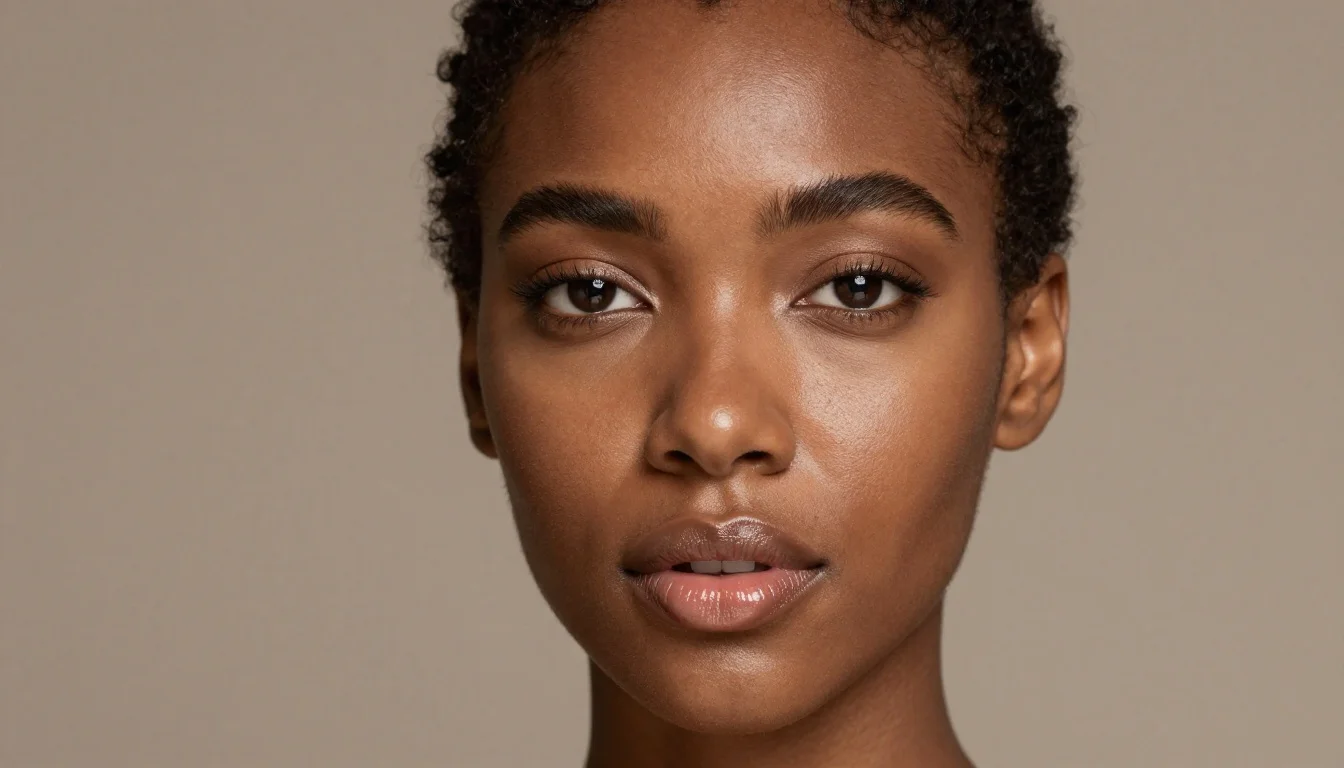
What does natural makeup look like on dark skin?
Natural makeup on dark skin means perfectly matched, luminous skin — rich, even, and glowing rather than covered or altered. It includes a foundation that matches your exact depth and warm undertone, a deep nude lip that reads as your own lips, minimal eye definition (warm brown liner, mascara), and a golden bronze highlighter that amplifies your skin's natural richness. The result looks like enhanced, cared-for skin rather than visible makeup.
Your Natural Makeup Shade Families for Dark Skin
Foundation & Skin — Deep Rich Matching Shades
The foundation is the natural look on dark skin — get this right and everything else follows. Deep skin tones need foundations in the darkest shade ranges with warm or neutral-warm undertones. Avoid foundations with grey or ash undertones, which create a flat grey cast on deep skin, and foundations with pink or red undertones, which look artificial against the natural golden-brown warmth of dark skin. Look for foundations described as mahogany, espresso, or deep warm brown. The right match disappears into the skin — you can only see where it ends by looking at the jawline against untouched neck skin. Concealer should match the foundation exactly, not be lighter, which creates a grey brightening effect under the eyes rather than a natural finish.
Lip — Deep Nude & Warm Berry
The deep nude lip is the most powerful tool in natural makeup for dark skin — and it works entirely differently than on lighter skin. On fair skin, nude means pale and pink. On dark skin, nude means the colour of your own lips: a deep warm brown-nude, or a soft berry-nude that reads as your lips on their best day rather than a separate product. Finding the right deep nude is transformative: the lips look full, natural, and alive without looking made up. A sheer warm berry gloss over your own lip colour achieves the same effect with even less effort. Avoid light beige or pink nudes, which look ashy and disconnected on deep skin — these are shades designed for fair skin that create the opposite of a natural effect on dark complexions.
Eye — Subtle Definition
Natural eye makeup on dark skin means definition, not transformation. A warm brown kohl pencil along the upper lash line, smudged softly, defines the eye without the hard black line that reads as dramatic rather than natural. A soft chocolate or warm taupe wash across the lid adds minimal depth that looks like shadow and dimension rather than eyeshadow. Black mascara on the upper lashes is the most natural-looking eye product on dark skin — the lash line is already rich against deep skin, and mascara simply makes it more defined. For a subtle smoke, smudge warm brown shadow along the outer lower lash line with a fingertip. Avoid heavy liner, dramatic eyeshadow, or wings for a natural look.
Glow — Golden Bronze & Highlighter
The luminosity element of natural makeup on dark skin is not optional — it is what separates glowing natural skin from flat covered skin. Dark skin has a natural richness that catches light, and makeup should enhance rather than suppress this quality. A rich golden bronze applied where the sun would naturally hit — cheekbones, bridge of the nose, temples, cupid's bow — amplifies this natural radiance. Highlighter for dark skin should be warm-toned: deep gold, warm copper, or rich caramel. Avoid white, silver, or icy highlighters, which sit on dark skin like pale patches rather than luminosity. The right golden highlighter makes deep skin look lit from within — this is what makes natural makeup on dark skin look genuinely natural rather than made up.

Ready to see yourself in mahogany & espresso?
Start my color analysisBuilding a Natural Look on Dark Skin
Skin prep for a natural finish
Natural makeup on dark skin lives or dies on skin preparation. Well-nourished, hydrated skin catches light naturally — foundation on dehydrated skin sits in dry patches and looks powdery rather than luminous. Apply a rich moisturiser and let it fully absorb before makeup. A luminous primer rather than a mattifying one preserves dark skin's natural glow instead of suppressing it. Apply primer only to areas of genuine concern — enlarged pores or uneven texture — rather than all over the face. The goal is a canvas that enhances the skin's own reflectivity.
Finding and applying the right deep nude lip
The deep nude lip is the most challenging product for dark skin to find because most mainstream 'nude' shades are formulated for fair skin. Your natural lip colour on dark skin is a rich warm brown-pink or warm berry — the right nude lip shade is a few tones lighter or darker than your lip with the same warm quality. Test lip colours on your actual lip, not your wrist or hand. A shade that reads "nude" against your lip is slightly sheerer or slightly more defined than your natural lip colour — not different in temperature. Lip oil in warm berry or a sheer warm brown-nude gloss is often the most flattering and lowest-effort solution: apply over your natural lip for a your-lips-but-better effect.
The subtle eye for natural dark skin looks
The natural eye for dark skin is about definition, not eyeshadow. Start with a warm brown kohl pencil along the upper waterline and outer half of the lower waterline — this makes eyes look more defined without visible liner. If you want more, smudge a tiny amount of deep warm brown shadow directly along the upper lash roots with a small brush, then blend the edge so nothing reads as a line. Finish with one to two coats of black mascara on the upper lashes only — this is often the full extent of natural eye makeup for dark skin. The eyes look awake, defined, and rich without reading as made up.
Setting for glow, not matteness
Setting powder on dark skin must be used with precision. Powdering the entire face suppresses the natural luminosity of dark skin and can leave a grey or ashy cast, particularly if the powder formula is not dark-skin-friendly. Set only where genuine shine control is needed — typically the T-zone. Use a translucent powder with no visible tint in your shade range, or a golden-tinted setting powder that complements dark skin rather than creating a light cast. Apply with a light hand and a fluffy brush, not a sponge. Finish with a glow-enhancing setting spray to restore the luminosity that powder can suppress, and apply golden bronze highlighter to the high points of the face for the lit-from-within finish that makes natural makeup on dark skin look genuinely natural.
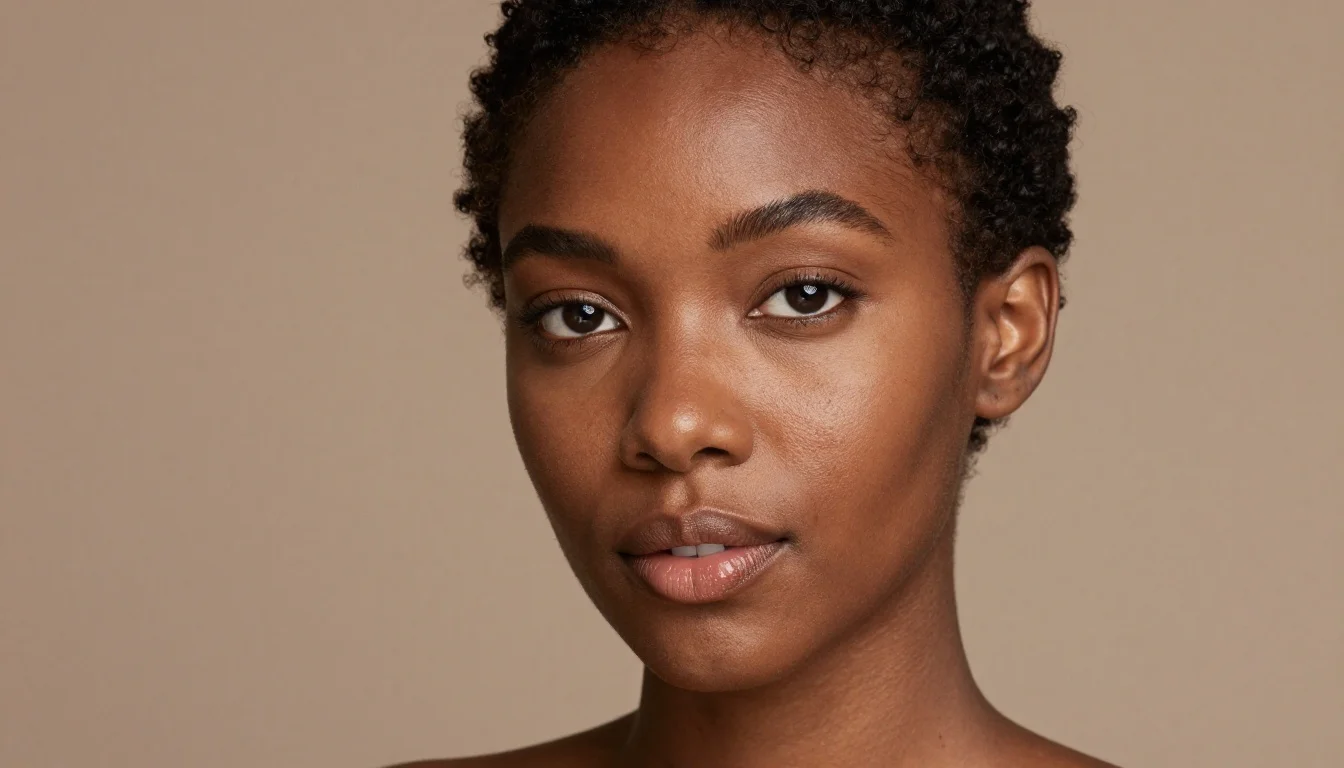
The Natural Makeup Mistakes on Dark Skin
Foundation lighter than your true skin depth
A foundation even one or two shades lighter than your actual skin colour immediately reads as artificial — the face looks lifted away from the natural warmth and depth of your neck and décolletage, and the look is the opposite of natural. This is the most common natural makeup mistake on dark skin. Always match your foundation to your neck colour in natural daylight, not store lighting, and accept that the deepest shades in most ranges are your starting point.
Ashy grey-based foundations and concealers
Grey-undertoned or ashy foundations sit on dark skin like a grey film — they dull the natural richness and luminosity of deep pigmentation and create a flat, unwell appearance. This is more visually dramatic on deep skin than on lighter tones because the grey undertone is visible against the richness of dark skin. Always choose foundations with warm or neutral-warm undertones (never pink, never grey) and test in natural light before committing.
Heavy or graphic eye liner for a natural look
A thick winged liner or heavily drawn lid line signals 'full makeup' regardless of how natural the rest of the face is. Natural eye makeup on dark skin means a soft smudged warm-brown or soft black line along the lash roots — not an architectural line on the lid. If the eye reads as 'liner look' first rather than 'beautiful eyes first,' the liner is too heavy for a natural makeup brief. Smudge everything, keep it close to the lash roots, and stop before the look reads as defined eye makeup.
Stop guessing — preview every shade on you
See myself in my shadesNatural Makeup Swaps for Dark Skin
Replace these common natural makeup mistakes with dark-skin-specific alternatives.
A perfect match in a luminous formula makes dark skin look like perfected skin rather than covered skin — the natural richness shows through.
Very light concealer under dark eyes creates a grey-pale patch, not brightness. A matched concealer cancels darkness without creating a mask.
Pale nudes designed for fair skin look ashy and disconnected on dark skin. A deep warm nude reads as "your lips" on dark skin — genuinely natural.
Sharp black liner signals full makeup. Smudged warm brown liner along the lash roots creates the same definition while reading as natural eye richness.
Cool light highlighters sit on dark skin as pale patches. Warm golden bronze amplifies dark skin's natural luminosity and looks like sunlight on rich skin.
Over-powdering suppresses dark skin's natural glow and can leave a grey cast. T-zone-only application controls shine while preserving luminosity.
Which Palette Might Be Yours?
Dark and deep skin tones appear across several seasonal colour palettes. Your specific palette determines which warm nudes, golden highlighters, and subtle eye tones look most alive against your skin — and which create the natural look that genuinely flatters your particular depth and undertone.
Deep Autumn
Learn moreIf your dark skin has a warm golden-brown or mahogany quality — rich and warm without being cool — Deep Autumn is likely your season. Natural makeup in warm, rich earthy tones suits you perfectly: deep golden bronze highlighter, warm espresso-brown foundation, deep warm berry or brown-nude lips. Your natural makeup colours are all in the warm, saturated earth-tone family. Avoid anything with pink or cool undertones.
Deep Winter
Learn moreIf your dark skin has a cool or neutral undertone — an ebony or blue-black depth, cool brown, or a cooler espresso — Deep Winter fits. Natural makeup for Deep Winter dark skin leans slightly cooler: a neutral-warm foundation match, a dark cool-berry nude lip (rather than a warm brown nude), and a gold-to-neutral highlighter. You can wear slightly cooler tones than Deep Autumn while keeping the depth and richness of the natural look.
Warm Autumn
Learn moreSome dark skin tones with strong golden-warm undertones and warm hair colour fall into Warm Autumn rather than Deep Autumn — particularly medium-to-deep skin with a distinct golden quality and warm brown eyes. Natural makeup for Warm Autumn dark skin is entirely in the warm earth family: terracotta-warm foundation, deep peachy-nude or warm berry lip, golden bronze highlighter. Your natural look should always feel warm and sun-kissed.
Find Your Natural Look for Dark Skin
Natural makeup for dark skin is not about doing less — it is about doing the right things precisely. A foundation matched to your exact depth. A deep nude lip that reads as your lips. A golden glow that amplifies your skin's natural richness. These are specific choices, not generic ones. A personalized color analysis identifies your exact depth, undertone, and seasonal palette so that every product recommendation — from foundation shade to highlighter tone to lip colour — is calibrated to make your dark skin look like the most luminous version of itself.

Related Guides for Natural Makeup for Dark Skin
Explore more personalized color advice based on your features.
Want to see these colors on you? What Colors Look Good on Me — free to try.
Frequently Asked Questions About Natural Makeup for Dark Skin
What does natural makeup look like on dark skin?
Natural makeup on dark skin means perfectly matched, luminous skin — rich, even, and glowing rather than covered or altered. It includes a foundation that matches your exact depth and warm undertone, a deep nude lip that reads as your own lips, minimal eye definition (warm brown liner, mascara), and a golden bronze highlighter that amplifies your skin's natural richness. The result looks like enhanced, cared-for skin rather than visible makeup.
What foundation shade is right for a natural look on dark skin?
The right foundation for a natural look on dark skin matches your neck colour exactly in natural daylight — not store lighting. Foundations for deep skin should have warm or neutral-warm undertones (never grey, never pink). Test on your jawline and check in natural daylight: if the foundation disappears into your skin, it is the right match. If it reads lighter, darker, greyer, or pinker than your skin, it is the wrong shade or undertone. Many mainstream ranges do not go deep enough — dedicated deep-skin ranges from brands like Fenty Beauty, Uoma Beauty, or Pat McGrath often offer the deepest, most accurate matches.
What nude lip colour works for dark skin?
The nude lip for dark skin is a deep warm nude — a colour in the range of warm brown-pink, warm berry-nude, or soft warm chocolate that reads as "your lips but better." Pale beige and pink nudes designed for fair skin look ashy and disconnected on dark skin because they have no relationship to the natural lip colour of deep skin. Find your nude by testing lip products directly on your lip — the right shade will be a slightly more defined or slightly sheerer version of your natural lip colour in the same warm tone family.
What highlighter looks natural on dark skin?
Natural-looking highlighter for dark skin must be warm-toned: deep gold, rich golden bronze, or warm copper. These tones amplify dark skin's natural richness and create the lit-from-within luminosity that reads as healthy glowing skin rather than shimmer. Avoid white, silver, or icy highlighters — they sit on dark skin as cool pale patches rather than glow. Apply warm golden bronze to the high points of the cheekbones, bridge of the nose, and cupid's bow for the most natural effect.
How do I stop foundation from looking ashy on dark skin?
Ashiness in foundation on dark skin comes from grey or cool undertones in the formula — the foundation is either the wrong undertone (too grey or too pink) or slightly too light. The fix is finding a foundation with warm or neutral-warm undertones in your exact depth. Additionally, using a luminous or satin formula rather than a matte one prevents the flat, ashy appearance that matte formulas can create on deep skin. Test foundations in natural light — store lighting is often warm-toned and hides grey casts that daylight reveals.
Should I use concealer lighter than my skin for a natural look on dark skin?
No — for a genuinely natural look on dark skin, concealer should match your skin depth as closely as possible, or be at most one shade lighter. Using concealer significantly lighter than your skin creates a grey-pale under-eye area that reads as artificial rather than natural — the opposite of the intended effect. If you have significant darkness under the eyes, use a warm-toned colour corrector (peach or orange-toned) before a skin-matching concealer to cancel the darkness. Set with a minimal amount of matched powder, not a light-toned brightening powder.