The Best Foundation Shades forWarm Undertones
Warm undertones turn pink and neutral foundations grey and ashy. Discover which tones look natural on you — and which to skip.
If you have warm undertones, you have a golden, peachy, or olive cast to your skin that dictates everything about your foundation match. The single most common mistake warm-undertone skin makes is choosing a foundation that looks natural in the bottle but reads grey or ashy in person — because the formula has a pink or neutral-cool base that fights against the natural warmth of your skin. Warm undertones span an enormous range: from fair golden ivory to deep rich bronze. But across every depth, the rule is the same: your foundation must have a warm, golden, or yellow-adjacent base to disappear into your skin. This guide explains exactly why, and exactly how to find it.


3,000+
happy clients
Why Undertone Is the Most Important Factor in Foundation Matching
If you have warm undertones, you have a golden, peachy, or olive cast to your skin that dictates everything about your foundation match. The single most common mistake warm-undertone skin makes is choosing a foundation that looks natural in the bottle but reads grey or ashy in person — because the formula has a pink or neutral-cool base that fights against the natural warmth of your skin. Warm undertones span an enormous range: from fair golden ivory to deep rich bronze. But across every depth, the rule is the same: your foundation must have a warm, golden, or yellow-adjacent base to disappear into your skin. This guide explains exactly why, and exactly how to find it.
Undertone is the subtle color cast beneath your skin's surface — warm undertones produce a golden, peachy, or olive quality that is present at every depth, from the palest fair skin to the deepest dark skin. This undertone doesn't go away with a tan, doesn't change seasonally, and doesn't shift across different lighting conditions. It is a permanent feature of your complexion, and it is the primary factor in whether a foundation looks like skin or like a mask.
Pink-toned and cool-neutral foundations are the nemesis of warm-undertone skin. When a foundation with a pink, rosy, or neutral-cool base is applied to warm skin, the result is a grayed-out, ashy, or flat appearance — the skin's natural golden warmth is suppressed rather than matched. This is why warm-undertone people often feel like no foundation "looks right" on them: they keep selecting shades by depth only, without accounting for the undertone of the formula itself. A foundation that is the correct depth but the wrong undertone will always look wrong.
The classic test for warm undertones: look at the veins at your inner wrist in natural daylight. If they appear green or olive rather than blue or purple, your undertones are warm. A second test: hold a piece of bright white paper next to your face, then a piece of cream or ivory-toned paper. If your skin looks healthier and more luminous against the warmer cream paper, your undertones are warm. When shopping for foundation, seek out descriptors like 'warm,' 'golden,' 'yellow-undertone,' 'W' suffix, 'Y' suffix, 'NC' in MAC's system, or shade names like 'Golden Beige,' 'Warm Sand,' or 'Caramel' — these signal that the formula's base will harmonize with rather than fight your natural skin warmth.
How do I know if I have warm undertones?
Look at the veins on your inner wrist in natural daylight: green or olive-toned veins indicate warm undertones. You can also hold a piece of bright white paper next to your face, then a piece of cream or ivory-toned paper — if your skin looks healthier against the cream, your undertones are warm. The jewelry test is also helpful: if gold jewelry makes your skin glow and silver jewelry makes you look slightly off or pale, you have warm undertones. When buying foundation, your warm undertones mean you should look for shades coded 'W,' 'Y,' or 'NC' (MAC), or with descriptors like 'golden,' 'warm,' 'honey,' or 'caramel' in the shade name.
Your Foundation Shade Families for Warm Undertones
Golden Beige & Warm Ivory (Fair-to-Light Warm Skin)
Fair skin with warm undertones needs foundations in the golden ivory and warm beige family — shades that have an unmistakable yellow or peachy base rather than a pink or neutral one. In MAC's system, NC15 and NC20 fall in this range; in shade systems using W notation, W1 and W2; in Y-notation systems, Y1 through Y2. These shades look almost yellow in the bottle to an untrained eye, but on warm fair skin they disappear completely and produce a luminous, natural-skin finish. Foundations that look 'neutral' or 'balanced' in the bottle typically have a pink component that will grey out fair warm skin.
Warm Sand & Golden Medium (Light-to-Medium Warm Skin)
Light-to-medium skin with warm undertones spans the warm sand and golden medium foundation territory — the most populated depth range in most foundation lines. In MAC's system this is NC25 through NC35; in W-notation systems, W3 through W4. These are often labeled as 'warm,' 'golden,' or 'honey' within a brand's naming. The defining characteristic is a clearly yellow or peachy undertone — not orange, which overcorrects, but genuinely warm and golden. This depth range is where mismatching is most common because many foundations labeled "medium" actually lean neutral-cool; look for explicit warm identifiers in the shade name or undertone descriptor.
Warm Caramel & Bronze (Medium-to-Deep Warm Skin)
Medium-to-deep skin with warm undertones needs foundations in the caramel, golden-brown, and bronze family — shades with a rich, warm, yellow-olive or amber base. In MAC's system, NC40 through NC50; in W-notation systems, W5 through W6. At this depth range, the distinction between warm and neutral foundations is particularly important because many 'medium-deep' or 'deep' foundations across brands skew neutral or even cool-rosy. Look for shade names that include words like 'warm,' 'caramel,' 'golden,' 'amber,' or 'bronze,' and verify by checking for W or Y suffixes in the shade code. These shades have an unambiguously warm, rich base that matches the golden or amber quality of deep warm-undertone skin.
Setting & Finishing — Warm Translucent & Golden Powder
Setting powder is where warm-undertone foundation results can be undermined or enhanced. A cool white or colorless translucent powder can add a slightly grey or ashy cast to perfectly matched warm-undertone liquid foundation — especially in photographs. For warm undertones, choose a warm-tinted translucent powder, a golden or honey-toned setting powder, or a classic "banana powder" — the pale yellow tone of banana powder is specifically designed to counteract any ashiness and set warm complexions beautifully. Apply loosely with a large brush, focusing on the T-zone, and leave the rest of the face in its natural luminous finish.

Ready to see yourself in golden ivory & ivory?
Start my color analysisFoundation Application Tips for Warm Undertones
Test foundation undertone, not just depth
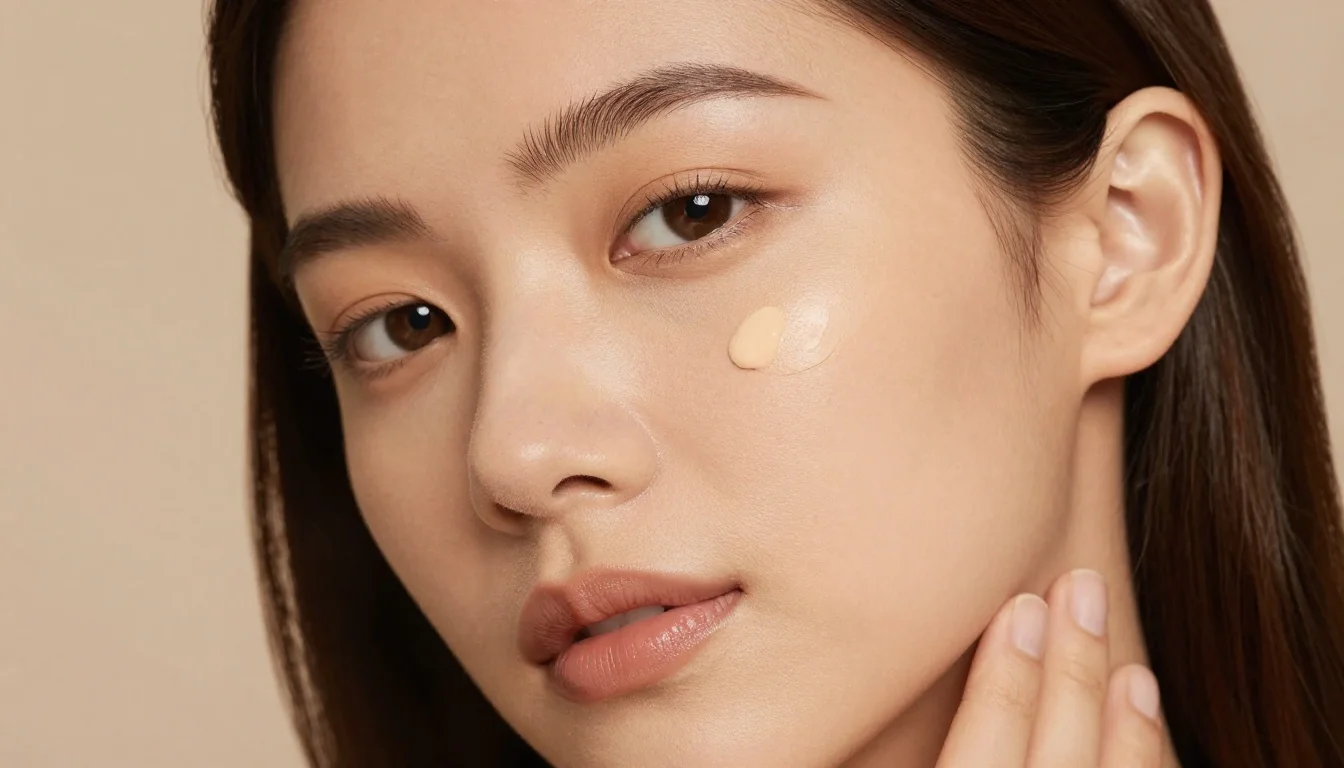
When shopping for foundation, pick two or three candidates at the right depth — one warm-labeled, one neutral, one cool — and swatch all three along your jawline in natural light. The swatch that disappears is the correct undertone. The warm-labeled swatch should melt into your skin; the cool or neutral swatch should look slightly grey or ashy by comparison. This side-by-side test is the fastest way to confirm undertone match. If you can only test one shade at a time, apply it to your jawline and step into daylight: a correct undertone match turns invisible; a pink or cool foundation makes your skin look duller than it did without any product.
Build coverage with a warm-tinted concealer
When adding concealer on top of warm-undertone foundation — for under-eye coverage, blemish concealing, or evening out redness — choose a concealer with a warm or peachy base rather than a pure white or pink-toned one. A cool-toned concealer used on warm skin creates patches that look ashy or grey against the warm foundation, breaking the illusion of seamless skin. A peachy or warm concealer not only covers but also cancels the blue and purple tones of under-eye circles, which is particularly effective for warm-undertone skin.
Set without adding coolness
Standard translucent powders can quietly add a grey or cool cast to warm-undertone foundation. To set your foundation without neutralizing its warmth, use a warm translucent powder, a classic banana powder, or a finely milled honey-toned setting powder. Apply with a large fluffy brush to the areas that need oil control — typically the T-zone — and avoid heavy powder application across the cheekbones and brow bone, where natural luminosity is most flattering on warm complexions.
Navigate brand shade systems by code
Learn the undertone coding system of any brand you shop. MAC's NC shades (Natural Cool, despite the name) are actually warm and yellow-based — they are the right choice for warm undertones. NW shades (Natural Warm, despite the name) are actually pink-toned and suited to cool undertones. Many other brands use 'W' for warm, 'C' for cool, and 'N' for neutral as suffixes on shade codes. When shade names aren't descriptive enough, look for the suffix: a shade coded '3W' or '30W' will have a warm base; a shade coded '3C' or '30C' will be pink-toned. When in doubt, ask a brand's shade-matching tool or consultant to identify which shades in their range are warm-undertone.

Match the rest of your makeup, not just foundation
Foundation is only one piece — your blush, lipstick, and eyeshadow all need the same warm base. Run the free makeup color matcher to see every shade family for your undertone in under a minute.
Foundation Shades That Work Against Warm Undertones
Pink-toned foundations in any depth
Pink-toned foundations — sometimes labeled 'rosy,' 'NW' in MAC's system, or 'C' for cool in other brands — are the opposite of what warm undertones need. Applied to golden or peachy warm skin, a pink-toned foundation suppresses the natural warmth and creates an ashy, grey, or muddy appearance. The skin loses its glow and instead looks flat and colorless. Even if the depth is correct, the undertone mismatch announces itself immediately in any natural light. If a foundation makes you look like you need more color or like the life has been washed out of your complexion, it's almost certainly pink-toned for your warm skin.
Cool-neutral foundations that look "natural" in the bottle
Many foundations marketed as 'neutral' are actually neutral-cool — they have a balance of pink and yellow that tips slightly cool. These read as natural and inoffensive in the bottle, and many warm-undertone people choose them thinking 'neutral is safe.' On warm undertones, neutral-cool foundations look slightly wrong in ways that are hard to articulate: the skin looks a little flat, a little grey, a little off. The foundation never quite disappears into the skin the way it should. This is the most common source of the "no foundation looks right on me" problem for warm-undertone skin.
Heavy orange-toned foundations (overcorrection)
Warm undertones should look for warmth in their foundation, but warm does not mean orange. Some foundations labeled 'warm' or 'golden' overcorrect and have an orange or terracotta base that creates a muddy, unnatural look — especially on fair-to-medium warm skin. True warmth in foundation is yellow and peachy, not orange. If a foundation makes your skin look orange, you have not found a warm foundation that is right for you — you have found one that is too orange. Step back one shade and look for a formula with a more balanced yellow-warm base.
Stop guessing — preview every shade on you
See myself in my shadesFoundation Swaps for Warm Undertones
Trading the shades and formulas that wash out warm skin for ones that make it glow.
Neutral foundations almost always tip cool enough to suppress warm undertones. A foundation explicitly coded as warm will match the golden quality of your skin instead of fighting it.
Pink-toned fair foundations look ghostly or ashy on warm fair skin. A golden ivory in the same depth reads as real, luminous skin.
Neutral medium formulas suppress the golden quality of warm medium skin. Warm sand and honey beige foundations make the skin look alive and vibrant rather than flat.
Neutral or cool deep foundations grey out the golden richness of deep warm skin. A warm caramel or amber-based foundation matches and enhances the skin's natural warmth.
Cool translucent powders add ashiness to warm-undertone foundation. A warm or banana powder sets without changing the warmth of the foundation underneath.
A cool concealer on warm skin creates visibly mismatched patches. A peachy warm concealer covers and color-corrects simultaneously on warm-undertone skin.
Which Seasonal Palette Fits Your Warm Undertones?
Warm undertones are a defining characteristic of multiple seasonal color palettes. Your specific season within the warm family determines the exact quality and intensity of warmth your ideal foundation should have.
Warm Autumn
Learn moreDeep, rich, muted golden undertones with warm medium-to-deep coloring often belong to Warm Autumn. Your ideal foundation has a rich caramel, amber, or warm chestnut base with a satin or natural finish. Luminous finishes suit your warm, earthy depth beautifully. Avoid anything with a pink, rosy, or cool-neutral base — it will suppress the gorgeous warmth that defines your complexion.
Warm Spring
Learn moreLight-to-medium warm skin with bright, warm, golden undertones and clear coloring often belongs to Warm Spring. Your ideal foundation is in the golden ivory, warm beige, or honey range with a peachy-yellow base. A luminous or satin finish enhances your natural glow. Your complexion is warm but also clear and bright, so avoid heavy or muddy foundations — a skin-tint or lightweight formula with a warm base is often most flattering.
Deep Autumn
Learn moreRich, deep warm skin with strong golden or bronze undertones and deep, warm coloring often belongs to Deep Autumn. Your ideal foundation is in the warm caramel, golden brown, or bronze family with an unmistakably warm amber base. A satin or natural finish suits your depth. At your depth level, the gap between a warm and a cool foundation is immediately obvious — a cool-toned foundation will look mask-like and grey against your rich, warm skin.
Find Your Exact Colors
Warm undertones need warm foundations — and the difference between the right warm shade and the wrong neutral one is the difference between a complexion that glows and one that looks flat and ashy. A personalized color analysis identifies your exact season, undertone quality, and contrast level so you know precisely which foundation families to shop, which shade codes to seek, and how to build a full beauty routine that enhances your natural warmth rather than working against it.

Related Guides for Foundation Shade for Warm Undertones
Explore more personalized color advice based on your features.
Want to see these colors on you? Skin Undertone Test — free to try.
Frequently Asked Questions About Foundation Shade for Warm Undertones
How do I know if I have warm undertones?
Look at the veins on your inner wrist in natural daylight: green or olive-toned veins indicate warm undertones. You can also hold a piece of bright white paper next to your face, then a piece of cream or ivory-toned paper — if your skin looks healthier against the cream, your undertones are warm. The jewelry test is also helpful: if gold jewelry makes your skin glow and silver jewelry makes you look slightly off or pale, you have warm undertones. When buying foundation, your warm undertones mean you should look for shades coded 'W,' 'Y,' or 'NC' (MAC), or with descriptors like 'golden,' 'warm,' 'honey,' or 'caramel' in the shade name.
Why does foundation always look grey or ashy on me?
Grey or ashy foundation on warm-undertone skin is almost always caused by a pink-toned or cool-neutral foundation base that clashes with your skin's natural warmth. When a cool-toned foundation is applied to warm skin, the two undertones fight each other and the skin loses its natural glow — it looks flat, grey, and dull. The solution is to switch to a foundation explicitly coded as warm: look for W, Y, or NC suffixes, or shade names with 'golden,' 'warm,' 'honey,' or 'peachy' in the descriptor. The difference between a warm and a cool foundation on warm-undertone skin is dramatic and immediately visible in natural light.
What does "warm undertone" mean for foundation shopping?
For foundation shopping, having warm undertones means you need to look for formulas with a yellow, golden, or peachy base rather than a pink, rosy, or cool-neutral base. In practical terms: seek out shade codes with W, Y, or NC (MAC) designations, and shade names with words like 'golden,' 'warm,' 'honey,' 'caramel,' or 'amber.' Avoid shade codes with C (cool), NW (MAC), or descriptors like 'rosy,' 'pink-undertone,' or 'cool beige.' The undertone of your foundation matters more than the exact depth level — a foundation in the right undertone at a slightly imperfect depth looks better than a foundation in the right depth but the wrong undertone.
Can warm undertones wear neutral foundations?
Some warm undertones that sit closer to neutral — sometimes called "neutral-warm" — can wear genuinely neutral foundations without the ashy effect that clearly warm undertones experience. However, even neutral-warm undertones typically look their best in foundations that tip toward the warm side rather than the neutral-cool side. If you think you might be neutral-warm, try a neutral foundation and a warm foundation side-by-side on your jawline: the one that disappears is your answer. If the neutral foundation looks slightly grey or flat compared to your skin and the warm one looks more alive, you are warm enough to need a warm-coded foundation.
What is the MAC NC shade system and does it work for warm undertones?
MAC's shade naming is counterintuitive: NC stands for 'Natural Cool' but the NC shades are actually warm-toned with a yellow-golden base — they are the correct choice for warm undertones. NW stands for 'Natural Warm' but the NW shades are pink-toned and suited to cool undertones. If you have warm undertones, shop MAC's NC range. NC15 and NC20 are for fair warm skin; NC25–NC35 for light-to-medium warm skin; NC40–NC50 for medium-to-deep warm skin. This reversed naming trips up many people — remember that NC equals warm-golden in MAC's system.
Should I use warm-toned concealer if I have warm undertones?
Yes — your concealer should match or complement your warm-toned foundation. For under-eye coverage, a peachy or warm concealer one shade lighter than your foundation is ideal: the peachy warmth color-corrects the blue-purple of under-eye circles while the warm base matches your complexion. Avoid cool-toned or very pink concealers, which create ashy patches against warm foundation and look visibly mismatched in person and in photographs. For blemishes or redness, a warm concealer that matches your foundation exactly — no lighter — blends seamlessly into warm skin.