Eyeshadow forAmber Eyes
Amber eyes — rare, warm, golden-brown like liquid honey — respond dramatically to purple and plum. Discover which tones look natural on you — and which to skip.
Amber eyes are among the rarest eye colors in the world — a warm, luminous golden-brown with an almost translucent quality, like liquid honey catching light. This rarity comes with a remarkable makeup property: amber eyes respond more dramatically to purple eyeshadow than almost any other eye color. The complementary contrast between purple and amber's golden-orange quality creates an optical intensification that makes amber eyes look vivid, warm, and glowing.


3,000+
happy clients
Why Purple Makes Amber Eyes Glow
Amber eyes are among the rarest eye colors in the world — a warm, luminous golden-brown with an almost translucent quality, like liquid honey catching light. This rarity comes with a remarkable makeup property: amber eyes respond more dramatically to purple eyeshadow than almost any other eye color. The complementary contrast between purple and amber's golden-orange quality creates an optical intensification that makes amber eyes look vivid, warm, and glowing.
Amber eyes sit in the warm golden-orange register on the color wheel. Orange's complementary opposite is blue-violet — which means purple, plum, and violet are the direct complementary contrast shades for amber eyes. When deep purple shadow is placed adjacent to an amber iris, the complementary colors intensify each other: amber looks warmer and more golden, and purple appears richer and deeper. The visual result is a glow in the iris that feels almost luminous.
The rarity of amber eyes amplifies this effect. Unlike common brown eyes, amber irises have significant orange-gold saturation with relatively low brown-grey content. This high saturation makes the complementary contrast with purple particularly powerful — saturated complementary pairs create more dramatic contrast than muted ones. Amber eyes are uniquely positioned to maximize the purple-contrast effect.
Warm copper and bronze work differently on amber eyes — through tonal resonance rather than complementary contrast. The warmth of copper resonates with the warm quality of amber and creates a luminous, rich effect. Deep forest green adds cool contrast that highlights the warm quality of amber by opposition. The three primary strategies for amber eyes — purple contrast, copper resonance, and green contrast — each create a different but equally striking effect.
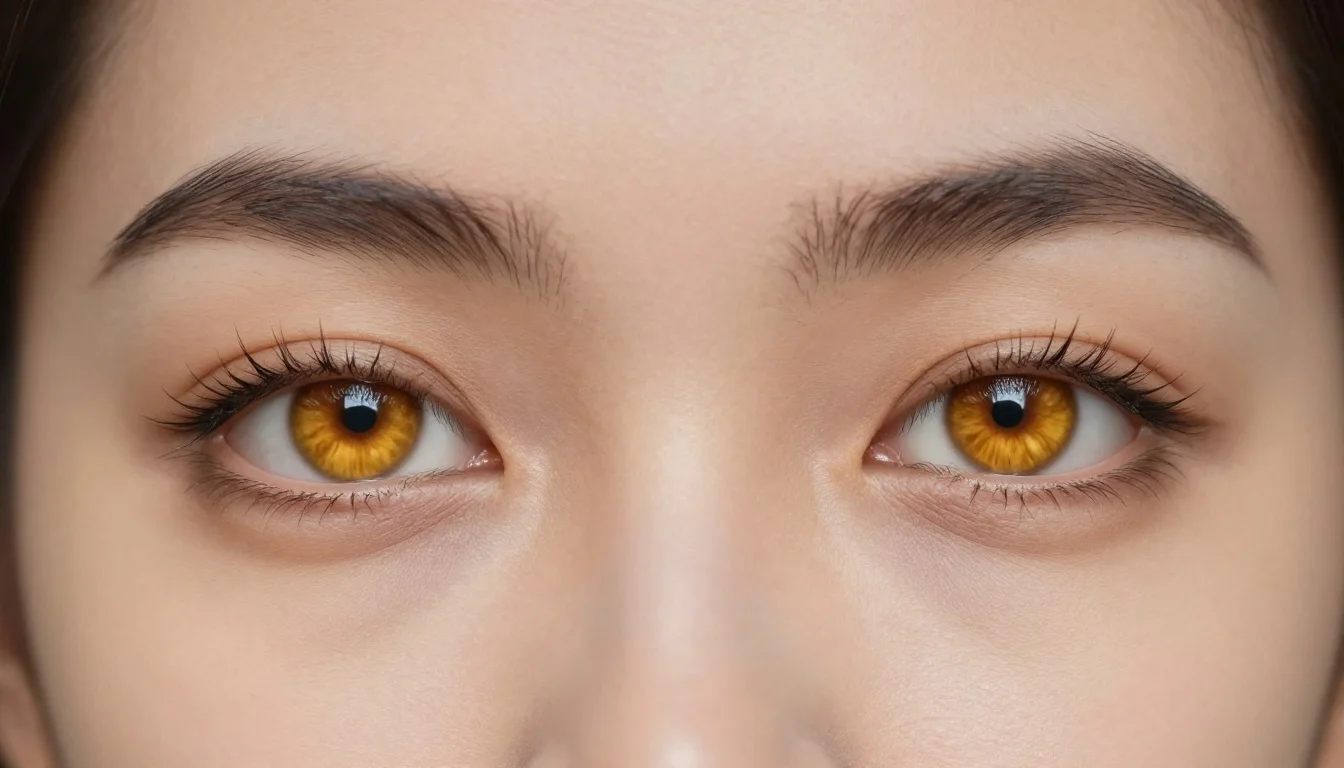
What is the best eyeshadow for amber eyes?
Deep plum and violet are the most effective eyeshadow shades for amber eyes. The warm golden-orange of amber sits opposite purple on the color wheel, and the complementary contrast between them makes amber eyes appear intensely warm and glowing. Deep forest green and warm copper are close alternatives — green through temperature contrast, copper through tonal resonance.
Your Best Eyeshadow Shades for Amber Eyes
Deep Plum and Violet: The Complementary Power Shade
Deep plum and violet are the most effective eyeshadow shades for amber eyes, bar none. The warm golden-orange of amber sits directly opposite purple on the color wheel, creating maximum complementary contrast. Deep plum in the crease and outer corner makes amber irises appear intensely warm and golden — the contrast creates an optical glow in the eye that simpler shadows cannot achieve. Warm aubergine (with red in it) is more flattering on warm-undertone skin than a purely cool blue-violet, which can feel harsh against amber eyes' warm setting.
Deep Forest Green: Cool Temperature Contrast
Deep forest green creates temperature contrast with amber eyes — the cool quality of green against the warm golden quality of amber highlights the warmth of the iris through opposition. This is a different mechanism from the purple complementary contrast, but equally effective. Deep hunter green in the crease makes amber eyes look warmer and more golden by comparison. The earthy richness of forest green also creates a natural, sophisticated harmony with the warm, earthy quality of amber.
Warm Copper and Bronze: Tonal Resonance
Copper and bronze resonate with the warm, metallic quality of amber eyes. The warmth of copper amplifies the golden register of amber irises, creating a luminous, lit-from-within effect. This strategy intensifies the warm quality of amber rather than contrasting against it. Burnished amber shadow — a metallic amber or golden-brown — is the most direct resonance option: it mirrors the iris tone while adding shimmer and depth. Rose gold bridges warm copper and the pink-toned shadows of the plum family for a versatile transition shade.
Warm Neutrals as Foundation Shades
Warm-biased neutral base shades set the foundation for contrast shades in the crease and outer corner. A warm champagne or light warm buff on the lid maintains the warm register that makes purple and green contrast shades most effective when layered above. Cool-toned bases — grey-nudes, silver, pink-cool nudes — introduce a temperature conflict that reduces the effectiveness of the warm contrast strategy. Keep the base warm, even if the crease is going bold.

Ready to see yourself in plum & aubergine?
Start my color analysisHow to Apply Eyeshadow to Make Amber Eyes Glow
The purple-contrast look
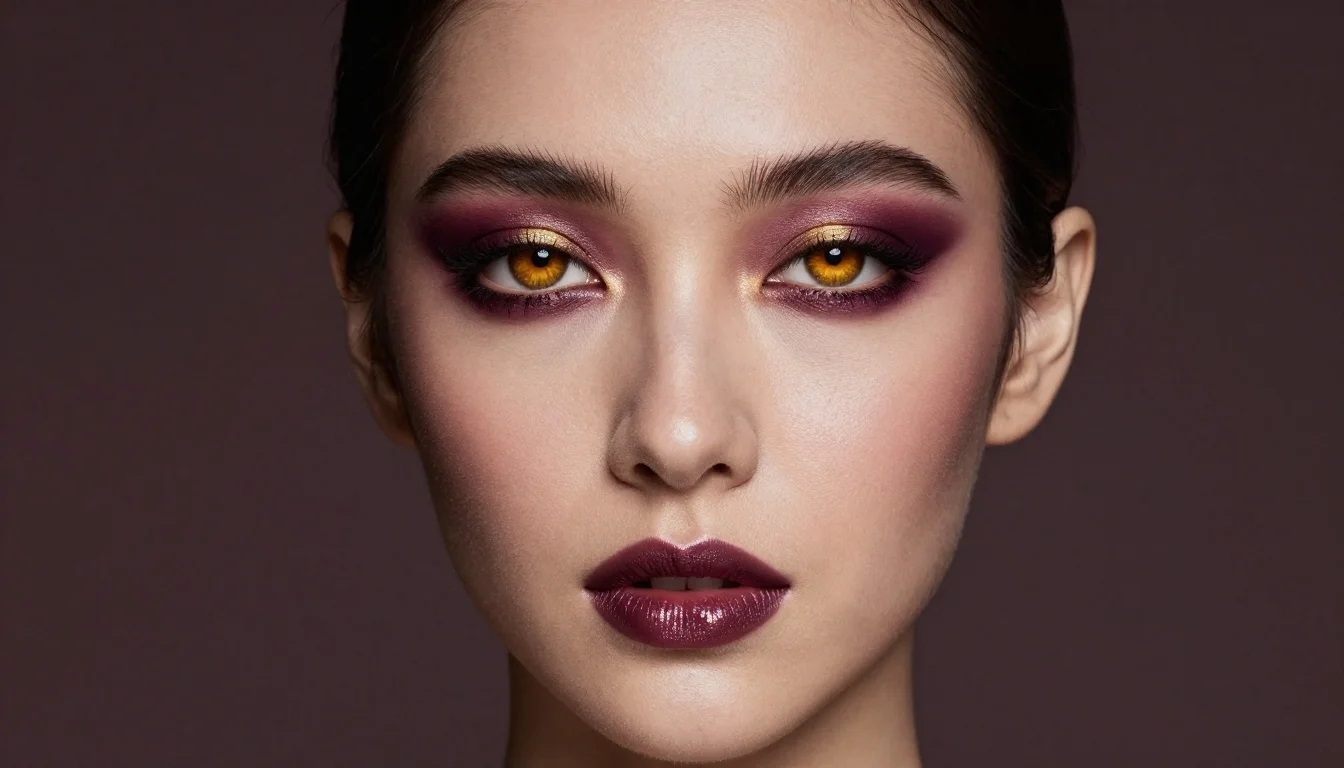
Apply a warm champagne base to the entire lid. Blend a warm mauve into the crease as a transition. Deepen with rich plum or aubergine at the outer corner and crease, blending well at the edges. Add a bright warm copper or rose gold shimmer to the center of the lid — the warm metallic on the lid against the plum in the crease creates a layered contrast effect. Apply plum or aubergine liner on the upper lash line and smudge a lighter plum on the lower lash line. The result: amber eyes look intensely warm and golden against the deep purple frame.
The forest green contrast look
Apply a warm buff or champagne base. Blend deep hunter green into the crease and outer corner — use a fluffy brush and keep the edges diffused. Add a metallic warm copper or bronze to the center of the lid to create warmth adjacent to the green and frame the amber iris between warm copper and cool green. This combination — warm copper lid against deep green crease — highlights the warm quality of amber from two directions: the copper resonates while the green contrasts.
The warm copper everyday look
For everyday wear, full copper resonance is sophisticated and quick. Apply a warm bronze base, add bright copper to the center of the lid, and blend a warm burgundy-brown into the crease for depth. Use warm brown liner. This look stays within the warm family and amplifies the luminous quality of amber eyes without the drama of purple or green. It photographs beautifully — the copper and amber create a warm, golden harmony that reads as natural but elevated.
Liner strategy for amber eyes
Deep plum liner on the upper lash line is the most effective liner choice for amber eyes — it extends the complementary contrast directly to the lash line. On the waterline, a warm copper or bronze kajal creates a warm frame directly adjacent to the amber iris, amplifying the golden quality. Avoid black liner alone if you want to maximize the color contrast effect — it adds definition but misses the chromatic opportunity that plum and copper liners provide.
Eyeshadow Shades That Work Against Amber Eyes
Yellow and orange-based shadows
Yellow-toned and orange shadows sit adjacent to amber on the color wheel — they are too harmonious with the iris rather than contrasting it. The result is that yellow-gold or orange shadow blends visually with the amber iris rather than framing it. Flat yellow or orange shadows make amber eyes look muddy and undefined. Warm gold with depth and metallics are different — the brightness and depth create contrast even within the warm family — but flat yellow and orange lack this.
Cool grey and silver as primary shades
Cool grey and silver are inert against amber eyes. They add no warmth to amplify and no complementary contrast to create vividness. The effect on amber eyes is flat definition through darkness or brightness alone. Amber eyes reward chromatic engagement — either through complementary contrast (purple, green) or warm resonance (copper, bronze). Cool grey and silver provide neither.
Very cool blue-violet without warm undertones
While purple is the power shade for amber eyes, very cool blue-violet — the kind with a strong blue base rather than a red-plum base — can feel stark against the warmth of amber eyes and warm-toned skin common in amber-eyed people. The warm undertones in amber eyes respond better to purple with warmth in it — rich plum, warm grape, red-violet — rather than pure blue-purple. Choose aubergine and warm plum over cool lavender or pure violet.
Stop guessing — preview every shade on you
See myself in my shadesEyeshadow Swaps for Amber Eyes
Replacing neutrals and inert shades with contrast and resonance shades that make amber glow.
Medium brown and warm taupe define amber eyes through darkness alone without engaging the iris chromatically. Deep plum creates complementary contrast; forest green creates temperature contrast; both make amber eyes look more vivid.
Cool metallics are temperature-neutral on amber eyes. Warm copper and burnished amber resonate with the golden quality of the iris and create a luminous, warm glow effect.
Pure white shimmer is cool-toned and introduces a conflicting temperature note against the warmth of amber eyes. Warm champagne brightens the inner corner while maintaining the warm register.
Black liner is effective but neutral. Deep plum liner extends the complementary contrast to the lash line, making amber eyes appear more vivid. Warm copper liner resonates with the iris warmth.
Grey smoky eyes on amber irises add darkness without chromatic engagement. A plum-burgundy or forest green-bronze smoky eye creates the same definition with contrast that makes amber eyes glow.
Cool-toned neutrals are temperature-inert against warm amber eyes. Warm-biased bases maintain the warm context that makes copper and plum contrast shades most effective.
Which Seasonal Palette Often Has Amber Eyes?
Amber eyes are closely associated with warm Autumn seasonal types, where the golden-brown iris harmonizes with warm, earthy skin undertones and overall richly warm coloring.
Warm Autumn
Learn moreWarm Autumn commonly features warm amber or golden-brown eyes with distinctly warm skin undertones. The full amber-eye strategy applies with maximum effectiveness: rich plum in the crease (with warm undertones rather than cool violet), deep forest green, and full copper on the lid. Warm Autumn's deep, richly warm coloring can support all three contrast strategies at their most saturated.
True Autumn
Learn moreTrue Autumn may have warm hazel-amber or golden-brown eyes with warm undertones and medium-to-rich overall coloring. Deep plum, forest green, and copper all apply. The distinction from Warm Autumn is subtle — True Autumn may prefer plum with slightly more warmth in it (richer grape or aubergine rather than cool violet) to harmonize with warm undertones.
Find Your Exact Amber Eye Strategy
Amber eye color is the starting point — your full seasonal palette determines which specific shades of plum, green, and copper most flatter your particular amber iris and skin undertone. A personalized color analysis identifies your season and provides specific eyeshadow shade directions tailored to your amber eyes and overall coloring.

Related Guides for Eyeshadow for Amber Eyes
Explore more personalized color advice based on your features.
Want to see these colors on you? What Colors Look Good on Me — free to try.
Frequently Asked Questions About Eyeshadow for Amber Eyes
What is the best eyeshadow for amber eyes?
Deep plum and violet are the most effective eyeshadow shades for amber eyes. The warm golden-orange of amber sits opposite purple on the color wheel, and the complementary contrast between them makes amber eyes appear intensely warm and glowing. Deep forest green and warm copper are close alternatives — green through temperature contrast, copper through tonal resonance.
Why does purple eyeshadow look so good on amber eyes?
Amber sits in the warm golden-orange zone on the color wheel. Purple is the complementary opposite of orange-gold — the two colors intensify each other when placed adjacently. When deep plum shadow is near an amber iris, the complementary contrast creates an optical effect where amber looks warmer and more golden, and the plum appears richer. Amber eyes are highly saturated, which maximizes this complementary contrast effect.
What is the difference between amber eyes and brown eyes for makeup?
Amber eyes have high saturation in the golden-orange range with relatively little grey or brown content, making them distinctly warm and luminous. Very dark brown eyes are deeply pigmented with lower visible saturation. This difference changes the eyeshadow strategy: amber eyes need complementary contrast (purple) or resonance (copper) to glow; dark brown eyes need brightness (gold, jewel tones) and contrast to stand out against their deep pigmentation.
Can amber eyes wear green eyeshadow?
Yes — deep forest green is highly effective on amber eyes through temperature contrast. The cool quality of green creates opposition with the warm quality of amber that highlights the warmth of the iris. Use deep, muted hunter green rather than bright or vivid greens. Pair forest green in the crease with warm copper on the lid for a layered contrast that engages both contrast and resonance simultaneously.
How do I make amber eyes look more vivid?
The most dramatic way to intensify amber eyes is deep plum or aubergine in the crease and outer corner — the complementary contrast with amber's golden-orange quality creates a glow in the iris that reads as vivid and luminous. Adding a bright warm copper shimmer to the center of the lid amplifies this effect by creating a warm metallic center against the deep purple frame. Plum liner along the lash line completes the contrast system.