Build a Wardrobe That Works WithYour Cool Undertones
Build a capsule wardrobe for cool undertones. Discover how to build looks with shades that actually flatter you.
If your veins look blue-purple at the wrist and silver jewelry always looks more natural than gold, you have cool undertones — a pink, blue, or rosy cast beneath the surface of your skin. Most people with cool undertones have learned a few color rules, but knowing which individual shades flatter is different from knowing how to build a wardrobe around them. This guide gives you the capsule logic: which neutrals to anchor with, which statement colors to invest in, and precisely which warm-toned pieces to stop buying.


3,000+
happy clients
Why Undertone Changes What Belongs in Your Wardrobe
If your veins look blue-purple at the wrist and silver jewelry always looks more natural than gold, you have cool undertones — a pink, blue, or rosy cast beneath the surface of your skin. Most people with cool undertones have learned a few color rules, but knowing which individual shades flatter is different from knowing how to build a wardrobe around them. This guide gives you the capsule logic: which neutrals to anchor with, which statement colors to invest in, and precisely which warm-toned pieces to stop buying.
Your undertone isn't about your surface skin color — it's about the temperature of the cast beneath it. Cool undertones have a pink, blue, or rosy quality that stays fixed regardless of tan, season, or age. This temperature is what makes certain colors instantly harmonious and others subtly off. When a color shares your undertone's temperature — blue-based, rosy, or cool — the match creates what stylists call harmony: your skin looks clear, rested, and bright. When you wear something warm-toned, the temperature mismatch creates a subtle clash that can read as ruddy, grey, or simply dull.
The wardrobe implication is specific. Camel and warm beige — colors many people treat as universal neutrals — have a yellow-orange base that fights cool undertones. Ivory has the same problem. Mustard, terracotta, rust, and warm coral all sit on the warm side of the color wheel, meaning they create contrast rather than harmony against cool skin. None of these are impossible to wear, but they require more distance from your face and more awareness of placement. Meanwhile, the cool-toned equivalents — navy, crisp white, slate, charcoal, soft lavender, powder blue, sapphire — all create the harmony that makes cool-toned skin look like the best version of itself.
The practical capsule wardrobe strategy for cool undertones has four layers: cool neutral anchors that form your foundation, soft cool tones that are uniquely flattering on cool skin, cool jewel tones for high-impact pieces, and cool darks for layering and depth. Each layer has a clear role, and together they build a wardrobe where everything works together because everything shares your skin's temperature.

What are the best neutrals for a cool-undertone wardrobe?
The strongest neutrals for cool undertones are crisp white, navy, soft grey, and charcoal. These replace the warm-toned 'universals' — camel, warm beige, ivory — that are commonly recommended but actually clash with cool undertones. Navy functions as the cool person's camel: it anchors outfits, works across all formality levels, and harmonizes completely with cool-toned skin. Crisp white is your most luminous neutral. Soft grey and charcoal round out a versatile, temperature-consistent neutral base.
Your Core Wardrobe Colors
Cool Neutral Anchors
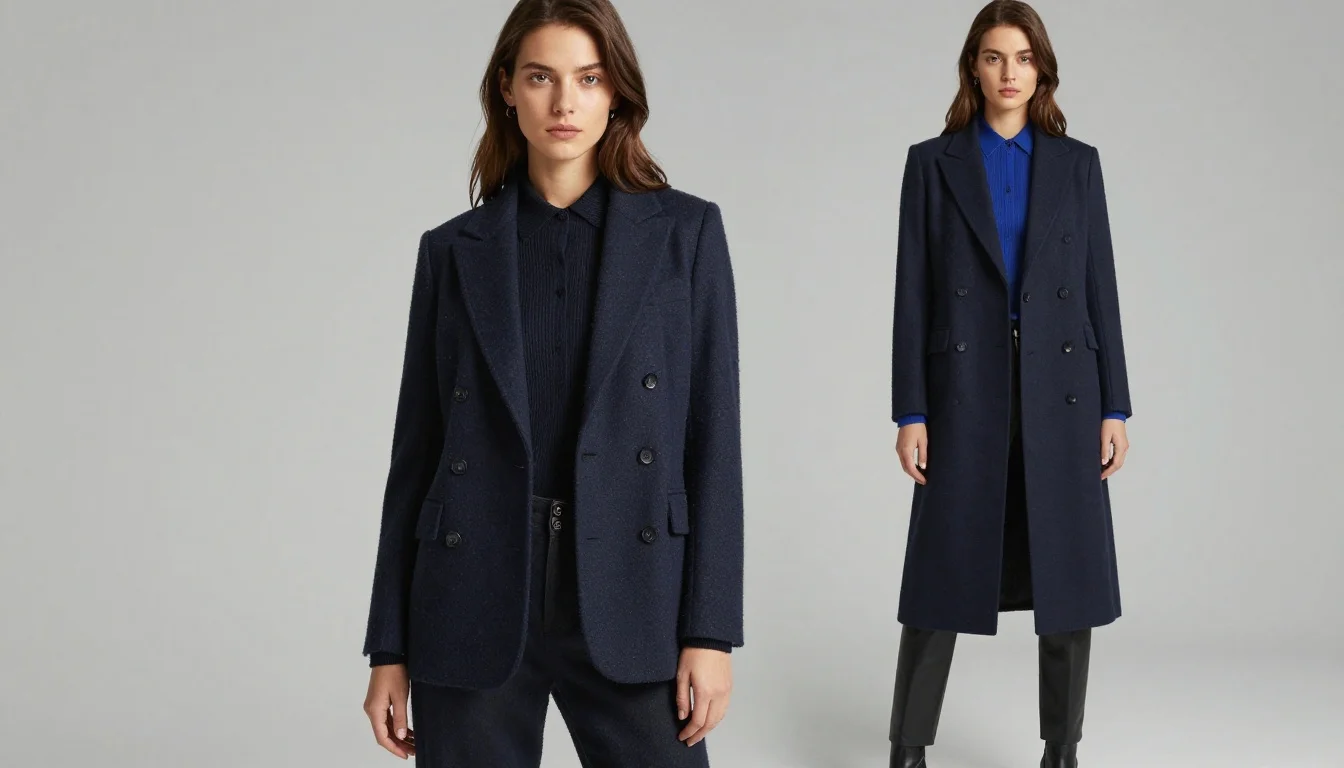
These are the foundation of your capsule wardrobe — the pieces you build everything else around. Navy is the cool person's camel: a warm-neutral substitute that actually works. A navy trench coat, navy trousers, navy blazer — all of these anchor outfits the way camel does for warm undertones, but without the temperature clash. Crisp white (the bright, daylight-white variety, not warm ivory) makes cool-toned skin look clear and luminous. Soft grey pairs with almost everything in your palette without adding warmth. Charcoal reads slightly cooler than true black and layers beautifully. Build your everyday wardrobe here: white and grey shirts, navy and charcoal trousers, grey and navy coats.
Soft Cool Tones
These are the shades that look uniquely luminous on cool undertones — and washed out or clashing on warm ones. Blush pink has a cool, rosy quality that mirrors the undertone in cool skin and creates a glowing, flushed-with-health look. Soft lavender picks up the rosy-blue quality beneath cool skin and makes it intentional. Powder blue and ice grey are quieter, softer versions of cool colors that work well in knits, blouses, and layering pieces. These tones are your differentiator — the shades that feel effortlessly right on you and often puzzling on warm-toned skin. A powder blue cashmere crewneck, a soft lavender blouse, a blush-pink linen shirt: these are high-value additions to a cool-undertone wardrobe.
Cool Jewel Tones
Jewel tones are your high-impact category. Sapphire — a deep, vivid blue — makes cool-toned skin look bright and vivid rather than flat. Against fair cool skin it reads dramatic; against deeper cool skin it reads rich and powerful. Amethyst's purple quality picks up the rosy cast beneath cool undertones and amplifies it in the most flattering way. True emerald sits in cool-green territory (blue-green rather than yellow-green), making it far more harmonious than warm olive or moss. Rose red — the cooler version of red, without orange warmth — reads as a statement color that harmonizes with rather than fighting cool skin. Invest in one or two jewel-tone statement pieces: a sapphire blouse, an amethyst blazer, a rose-red dress.
Cool Darks
Your dark neutral layer extends beyond black into territory that specifically flatters cool undertones. Deep navy is richer and more dimensional than black on cool-toned skin — a deep navy coat or trousers makes cool skin look vivid. Dark plum sits in the purple-berry family that mirrors cool undertones and creates sophisticated, high-contrast looks without fighting your complexion. Cool forest green — the blue-green variety, not warm olive — gives you a moody dark green option that harmonizes rather than clashes. These darks layer under your jewel tones and cool neutrals, and they work as outerwear anchors that make every outfit feel intentional.

Ready to see navy & white on your face?
Start my color analysisHow to Build Outfits for Cool Undertones
The anchor-and-accent formula
The most reliable outfit formula for cool undertones is a cool neutral anchor plus a cool accent. Navy trousers or charcoal trousers are your anchor — they're the foundation that everything else rests on. Your accent is where your jewel tones or soft cool tones come in: a sapphire silk blouse, a powder blue cashmere sweater, a soft lavender blouse. The anchor is always a cool neutral; the accent is always from your cool-tone families. Add silver or white gold jewelry and you have an outfit that looks completely put-together because everything shares the same temperature. Try: navy wide-leg trousers + crisp white fitted tee + sapphire blazer + silver chain necklace.
The soft cool monochrome look
Cool undertones are uniquely suited to soft, cool monochromatic dressing — a look that falls flat on warm-toned skin but glows on yours. A full-length look in powder blue, soft grey, or blush pink works because your skin's temperature reinforces the palette rather than fighting it. Try: powder blue wide-leg trousers + ice grey silk blouse + silver sandals. Or: blush pink midi dress + soft grey knit cardigan + white sneakers. The key is keeping every piece in a cool register — no warm tan accessories or gold jewelry to break the temperature unity.
Building outfits around a jewel-tone statement
Jewel tones are your power move — a sapphire blazer or amethyst blouse does more for cool-toned skin than any warm color can. The rest of the outfit should be cool neutrals that let the jewel tone lead. Try: sapphire silk blouse + charcoal tailored trousers + white pointed-toe flats + silver earrings. Or: deep plum midi skirt + crisp white fitted tee + black ankle boots. The jewel tone anchors the whole look; the neutrals support it. Avoid mixing warm accessories into a jewel-tone outfit — a camel bag or gold jewelry will shift the temperature and break the harmony.
Layering cool darks in winter
In colder months, cool-undertone wardrobes shine through layered darks. Deep navy, charcoal, dark plum, and cool forest green all layer beautifully together because they share the same cool temperature. Try: charcoal wool trousers + deep navy cashmere sweater + dark plum long coat + black leather ankle boots + silver watch. Or: cool forest green turtleneck + charcoal straight-leg jeans + navy puffer vest. These combinations look rich and intentional because the temperatures reinforce rather than fight each other. Avoid mixing warm-toned outerwear — a camel coat over this palette breaks the harmony immediately.
Turn cool undertones into a full wardrobe
Cool undertone is the start, not the whole answer. Use personal color analysis to see whether your best wardrobe is Summer-soft, Winter-clear, or somewhere between.
Warm Colors That Work Against Cool Undertones
Camel and warm beige
Camel and warm beige have a yellow-orange base that sits at the opposite end of the temperature scale from cool undertones. These 'universally neutral' colors actually create a subtle clash with cool skin — making it look flat or slightly grey. The cool-undertone equivalent is navy, slate, or cool taupe. If you've been building your wardrobe on camel as a neutral, this is the single biggest swap that will transform how your clothes look on you.
Mustard and golden yellow
Warm golden yellow amplifies warmth that cool undertones don't have. Against cool skin, mustard and golden yellow can make your complexion look sallow or create an unintentional greenish quality. If you want yellow in your wardrobe, cool lemon yellow or chartreuse works far better — they're bright rather than warm. But even those are best placed away from the face.
Terracotta, rust, and burnt orange
Orange-family tones sit at the extreme warm end of the spectrum, making them the most challenging for cool undertones. Terracotta, rust, and burnt orange near the face can make cool skin look flushed or create an off-quality that's hard to identify but easy to feel. If you love warm earthy tones, use them in accessories (a terracotta bag, rust boots) rather than tops and blouses closest to your face.
Warm coral
Coral appears pink but has an orange base that fights cool undertones. The result on cool skin often reads as slightly clashing — the skin looks redder or less clear. The fix is simple: choose raspberry or true rose instead. They give you the same vibrant pink-adjacent energy in a cool-toned register that harmonizes with rather than clashes against your complexion.
Stop guessing — preview every look on you
See these looks on my photoYour Wardrobe, Upgraded
Temperature-matching swaps that replace warm-toned pieces with cool equivalents your undertone will thank you for.
Ivory has yellow warmth that clashes with cool undertones. Crisp white shares your skin's cool temperature and makes your complexion look clear rather than off.
Camel's yellow-orange warmth fights cool undertones at the most visible moment — your outerwear. Navy creates the same anchor function in a cool temperature that harmonizes completely.
Warm blazers near your face show the temperature conflict most clearly. Cool-neutral blazers let your skin look clear and professional rather than fighting the warmth in the fabric.
Coral and warm red-orange create temperature conflict with cool undertones. Raspberry and rose red give you the same vibrant energy in a cool pink-red register that harmonizes instead.
Warm-toned knits close to the face amplify the temperature mismatch. Soft cool-toned knits do the opposite — they borrow your skin's temperature and make everything look intentional.
Warm brown and olive have yellow-green warmth that sits opposite cool undertones. Charcoal, navy, and plum are all cool-toned alternatives that layer seamlessly with everything else in your palette.
Gold's warm yellow tone creates a subtle temperature conflict against cool skin. Silver shares your cool temperature and looks clean, bright, and completely natural on cool-toned skin.
Which Seasonal Palette Aligns with Your Cool Undertones?
Cool undertones span the summer and winter seasonal families — your depth and contrast level determine exactly which season is yours. Each season within the cool spectrum has slightly different wardrobe priorities.
Cool Summer
Learn moreCool Summer pairs cool undertones with low-to-medium depth and soft, muted coloring. If your hair and eyes are lighter and your overall look is gentle rather than high-contrast, Cool Summer is likely your season. Your wardrobe leans into the softer end of the cool palette: dusty rose, soft lavender, slate blue, cool taupe, muted berry. Saturated jewel tones can overpower your coloring — your version of navy is softer, your version of rose is dustier.
Light Summer
Learn moreLight Summer is the lightest expression of cool undertones — fair, delicate coloring where soft cool tones and icy pastels lead the wardrobe. If you have very light hair, fair cool skin, and low overall contrast, Light Summer orients your wardrobe toward the palest end of the cool spectrum: powder blue, ice lavender, soft blush, light grey. Your palette avoids both heavy darks and saturated jewels.
Cool Winter
Learn moreCool Winter pairs cool undertones with high contrast and vivid, clear coloring — darker hair against fairer or deeper cool skin, or striking eye color. Your wardrobe can handle the most saturated, clear cool colors: icy white, cobalt, fuchsia, true black, sapphire. The jewel-tone strategy works at full strength here. High contrast is your ally — a white shirt under a sapphire blazer, black trousers with a fuchsia blouse.
Bright Winter
Learn moreBright Winter has cool undertones with exceptional clarity and vibrancy in the coloring — vivid eyes, very clear skin, strong contrast. Your wardrobe should match that clarity: bright, clear, saturated cool colors rather than muted or dusty ones. The brightest jewel tones suit you best, and your cool neutrals lean toward stark white rather than soft grey. Every piece should be crisp and vivid.
Know Exactly Which Shades Are Yours
Building a wardrobe around cool undertones gives you a powerful foundation — but cool undertones span a wide range from soft summer palettes to vivid winter ones. Your depth, contrast level, and specific undertone shade all shape which exact shades within the cool spectrum are most flattering for you. A personalized color analysis identifies your precise seasonal type so you know not just which temperature to dress in, but exactly which shades, saturations, and value levels within that temperature were built for your specific coloring.
Stop guessing — preview every color on you
Preview Yourself In Your Palette
Get my personalized paletteStop guessing — preview every color on you
Preview Yourself In Your Palette

Related Guides for Wardrobe for Cool Undertones
Explore more personalized color advice based on your features.
Want to see these colors on you? Skin Undertone Test — free to try.
Frequently Asked Questions About Wardrobe for Cool Undertones
What are the best neutrals for a cool-undertone wardrobe?
The strongest neutrals for cool undertones are crisp white, navy, soft grey, and charcoal. These replace the warm-toned 'universals' — camel, warm beige, ivory — that are commonly recommended but actually clash with cool undertones. Navy functions as the cool person's camel: it anchors outfits, works across all formality levels, and harmonizes completely with cool-toned skin. Crisp white is your most luminous neutral. Soft grey and charcoal round out a versatile, temperature-consistent neutral base.
Should cool undertones avoid warm colors entirely?
Not entirely — placement matters more than avoidance. The closer a color is to your face, the more your undertone affects how it reads. A warm-toned bag, shoes, or belt causes less conflict than a warm-toned top or blouse directly next to your face. If you love camel or terracotta, use them as accessories or in bottoms paired with a cool-toned top. The goal is keeping the warm tones at a distance from your face where the temperature mismatch is most visible.
What colors should cool undertones wear to look their best?
Cool jewel tones — sapphire, amethyst, rose red, true emerald — are the most flattering high-impact colors for cool undertones. Soft cool tones like powder blue, soft lavender, and blush pink are uniquely luminous on cool skin. For neutrals, navy, crisp white, soft grey, and charcoal form the strongest foundation. All of these share the cool temperature of your undertone, creating harmony that makes your skin look clear and radiant.
Why does camel look off on cool undertones?
Camel has a yellow-orange base, placing it firmly on the warm side of the color temperature scale. Cool undertones have a pink or blue-based quality — the opposite temperature. When these two temperatures meet, they create a clash rather than harmony: your skin can look flat, grey-tinged, or slightly off without being able to identify exactly why. The fix is swapping camel for its cool-toned equivalent — navy, slate, or cool taupe — which share your undertone's temperature and create immediate harmony.
What jewelry metal works best for cool undertones?
Silver, white gold, and platinum are the most flattering metals for cool undertones. They share the cool temperature of your skin and look clean, bright, and naturally harmonious. Gold's warm yellow tone creates a subtle temperature conflict against cool skin — it doesn't always look wrong, but silver consistently looks more intentional and more flattering. Rose gold sits between warm and cool and can work on cool skin, particularly if you have some pink warmth in your undertone.
How do I know which cool-undertone season I am?
Your seasonal type within the cool spectrum depends on your depth and contrast level. If you have light, muted, soft coloring, you're likely Cool Summer or Light Summer — your wardrobe leans toward dusty, muted cool tones rather than vivid jewels. If you have higher contrast — darker hair, vivid eye color, or deeper skin — you're likely Cool Winter or Bright Winter, and your wardrobe handles full-saturation jewel tones and stark contrast. A personalized color analysis maps your exact season so you know precisely where in the cool spectrum your best colors sit.