The Right Shade of Greenfor Cool Undertones
Cool undertones need the right green — warm olive and khaki clash, but jade, emerald. Discover how to find the colors that actually flatter your coloring.
You already know you want to wear green — the question is which green. For cool undertones, this distinction matters enormously. Warm greens like olive, khaki, and yellow-green create a sallow, discordant look against pink-cool skin. Cool greens — jade, emerald, forest, teal — harmonise perfectly, making your skin look fresh and clear. The difference between the right green and the wrong green is often just a shift in temperature, not a complete change of direction.


3,000+
happy clients
Why Green Undertone Matters More Than Depth
You already know you want to wear green — the question is which green. For cool undertones, this distinction matters enormously. Warm greens like olive, khaki, and yellow-green create a sallow, discordant look against pink-cool skin. Cool greens — jade, emerald, forest, teal — harmonise perfectly, making your skin look fresh and clear. The difference between the right green and the wrong green is often just a shift in temperature, not a complete change of direction.
Green is one of the most undertone-sensitive colour families. Every shade of green has its own undertone — some pull warm (olive, khaki, mustard-green, yellow-green, warm sage), others pull cool (jade, emerald, forest, cool teal, blue-green). When a green's undertone clashes with your skin's undertone, the result is noticeable: skin can look sallow, yellow-tinged, or unwell.
Cool undertones — the pink, blue-pink, or neutral-cool quality in your skin — harmonise naturally with greens that share that same coolness. Jade and emerald are both essentially blue-greens: their coolness reads as complementary rather than discordant next to cool-undertoned skin. Forest green is deep and slightly neutral, avoiding the yellow pull of olive while providing richness. Cool teal adds blue to the mix, which amplifies the clear, fresh quality of cool skin.
The mistake most people with cool undertones make with green is reaching for the most 'wearable'-looking option — often a muted sage or khaki — without realising those are warm-leaning. The greens that actually work best for cool undertones tend to be more vivid and jewel-toned than instinct suggests.

What shade of green is best for cool undertones?
Jade, emerald, and cool teal are the best greens for cool undertones. These shades share the same blue-cool quality as cool-undertoned skin, so they harmonise rather than clash. Forest green works well too. Avoid warm greens like olive, khaki, warm sage, and army green — these have yellow warmth that conflicts with cool skin.
The Green Shades That Work for Cool Undertones
Jade and Cool Jade Green
Jade is the single most reliable green for cool undertones. Its blue-green quality harmonises directly with cool skin without any warm-yellow interference. Clear jade has enough saturation to create visual presence without clashing. Soft jade with a grey-blue cast suits the more muted cool palettes (Cool Summer, Soft Summer). This is the green to reach for when you want to wear green but aren't sure where to start.
Emerald and Deep Cool Green
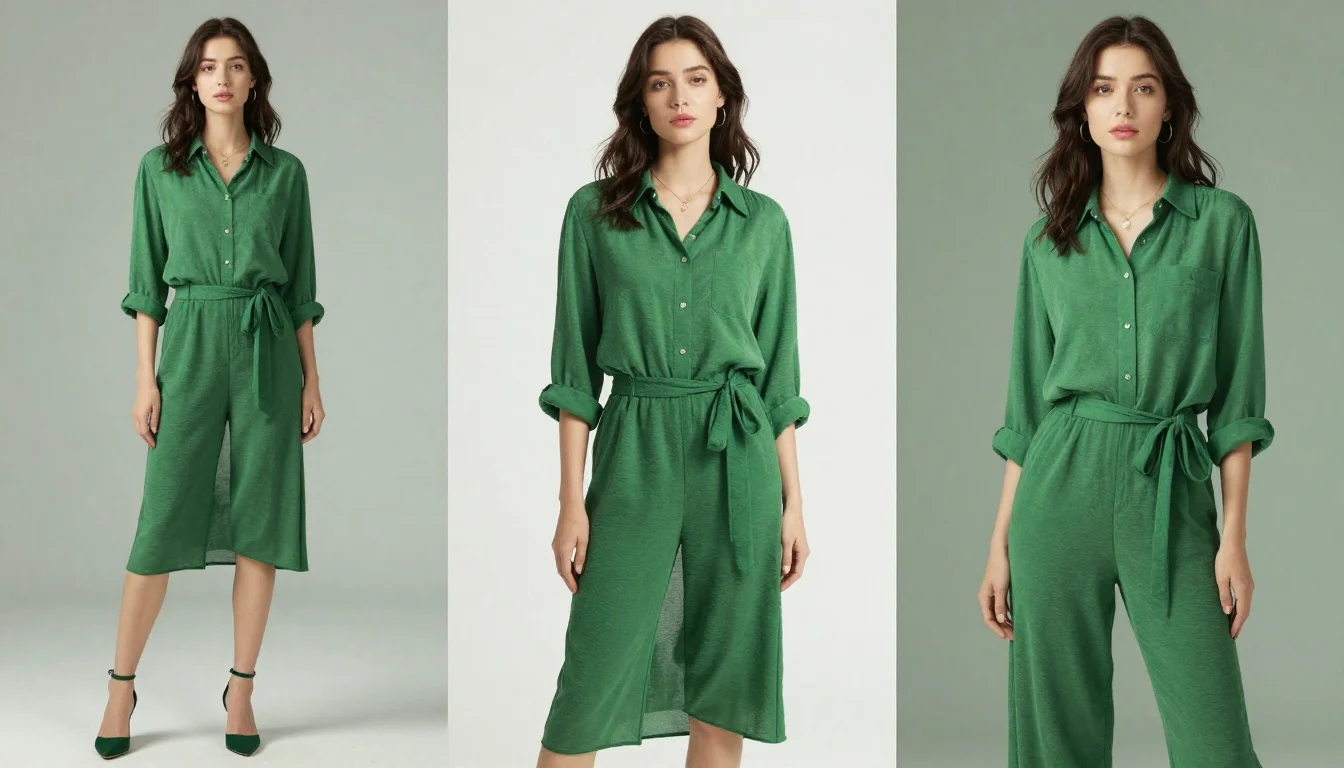
Emerald is green at its most vivid and blue-leaning — it has no yellow warmth. True emerald reads brilliantly against cool skin because the coolness of both the colour and the skin amplify each other rather than conflicting. Deep emerald and rich forest green provide the same cool-green quality with more depth. These are your power colours: evening events, impactful professional moments, occasions where you want to look striking.
Cool Teal and Blue-Green
Teal adds blue to the green equation — and blue is definitionally cool. Cool teal and blue-green shades are particularly flattering for cool undertones because the blue dimension reinforces the coolness of your skin rather than creating any warmth conflict. Peacock teal and deep teal have jewel-tone richness. Slate teal is cooler and more muted, working well for everyday wear on cool-muted palettes.
Muted Cool Sage and Cool Fern
Not all sage is warm. Cool sage — the version that pulls grey-blue rather than yellow-grey — works beautifully for cool undertones, especially Cool Summer and Soft Summer. Grey-sage and muted eucalyptus read as sophisticated and soft rather than earthy and warm. These are versatile everyday greens that feel calm and easy. The test: if a sage reads yellow or khaki-ish in natural light, it's warm. If it reads grey-blue-green, it's cool.

Ready to see clear jade & jade on your face?
Start my color analysisHow to Wear Green with Cool Undertones
Your most wearable everyday green
Cool jade or cool sage as a top near your face is your most effortless green option. A jade linen shirt, a grey-sage fine knit, or a cool teal blouse requires almost no thought — the cool-green temperature harmonises with your skin and makes you look fresh and clear. These shades photograph well and work across professional and casual contexts without needing to be 'styled'.
Your power green
Emerald is your power colour in green. A deep emerald blazer, a vivid green dress, a rich emerald satin blouse — all of these create maximum impact against cool-undertoned skin because the colour's coolness and your skin's coolness amplify each other. This is the green for important evenings, interviews, occasions where you want to look memorable. It doesn't need accessories to work.
Mixing greens with your wardrobe
Cool greens pair naturally with your wardrobe's cool neutrals. Jade and navy is a classic combination. Emerald and grey is sophisticated and works across seasons. Cool teal with white reads fresh and clean. Cool sage with black creates understated elegance. Avoid pairing cool greens with warm browns (camel, tan) — the temperature conflict undermines both colours. Pair with charcoal, black, grey, or navy instead.
Seasonal green strategies
In spring and summer, lighter cool greens — pale jade, cool mint, dusty eucalyptus — give freshness without heaviness. In autumn and winter, deep emerald, forest green, and rich teal have the depth to work with heavier fabrics and layering. Avoid being pushed toward warm sage and khaki in autumn just because they're seasonally trendy — cool undertones need cool greens year-round.
Green Shades That Clash with Cool Undertones
Olive and khaki green
Olive is the warmest green — it's essentially yellow-brown-green. Against cool-undertoned skin, olive creates a sallow, yellowish cast that pulls the warmth out of skin tone in an unflattering way. The contrast between olive's warmth and cool skin's pink quality creates visual discord. This applies equally to deep olive, light olive, and olive-khaki blends.
Warm mustard-green and yellow-green
Any green with a distinct yellow pull — lime, yellow-green, mustard-green, bright chartreuse — clashes with cool undertones for the same reason as olive: the yellow warmth conflicts with the cool-pink quality of your skin. These greens can make cool-undertoned skin look wan and slightly jaundiced.
Warm sage and warm khaki-sage
The version of sage that's most commonly sold — warm sage with a yellow-green or khaki undertone — is a trap for cool undertones. It looks neutral on a hanger but warm against cool skin. The yellow-grey quality reads as sallow rather than sophisticated. Look for sages that pull grey-blue, not yellow-grey.
Warm army green and military green
Army green and military green are warm, yellow-brown greens that sit close to olive on the colour spectrum. They're definitionally warm and definitionally problematic for cool undertones. If you want a deep, understated green, forest green with a blue-cool quality is the alternative that works.
Stop guessing — preview every shade on you
See myself in my colorsGreen Swaps for Cool Undertones
Trading the warm greens that clash for the cool greens that work.
Olive creates a sallow cast against cool skin. Jade harmonises with pink-cool undertones and makes skin look clear and fresh.
Warm sage pulls yellow against cool skin. Cool sage with grey-blue undertone reads sophisticated and harmonious.
Army green is a warm yellow-green that clashes. Forest green and emerald are cool-leaning with depth — they look intentional and polished.
Yellow-green pulls warm against cool skin. Emerald is cool-green at its richest and most flattering for cool undertones.
Olive coats clash at the neckline with cool skin all season. Forest green and teal are the cool-green alternatives with the same versatility and depth.
Even in accessories, cool greens harmonise better. A jade scarf near your face creates freshness; a khaki scarf creates a warm-cool conflict that dulls your skin's natural clarity.
Which Cool Season Are You?
Cool undertones span several seasonal palettes. The depth and clarity of your green will differ depending on which cool season fits your specific colouring — your hair depth, eye colour, and contrast level all play a role.
Cool Summer
Learn moreIf your cool undertones are soft and medium-depth — soft pink skin, medium hair, eyes that are gentle blue, grey, or soft green — Cool Summer is likely your season. Your greens are muted and soft: cool sage, dusty teal, muted jade. Vivid emerald may be too intense; look for greens with a slightly grayed quality.
Cool Winter
Learn moreIf your cool undertones are crisp and high-contrast — very fair or deep skin, dark or very light hair, vivid eyes — Cool Winter is your season. You can wear emerald and vivid teal at full intensity. Your greens are clear, vivid, and jewel-toned. The more saturated the cool green, the better it works.
Soft Summer
Learn moreIf your colouring is soft, low-contrast, and cool-muted — soft ash hair, gentle eyes, fair skin with a cool neutral quality — Soft Summer greens are the most muted of all. Cool sage, grey-eucalyptus, and dusty teal. Very vivid greens will overpower; stay in the soft, blended range.
Find Your Exact Green
The right green shade for cool undertones depends on more than just whether you're 'cool' — your specific palette depth, contrast level, and seasonal family determine whether you suit vivid emerald, soft jade, or muted teal. A personalised colour analysis identifies exactly which greens belong in your wardrobe and which to leave on the rail.
Stop guessing — preview every color on you
Preview Yourself In Your Palette
Get my personalized paletteStop guessing — preview every color on you
Preview Yourself In Your Palette

Related Guides for Best Shade of Green for Cool Undertones
Explore more personalized color advice based on your features.
Want to see these colors on you? Skin Undertone Test — free to try.
Frequently Asked Questions About Best Shade of Green for Cool Undertones
What shade of green is best for cool undertones?
Jade, emerald, and cool teal are the best greens for cool undertones. These shades share the same blue-cool quality as cool-undertoned skin, so they harmonise rather than clash. Forest green works well too. Avoid warm greens like olive, khaki, warm sage, and army green — these have yellow warmth that conflicts with cool skin.
Can cool undertones wear olive green?
Olive is one of the most problematic greens for cool undertones — it's essentially a warm, yellow-green-brown that creates a sallow, discordant effect against pink-cool skin. If you want a darker, more understated green, deep forest green or dark teal gives you that earthy richness without the warm-cool clash.
Is sage green good for cool undertones?
It depends on the specific sage. Cool sage — the version with a grey-blue undertone rather than a yellow-grey one — works well for cool undertones, particularly for Cool Summer and Soft Summer. Warm sage, which reads khaki-ish or yellow-grey, clashes. The test is whether the sage reads blue-grey-green or yellow-grey-green in natural light.
What is the difference between emerald and jade for cool undertones?
Emerald is vivid, saturated, and brilliant — it's green at high intensity with cool blue undertones. Jade is softer, slightly more muted, and has a blue-green quality that's more understated. Both work for cool undertones; emerald is better for high-contrast cool palettes (Cool Winter), jade is better for medium or muted cool palettes (Cool Summer, Soft Summer).
Does cool undertone mean I can wear all cool greens?
Yes — any green with a blue or grey-cool undertone will work. The depth and saturation of the green should match your seasonal palette: vivid and saturated for Cool Winter, softer and muted for Cool Summer and Soft Summer. But the temperature — cool — stays consistent regardless of depth.