Your First Cool WinterWardrobe
Cool Winter coloring is the most dramatic and high-contrast of all the seasonal types. Discover how to build looks with shades that actually flatter you.
Cool Winter coloring is the most dramatic and high-contrast of all the seasonal types — cool undertones, striking features, and the ability to carry colors that would overwhelm anyone else. Building a starter wardrobe for Cool Winter means embracing that intensity rather than softening it. Twelve to fifteen pieces in your most flattering cool, saturated, and high-contrast shades will create a wardrobe with real visual power. This guide starts with what actually works — not the generic neutrals that are recommended for everyone else but actively undermine Cool Winter coloring.


3,000+
happy clients
Why Cool Winter Dresses Differently
Cool Winter coloring is the most dramatic and high-contrast of all the seasonal types — cool undertones, striking features, and the ability to carry colors that would overwhelm anyone else. Building a starter wardrobe for Cool Winter means embracing that intensity rather than softening it. Twelve to fifteen pieces in your most flattering cool, saturated, and high-contrast shades will create a wardrobe with real visual power. This guide starts with what actually works — not the generic neutrals that are recommended for everyone else but actively undermine Cool Winter coloring.
Cool Winter coloring is defined by its coolness and contrast — distinctly cool or blue-pink undertones in the skin; dark hair in cool brown, cool black, or very dark with no warmth; and eyes that are often distinctly cool (icy blue, clear grey, deep cool brown). This combination has more natural contrast than any other seasonal type. The right colors lean into that contrast — cool, vivid, and clear.
The key insight for Cool Winter: you are not constrained the way other seasons are. Cool Winters are often the only seasonal type that can wear true black, true white, and fully saturated cool jewel tones all at once and make each look intentional. What you cannot wear well are warm, muted, or earthy tones — they create the visual equivalent of static, fighting against your cool, clear coloring.
A Cool Winter starter wardrobe is actually more straightforward to build than other seasons because the palette is cleaner and more limited: cool, vivid, and often high-contrast. Black and white are genuine neutrals for you. Deep cool jewel tones are your statement colors. Icy pastels are your softer alternative. Everything stays cool — no warm undertones need apply.

What are the best starter colors for Cool Winter?
Black, cool white, sapphire blue, and icy lavender are the most versatile Cool Winter starter colors. They cover your neutrals (black and white), your jewel-tone statement color (sapphire), and your light alternative (icy lavender) — all the palette foundations you need.
Your Cool Winter Foundation Colors
True Black
Black is Cool Winter's primary neutral — and unlike every other season, it genuinely is. Cool Winter skin has the cool undertone and natural contrast to make black look intentional rather than draining. A black blazer, black trouser, and black dress are all foundational Cool Winter pieces. This is the one season where standard style advice to 'invest in black basics' is actually correct.
True White and Icy White
True white is Cool Winter's secondary neutral — the most striking light color in your palette. Where other seasons need warm ivory or cream, Cool Winter genuinely suits crisp, cool white. A white shirt against Cool Winter's dark hair and cool skin creates a sharp, luminous contrast that looks polished and striking rather than stark. Keep whites cool and bright, not warm or cream.
Deep Cool Jewel Tones
Deep cool jewel tones are Cool Winter's power colors — the shades that fully express the palette's capacity for vividness and depth. Sapphire blue, clear emerald, and deep magenta create a striking effect next to Cool Winter's dark coloring. Choose one jewel tone as your signature color for work and occasions — it will be consistently more impactful than anything else in your palette.
Icy Pastels
Icy pastels — very light, cool versions of each color — are Cool Winter's softer option for occasions when vivid jewel tones feel too much. The defining feature is that they must be genuinely cool and clear, not warm or chalky. Ice blue and icy lavender are particularly flattering: they pick up the cool undertone of Cool Winter skin and create a luminous, almost ethereal effect.

Ready to see jet black & black on your face?
Start my color analysisBuilding Your 12-Piece Cool Winter Starter Wardrobe
The 4 bottoms
Four bottoms that establish your cool-contrast base: black trouser (your most essential piece), dark charcoal or grey trouser, deep navy or dark indigo denim, and a vivid jewel-toned bottom (sapphire, deep emerald, or deep magenta skirt or trouser). Cool Winter can wear vivid colored bottoms in a way most other seasons cannot — lean into this.
The 4 tops
Four tops across your key Cool Winter families: a white crisp shirt or blouse, a black fine-knit top for layering, a deep jewel tone blouse (your signature color), and an icy pastel top for softer occasions. Each should be solid and clear-toned — no muted or dusty versions.
The 2 layers
A black blazer and a deep cool-toned cardigan or zip layer. The black blazer is Cool Winter's ultimate investment piece — it works over everything in your palette and creates the high-contrast effect that makes this type's outfits look so intentional. A deep navy or jewel-toned cardigan adds variety.
The 2 outerwear pieces
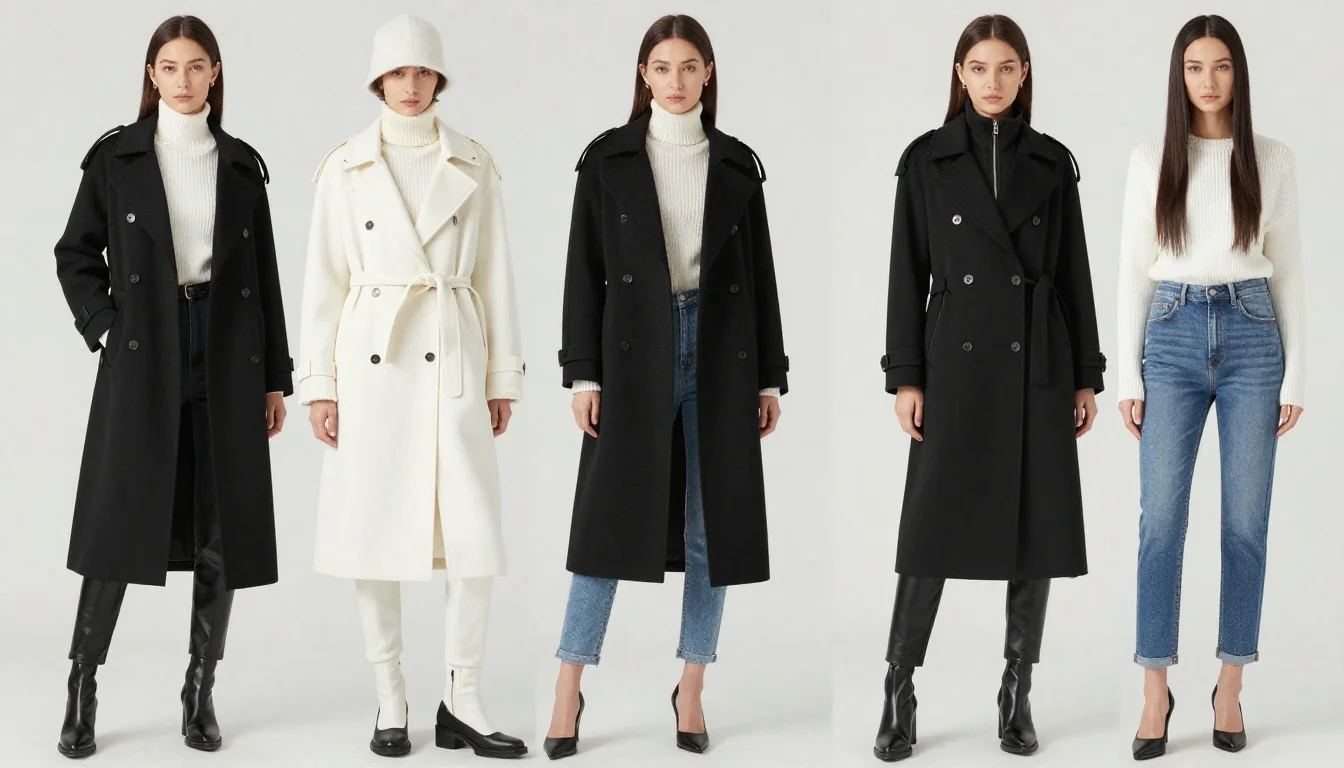
A black coat (a genuine foundation piece for Cool Winter) and a vivid jewel-toned or deep navy coat for statement outerwear. Cool Winter is one of the few seasonal types where a vivid-colored coat looks chic rather than overwhelming — a deep sapphire blue or emerald coat is a Cool Winter signature.
Colors to Leave Out of Your Starter Wardrobe
Warm brown and camel
Warm browns and camel have yellow-golden undertones that conflict with Cool Winter's distinctly cool base. On Cool Winter skin, camel looks muddy and disconnected. Reserve any brown for accessories only — never in tops or main outfit pieces.
Olive and warm green
Olive and warm khaki-greens have warm yellow undertones that clash with Cool Winter coloring. If you want green, choose cool emerald or cool teal — fully saturated, cool versions. Warm or muted greens fight the palette.
Muted and dusty tones
Cool Winter can carry vivid, saturated colors — and wearing muted, dusty versions (heathered grey, dusty rose, muted teal) underutilizes that capacity. These muted tones belong to summer palettes; for Cool Winter, keep saturation high and tones clear.
Orange, rust, and warm red
Warm-based reds and orange-leaning tones conflict severely with Cool Winter's cool undertone. If you want red, choose true cool red or deep magenta — never orange-red, coral, or rust. The temperature of the color matters as much as the hue itself.
Stop guessing — preview every look on you
See these looks on my photoThe Foundational Cool Winter Swaps
Trading generic recommendations for Cool Winter-specific pieces that actually flatter.
Warm neutrals conflict with Cool Winter coloring. Black, charcoal, and navy have the cool quality that harmonizes with your undertones.
Warm cream has a yellow quality that clashes with cool skin. Cool white or icy blue create the luminous contrast Cool Winter coloring needs.
Warm red fights Cool Winter undertones. True cool red or magenta amplifies the palette rather than conflicting with it.
Warm-toned outerwear is visually disconnected from cool coloring. Deep navy or grey creates cohesion and polish.
Camel is the recommended neutral for most seasons but actively fights Cool Winter. Black or a deep sapphire coat integrates with your palette beautifully.
Muted pastels lack the clarity Cool Winter coloring needs. Icy, clear pastels have brightness and coolness that make Cool Winter's complexion look luminous.
About Cool Winter Coloring
Cool Winter is one of the twelve color seasons and sits firmly in the Winter family — the coolest of the cool-season types. Its palette is vivid, cool, and high-contrast, with the ability to carry both deep darks and icy lights.
Cool Winter
Learn moreYour palette includes true black, crisp white, icy pastels (lavender, blue, pink, mint), deep cool jewel tones (sapphire, emerald, magenta, violet), and cool darks (deep navy, charcoal). All colors stay distinctly cool.
Deep Winter
Learn moreIf your coloring has more depth and a slight warmth compared to pure Cool Winter, Deep Winter may be your season — it shares the Winter family's intensity but runs slightly warmer and deeper.
Bright Winter
Learn moreIf your coloring has an especially high brightness and clarity — vivid eyes, very clear skin — Bright Winter may be a closer match, with slightly more Spring influence in its vivid, clear palette.
Find Your Exact Cool Winter Palette
Cool Winter encompasses a range of cool, high-contrast coloring — from deeply dark to moderately dark, from distinctly blue-cool to neutral-cool. Your precise position within the season determines exactly which icy pastels and vivid jewel tones are most flattering for your specific coloring. A personalized color analysis identifies your exact seasonal profile and gives you your most flattering shades.
Stop guessing — preview every color on you
Preview Yourself In Your Palette
Get my personalized paletteStop guessing — preview every color on you
Preview Yourself In Your Palette

Related Guides for Starter Wardrobe for Cool Winter
Explore more personalized color advice based on your features.
Want to see these colors on you? What Colors Look Good on Me — free to try.
Frequently Asked Questions About Starter Wardrobe for Cool Winter
What are the best starter colors for Cool Winter?
Black, cool white, sapphire blue, and icy lavender are the most versatile Cool Winter starter colors. They cover your neutrals (black and white), your jewel-tone statement color (sapphire), and your light alternative (icy lavender) — all the palette foundations you need.
Can Cool Winter wear all black?
Yes — Cool Winter is the seasonal type best suited to all-black outfits. Black is a genuine neutral for this palette, not just a safe option. An all-black outfit on Cool Winter coloring looks intentional, polished, and striking. Add an icy or vivid accessory for variation.
Can Cool Winter wear white?
Yes — crisp, cool white is one of Cool Winter's best colors. Unlike warm seasons who need cream or ivory, Cool Winter genuinely suits true white. A white shirt or white top against Cool Winter's dark hair and cool skin is one of the most flattering combinations in this palette.
Do Cool Winters need to avoid warm colors entirely?
In a starter wardrobe, yes — build from cool colors first and add everything else later if needed. Warm tones (camel, orange, warm brown, warm red) conflict with Cool Winter's cool undertones and undermine the palette's clarity. In a full wardrobe, some warm accents in accessories can work, but they're never foundation pieces for this season.
What is the most important piece in a Cool Winter starter wardrobe?
A black blazer. It's Cool Winter's most versatile, most impactful investment — it goes over everything, creates the high-contrast silhouette this palette excels at, and remains useful indefinitely. If you're going to spend money on one Cool Winter piece, make it a well-cut black blazer.