How to WearOlive Green
Olive green is one of the most versatile colors in a wardrobe. Discover how to wear them confidently — matched to your undertone.
Olive green has a peculiar quality: it functions as both a statement color and a neutral depending on how you wear it. It's warm, earthy, and grounded — close enough to khaki and brown to slot into neutral territory, but green enough to add genuine color. This dual nature is what makes it one of the most useful colors in a wardrobe. It pairs with almost everything. It works in almost every context. And for the right skin tones, it creates a glow that very few other colors can replicate.


3,000+
happy clients
Why Olive Green Works Across So Many Contexts
Olive green has a peculiar quality: it functions as both a statement color and a neutral depending on how you wear it. It's warm, earthy, and grounded — close enough to khaki and brown to slot into neutral territory, but green enough to add genuine color. This dual nature is what makes it one of the most useful colors in a wardrobe. It pairs with almost everything. It works in almost every context. And for the right skin tones, it creates a glow that very few other colors can replicate.
Olive green occupies a unique position in the color spectrum: it's the intersection of yellow, green, and brown. This gives it the earthiness of khaki, the depth of forest green, and the warmth of mustard — all compressed into a single, muted tone. Because it contains so many color references simultaneously, it pairs naturally with colors from all those families: browns, tans, navy, burgundy, rust, cream.
The warmth in olive green means it reflects golden light toward skin, making it particularly flattering for warm and olive complexions. For warm undertones specifically, olive green creates a harmony with the skin rather than contrasting against it — the result is a cohesive, unified look where clothing and complexion feel intentional rather than accidental. For cool undertones, olive can appear slightly yellow; choosing the versions with more grey or blue-green can correct this.
Olive is also one of the few colors that works equally well in casual and professional contexts without adjustment. A fine-gauge olive turtleneck under a navy blazer is professional. The same turtleneck with dark denim is casual. A structured olive blazer works in boardrooms and in bars. This contextual flexibility is rare in statement colors — most require careful context-reading. Olive does not.
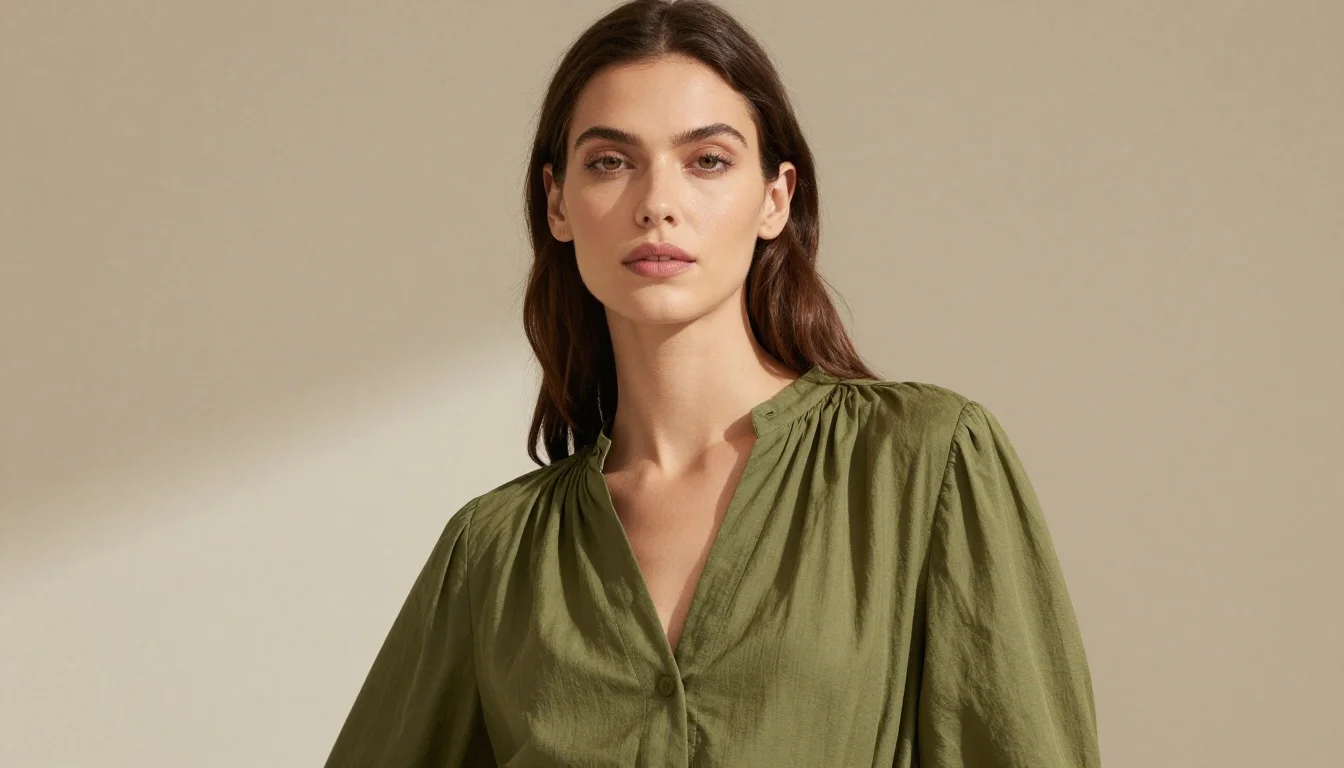
What colors go with olive green?
Navy, cream, burgundy, rust, chocolate brown, tan, and charcoal all pair beautifully with olive green. Navy and olive is the most reliable smart-casual pairing. Cream and olive is the best clean, neutral combination. Burgundy and olive is the richest autumn pairing. Avoid bright pink, bright orange, and neon alongside olive.
Shades of Olive Green That Work Best
Classic Olive
Classic olive is the most versatile shade — a warm, medium-dark yellow-green that is genuinely difficult to wear badly. It pairs with almost everything, photographs well, and works in every season. This is the shade to invest in as a coat, blazer, or structured trousers. It has enough depth to be interesting and enough warmth to create a glow near most skin tones.
Golden Olive
Golden olive pushes toward mustard — it has more yellow warmth than classic olive and less military austerity. This version creates the most flattering glow for warm undertones and is the best olive for those who want maximum richness. It works beautifully in knitwear, silk, and satin where the warmth of the fabric enhances the golden quality of the color.
Muted Sage Olive
Grey-olive is the most neutral of the family — the grey desaturates the yellow, creating something that behaves almost entirely as a muted neutral. This is the most forgiving olive for cool undertones, and the best version for those building a capsule wardrobe where everything needs to work together. It pairs seamlessly with black, white, navy, and mid-grey.
Deep Olive
Deep olive pushes toward almost-black with a strong green undertone. This version creates more drama than classic olive while retaining the earthy quality. It works as a dark neutral — a deep olive coat or structured blazer has the authority of charcoal with more personality. Best for those who want olive's character without its lightness.

Ready to see olive & military olive on your face?
Start my color analysisHow to Incorporate Olive Green in Real Outfits
Olive as the anchor of a neutral outfit
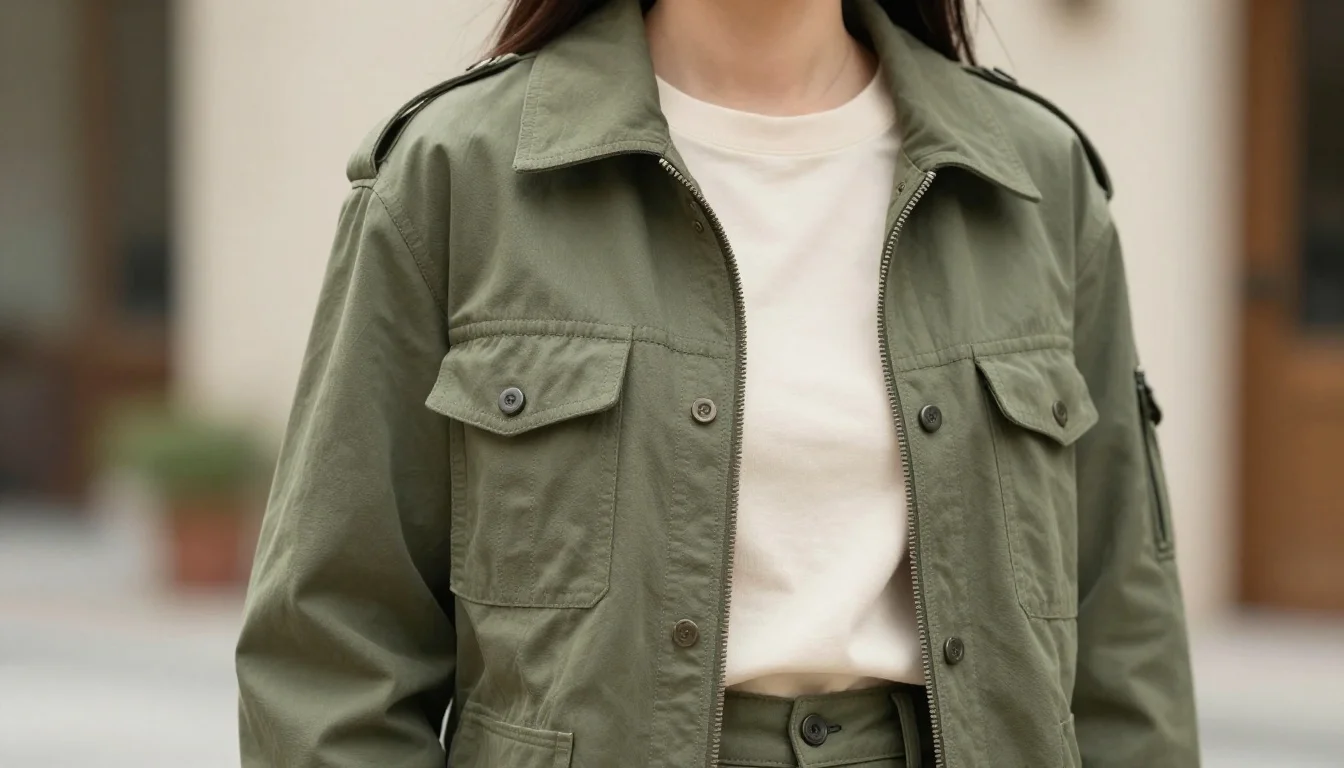
Treat olive the way you would treat khaki or tan — as the neutral that carries the outfit. Olive wide-leg trousers with a cream or ivory blouse and brown leather accessories is a complete outfit that requires no styling thought. A structured olive blazer over a white tee and black jeans is equally complete. These combinations work because olive functions as the warm neutral anchor.
Olive with navy: the best safe pairing
Olive and navy is the olive equivalent of navy and tan — a warm-cool combination that is reliably sophisticated. Olive trousers with a navy blazer, or a navy blouse with olive wide-leg trousers, works in professional and smart-casual contexts. The contrast is obvious enough to look intentional without being jarring. Add tan or brown leather shoes to complete the combination.
Olive with burgundy for autumn richness
Olive and burgundy is one of the best autumn color combinations. Both are earthy, warm, and rich — but they have enough contrast (green versus red) to create interest. An olive coat with a burgundy scarf or vice versa. Olive trousers with a burgundy blouse. This pairing feels deliberate and seasonal without being trendy.
Full olive as a statement
Wearing olive head-to-toe in different textures and shades — a deep olive jacket over classic olive trousers with a gold-olive knit — creates a tonal, sophisticated look. The key is varying the shade and texture. Full olive in a single flat shade reads as uniform; olive in varying depths reads as considered. Add a single contrast element — cream boots, tan bag — to ground it.
Pairings That Undermine Olive Green
Bright or neon green alongside olive
Pairing olive with bright, vivid green creates a muddy, conflicted color story. The two greens compete without either winning. If you want to layer greens, use deep forest green or very dark hunter green — the depth creates contrast rather than competition.
Pink or lilac at full intensity
Vivid pink or lavender alongside olive requires extremely deliberate styling to avoid looking unintentional. The warm-cool contrast is high. If you do pair olive with pink, keep one muted and one vivid — a dusty pink with classic olive, or a bright olive accessory against a soft blush outfit.
Too many warm tones at once
Olive, mustard, rust, and brown together without a cooler anchor can create visual warmth overload. Each individual pairing works — olive and rust, olive and mustard, olive and brown — but all four together lose definition. Add a navy, charcoal, or cream element to separate the warmth.
Stop guessing — preview every look on you
See these looks on my photoOlive Green Swaps That Upgrade the Wardrobe
Trading predictable neutrals for olive and getting more warmth and character without more effort.
Olive has all the neutrality of khaki with more visual interest — it pairs with all the same tops and works in more contexts.
The silhouette reads as intentional rather than utilitarian — a structured olive jacket with black or navy is immediately considered.
Olive blazer with white shirt and navy or grey trousers is more visually interesting than camel while maintaining the same warmth.
Olive turtleneck with dark denim and brown boots is a consistently excellent casual outfit that brown can't achieve alone.
Olive coats have a quiet authority that camel lacks — they're versatile across all outfit colors and photograph exceptionally well.
Olive linen is one of the best summer casual pieces — it works with white jeans, denim, and tan shorts with equal ease.
Who Olive Green Belongs To
Olive green is a warm, earthy color that sits most naturally in warm and muted seasonal palettes. It's a core color for Autumn types and a reliable neutral for most warm-toned individuals.
Warm Autumn
Learn moreOlive green is one of Warm Autumn's signature colors — it sits perfectly in the rich, earthy palette. Deep olive, classic olive, and golden olive are all strong choices. For Warm Autumn, olive belongs at the center of the wardrobe rather than as an accent.
Soft Autumn
Learn moreSoft Autumn wears the more muted, grey-toned olive — dusty army green and muted sage olive work best here. The softness of this season means very dark or very golden olive can be slightly too much; the mid-depth muted versions are ideal.
Deep Autumn
Learn moreDeep Autumn wears the darkest, richest olives — hunter olive, deep army, almost-black olive. The high-contrast nature of this season means lighter olives can feel washed out; the depth needs to be significant to create impact.
Find Your Olive Green
Olive green works differently depending on your undertone, contrast level, and seasonal palette. The specific shade that creates a glow on one person can look muddy on another. A personal color analysis identifies exactly which olive — classic, golden, grey-toned, or deep — belongs in your wardrobe and which to skip.
Stop guessing — preview every color on you
Preview Yourself In Your Palette
Get my personalized paletteStop guessing — preview every color on you
Preview Yourself In Your Palette

Related Guides for How to Wear Olive Green
Explore more personalized color advice based on your features.
Want to see these colors on you? What Colors Look Good on Me — free to try.
Frequently Asked Questions About How to Wear Olive Green
What colors go with olive green?
Navy, cream, burgundy, rust, chocolate brown, tan, and charcoal all pair beautifully with olive green. Navy and olive is the most reliable smart-casual pairing. Cream and olive is the best clean, neutral combination. Burgundy and olive is the richest autumn pairing. Avoid bright pink, bright orange, and neon alongside olive.
Does olive green suit cool undertones?
It depends on the shade. Grey-olive and muted sage olive are most forgiving for cool undertones because the green neutralizes some of the yellow warmth. True olive and golden olive are more difficult for cool undertones and can appear yellow against the skin. If you have cool undertones and want olive, choose the most grey-toned version you can find.
Is olive green a neutral?
In practice, yes. Classic olive pairs with navy, cream, burgundy, brown, charcoal, and white — in the same way that khaki or camel does. It behaves as a warm neutral in most outfit contexts. Bright, very golden versions behave more as a statement color; grey, muted versions are almost entirely neutral.
What to wear with olive green trousers?
White, cream, or ivory tops create a clean contrast with olive trousers. Navy, charcoal, or burgundy tops create a richer, deeper combination. Brown or tan leather shoes and bags are the best accessories. Avoid bright prints and bold colors — let the olive trousers be the statement and keep the rest simple.