Suit Colors That FlatterWarm Undertones
Warm undertones need suits in warm-leaning neutrals — not every navy or grey works. Discover how to find the colors that actually flatter your coloring.
A suit is the highest-stakes garment in most wardrobes — the wrong color near your face for eight hours shows. If you have warm undertones, the standard charcoal and cool navy that dominate suit racks can drain your complexion and make you look tired by noon. The right warm-leaning suit color does the opposite: it makes your skin glow, your features sharpen, and the whole outfit look like it was tailored for you in more ways than one.


3,000+
happy clients
Why Warm Undertones Need Specific Suit Colors
A suit is the highest-stakes garment in most wardrobes — the wrong color near your face for eight hours shows. If you have warm undertones, the standard charcoal and cool navy that dominate suit racks can drain your complexion and make you look tired by noon. The right warm-leaning suit color does the opposite: it makes your skin glow, your features sharpen, and the whole outfit look like it was tailored for you in more ways than one.
Warm undertones mean your skin has golden, peachy, or olive base tones. A suit worn close to the face and body for hours amplifies any temperature mismatch. Cool-toned charcoal against warm skin creates a grey, washed-out effect that accumulates through the day — you look less vibrant, less healthy, less authoritative. The wrong suit color actively undermines the confidence the suit is supposed to project.
The suiting industry defaults to cool tones. Standard charcoal has blue undertones. Classic navy often leans cool-blue rather than warm-blue. Even black suits carry a cool temperature. This means off-the-rack suit shopping is stacked against warm-toned people. You need to look specifically for warm-leaning versions of these classics — or explore suit colors that are inherently warm, like rich brown, olive-toned, or golden-tan.
The good news is that warm-toned suit colors look rich, expensive, and distinctive. A warm brown suit stands out in a sea of cool grey. A warm navy with golden undertones photographs beautifully. Tan and camel suits carry a relaxed authority that cool-toned suits cannot replicate. Knowing your temperature opens up a suit wardrobe that is both more flattering and more interesting than the default.
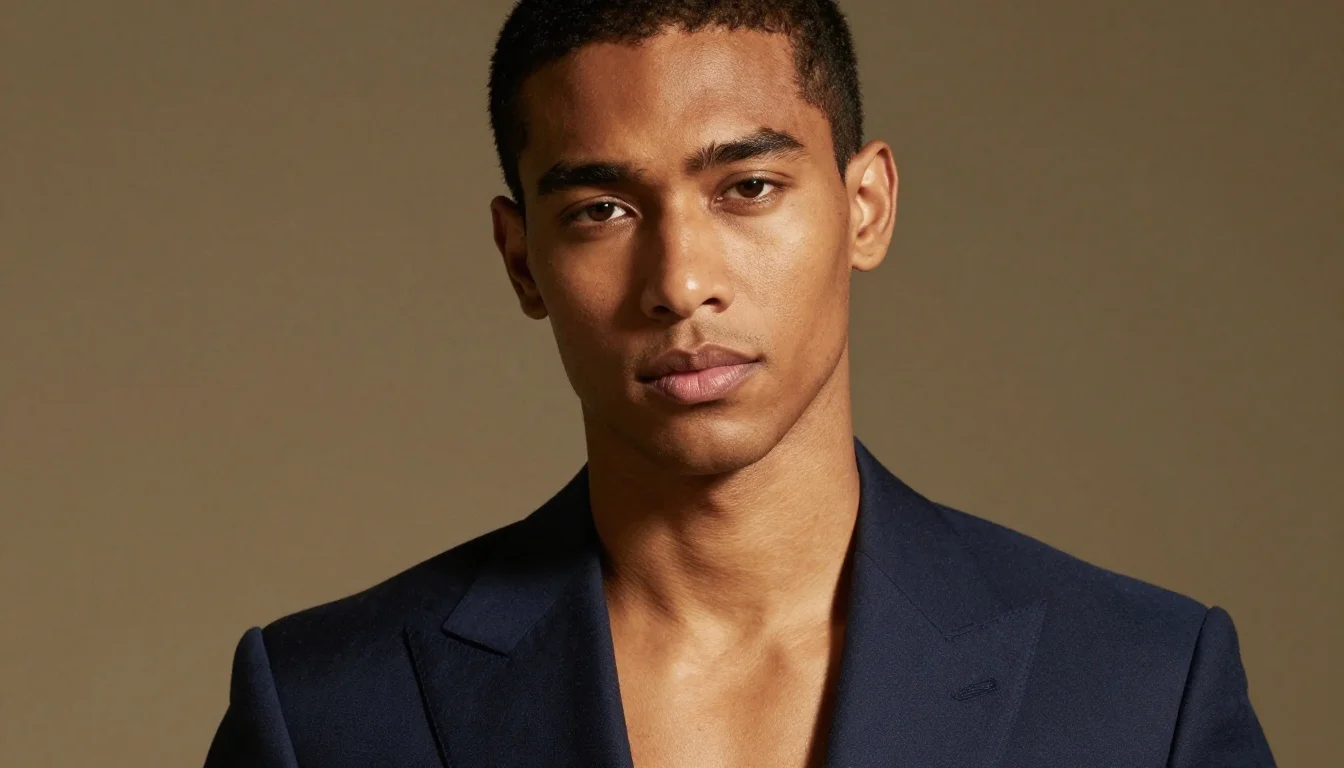
What suit color is best for warm undertones?
Warm navy is the most versatile suit color for warm undertones — it works across all contexts while flattering golden and olive skin. Rich chocolate brown is the standout second choice. Warm charcoal, camel, and tan round out a complete warm-toned suit wardrobe. Avoid cool charcoal and black as your primary suits.
Your Best Suit Colors
Warm Navy & Ink Tones
Navy is the most versatile suit color, but warm undertones need the right navy. Warm navy has a subtle golden or greenish quality rather than the bright cool-blue of standard navy. Ink blue — a deeper, slightly muted navy — reads as sophisticated and pairs beautifully with warm skin. Hold the fabric against your wrist in natural light — if it makes your skin look golden rather than grey, the temperature is right.
Warm Browns & Chocolate
Brown suits are warm undertones' secret advantage. Rich chocolate in fine wool looks as polished as charcoal but far more flattering on golden or olive skin. Warm espresso creates depth without the coolness of black. Cognac brown is the statement choice — distinctive, warm, and increasingly accepted in professional settings. Brown suits with warm skin is one of the most naturally harmonious combinations in suiting.
Warm Grey & Greige Tones
If your workplace demands grey, choose warm-leaning versions. Warm grey has a brownish rather than bluish base — the grey that makes warm skin look healthy. Greige sits between grey and beige and is remarkably flattering on golden and olive tones. Taupe is the lighter warm neutral for spring and summer suiting. Warm charcoal with a brown undertone provides seriousness without the complexion-draining effect.
Tan, Camel & Khaki
Lighter warm suits are perfect for warm weather, summer weddings, and less formal contexts. Warm camel is one of the most flattering suit colors for warm undertones — it echoes the golden quality of your skin while looking expensive and intentional. Golden tan suits have relaxed authority for outdoor events. Dark khaki is the most versatile of the group. Rich sand works beautifully in summer linen.

Ready to see navy & ink blue on your face?
Start my color analysisHow to Build a Suit Wardrobe for Warm Undertones
Start with warm navy as your cornerstone
Your first suit should be warm navy — the most versatile color in any suit wardrobe. Look for suits described as midnight navy, ink, or warm navy. In the fitting room, check the fabric against your bare wrist in natural light. If your skin looks golden and healthy, it is right. If your skin looks grey or sallow, the navy is too cool. This single test saves countless buying mistakes.
Add warm brown as your second suit
A rich chocolate or cognac brown suit is the warm-undertone power move. It distinguishes you from the sea of cool grey and navy while looking entirely polished. Pair with a cream shirt and warm gold accessories for the most natural, harmonious combination. Brown suits are increasingly accepted in professional settings and are always appropriate for social occasions.
Choose warm-toned shirts and ties
Extend warm temperature to your shirting. Cream and warm white are more flattering than stark blue-white. Light peach, warm pink, and soft gold dress shirts complement warm suits beautifully. For ties, warm burgundy, golden bronze, burnt orange, and warm olive add personality while staying in temperature harmony. Avoid icy blue shirts and cool silver ties.
Match accessories to your temperature
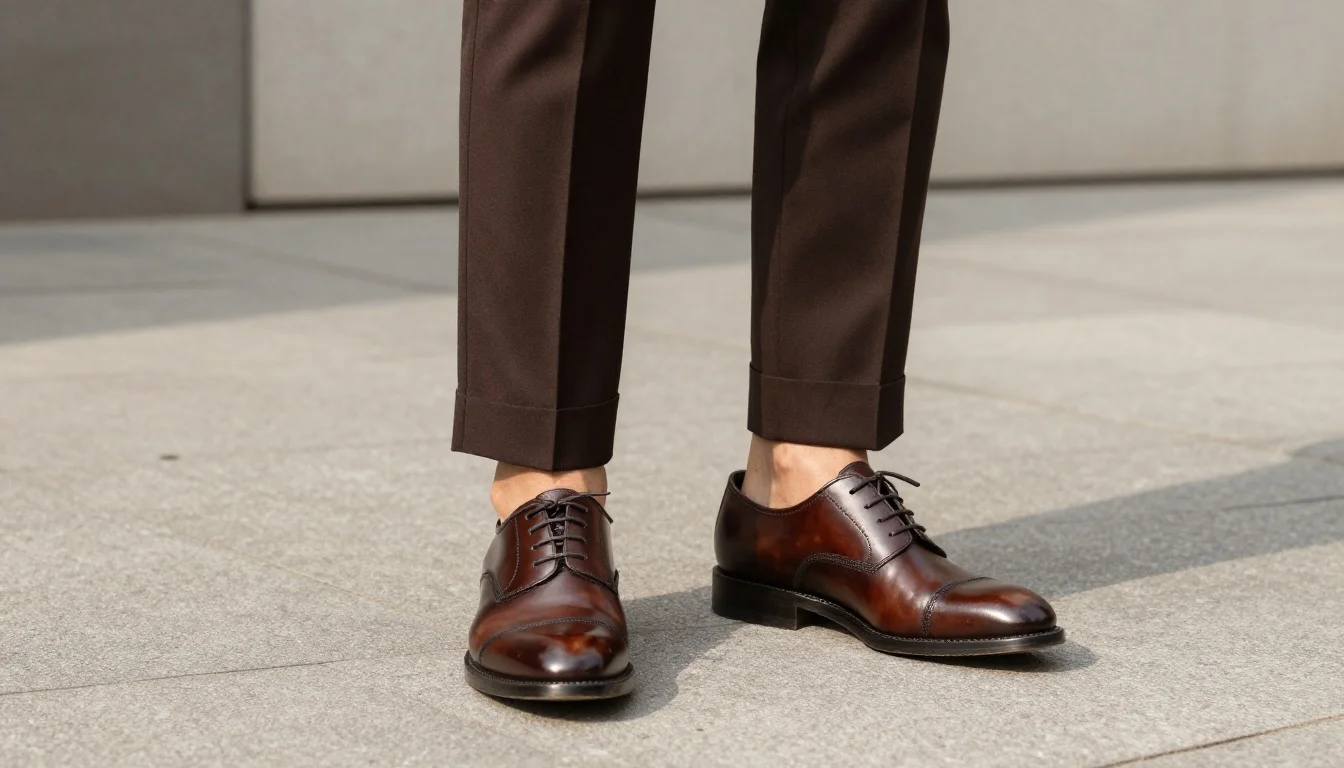
Gold and warm-metal accessories complete a warm-toned suit. Gold cufflinks, warm brown leather belt and shoes, cognac leather watch strap, and warm-toned pocket squares tie everything together. Brown shoes with warm navy or grey suit is the classic warm-undertone combination. Black shoes and belt with a warm brown suit create a temperature clash — keep leather and metals warm throughout.
Suit Colors That Work Against Warm Skin
Cool charcoal with blue undertones
Standard charcoal is the default safe suit choice, but on warm undertones it creates a subtle greyness in the face that accumulates over a full day. The fix is warm charcoal with brown undertones or switching to warm navy or chocolate brown entirely. Cool charcoal against warm skin looks off; warm charcoal looks polished.
Black suit as your primary suit
Black is the coolest suit color and on warm skin it reads as harsh and draining rather than sharp. A black suit at a formal event is fine, but as your go-to daily suit it actively works against warm undertones. Rich chocolate or deep warm navy serves the same dark, serious function while harmonizing with your warmth.
Cool light grey
Light grey with a blue or silver base makes warm skin look sallow and yellow by contrast. The coolness highlights every warm tone in your skin in an unflattering way. Switch to greige, warm taupe, or warm light grey — the same lightness with a warm undertone that complements rather than clashes.
Stop guessing — preview every look on you
See these looks on my photoSuit Color Upgrades for Warm Undertones
Trading the cool-toned defaults that drain you for warm alternatives that flatter.
Warm-leaning dark suits provide the same gravitas without the complexion-draining effect of cool charcoal on warm skin.
Brown suits harmonize with warm skin naturally and stand out positively. Cool light grey makes warm skin look sallow.
Warm light suits echo your skin golden quality and look effortlessly stylish. Cool light tones wash out warm undertones.
Both read as appropriately dark while complementing warm skin. Black against warm undertones looks harsh over a full day.
Warm shirts against warm skin and warm suits create total temperature harmony that reads as polished and natural.
Warm leather tones complete the warm palette. Black creates a cool break in an otherwise harmonious warm outfit.
Which Warm Season Defines Your Suit Palette?
Your seasonal color palette determines the ideal depth and richness of suit colors. All warm seasons suit warm-toned suits, but the ideal darkness and saturation differ.
Warm Autumn
Learn moreIf your coloring is warm and rich — golden-brown hair, warm brown or hazel eyes, golden-beige skin — Warm Autumn is your palette. Your suits should be deep and earthy: rich chocolate, warm espresso, deep warm navy, and dark tobacco.
Warm Spring
Learn moreIf your coloring is warm and clear — golden-blonde or warm-brown hair, clear warm eyes, peachy skin — Warm Spring fits. Your suit palette is warm but lighter: warm camel, golden tan, warm medium navy, and cognac.
Deep Autumn
Learn moreIf you have high contrast with warmth — dark hair, rich warm skin, deep brown eyes — Deep Autumn may be your season. Your suits can handle the most depth: near-black espresso, dark warm navy, deep chocolate, and rich olive.
Find Your Perfect Suit Colors
The exact suit colors that flatter you depend on whether your warm undertones are deep and rich, light and clear, or somewhere in between. A personalized color analysis identifies your seasonal palette and maps the precise warm neutrals — from your power suit to your summer linen — that make you look commanding and entirely yourself.
Stop guessing — preview every color on you
Preview Yourself In Your Palette
Get my personalized paletteStop guessing — preview every color on you
Preview Yourself In Your Palette

Related Guides for Best Suit Color for Warm Undertones
Explore more personalized color advice based on your features.
Want to see these colors on you? Skin Undertone Test — free to try.
Frequently Asked Questions About Best Suit Color for Warm Undertones
What suit color is best for warm undertones?
Warm navy is the most versatile suit color for warm undertones — it works across all contexts while flattering golden and olive skin. Rich chocolate brown is the standout second choice. Warm charcoal, camel, and tan round out a complete warm-toned suit wardrobe. Avoid cool charcoal and black as your primary suits.
Can warm undertones wear a grey suit?
Yes, but it must be warm grey. Warm grey with brown undertones, greige, and warm charcoal flatter warm skin. Cool grey with blue or silver undertones creates a washed-out effect. Hold fabric against your wrist — if your skin looks golden and healthy, the grey is warm enough.
What color shirt goes with a brown suit?
Cream is the most natural pairing — it echoes the warmth and flatters warm skin. Light peach and soft gold add personality while staying warm. Warm white works for formal settings. Avoid bright white or icy blue shirts with brown suits — the cool temperature clashes with the warm suit.
Should warm undertones avoid black suits?
Black should not be your primary suit. It drains warmth from golden and olive skin, especially over a full day. For formal occasions it works fine. For regular wear, deep warm navy or espresso brown provides the same seriousness while flattering your skin.
Are brown shoes better than black for warm undertones?
In most contexts, yes. Rich brown, cognac, and tan leather shoes harmonize with warm-toned suits and warm skin far better than black. Reserve black shoes for black-tie events. For everything else, warm-toned leather creates a more polished, intentional look.
What tie colors work with warm undertones?
Warm burgundy, golden bronze, burnt orange, warm olive, and rich terracotta complement warm suits and warm skin beautifully. Avoid icy blue, cool silver, and bright cool pink ties — they create temperature clashes against warm skin and warm suiting.