Best Dress Colorsfor Olive Skin
Olive skin has warm golden-green undertones that respond powerfully to the right dress colors. Discover which shades flatter you most — and which to skip.
Olive skin sits at a uniquely powerful intersection of warm and neutral undertones. Its golden-green quality means it neither strictly warm nor strictly cool — it responds beautifully to a wide range of colors, but has specific shades that make it genuinely radiant versus ones that drag it toward sallow. The right dress color on olive skin creates a glow that looks like you've just returned from somewhere sunny. The wrong one makes that same complexion look tired. This guide cuts to exactly which dress colors work and why.


3,000+
happy clients
Why Dress Color Is Everything for Olive Skin
Olive skin sits at a uniquely powerful intersection of warm and neutral undertones. Its golden-green quality means it neither strictly warm nor strictly cool — it responds beautifully to a wide range of colors, but has specific shades that make it genuinely radiant versus ones that drag it toward sallow. The right dress color on olive skin creates a glow that looks like you've just returned from somewhere sunny. The wrong one makes that same complexion look tired. This guide cuts to exactly which dress colors work and why.
Olive skin gets its distinctive quality from a combination of melanin and a greenish-yellow pigment called pheomelanin. This creates the warm, golden-green undertone that's so striking in certain lighting — but also means the skin is sensitive to colors with strong yellow-green undertones (which amplify the sallow note) and harsh cool tones (which grey it out). The right dress color sits in the sweet spot: rich, warm, or deeply saturated enough to bring out the golden quality without enhancing the green.
Because a dress occupies your entire silhouette and sits right against your skin from neckline to hem, the color has more visual impact than almost any other garment choice. A top that's slightly off can be corrected with a blazer layer. A dress in the wrong shade has nowhere to hide. This makes dress color selection the highest-stakes wardrobe decision for olive skin — and the most rewarding when you get it right.
The good news is that olive skin has a broader flattering range than most other skin tones. Deep jewel tones, earthy naturals, warm metallics, and rich brights all have legitimate places in an olive-skin dress wardrobe. What you're filtering out is a narrow but important group: orange-adjacent tones that push toward sallow, and desaturated mid-tones that dull the natural warmth.
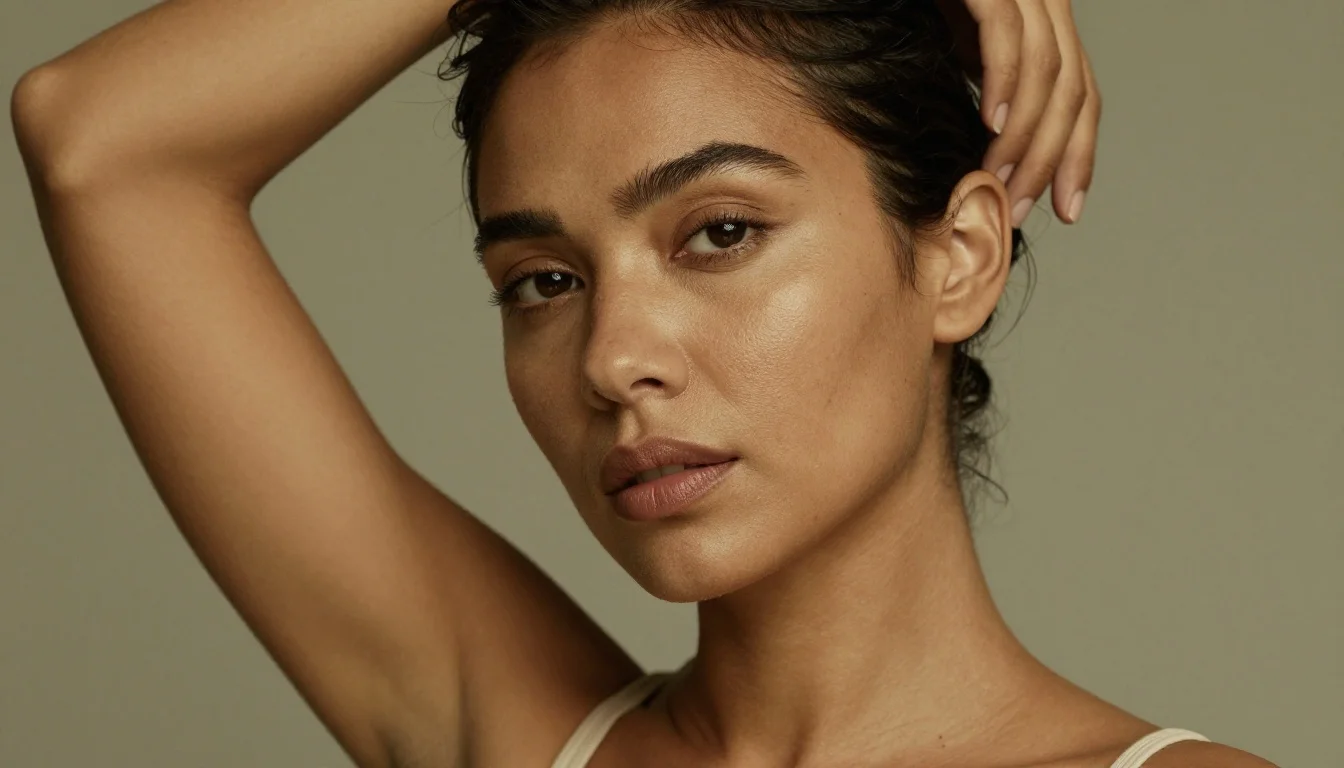
What dress colors look best on olive skin?
The most flattering dress colors for olive skin are warm earth tones (terracotta, rust, cognac), deep jewel tones (forest green, burgundy, eggplant), warm neutrals (cream, sand, warm ivory), and saturated warm brights (saffron, tomato red, warm coral). The key is warmth or depth — colors with a warm undertone or rich saturation bring out the golden quality of olive skin.
Your Most Flattering Dress Color Families
Rich Earthy Tones
Earthy tones with genuine warmth are among the most instinctively flattering on olive skin. Terracotta and rust sit close enough to the skin's own undertone to feel cohesive while adding visual warmth. Cognac brown creates a tone-on-tone richness that makes olive skin look deeply tanned and healthy. These work because they share color DNA with olive skin — the warmth feels harmonious rather than contrasting, creating the effect of skin that's glowing from within.
Deep Jewel Tones
Deep jewel tones bring the contrast that makes olive skin look its most vivid. Forest green is particularly brilliant — its warm-green quality resonates with the green undertone of olive skin in a way that looks entirely intentional, creating a sophisticated harmony. Deep burgundy adds richness without the cool-clash that navy sometimes creates. Eggplant purple hits a similar note. These colors provide depth that gives olive skin definition and clarity.
Warm Neutrals
Warm-based neutrals give olive skin a clean, sun-kissed backdrop without the starkness of pure white or the grey conflict of cool whites. Cream and warm ivory are especially good for daytime and summer dresses — they lighten the look while keeping everything in the same warm register. The key word is 'warm': the cream should have a yellow or peachy cast, not a grey or bluish one. These function as your best neutral foundation for printed or textured dresses.
Saturated Warm Brights
Olive skin can handle intense, saturated colors with a warmth bias better than almost any other complexion. Saffron yellow and warm golden tones play directly into the skin's natural undertone, creating a luminous effect. Tomato red — not blue-red — brings energy and vibrancy. Warm fuchsia bridges the gap between warm and cool. These colors look alive and intentional on olive skin where they can appear garish on other tones.

Ready to see terracotta & cognac brown on your face?
Start my color analysisHow to Dress Olive Skin with Intention
Everyday dresses
For daily wear, lean into warm neutrals at the lighter end and rich jewels at the darker end. A cream or warm ivory wrap dress is an effortless go-to: the warm white brightens without clashing, and the wrap silhouette adjusts to fit. For cooler months, a forest green or deep burgundy jersey dress is a consistent winner. Build a rotation of your best colors in versatile cuts and you'll never open your wardrobe to a problem.
Formal and occasion wear
Olive skin looks exceptional in formal dresses. Deep emerald green, rich burgundy, and warm bronze are the strongest choices for evening events. Olive skin in a deep jewel tone under warm event lighting photographs beautifully — the skin looks golden and luminous. For black-tie or very formal events, a warm-toned metallic — antique gold, warm bronze, or copper — creates a striking, sophisticated look that suits olive skin uniquely well.
Summer and warm weather
In summer dresses and lighter fabrics, lean into warm brights and saturated colors. Saffron, warm coral, tomato red, and warm turquoise all look alive against olive skin in summer lighting. Floral prints work well when the dominant colors are warm: burnt orange florals, warm red florals, or cream-and-green prints. Avoid cool-dominant floral prints with a lot of blue-pink, which can cool the whole look.
Print selection
When choosing printed dresses, look at the dominant background color — that's what registers most from a distance and has the most impact on your skin. A dress with a warm cream background reads as cream. A dress with a cool grey background reads as grey. For olive skin, prints with warm backgrounds — cream, warm beige, rust, olive, warm teal — will always work better than prints with cool grey or blue backgrounds.
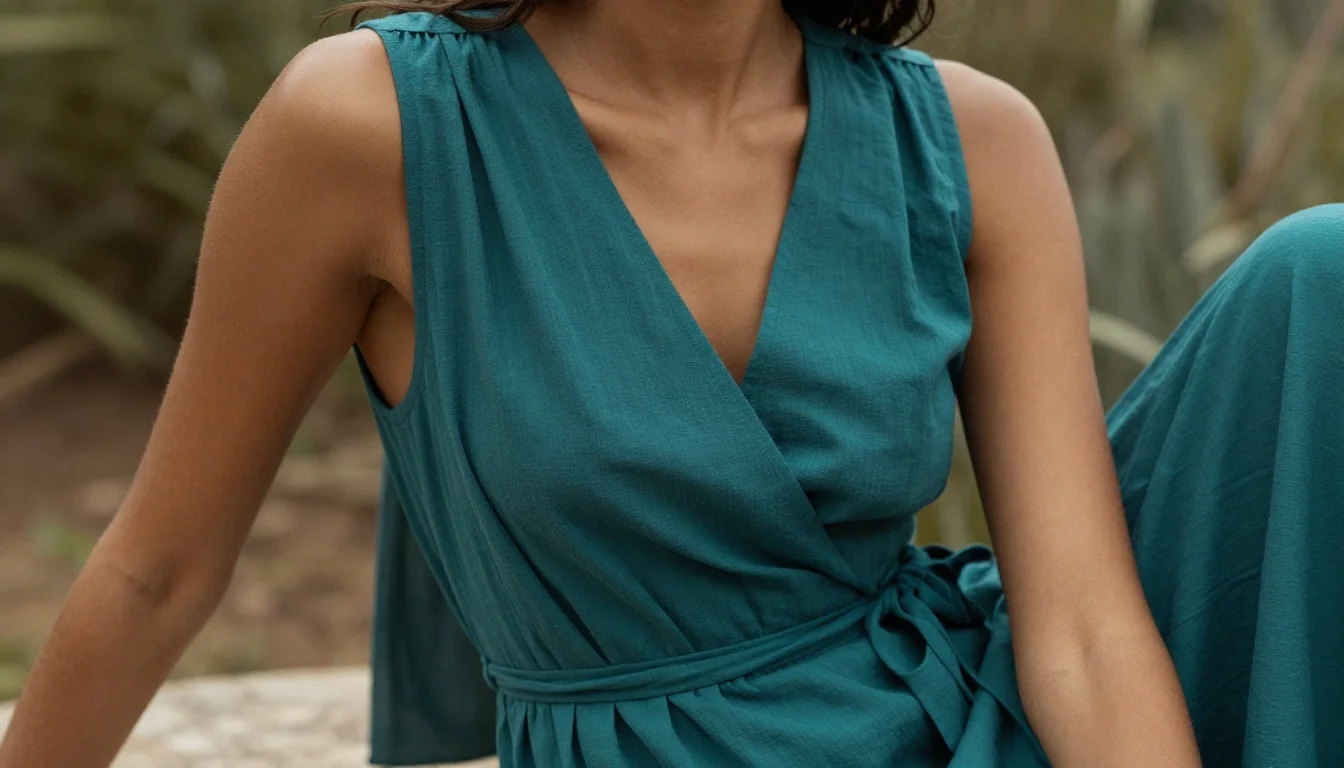
Dress Colors That Work Against Olive Skin
Mustard and yellow-green
Mustard and yellow-green amplify the green-yellow undertone in olive skin rather than complementing it. Instead of looking warm and golden, the combination reads as sallow — the skin appears dull and slightly unwell. True saffron yellow works; the muddied, warm-brown-yellow of mustard is the problem. Similarly, chartreuse and yellow-green can make olive skin look greenish in certain lighting.
Bright orange
This is counterintuitive since orange is warm and earthy tones work — but bright, pure orange (especially neon or traffic-cone orange) clashes with the green dimension of olive skin and can make it look uneven. Rust and terracotta work because they have brown grounding; pure bright orange doesn't. If you love orange, go deep toward burnt sienna or dark rust rather than saturated bright orange.
Cool pastel pink and baby blue
Cool, pale pastels have no warmth to complement olive skin and can make the complexion look grey and dull. Cool baby pink and cool powder blue are the worst offenders. If you want pastels, find versions with a warm cast — a peach-pink rather than a blue-pink, a sky blue with a slight green warmth. Pure cool pastels drain olive skin of its natural warmth.
Washed-out beige and taupe
Mid-tone washed-out beiges without warmth can make olive skin look dull and unsaturated. The problem isn't beige itself — warm sand, caramel, and cream work beautifully — it's the specific grey-beige taupe that has no warmth. This color sits too close to olive skin tonally while missing its warmth, creating a flat, low-contrast look.
Stop guessing — preview every look on you
See these looks on my photoSimple Dress Color Swaps for Olive Skin
Trading colors that flatten olive skin for ones that make it glow.
Cool grey drains the warmth from olive skin. Warm camel sits in the same neutral territory but shares the skin's warm undertone, creating a harmonious, polished look.
Mustard has too much brown-green and sits in the same muddy range as olive skin's undertone. Clear saffron is warm and bright, making olive skin look sun-kissed rather than sallow.
Cool baby pink fights the warmth in olive skin. Coral and warm dusty rose share the warm undertone and complement olive's golden quality instead of conflicting with it.
Icy blue creates a stark contrast with olive skin that can read as cold rather than dramatic. Forest green has warm-green depth that looks intentional and luminous next to olive skin.
Washed taupe lacks the warmth to complement olive skin and can look dull. Cognac and caramel are in the same neutral family but have the warmth to make olive skin look rich and polished.
Pure bright orange can clash with the green dimension of olive skin. Rust and terracotta are grounded with brown, which sits in harmony with olive's earthy warmth.
Which Seasonal Palette Might Fit Your Olive Skin?
Olive skin appears across several seasonal palettes — the specific season depends on whether your olive runs more warm or neutral, and what depth and contrast your overall coloring presents.
Warm Autumn
Learn moreIf your olive skin has a distinctly warm, golden quality and your hair and eyes are also warm (medium brown, golden brown, warm hazel), Warm Autumn is likely your home. Your dress palette includes all the rich earth tones — terracotta, camel, warm olive green, cognac, and deep rust — plus muted versions of warm colors. Avoid anything icy or sharply cool.
Soft Autumn
Learn moreIf your olive skin is more muted and medium-toned, with eyes and hair that are softened rather than vivid, Soft Autumn may suit you better. Your dress palette is the same warm earth tone family but slightly less intense — warm taupe, muted terracotta, dusty olive, and softened warm teal. You suit colors that are warm but not too vivid.
Deep Autumn
Learn moreIf your olive skin is on the deeper, richer end and your hair and eyes create strong contrast — very dark hair, deep eyes — Deep Autumn's palette of rich, dark, saturated colors suits you well. Deep forest green, burgundy, espresso brown, and warm deep teal are your best formal dress colors. You can handle more intensity than other autumn types.
Find Your Best Dress Colors
Olive skin has a uniquely wide flattering range — but the colors that make it glow versus dull it are specific. Whether your olive runs warm and golden, neutral and versatile, or deep and rich, a personalised color analysis identifies your exact seasonal palette and gives you a precise dress color guide tailored to your specific skin, hair, and eye combination.
Stop guessing — preview every color on you
Preview Yourself In Your Palette
Get my personalized paletteStop guessing — preview every color on you
Preview Yourself In Your Palette

Related Guides for Best Dress Colors for Olive Skin
Explore more personalized color advice based on your features.
Want to see these colors on you? What Colors Look Good on Me — free to try.
Frequently Asked Questions About Best Dress Colors for Olive Skin
What dress colors look best on olive skin?
The most flattering dress colors for olive skin are warm earth tones (terracotta, rust, cognac), deep jewel tones (forest green, burgundy, eggplant), warm neutrals (cream, sand, warm ivory), and saturated warm brights (saffron, tomato red, warm coral). The key is warmth or depth — colors with a warm undertone or rich saturation bring out the golden quality of olive skin.
Can olive skin wear white dresses?
Yes, but choose warm white rather than bright cool white. Cream, warm ivory, and off-white with a golden or peachy cast all look excellent on olive skin. Pure cool white or bright bluish-white can make olive skin look grey. For a summer dress or formal event, warm white is one of the best backdrop choices for olive skin.
Does olive skin look good in green dresses?
Yes — particularly forest green, warm olive green, and deep emerald. The green undertone in olive skin harmonizes with green clothing in a sophisticated way. Avoid yellow-green and lime, which can clash. Deep, warm greens are especially flattering for formal and occasion wear on olive skin.
What colors should olive skin avoid in dresses?
Avoid mustard yellow (too much yellow-green overlap with the skin's undertone), bright orange (clashes with the green dimension), cool pale pastels (drain warmth), and washed taupe without warmth. Anything that either amplifies the green-sallow note or cools the natural warmth is the wrong direction.
Can olive skin wear black dresses?
Yes — black is nearly universal and works well on olive skin, particularly for evening and formal wear. It creates strong contrast against olive skin without any undertone conflict. For daytime, pair black with warm accessories to keep the overall look from feeling cold.
What color dress makes olive skin look tanned?
Warm earth tones — terracotta, cognac, camel, and rust — make olive skin look deeply tanned. These colors share the warm undertone of olive skin and create a richness that reads as a deep, healthy tan. Warm cream and ivory also have this effect in lighter dresses, giving the complexion a sun-kissed quality.