Best Dress Colorsfor Cool Undertones
Cool undertones respond to specific dress colors that enhance the natural blue-pink or neutral-cool. Discover which shades flatter you most — and which to skip.
Cool undertones describe skin that has a blue, pink, or neutral-cool base — the kind that looks best in silver jewelry, burns before it tans, and has veins that appear blue or purple at the wrist. When you wear cool-toned dress colors, something clicks: the skin looks brighter, the eyes more vivid, the overall look more intentional. Warm-toned dresses do the opposite — they can make cool skin look ashy, grey, or slightly off. This guide covers the exact dress colors that work with your cool undertone and why.


3,000+
happy clients
Why Undertone Drives Dress Color Success
Cool undertones describe skin that has a blue, pink, or neutral-cool base — the kind that looks best in silver jewelry, burns before it tans, and has veins that appear blue or purple at the wrist. When you wear cool-toned dress colors, something clicks: the skin looks brighter, the eyes more vivid, the overall look more intentional. Warm-toned dresses do the opposite — they can make cool skin look ashy, grey, or slightly off. This guide covers the exact dress colors that work with your cool undertone and why.
Your skin's undertone is the fixed, underlying color temperature beneath whatever surface tone you have — and it doesn't change with tan, season, or age. Cool undertones contain a blue-pink quality that resonates with other cool-toned colors and conflicts with yellow-warm tones. When a dress shares your cool undertone, the colors harmonize and the skin looks clear and luminous. When a warm-toned dress sits against cool skin, the temperature conflict makes the skin look ashy, yellow, or dull.
The cool undertone family is broad — it includes the pale, pink-cool fair skin of Cool Winter and Cool Summer types, the neutral-cool of some medium complexions, and even deep skin tones with distinctly cool blue undertones. What they share is that same blue-pink quality, the preference for silver over gold, and the way certain colors make the skin look alive versus flat.
The most important thing to know about cool undertones and dress color is this: saturation matters as much as temperature. A cool-toned dress in a rich, saturated shade will nearly always work. A cool-toned dress in a chalky, faded shade can still look flat on cool skin — especially fair cool skin. The combination of cool temperature and sufficient depth or saturation is what creates the luminous effect.

What dress colors suit cool undertones?
Cool-toned dress colors suit cool undertones best: royal blue, sapphire, amethyst, emerald (with a cool-blue quality), navy, charcoal, crisp white, fuchsia, raspberry, and berry rose. The common thread is a blue or neutral-cool base. These colors share the temperature of cool skin and create harmony rather than conflict.
Your Most Flattering Dress Color Families
Cool Jewel Tones
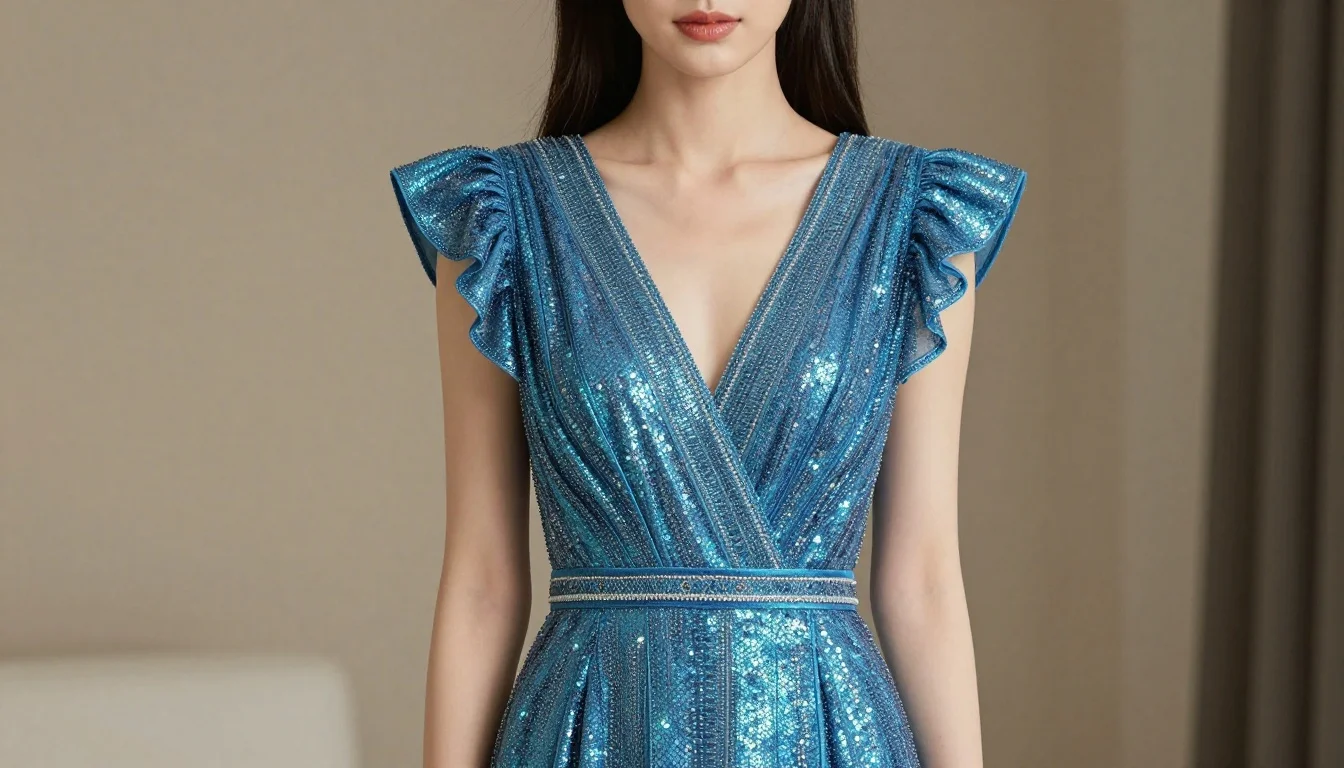
Cool jewel tones are the ultimate expression of cool-undertone dressing. Royal blue and sapphire have the exact cool, clear quality that resonates with blue-pink undertones — the skin looks brighter and more vivid by contrast. Deep amethyst plays into the blue-purple wavelengths that complement cool skin beautifully. Clear emerald, when it has a cool-blue green quality rather than warm-yellow green, creates a striking, sophisticated look. These are the colors where cool-toned skin looks its most intentional.
Blue-Based Pinks and Roses
Pink family colors are uniquely flattering for cool undertones because they share the blue-pink quality of cool skin. The key is choosing the cool side of pink: fuchsia rather than coral, raspberry rather than peach, deep rose rather than warm blush. Cool fuchsia in a dress creates a vivid, face-brightening effect that's hard to achieve with any other color. Berry rose and deep raspberry add warmth without crossing into the orange-warm territory that conflicts with cool undertones.
Classic Cool Neutrals
Cool neutrals are the backbone of a cool-undertone wardrobe because they share the temperature without any undertone conflict. True navy is the single most reliable all-purpose dress color for cool undertones — it creates depth, contrast, and a cool elegance that suits every cool-skin type. Crisp white brightens cool skin without any temperature clash. Charcoal and true black create maximum contrast and are especially powerful for evening. These are fail-safe foundations.
Muted Cool Tones
For cool undertones with a softer, more muted character — particularly Cool Summer and Soft Summer types — dusty, softened versions of cool colors create a refined, sophisticated look. Dusty mauve, soft slate blue, and muted lavender all share the cool temperature but in a softer, less vivid form. These are particularly flattering for daytime wear, creative professional settings, and anyone whose overall coloring is soft rather than vivid.

Ready to see blue & clear emerald on your face?
Start my color analysisHow to Dress Cool Undertones for Maximum Impact
Identifying your cool undertone depth
Cool undertones vary from very pale (Cool Winter, Cool Summer) to medium-depth (Soft Summer, some neutral-cool types) to deep (Deep Winter). Your depth affects how vivid your dress colors should be. Pale cool skin suits vivid jewel tones and high-contrast darks. Medium cool skin can handle both vivid and softer cool tones. Deep cool skin looks best in rich, deep, or vivid cool colors rather than pale ones. Match depth to depth for the best result.
Professional settings
For work dress choices, navy is your most reliable professional color — it's cool, authoritative, and works with every cool-skin type at every depth. Charcoal grey is the runner-up. For creative or fashion-forward professional settings, a deep jewel tone (amethyst, emerald, cobalt) in a structured cut reads as both polished and confident. Avoid warm-toned dresses in professional settings if you want to look at your most put-together.
Summer and occasion dressing
For summer dresses and lighter-weight options, crisp white, clear fuchsia, and vivid cobalt are your best options for cool undertones. White is especially powerful in summer — it creates luminous contrast against cool skin. For occasions and events, cool jewel tones in silk, satin, or structured fabric create a formal look that suits cool undertones naturally. A deep sapphire or amethyst evening dress on cool-toned skin is genuinely striking.
Using prints effectively
For printed dresses, assess the dominant cool-warm balance of the print. Prints dominated by blue, green, purple, pink, or grey tones will work well. Prints dominated by warm orange, warm yellow, or rust tones will create the same undertone conflict as solid warm colors. A floral print with cool background and cool-dominant flowers will always work; a predominantly orange-warm floral will fight your undertone regardless of how pretty the print is.
Dress Colors That Conflict with Cool Undertones
Orange and warm rust
Orange is the most problematic color for cool undertones. Its warm-yellow base directly conflicts with the cool-blue quality of the skin, and the result ranges from the skin looking ashy and dull to appearing slightly greenish or grey. Warm rust and burnt sienna have the same issue. If you want warmth or red in your dress, choose true red, deep raspberry, or cool burgundy — these have enough cool-blue in their base to avoid the clash.
Warm golden yellow
Warm yellow and golden tones have strong yellow undertones that conflict with the blue-pink base of cool skin. The result is that cool skin can look greenish or sallow next to warm yellow. If you love yellow, choose a lemon or cool citrus yellow rather than warm golden yellow — the slight cool quality changes the effect entirely.
Warm caramel and earthy brown
Warm brown tones — caramel, warm tan, yellow-beige, warm sand — push toward the yellow-warm side and can make cool skin look dull and ashy. If you want a neutral or earthy dress tone, choose cool brown (taupe with a grey cast, cool cocoa) or anchor the warmth with cool accessories. The brown family works for cool undertones but only in its cooler expressions.
Warm coral and orange-red
Coral sits between orange and pink — the exact temperature zone where cool undertones struggle. Pure coral and orange-red push toward the warm side that conflicts with cool skin. Choose blue-based red, raspberry, or cool crimson instead. The principle is the same: the further toward orange-warm a red goes, the more it conflicts with cool undertones.
Stop guessing — preview every look on you
See these looks on my photoDress Color Swaps for Cool Undertones
Trading warm-toned dress colors for cool alternatives that work with rather than against your undertone.
Warm camel fights the cool undertone and can make skin look ashy. Slate blue is in the same neutral-casual territory but in the cool temperature that works with rather than against the undertone.
Coral is the warm side of pink and conflicts with cool undertones. Fuchsia and raspberry are the cool side of the same pink family and create a face-brightening effect instead.
Warm tan has a yellow undertone that clashes with cool skin. Navy and teal are cool-neutral and create a professional, polished look that suits cool undertones perfectly.
Gold and warm bronze are warm metallics that fight cool undertones. Sapphire and emerald are cool jewel tones that create dramatic, luminous contrast with cool skin.
Orange-red pushes toward warm territory that conflicts with cool skin. True red or cool berry gives you the boldness of red in a temperature that works with cool undertones.
Rust has a warm-orange base that conflicts with cool undertones. Burgundy and plum have enough cool-blue base to sit in harmony with cool skin while delivering similar richness.
Which Cool-Undertone Season Are You?
Cool undertones span multiple seasonal palettes — your exact season within the cool family is determined by your overall depth and the clarity or softness of your coloring.
Cool Summer
Learn moreIf your cool-toned skin is fair to medium, your overall coloring is soft and elegant rather than vivid, and you suit muted, dusty versions of cool colors rather than vivid jewel tones, Cool Summer is likely your season. Your best dress colors are cool and softened: dusty rose, slate blue, muted lavender, smoky teal, and soft burgundy.
Cool Winter
Learn moreIf your cool-toned skin creates high contrast with your hair and eyes, you suit vivid and intense colors, and softer muted tones look flat on you, Cool Winter is your season. Your best dress colors are vivid and cool: clear emerald, bright cobalt, icy pink, royal blue, and sharp ruby. You can handle the most intensity of all cool-undertone types.
Soft Summer
Learn moreIf your cool undertone is expressed in a muted, soft way — overall coloring that feels blended and understated rather than vivid or stark — Soft Summer fits. Your best dress colors are the softest, most muted cool tones: heather, smoky blue, dusty pink, and muted sage. Vivid jewel tones can overwhelm your coloring.
Find Your Precise Cool-Undertone Palette
Cool undertones create the foundation for a clear dress color strategy, but your exact placement within the cool family — the depth of your skin, the contrast of your hair and eyes, and whether your cool runs toward vivid or muted — refines the advice into a precise personal palette. A personalised color analysis identifies exactly which cool colors will look best on your specific combination.
Stop guessing — preview every color on you
Preview Yourself In Your Palette
Get my personalized paletteStop guessing — preview every color on you
Preview Yourself In Your Palette

Related Guides for Best Dress Colors for Cool Undertones
Explore more personalized color advice based on your features.
Want to see these colors on you? Skin Undertone Test — free to try.
Frequently Asked Questions About Best Dress Colors for Cool Undertones
What dress colors suit cool undertones?
Cool-toned dress colors suit cool undertones best: royal blue, sapphire, amethyst, emerald (with a cool-blue quality), navy, charcoal, crisp white, fuchsia, raspberry, and berry rose. The common thread is a blue or neutral-cool base. These colors share the temperature of cool skin and create harmony rather than conflict.
How do I know if I have cool undertones?
Check your wrist veins — blue or purple suggests cool undertones, green suggests warm, blue-green suggests neutral. Silver jewelry tends to look better on cool skin than gold. You likely burn before you tan. Pink or neutral-cool colors tend to look better on you than yellow-warm ones. Cool skin often has a pink, rosy, or neutral quality rather than golden or yellow.
Can cool undertones wear warm colors?
Yes, in limited cases. Deep, rich colors that have both warmth and a cool component can work: deep burgundy has warm-wine tones but also a cool base; deep plum is warm in depth but cool in temperature. The colors that strictly don't work are pure warm tones: bright orange, warm golden yellow, warm coral, and earthy rust. The test is whether the color has any cool-blue quality in it.
What neutrals work for cool undertones in dresses?
The best neutral dress colors for cool undertones are navy, charcoal grey, true black, and crisp white. In the brown family, cool taupe (grey-beige) works better than warm camel. In the beige family, choose versions with a grey-cool quality rather than a yellow-warm one. Avoid warm sand, golden beige, and caramel as neutrals.
Does navy suit cool undertones?
Yes — navy is one of the best dress colors for cool undertones across all skin depths. It's cool-toned enough to harmonize with blue-pink undertones, deep enough to create contrast with fair cool skin, and professional enough for work settings. It's the most universally flattering dress color for cool undertones.
Can cool undertones wear green dresses?
Yes, when the green has a cool quality. Cool emerald, deep teal, forest green with a cool-blue cast, and jewel-tone greens all work with cool undertones. Avoid warm yellow-greens, olive, and chartreuse — these have warm undertones that conflict with cool skin. The test for a green dress: does it lean blue-green (cool) or yellow-green (warm)?