Best Dress Colorsfor Bright Winter
Bright Winter dresses demand maximum saturation and high contrast. Discover which shades flatter you most — and which to skip.
Bright Winter is the most vibrant and high-contrast seasonal palette. Your coloring features maximum contrast — typically very dark or very bright hair against fair or cool skin, paired with vivid, striking eyes that appear bright and defined. You have the rare capacity to carry the most intense, saturated colors without them overpowering you — in fact, your coloring demands that saturation. Muted, softened, or mid-toned dress colors make you look dull by comparison. This guide identifies the dress colors that match your intensity level and explains why Bright Winter has the most uncompromising color requirements of any seasonal palette.


3,000+
happy clients
Why Saturation Is Non-Negotiable for Bright Winter Dresses
Bright Winter is the most vibrant and high-contrast seasonal palette. Your coloring features maximum contrast — typically very dark or very bright hair against fair or cool skin, paired with vivid, striking eyes that appear bright and defined. You have the rare capacity to carry the most intense, saturated colors without them overpowering you — in fact, your coloring demands that saturation. Muted, softened, or mid-toned dress colors make you look dull by comparison. This guide identifies the dress colors that match your intensity level and explains why Bright Winter has the most uncompromising color requirements of any seasonal palette.
Bright Winter's coloring engine is contrast and clarity. High contrast between light skin and dark hair, vivid eyes with bright whites — every feature is clear and well-defined. A dress in a muted, dusty, or mid-toned color sits next to this naturally high-definition coloring and looks like it belongs to a different, lower-resolution world. The person in the muted dress seems less vivid than she actually is — the dress is pulling her coloring down rather than meeting it.
The dress colors that work for Bright Winter are the ones with enough saturation and contrast to visually match the intensity of the wearer's features. This doesn't mean wearing neon every day — it means choosing colors that are clear, vivid, and either very light or very dark. The clear-light end (icy white, clear bright pink) and the vivid-saturated end (true red, electric blue, vivid emerald) are both Bright Winter territory. The muted, dusty middle is not.
Bright Winter shares the high-contrast requirement with other high-contrast types but adds the warmth-cool bridge that sets it apart. You sit between Bright Spring (which tilts slightly warm and golden) and Cool Winter (which tilts purely cool). Your dress colors can include the clearest, most vivid versions of colors from both families — as long as they maintain maximum saturation and avoid muddying into warmth or dustiness.

What dress colors look best on a Bright Winter?
Bright Winter dresses work best in true red, electric cobalt, vivid emerald, clear hot pink and fuchsia, royal purple, bright turquoise, pure black, crisp white, and icy cool pastels. The essential quality is clarity and maximum saturation — no muted, dusty, or warm versions.
Your Most Flattering Dress Color Families
Pure Vivid Brights
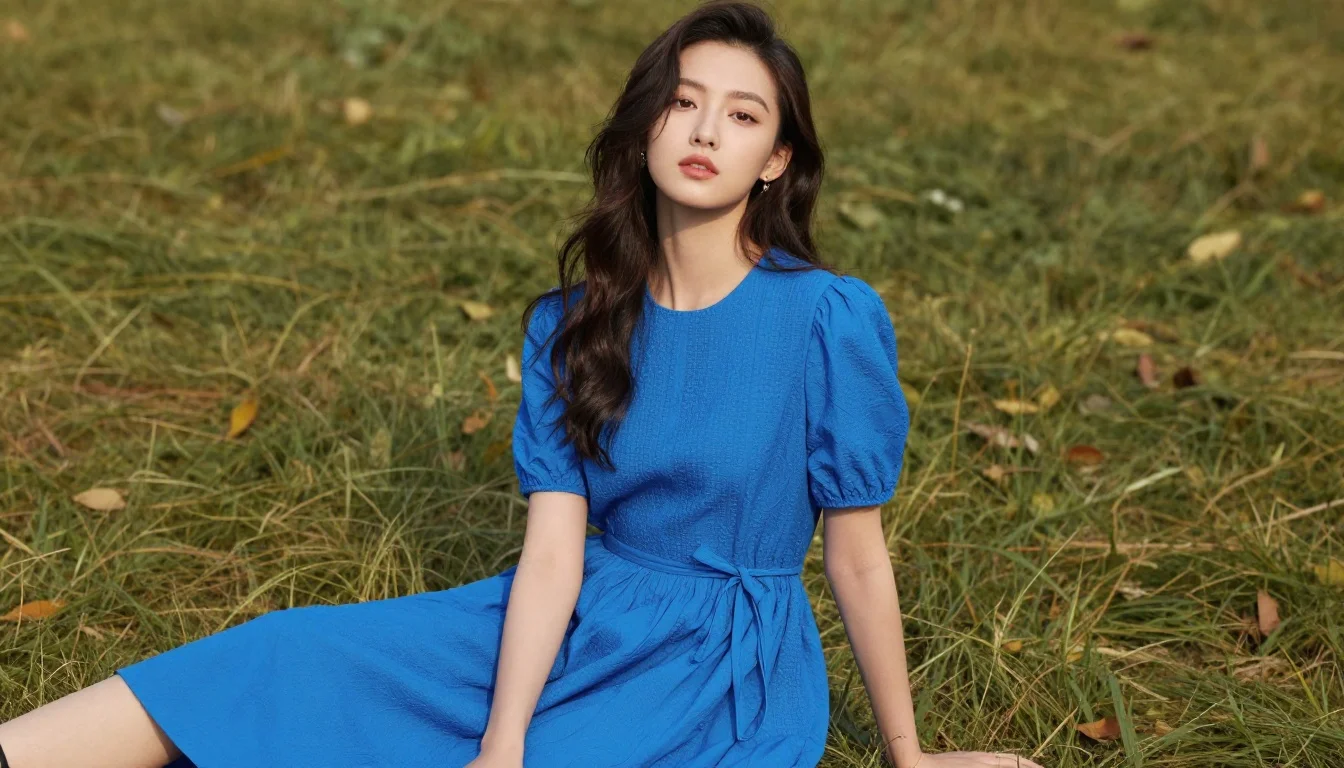
These are the most emphatically Bright Winter dress colors — pure hues at maximum saturation with no muting or warming. True red with neutral-cool balance is a standout: it has the intensity to meet your natural contrast level and looks genuinely striking rather than loud. Electric cobalt amplifies the brightness of cool eyes. Vivid emerald creates striking depth against fair skin. Clear hot pink is the feminine option that delivers the same high-saturation impact.
Maximum Contrast Neutrals
High-contrast neutral combinations are Bright Winter's most powerful dress territory. Pure white alone — crisp and clear — creates maximum contrast against dark features. True black does the same in the opposite direction. Black-and-white contrast prints are particularly excellent because the combination of both extremes replicates the natural contrast of your coloring in the dress itself. These aren't 'safe' neutral choices — they're the precise colors that leverage what makes your appearance distinctive.
Vivid Cool Jewel Tones
Cool jewel tones in their most vivid, undiluted versions belong in Bright Winter's dress palette. Royal purple with maximum saturation amplifies the dramatic quality of dark features. Bright turquoise in its clearest form creates a stunning interplay with fair cool skin. Clear fuchsia magenta — vivid and blue-based — is one of the most flattering Bright Winter dress colors. Vivid teal sits at the blue-green intersection with enough saturation to hold its own against high-contrast coloring.
Icy High-Light Neutrals
The icy, clear lights give Bright Winter a delicate but high-contrast option that works when maximum saturation would be too much for a setting. These are cool pastels stripped of warmth and brought to their clearest form. Icy white-blue and cool silver in evening fabrics look luminous. Pale clear lavender maintains the cool, clear quality that prevents it from softening into Soft Summer territory. These are bright lights — crisp, not chalky.

Ready to see red & cobalt blue on your face?
Start my color analysisHow to Wear Dresses as a Bright Winter
Making a statement without trying
The great advantage of Bright Winter coloring is that a single clear, vivid dress color does all the work. A true red dress on Bright Winter coloring needs no accessories to look complete — the contrast between the vivid dress and your natural features creates a finished look automatically. Resist the temptation to 'soften' or accessorize away the impact. Let the color-plus-coloring combination be the statement.
Professional settings
True black and crisp white are your most reliable professional dress colors. A black sheath or a white structured dress with Bright Winter coloring looks authoritative and deliberate. For settings that welcome color, a vivid cobalt or royal purple dress in a structured silhouette communicates the same professionalism with more visual distinction. Avoid muted or earthy professional staples like camel, warm beige, or sage.
Evening and formal wear
Bright Winter in an evening dress is one of the most high-impact combinations in color analysis. A true red floor-length gown looks genuinely cinematic. Vivid cobalt in silk looks electric against fair skin and dark hair. For the most dramatic formal option, black with white contrast — a black dress with white accents or a bold black-and-white pattern — replicates the natural contrast ratio of your coloring in the garment itself.
Casual and daytime dresses
Casual Bright Winter dresses should maintain saturation even in relaxed contexts. A bright cobalt jersey sundress, a vivid teal casual wrap, a crisp white cotton shift — all maintain the clarity the palette requires while being completely appropriate for casual settings. The mistake is reaching for soft, easy-wear pastels in spring and summer. Clear cobalt is as easy to wear as soft pink; it just looks dramatically better on your coloring.
Dress Colors That Dull Bright Winter Coloring
Muted, dusty, or greyed tones
Any color with significant grey or muting mixed in — dusty rose, soft sage, heathered lavender, greyed teal — is the wrong direction for Bright Winter dresses. Bright Winter's high-saturation, high-contrast coloring makes muted colors look like they're the wrong version of themselves. A greyed-out dress next to bright features simply looks like it was washed too many times.
Warm earth tones and taupes
Warm camel, rust, warm brown, and taupe conflict with the cool-to-neutral undertone of Bright Winter and their mid-level value fails to create the contrast the palette needs. These are the most flattering colors for Autumn seasons precisely because they're warm, earthy, and muted — which is the opposite of what makes Bright Winter work.
Soft warm pastels
Peachy pastels, warm blush, soft warm yellow — these combine warmth with low saturation, creating a double problem for Bright Winter. The warmth conflicts with cool features and the low saturation fails to match the intensity of Bright Winter coloring. The result looks washed out and color-confused.
Muddy or complex mixed colors
Brownish purples, olive-inflected greens, rust-toned reds — colors that read as complex mixtures rather than clear hues — lack the clarity that Bright Winter requires. Bright Winter dress colors should read as clean and identifiable, not as 'almost' a color with something else going on.
Stop guessing — preview every look on you
See these looks on my photoDress Color Swaps for Bright Winter
Replacing low-impact dress choices with high-saturation Bright Winter alternatives.
Dusty rose lacks the saturation to register next to Bright Winter's natural vibrancy. Clear hot pink and fuchsia are in the same hue family but deliver the clarity and punch that makes the color feel deliberate.
Warm mid-tones disappear against Bright Winter coloring. Black and deep navy provide the definitive contrast that works.
Warm peach is low-saturation and warm-based — both the wrong direction. Cobalt and turquoise are summer-bright and cool-clear.
Warm nudes flatten Bright Winter coloring entirely. True red and vivid emerald match the natural contrast level and look genuinely dramatic rather than merely dressed up.
Dusty or warm greens are Autumn colors. Vivid teal and bright emerald are the Bright Winter versions of green — cool and saturated.
Muted prints dissolve next to Bright Winter features. High-contrast prints match the natural drama of your coloring and look intentional rather than faded.
The Bright and Winter Palette Connection
Bright Winter bridges the Winter and Spring families. Understanding the adjacent seasons clarifies why saturation and clarity are your defining dress color requirements.
Bright Winter
Learn moreYour home season. High contrast, maximum saturation, cool-to-neutral base. True vivid brights, high-contrast neutrals, and icy lights are the dress categories that work for you.
Cool Winter
Learn moreAdjacent within Winter — shares the cool base and high clarity. Cool Winter dress colors lean toward icy lights and purely cool jewel tones. Slightly less intense contrast requirement.
Bright Spring
Learn moreThe Spring-adjacent neighbor — shares maximum saturation and vibrancy but tilts slightly warmer and more golden. Bright Spring dresses include warmer vivids and peach-to-coral versions of bright colors that would be slightly outside Bright Winter range.
Find Your Exact Bright Winter Dress Colors
Bright Winter has the most uncompromising dress color requirements of any seasonal palette — but once you know your specific needs, shopping becomes dramatically simpler. You're looking for clarity, saturation, and contrast, and you can leave anything muted, warm, or mid-toned on the rack with complete confidence. A personalized color analysis confirms your exact Bright Winter placement and identifies which specific vivid colors within your range are most exceptional for your individual features.
Stop guessing — preview every color on you
Preview Yourself In Your Palette
Get my personalized paletteStop guessing — preview every color on you
Preview Yourself In Your Palette

Related Guides for Best Dress Colors for Bright Winter
Explore more personalized color advice based on your features.
Want to see these colors on you? What Colors Look Good on Me — free to try.
Frequently Asked Questions About Best Dress Colors for Bright Winter
What dress colors look best on a Bright Winter?
Bright Winter dresses work best in true red, electric cobalt, vivid emerald, clear hot pink and fuchsia, royal purple, bright turquoise, pure black, crisp white, and icy cool pastels. The essential quality is clarity and maximum saturation — no muted, dusty, or warm versions.
Can a Bright Winter wear a red dress?
Yes — true red is one of the best dress colors for Bright Winter. It should be a clear, neutral-based red (not orange-red or rust). A pure, vivid red dress with Bright Winter coloring is one of the most dramatic and intentional-looking combinations in personal color.
Can Bright Winter wear black and white together in a dress?
Black-and-white contrast dresses are exceptionally good for Bright Winter. The combination replicates the natural high-contrast ratio of your coloring — dark and light in sharp relationship. It's one of the most effective print choices for this palette.
What should Bright Winter avoid in a dress?
Bright Winter should avoid muted or greyed colors (dusty rose, soft sage, heather), warm earth tones (camel, rust, taupe), soft warm pastels (peach, blush, warm yellow), and any complex or muddy mixed colors. The key is avoiding low saturation and warmth.
Is Bright Winter different from Deep Winter in dress choices?
Yes — both seasons work in true vivid colors and high-contrast neutrals, but Deep Winter leans into deeper, darker colors (very deep navy, black-cherry, near-black) while Bright Winter also excels in the highest-saturation vivids and icy lights. Bright Winter has a higher vibrancy requirement; Deep Winter has a higher depth requirement.
Can Bright Winter wear pastel dresses?
Only the iciest, most clear cool pastels. Icy blue-white, pale clear lavender, cool mint with maximum clarity — these maintain Bright Winter's essential quality of crispness. Warm pastels, chalky pastels, and soft-muted pastels are all wrong. If the pastel isn't crisp and cool, skip it.