Best Blazer Colorsfor Warm Undertones
Warm undertones suit blazers in earthy, golden, and deep warm shades — but not all of them. Discover how to find the colors that actually flatter your coloring.
Warm-undertoned skin has yellow, peach, or golden quality to it — and blazer color choices that harmonize with this warmth look rich, natural, and intentional. Clashing cool colors drain warmth-undertoned skin of its golden quality, making complexions look grey, dull, or sallow. The key for warm undertones is staying in the warm-to-neutral color temperature range, then choosing enough depth and saturation to create genuine contrast rather than a washed-out blend.


3,000+
happy clients
Why Undertone Temperature Drives Your Best Blazer Colors
Warm-undertoned skin has yellow, peach, or golden quality to it — and blazer color choices that harmonize with this warmth look rich, natural, and intentional. Clashing cool colors drain warmth-undertoned skin of its golden quality, making complexions look grey, dull, or sallow. The key for warm undertones is staying in the warm-to-neutral color temperature range, then choosing enough depth and saturation to create genuine contrast rather than a washed-out blend.
Warm undertones exist on a spectrum — some people are purely golden, others are peachy-warm, and some sit at a warm-neutral midpoint. The undertone temperature of your skin determines which blazer colors sit harmoniously against it. Colors that share your warm temperature look natural and radiant. Colors that are distinctly cool create a visual tension that reads as 'off' — the cool blazer makes warm skin look grey or sallow by contrast.
The depth of your skin tone adds another layer. Warm-toned skin can be fair, medium, or deep — and the depth determines how saturated and vivid your blazer colors should be. Warm-fair skin suits lighter versions of warm colors. Warm-medium skin can handle rich, saturated warm tones. Warm-deep skin can wear the most intense versions and also carry certain cool contrasts that don't work on lighter warm complexions.
A common misconception is that warm undertones mean 'stick to earth tones only.' In practice, warm-undertoned skin can wear a wider range including some neutrals and even certain cool shades — the rules are more about avoiding the sharp, clear cool tones (icy blue, cool grey, stark white with blue tone) rather than avoiding all non-earth colors.

What blazer colors suit warm undertones?
Warm undertones suit blazers in rich earth tones — chocolate brown, cognac, terracotta, rust, and warm olive. Deep warm neutrals like rich camel also work well. The key is staying in the warm-to-neutral temperature range and choosing enough depth and saturation to create contrast. Cool greys, icy pastels, and cool blues and purples are the main colors to avoid.
Your Most Flattering Blazer Colors
Rich Earth Tones
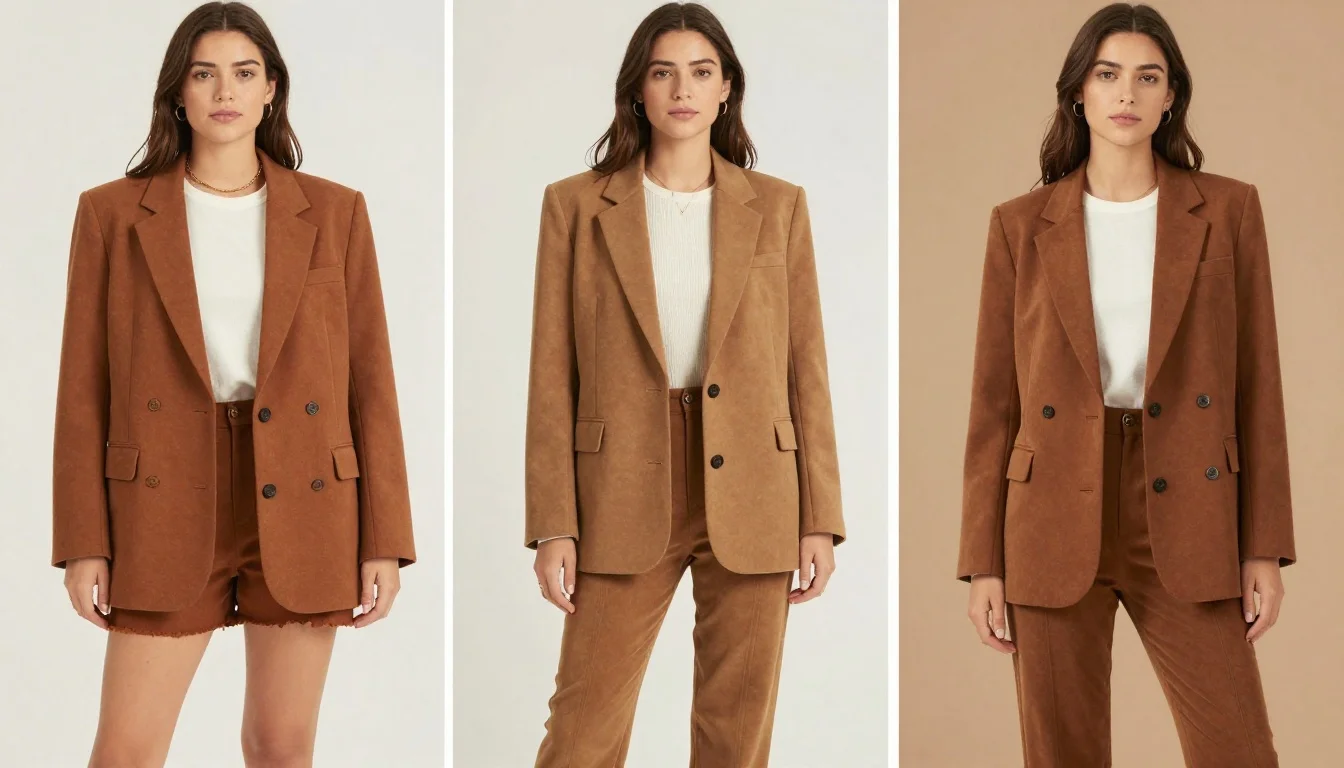
Earth tones are the quintessential warm-undertone blazer colors — they share the golden-warm quality of warm skin while being deep enough to provide real contrast. Chocolate brown is the workhorse of this group: versatile, professional, and immediately harmonious with warm undertones. Cognac adds richness. Terracotta brings in orange warmth that makes warm-toned skin glow. Caramel sits lighter and works well on warm-fair skin.
Warm Greens
Yellow-green tones harmonize directly with warm undertones in a way that cool greens don't. Olive green is particularly effective — it's a warm-neutral that works across many warm-undertone depths. Forest green with a warm bias (brown-green rather than blue-green) is elegant and professional. Deep sage in its richer forms adds warmth without the earthiness of olive.
Warm Burgundy and Rust
Warm reds with brown or orange undertones are exceptionally flattering on warm-toned skin. Burgundy with a brown-warm bias (not a cool berry-wine) adds depth and richness. Rust and brick red take advantage of the warm orange-red wavelengths that make warm undertones look golden and alive. Deep tomato red is bolder but works well on warm-medium to warm-deep complexions.
Deep Camel and Warm Neutrals
For warm undertones specifically, warm neutral blazers work in a way they don't for most other complexion types. The key is choosing deep, saturated warm neutrals rather than pale, chalky ones. Rich camel in a deep, saturated form looks polished and intentional on warm-toned skin. Warm tan and golden beige in medium depths work for smart-casual contexts.

Ready to see chocolate brown & cognac on your face?
Start my color analysisHow to Style Blazers for Warm Undertones
Professional settings
Chocolate brown, warm cognac, or deep camel blazers in professional contexts look authoritative and distinct compared to the default navy-grey palette. A rich brown blazer over a cream or warm white shirt is particularly polished on warm-undertoned skin. Deep warm olive is a strong alternative for creative environments. Avoid the navy that works for cool undertones — it can look slightly off-temperature against warm skin.
Smart-casual combinations
Rust, brick red, or terracotta blazers over a white tee and dark jeans are strong smart-casual choices for warm undertones. The warmth of the blazer plays to the undertone's natural quality. Olive green over neutral basics is another reliable combination. These colors are also stylistically strong at the moment — the earthy warm palette aligns with current knitwear and casual fashion trends.
Creating depth
Warm-undertoned skin at any depth looks best when the blazer creates real tonal contrast. Warm-fair skin should reach for deep camel, cognac, or terracotta rather than pale warm beiges. Warm-medium and warm-deep skin can carry the most saturated earth tones: rich rust, chocolate, and deep olive all read beautifully. The rule is: go deeper and more saturated than you think you need to.
Accessory pairings
Warm undertones suit gold jewelry and warm-toned accessories, which align well with earth-tone blazers. A chocolate brown blazer with gold hardware details looks cohesive and intentional. Warm leather accessories — cognac, camel, saddle brown — are natural pairings for warm-toned blazer wardrobes.
Blazer Colors That Work Against Warm Undertones
Cool grey and silver
Cool grey drains golden warmth from warm-undertoned skin, making complexions look ashy and grey. The cool temperature conflict is visible and unflattering. Deep charcoal with a brown-warm bias is a better alternative if you want a neutral dark blazer.
Icy pastels
Cool icy pastels — pale lilac, icy blue, cool mint — clash with warm undertones, making skin look sallow or grey by contrast. The temperature mismatch between cool-icy and warm-golden skin is one of the starkest and most common blazer mistakes for warm-undertoned people.
Cool purple and blue-violet
True cool purples and blue-violets sit at the opposite end of the color wheel temperature from warm undertones. They make warm skin look grey and drain its golden quality. If you want purple, choose a warm purple (with red rather than blue leaning) or aubergine.
Stark white and cool white
Cool, stark white with a blue tone creates a sharp contrast that makes warm-undertoned skin look yellow by comparison. Off-white, ivory, and cream are far more flattering — they share the warm temperature of warm-toned skin and create harmonious rather than conflicting contrast.
Stop guessing — preview every look on you
See these looks on my photoBlazer Swaps That Flatter Warm Undertones
Replacing the shades that drain warm skin for ones that make it glow.
Cool grey fights warm undertones. Cognac and chocolate harmonize with warm skin's golden quality while providing professional depth.
Icy blue clashes with warm undertones. Olive green shares the warm-yellow quality of warm skin and looks immediately harmonious.
Cool lavender drains warmth. Brick red and terracotta play directly to warm undertones' golden-warm quality.
Stark cool white makes warm skin look yellow. Ivory and cream share the warm temperature and create harmonious contrast.
Cool silver drains warmth from warm undertones in evening settings. Burgundy and rust add richness that enhances the golden quality of warm skin.
Which Color Season Fits Warm Undertones?
Warm undertones span several autumn and spring seasonal palettes. Your depth and saturation level determine which warm season best captures your optimal blazer colors.
Warm Autumn
Learn moreIf your warm undertones sit in medium to medium-deep skin, your hair is warm brown or auburn, and your overall coloring feels rich and earthy, Warm Autumn is likely your season. Your blazer palette centers on rich earth tones: camel, terracotta, warm olive, chocolate, and rust. Everything has warmth, depth, and earthiness.
Warm Spring
Learn moreIf your warm undertones sit in lighter, peachy-golden skin, your overall coloring is warm and bright rather than deep or earthy, Warm Spring fits best. Your blazer palette is warm and lighter: warm camel, peach, warm coral, and golden tan. Deep and muted earth tones can feel heavy.
Deep Autumn
Learn moreIf your warm undertones come with a deep skin tone and your overall coloring is rich, saturated, and high-pigment, Deep Autumn may be your season. Your blazer palette is warm and deeply saturated: chocolate, dark terracotta, forest green, and rich burgundy. You can handle more intensity than lighter warm seasons.
Find Your Exact Blazer Colors
Warm undertones have one of the clearest color direction in blazer dressing — earthy, rich, and golden. But the precise range that works best for you depends on whether your warmth is peachy, golden, or olive-warm, and how deep your skin tone is overall. A personalised color analysis identifies your exact warm season and gives you a precise blazer palette matched to your specific undertone depth and saturation level.
Stop guessing — preview every color on you
Preview Yourself In Your Palette
Get my personalized paletteStop guessing — preview every color on you
Preview Yourself In Your Palette

Related Guides for Best Blazer Color for Warm Undertones
Explore more personalized color advice based on your features.
Want to see these colors on you? Skin Undertone Test — free to try.
Frequently Asked Questions About Best Blazer Color for Warm Undertones
What blazer colors suit warm undertones?
Warm undertones suit blazers in rich earth tones — chocolate brown, cognac, terracotta, rust, and warm olive. Deep warm neutrals like rich camel also work well. The key is staying in the warm-to-neutral temperature range and choosing enough depth and saturation to create contrast. Cool greys, icy pastels, and cool blues and purples are the main colors to avoid.
Can warm undertones wear navy blazers?
Navy can work for warm undertones if it leans warm — a blue-navy with some warmth to it rather than a sharp, cool blue-navy. True cool navy can clash slightly with warm undertones. If you love navy, look for versions described as 'warm navy' or 'indigo' rather than sharp, pure cool navy. Brown-toned dark options like chocolate or cognac are generally more reliably flattering.
Do warm undertones suit black blazers?
Black can look slightly harsh against warm-undertoned skin, particularly if the skin is light-to-medium. It works better on deeper warm complexions where there's enough depth in the skin to match the intensity of black. Deep charcoal with a warm-brown undertone is a more flattering alternative for most warm complexion types. Rich chocolate brown achieves the same formality with better undertone harmony.
What is the best professional blazer for warm undertones?
Chocolate brown is the strongest professional blazer for warm undertones — it reads as authoritative, works across industries, and harmonizes with warm-toned skin at every depth. Deep warm olive and cognac are strong alternatives. If the industry requires navy or charcoal, choose the warmest version available — a blue-navy rather than a cool navy, or a charcoal with brown warmth rather than cool grey.
Can warm undertones wear green blazers?
Yes — but the green type matters. Warm greens (olive, forest with brown-green tone, deep sage with warmth) are excellent for warm undertones. Cool greens (emerald with blue-green, mint, cool teal) work less well. The yellow-green quality of warm greens harmonizes directly with warm undertones' golden quality.