System
4 seasons
- Structure
- Spring, Summer, Autumn, Winter
- What it adds
- Broad warm/cool and light/deep direction
- Best use
- A fast introduction to your main color family
See how the four color families expand into 12 and 16 sub-seasons using undertone, value, and chroma.
Seasonal color analysis is a framework for organizing flattering colors. It begins with Spring, Summer, Autumn, and Winter, then uses undertone, value, and chroma to place you more precisely. The result is a usable palette rather than a rule about which colors you are allowed to wear.


3,000+
happy clients
Seasonal color analysis groups your natural coloring into Spring, Summer, Autumn, or Winter, then refines that family using undertone, value, and chroma. Four-season systems stay broad; 12- and 16-season systems add sub-seasons so your recommended clothing, makeup, and neutral colors become more precise.
Seasonal color analysis is a framework for organizing flattering colors. It begins with Spring, Summer, Autumn, and Winter, then uses undertone, value, and chroma to place you more precisely. The result is a usable palette rather than a rule about which colors you are allowed to wear.
Before seasonal color analysis, personal styling advice was arbitrary — wear your best color, whatever that meant. The seasonal system introduced a systematic way to categorize natural human coloring along axes that actually predict how colors perform next to the face. The two primary axes are temperature (warm vs cool) and depth (light vs dark), with a third axis of saturation (vivid vs muted) adding precision.
The modern four-season framework was popularized in the 1980s by Carole Jackson's 'Color Me Beautiful.' Later systems split each family into sub-seasons. The common 12-season approach uses three palettes per family; the 16-season Sci\ART framework used by Palette Hunt uses four, preserving more nuance in undertone, value, and chroma.
The reason it works is that colors have temperature too. Terracotta is warm (yellow-based). Cobalt is cool (blue-based). When a warm-toned color sits next to a warm-toned face, they harmonize and the skin looks clear, healthy, and even-toned. When a cool-toned color sits next to a warm-toned face, the two temperatures conflict — and the skin shows every imperfection, redness, or sallowness. This isn't aesthetic preference; it's color physics applied to the human face.
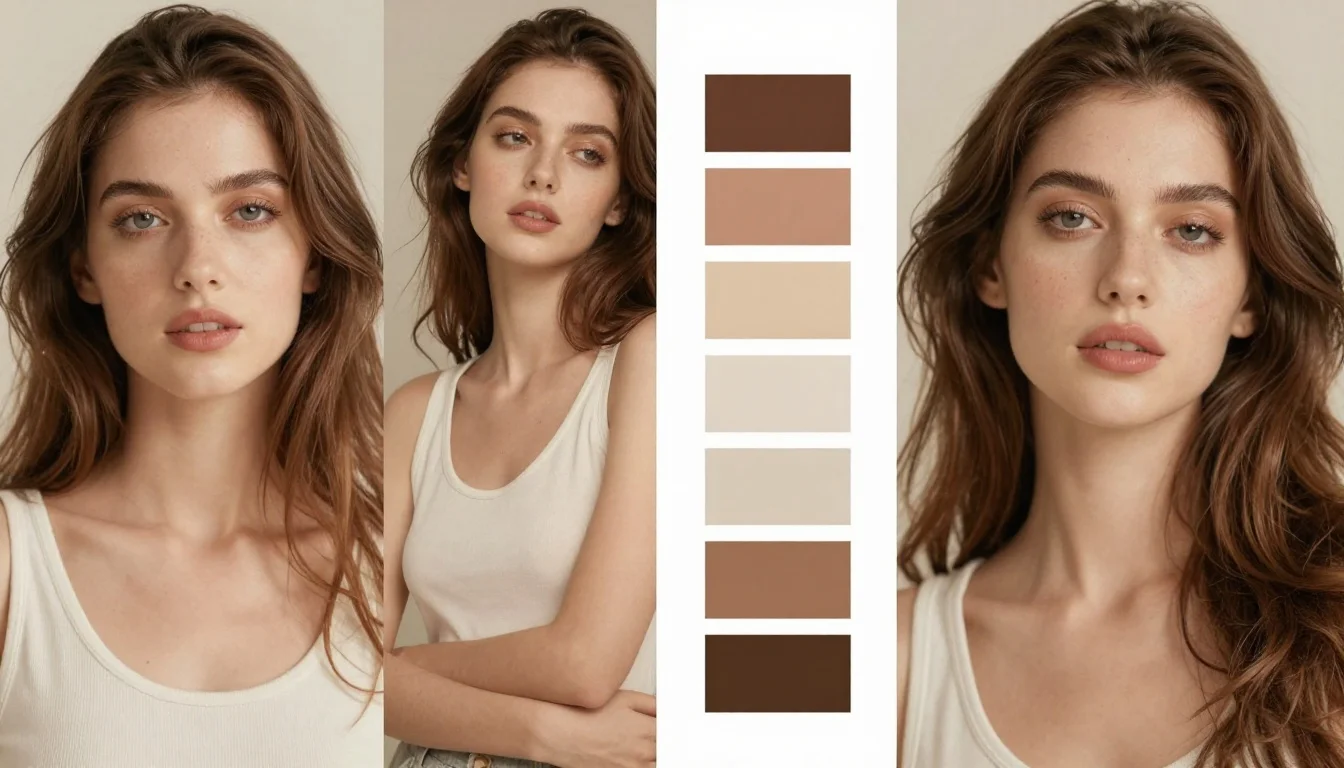
Spring coloring is warm (golden or peachy undertones), relatively light, and often has a fresh, clear quality. Hair tends toward golden blonde, strawberry blonde, warm light brown, or bright auburn. Eyes are often warm — hazel, warm green, warm brown, or blue with warm flecks. The Spring palette reflects this: colors are warm and clear, neither too muted nor too dark. Pastels that work for Spring are the warm kind — peach, coral blush, warm aqua — not cool mint or lavender.
Summer coloring is cool (pink or neutral-cool undertones), soft, and typically medium in depth — not strongly dark or strongly light. Hair is often mousy brown, ash blonde, or cool grey. Eyes tend toward cool blue, grey, or muted grey-green. The Summer palette is defined by being cool and muted: dusky pinks, soft blues, lavender, and soft teals all share the same muted, cool quality that harmonizes with Summer coloring. Harsh or vivid colors overpower Summers.
Autumn coloring is warm (golden or bronze undertones), typically medium to deep, and often has a muted richness. Hair tends toward warm brown, auburn, chestnut, or dark golden tones. Eyes are often warm — warm hazel, golden brown, warm olive green. The Autumn palette is warm and muted: earth tones, spice colors, and rich botanicals. These are not the clear, bright warm colors of Spring — they have depth and a slightly dusty, muted quality that matches the natural complexity of Autumn coloring.
Winter coloring is cool (pink, blue, or neutral-cool undertones) and either very deep or very high-contrast — dark hair with fair skin, for example, or very deep cool skin. Eyes are often vivid or striking. The Winter palette matches this intensity: cool and vivid colors, dramatic neutrals, pure white and true black. Winter palettes are the most striking and require the most color contrast. Muted or warm colors look weak against Winter coloring.
The systems share the same four families. What changes is how finely they divide people whose coloring sits between broad seasonal descriptions.
System
System
System
| System | Structure | What it adds | Best use |
|---|---|---|---|
| 4 seasons | Spring, Summer, Autumn, Winter | Broad warm/cool and light/deep direction | A fast introduction to your main color family |
| 12 seasons | Three sub-seasons inside each family | Dominant traits such as Light, Deep, Bright, Soft, Warm, or Cool | A more specific wardrobe palette for most people |
| 16 seasons | Four palettes inside each family | A True/Core palette plus finer undertone, value, and chroma distinctions | The more precise Sci\ART framework used by Palette Hunt |
More seasons do not make the four-season foundation wrong; they reduce the compromises for people near a seasonal boundary.

The colors with the greatest impact on how you look are those worn directly at face level: shirt or blouse collar, scarf, neckline. A sweater in your wrong season worn under a jacket mostly hidden — fine. That same sweater with the collar visible at your face — significant. Prioritize getting face-adjacent colors right, and you can be more relaxed about pieces that stay away from the face.
Every season has a set of neutrals — the blacks, whites, greys, browns, and navies that form the backbone of a wardrobe. Getting these right is the highest leverage move in seasonal dressing. Warm seasons use camel, chocolate, ivory, and warm grey. Cool seasons use charcoal, cool grey, navy, and pure white. Wearing wrong-season neutrals as base pieces means every outfit starts with temperature conflict.
Once your neutrals are right, layer in the accent colors from your palette for interest and personality. For Springs: warm coral, turquoise, warm peach. For Summers: dusty rose, soft lavender, slate blue. For Autumns: terracotta, forest green, warm burgundy. For Winters: cobalt, fuchsia, emerald. These pairings work because both the neutral base and the accent color share the same seasonal temperature and depth.
The only reliable way to confirm a color works for you is to hold it against your bare face in natural daylight. No makeup, near a window. Does your skin look even and clear? Do your eyes look brighter? Does your face look healthy? Or does the color pull out redness, make you look tired, or grey your complexion? Trust the test over the appeal of the color on the hanger.
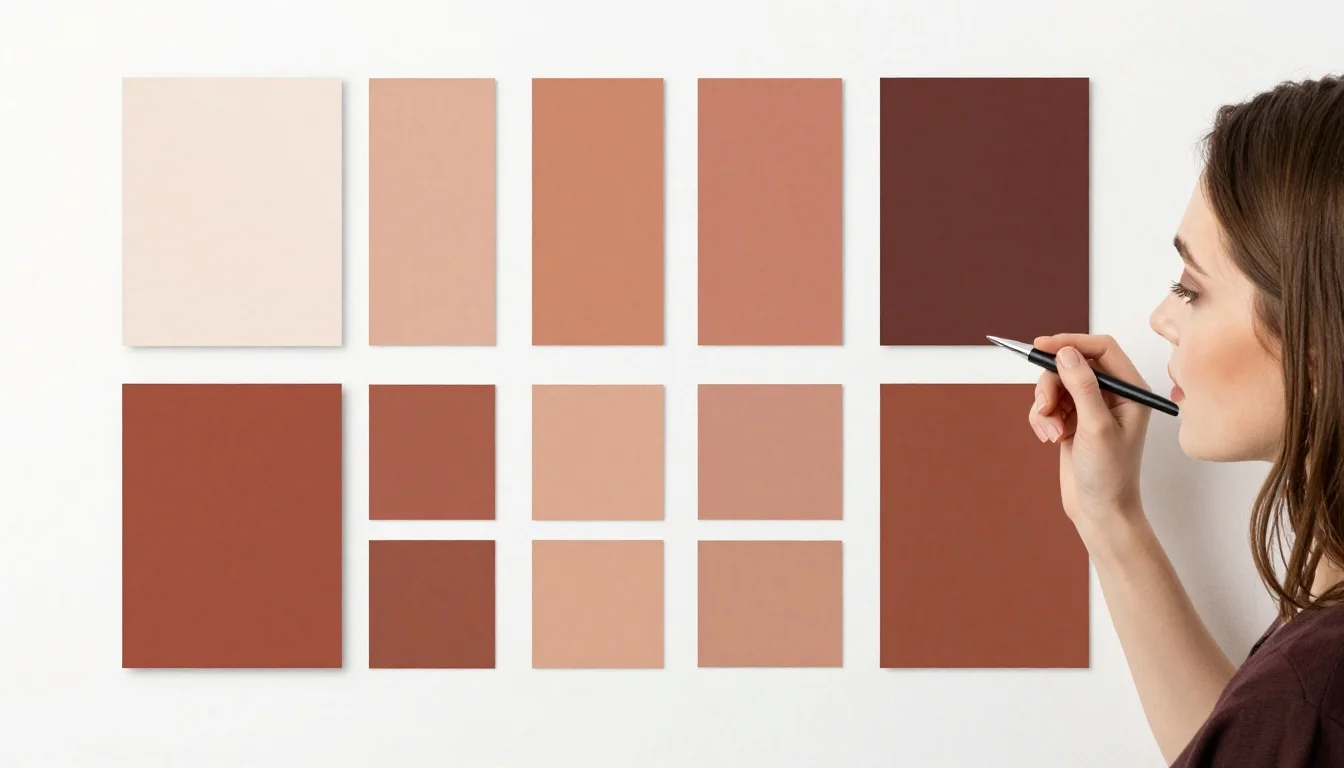
Once the framework makes sense, take the free seasonal color analysis quiz to narrow your undertone, value, chroma, and likely season.
The most common error: assuming that dark skin is automatically warm-toned, or that fair skin is automatically cool-toned. Undertone is independent of depth. Many deep-skinned people have cool undertones (appearing in vivid cool palettes like Cool Winter), and many very fair people have warm undertones (appearing in warm palettes like Warm Spring or Warm Autumn). Always test undertone separately from skin depth.
Four-season, 12-season, and 16-season labels describe different levels of detail. Two people can both be Autumn while needing different depths or chroma. Always check which framework a result uses before comparing its palette with another analysis.
Seasonal analysis identifies your most flattering palette — it doesn't prohibit you from wearing other colors. The goal is knowing which colors are reliably flattering and which require extra care. A Soft Summer can wear warm colors; they just benefit from keeping them away from the face (in bottoms, shoes, or bags) while wearing their cool palette near the face.
Hair color is one input, not the whole picture. Natural hair color gives important clues, but the undertone of the skin and the clarity of the eyes matter equally. A natural redhead might be Warm Autumn, Warm Spring, or even Deep Winter depending on the complete picture of their coloring. Seasonal analysis requires evaluating all features together.
Concrete swaps that show how seasonal temperature shifts change the effect on different colorings.
Pure white has a cool, sharp quality that can make warm Autumn coloring look sallow. Warm ivory or cream matches the golden warmth in Autumn skin and hair.
Dusty mauve is a cool, muted color that belongs to Summer. Spring coloring needs warmth and clarity — peach and coral provide the warm temperature that makes Spring skin glow.
Camel is warm and golden — a strong Autumn color that clashes with cool Winter undertones. Charcoal and deep navy have the cool depth that harmonizes with Winter's cool, high-contrast coloring.
True black is high-contrast and intense — more suited to Winter coloring. Soft charcoal and cool dark navy have the same cool base but lower intensity, which is more harmonious with Summer's softer quality.
Bright clear yellow has the vivid quality of Spring but lacks the depth that Autumn coloring needs. Deep mustard and warm gold are both warm-based but carry the richness that makes Autumn colors work.
Dusty rose is the muted, soft version of pink — a Summer staple. For Winter, the same pink family works but needs to be vivid and cool: fuchsia and magenta have the intensity that matches Winter's high-contrast clarity.
Seasonal color analysis starts with your primary family, then refines it inside the 16-season framework. Ask whether your dominant trait is warm or cool, light or deep, and bright or soft. Your strongest combination points to the most likely palette.
Warm undertones with deep, rich coloring — dark hair, warm dark eyes, bronze or olive-brown skin. The deepest and richest of the warm seasons. Deep, earthy, spiced colors.
Cool undertones with strong depth or high contrast — often dark features against cool-toned skin. Clear, vivid, cool colors with strong contrast work best.
Cool or neutral undertones with soft, blended coloring — nothing too vivid or too dark. Muted, cool, gentle colors that never overpower the natural softness.
Seasonal color analysis is the most direct path from confusion about what to wear to a wardrobe that reliably works. Once you know your season and sub-season, shopping becomes faster, getting dressed becomes easier, and every mirror confirms you made the right choice. A professional color analysis — or an AI-powered tool like Palette Hunt — identifies your exact palette from your unique combination of skin, hair, and eye coloring.
Preview Yourself In Your Palette
Get my personalized analysisPreview Yourself In Your Palette

Explore more personalized color advice based on your features.
Want to see these colors on you? What Colors Look Good on Me — free to try.
Seasonal color analysis groups your natural coloring into Spring, Summer, Autumn, or Winter, then refines that family using undertone, value, and chroma. Each final season corresponds to clothing, makeup, and neutral colors designed to harmonize with those traits.
The original system has four seasons: Spring, Summer, Autumn, and Winter. A common expanded system has 12 seasons, with three sub-seasons per family. Palette Hunt uses the 16-season Sci\ART framework, with four palettes per family for finer undertone, value, and chroma distinctions.
Start by determining your undertone: hold pure white and warm cream fabric near your bare face — whichever looks better indicates whether you're cool or warm toned. Then assess your depth (how light or dark your natural coloring is overall) and your clarity (how vivid vs soft your coloring is). These three factors together point to a season. Professional draping with colored fabric swatches or an AI color analysis tool gives the most accurate result.
Your genetic coloring doesn't change, so your true season remains constant throughout your life. However, significant changes — going grey, tanning heavily, or changing hair color — can make you appear to shift seasons because your visible coloring has changed. The underlying season determined by your natural undertone and depth stays the same.
Some people do flatter multiple season palettes, especially if they have neutral undertones or sit on the border between two seasons (like Soft Autumn and Soft Summer). The goal of color analysis isn't to restrict you but to identify the palette with the highest density of reliably flattering colors. If you truly wear both warm and cool colors well, neutral undertone or a 'bridge' season like Soft Autumn is likely the accurate answer.