How to Dress WhenGoing Grey
Going grey changes what flatters you — often before you realize it. Discover how to wear them confidently — matched to your undertone.
The trickiest part of going grey isn't the grey itself. It's the in-between. Your hair is neither the color it was nor fully silver, and suddenly half your wardrobe looks slightly off. Colors that worked beautifully against your natural brunette or auburn now drain your face. The good news: this isn't permanent confusion. Your coloring is shifting, and your wardrobe just needs to shift with it. Once you understand what's actually changing — contrast, undertone temperature, saturation needs — dressing through the grey transition becomes straightforward.


3,000+
happy clients
Why Your Old Wardrobe Stops Working
The trickiest part of going grey isn't the grey itself. It's the in-between. Your hair is neither the color it was nor fully silver, and suddenly half your wardrobe looks slightly off. Colors that worked beautifully against your natural brunette or auburn now drain your face. The good news: this isn't permanent confusion. Your coloring is shifting, and your wardrobe just needs to shift with it. Once you understand what's actually changing — contrast, undertone temperature, saturation needs — dressing through the grey transition becomes straightforward.
When hair begins to grey, two things change simultaneously. First, your overall contrast shifts. Dark hair against light skin is high contrast. Salt-and-pepper is medium contrast. Fully silver is a different kind of high contrast — bright against skin. During the transition, you're in a no-man's land where your old high-contrast pieces may feel too harsh and your softer pieces may feel washed out.
Second, the undertone temperature near your face changes. Pigmented hair has a clear warm or cool cast — chestnut is warm, ash brown is cool. Grey hair is essentially neutral, leaning slightly cool. As grey increases, the warm or cool signal from your hair weakens. This means warm-toned people may find their warmest colors suddenly feel disconnected from their face. Cool-toned people may find their coolest shades start to overwhelm rather than complement.
The practical result: colors you've worn for decades can start looking 'off' without any obvious reason. The instinct is to blame aging, but it's almost always a contrast and undertone mismatch. Fix those two variables and your clothes work again — often better than before.
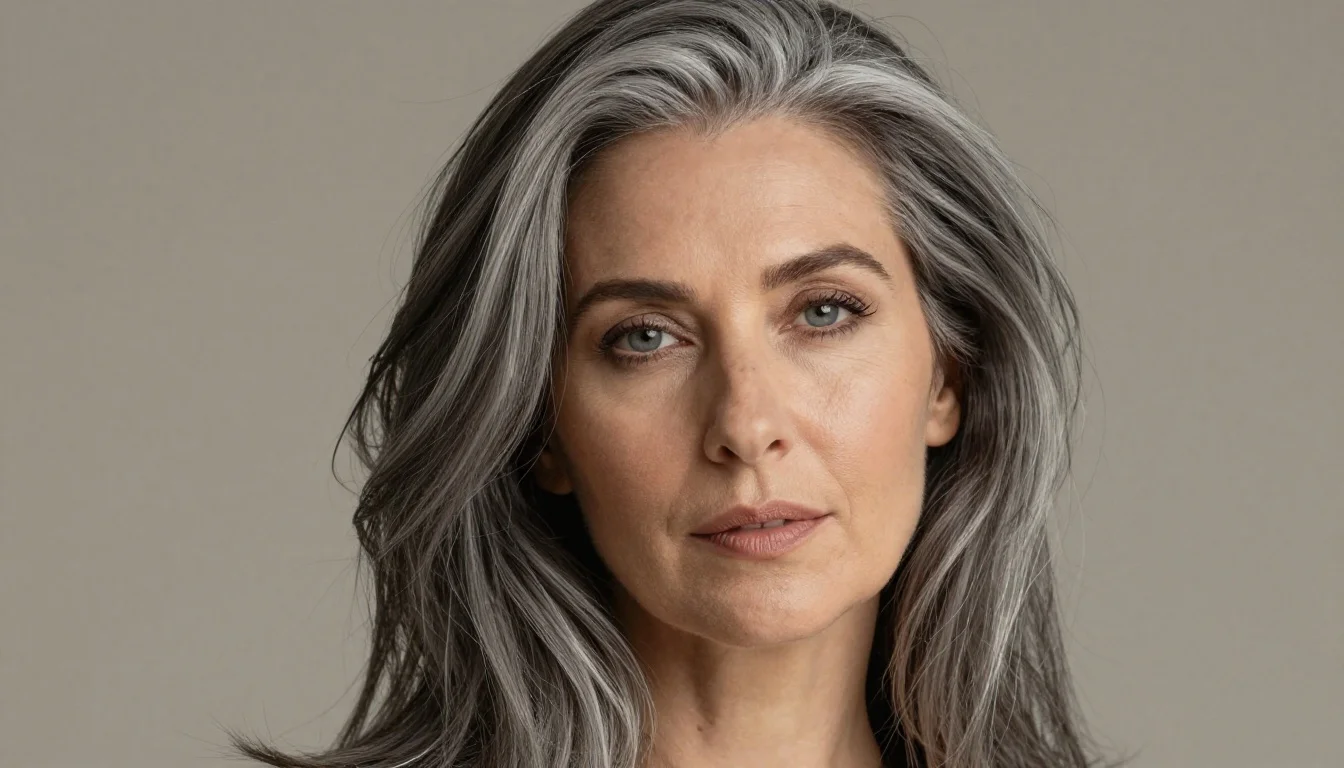
How do I dress when my hair is going grey?
Focus on adjusting the colors closest to your face first. Rich jewel tones (teal, sapphire, amethyst), warm mid-depth neutrals (cognac, warm camel), and clear medium-depth colors (raspberry, true red) tend to work well at every stage of the transition. Avoid colors that matched your original hair and anything muted or washed-out near the face.
Colors That Work at Every Stage of the Transition
Rich Jewel Tones
Jewel tones are the most reliable family during the grey transition because their depth and saturation create contrast without requiring a specific hair color to anchor them. Deep teal flatters cool and warm grey equally. Sapphire frames salt-and-pepper beautifully. These colors work whether you're ten percent grey or eighty percent — they never need to be recalibrated as the transition progresses.
Warm Mid-Depth Neutrals
As grey enters your hair, warm neutrals with genuine depth become especially useful. They create a sophisticated tonal relationship with salt-and-pepper hair — neither matching it nor fighting it. Cognac and warm camel are particularly good because they add warmth near the face without depending on warm hair to make sense. Rich taupe bridges warm and cool, making it nearly foolproof during the transition.
Clear Medium-Depth Colors
Medium-depth colors with genuine clarity — not muted, not neon — hit the sweet spot during the transition. They're strong enough to hold their own against changing contrast levels but not so dark or vivid that they overwhelm a softening overall palette. Clear raspberry is especially versatile: it reads as polished whether your hair is mostly dark with silver threads or mostly silver with dark remnants.
Deep, True Neutrals
Deep neutrals provide the structural backbone your wardrobe needs as contrast levels fluctuate. True navy works at every single stage of the grey transition — it's possibly the most reliable color you can own. Deep charcoal creates clean contrast without the starkness of pure black. Slate sits between blue and grey and naturally harmonizes with silver threads in the hair.

Not sure yet? See it on your face
Start my color analysisHow to Navigate the Transition Gracefully
Adjust your neckline colors first
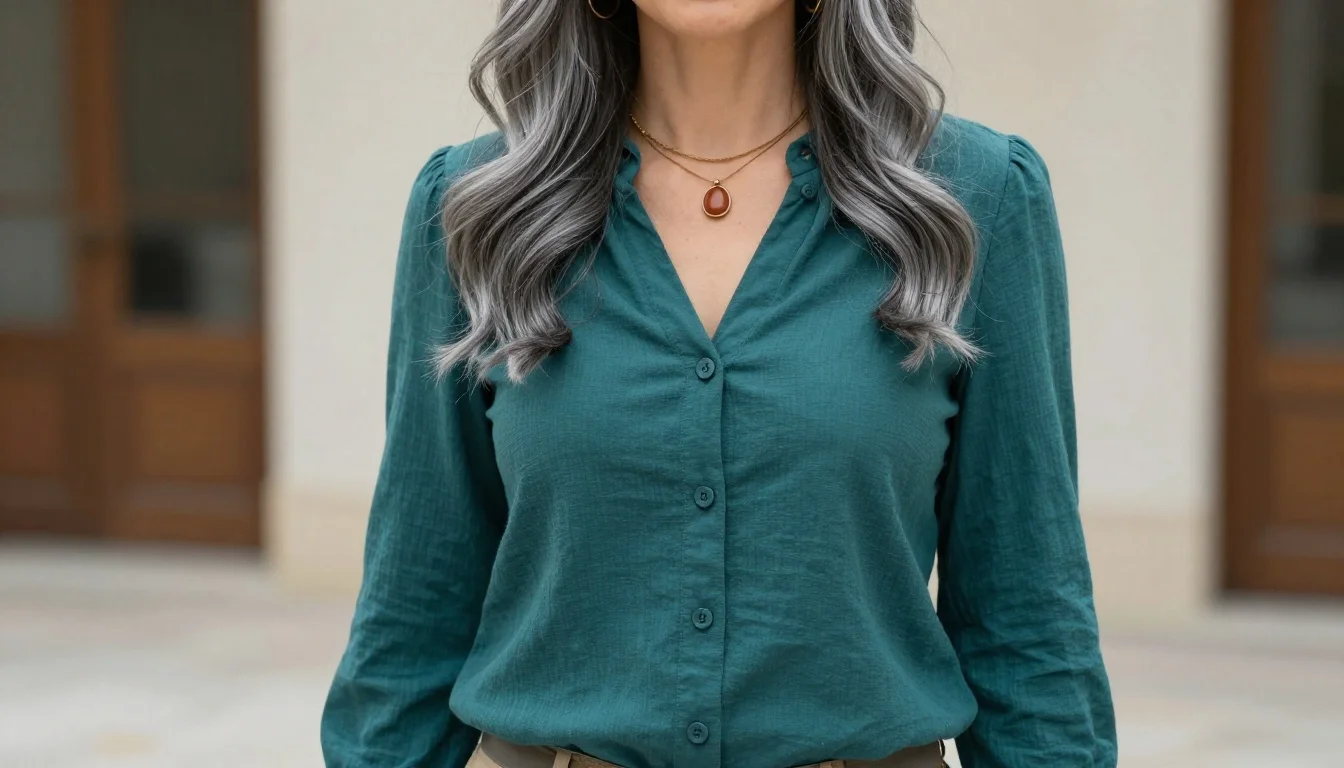
The colors closest to your face matter most during the grey transition — that's where the changed contrast is visible. Start there. Swap tops, scarves, and collared shirts before worrying about trousers or skirts. A deep teal blouse or sapphire crew-neck can immediately correct the 'something looks off' feeling, even if the rest of your wardrobe hasn't changed yet.
Use accessories to bridge the gap
Scarves, statement necklaces, and earrings in your most flattering new tones create a buffer between your transitioning hair and any clothing that hasn't been updated yet. A silk scarf in deep jewel tones near the face can carry a neutral outfit through the awkward middle phase. Earrings in warm gold or cool silver (matching your grey's temperature) also help frame the face intentionally.
Increase contrast deliberately
Salt-and-pepper hair reduces your natural contrast. Compensate with intentional contrast in your clothing: dark bottoms with lighter tops, a deep blazer over a cream blouse, or a rich-toned scarf against a neutral base. This visual structure replaces the contrast your solid hair color used to provide. Without it, outfits can look flat during the transition.
Reassess every six months
The grey transition isn't a single event — it unfolds over years. What works at thirty percent grey won't necessarily work at seventy percent. Check in with your wardrobe twice a year: hold your most-worn tops near your face in natural light. If something that worked six months ago now looks slightly dull or disconnected, it's time to rotate it out. The transition asks you to stay attentive rather than settling on one formula.
What Stops Working as Grey Comes In
Colours that matched your original hair
If you're a brunette going grey, medium brown tops and dresses that once echoed your hair now create an awkward half-match — close enough to look intentional, different enough to look off. The eye reads it as 'trying to match' and failing. Move away from your old hair-matching colors and toward contrast or harmony instead.
Washed-out pastels and dusty tones
The grey transition already softens your overall coloring. Adding soft, dusty, low-saturation colors on top creates a cumulative washed-out effect — everything reads as faded. Dusty rose, chalky blue, greyed lavender, and muted sage all lose their power during this phase. Save them for after the transition if they suit your final seasonal palette.
Mid-tone grey clothing
Medium grey fabric next to salt-and-pepper hair creates visual confusion — neither matching, nor contrasting, nor creating a deliberate tonal story. The eye can't resolve the relationship. Go much darker (charcoal) or avoid grey-toned clothing near the face entirely during the transition. Grey clothes work again once you're fully silver.
Very warm yellows and oranges
As grey cools the temperature near your face, pure warm colors like marigold, golden yellow, and tangerine start to clash with the cool silver at your temples. The warm-cool conflict is most jarring during the transitional phase. Muted warm tones (cognac, warm taupe) still work. Pure, bright warm tones increasingly don't.
Stop guessing — discover your exact palette
See myself in my colorsWardrobe Swaps for the Grey Transition
The pieces that stop working as grey arrives — and the replacements that carry you through every stage.
Warm medium tones that once harmonized with pigmented hair lose their anchor as grey increases. Jewel tones create fresh contrast that works regardless of how much grey is present.
Dusty tones compound the softening effect of grey hair and create a washed-out look at the neckline. Clear raspberry has enough saturation to hold its own; warm ivory creates clean contrast.
Pale, low-contrast accessories near the face disappear against transitioning hair. A jewel-toned scarf frames the face with intention and gives salt-and-pepper hair a backdrop to look striking against.
Light, mid-tone outerwear blends into salt-and-pepper hair and reduces visual structure. Deep navy or warm charcoal creates a defined frame that makes the grey look deliberate and polished.
Muted, warm-neutral dresses lose their flattery as grey shifts your face's temperature. True red and deep teal are strong enough to create their own visual anchor regardless of the hair transition stage.
Heathered, muted knits in the mid-tone range blend into transitioning hair and create a uniform dullness. Rich burgundy adds depth and warmth; cognac creates a sophisticated tonal complement to silver threads.
How the Grey Transition Affects Your Season
As grey changes your coloring, your color season may shift. Many people move toward a cooler, softer season as grey progresses. Understanding where you're heading helps you dress proactively rather than reactively.
Cool Summer
Learn moreMany warm-season types shift toward Cool Summer as grey dominates — the warm signal from their hair fades and their overall coloring becomes cooler and softer. If you're noticing that your formerly warm wardrobe feels 'too much' and softer, cooler tones are starting to feel right, you may be transitioning into Cool Summer territory.
Soft Summer
Learn moreIf your grey is coming in as a soft, warm silver rather than stark white — and your skin has muted, neutral undertones — you may find yourself in Soft Summer. This season's gentle, slightly cool palette works beautifully with the low-contrast, muted quality of the mid-transition phase.
Cool Winter
Learn moreIf your grey is heading toward bright white or platinum silver, and you have high contrast with fair skin and vivid eyes, you may be moving into Cool Winter. This is the season where grey hair becomes a genuine asset — the striking contrast between white hair and vivid features means you can carry bold, clear colors with ease.
Own the Transition
Going grey is a shift, not a loss. Your coloring is evolving, and the right wardrobe evolves with it — not by hiding the grey, but by framing it so well that it looks like the plan all along. The specific colors that work best for your transition depend on your skin's undertone, the temperature of your emerging grey, and how your contrast is changing. A personalized color analysis can map exactly where your coloring is now and where it's heading, giving you a wardrobe roadmap that keeps you looking sharp through every stage.
Stop guessing — preview every color on you
Preview Yourself In Your Palette
Get my personalized analysisStop guessing — preview every color on you
Preview Yourself In Your Palette

Related Guides for How to Dress When Going Grey
Explore more personalized color advice based on your features.
Want to see these colors on you? What Colors Look Good on Me — free to try.
Frequently Asked Questions About How to Dress When Going Grey
How do I dress when my hair is going grey?
Focus on adjusting the colors closest to your face first. Rich jewel tones (teal, sapphire, amethyst), warm mid-depth neutrals (cognac, warm camel), and clear medium-depth colors (raspberry, true red) tend to work well at every stage of the transition. Avoid colors that matched your original hair and anything muted or washed-out near the face.
Why do my clothes look different now that I'm going grey?
Two things are changing: your overall contrast level (salt-and-pepper is lower contrast than solid dark hair) and the undertone temperature near your face (grey is cooler and more neutral than pigmented hair). Both affect how your clothes interact with your complexion. The clothes haven't changed — your coloring has.
Should I wear more black when going grey?
Black can work, but it depends on your stage. During the salt-and-pepper phase, black may feel too stark — deep navy and charcoal often look more refined. Once you're fully silver, black creates a beautiful high-contrast frame. During the transition, deep colors with some warmth or richness (teal, burgundy, navy) tend to look more intentional than pure black.
What colors should I avoid during the grey transition?
Avoid mid-tone grey clothing (it blurs into salt-and-pepper hair), dusty and muted pastels (they compound the washed-out effect), pure bright warm colors like marigold and tangerine (they clash with cool silver), and colors that closely matched your original hair color (they create an awkward almost-match).
Does going grey change my color season?
Often, yes. As grey replaces pigmented hair, the warm or cool signal from your hair shifts toward neutral-cool. Many people find their season moves cooler — from Warm Autumn toward Soft Summer, for example, or from Warm Spring toward Cool Summer. A re-analysis when you're significantly grey can recalibrate your entire palette.
How do I stop looking washed out with grey hair?
Increase the saturation and contrast in your clothing near the face. Avoid muted, dusty, or pale colors close to your face and choose rich jewel tones, deep neutrals, or clear medium-depth colors instead. Adding deliberate contrast through your outfit structure — dark with light — also compensates for the reduced contrast that salt-and-pepper hair creates.