Am I a Summer ora Winter?
Both Summer and Winter are cool-toned color seasons. Discover how to find your perfect shade — and skip the ones that wash you out.
You've confirmed your cool undertones — white and silver both won. But cool-toned people split into two very different camps: Summer, with its soft, muted, gentle palette; and Winter, with its vivid, high-contrast, striking palette. A cool dusty lavender that's perfect for a Summer looks washed out on a Winter. A vivid cobalt blue that's stunning on a Winter looks harsh and overpowering on a Summer. Here's how to tell which cool family is yours.


3,000+
happy clients
Why Summer and Winter Need Such Different Colors
You've confirmed your cool undertones — white and silver both won. But cool-toned people split into two very different camps: Summer, with its soft, muted, gentle palette; and Winter, with its vivid, high-contrast, striking palette. A cool dusty lavender that's perfect for a Summer looks washed out on a Winter. A vivid cobalt blue that's stunning on a Winter looks harsh and overpowering on a Summer. Here's how to tell which cool family is yours.
Summer and Winter share cool undertones — pink, rosy, or blue-based skin. But they diverge sharply on two other axes: depth and clarity. Summer coloring is typically soft, medium, and gently muted — like a hazy summer day with soft light. Winter coloring is vivid, deep, or high-contrast — like crisp, clear winter air with stark contrasts.
When a Summer wears vivid Winter colors, the contrast is too much — the colors overpower the gentle, blended quality of Summer coloring and make the person look pale or harsh. When a Winter wears soft Summer colors, the muted quality reads flat and grey against Winter's strong, clear coloring.
Getting this right is important because both seasons avoid warm colors — but they need very different versions of cool ones. A Summer needs dusty rose; a Winter needs vivid fuchsia. A Summer needs soft slate; a Winter needs sharp cobalt. Precision here changes everything.

What is the main difference between Summer and Winter color seasons?
Both are cool-toned, but Summer colors are soft, muted, and medium in depth — dusty rose, powder blue, soft lavender. Winter colors are vivid, clear, and high-contrast — cobalt, fuchsia, emerald, pure white, and true black. The difference is in clarity and depth: Summer is gentle and blended, Winter is striking and saturated.
Colors That Work for Summer vs Winter
Summer: Soft, Muted, Cool
Summer colors have a dusty, muted quality — like they've had a little grey blended in. They're cool but never sharp. The best Summer colors are soft versions of cool hues: dusty rose not vivid fuchsia, powder blue not royal blue, soft lavender not vivid purple, cool mauve not hot pink. That softness harmonizes with the blended, low-chroma quality of Summer coloring.
Winter: Vivid, Clear, and Cool
Winter colors are clear and saturated — no muddiness, no dustiness. The best Winter colors are either very vivid (cobalt, fuchsia, emerald, true red) or very stark/icy (sharp white, icy blue, icy pink). Both extremes work because Winter coloring has enough contrast and depth to carry them. What doesn't work for Winter is anything in between — dusty or muted colors look grey and flat.
Where They Overlap
The overlap zone contains mid-saturation cool colors that aren't aggressively vivid or heavily muted. If you're not sure which season you are, test in this overlap zone first — then test both a dusty muted version and a vivid saturated version of the same color to see which direction suits your coloring better.
The Neutrals That Reveal Your Season
Neutrals are the clearest test. Summers look best in soft, cool, medium neutrals — soft grey, cool taupe, muted blue-grey. Black can be harsh on Summers. Winters look striking in the sharpest, starkest neutrals: pure white, true black, sharp navy, charcoal. Black is often a Winter's best neutral, not something to avoid.

Not sure yet? See it on your face
Start my color analysisHow to Test Summer vs Winter at Home
Test with vivid vs muted cool colors
Hold a vivid, saturated cool color near your bare face — vivid cobalt, bright fuchsia, or sharp emerald. Then try a muted, dusty version of a similar cool color — slate blue, dusty mauve, or soft teal. If the vivid one makes your skin look clear and your eyes pop, you're Winter. If the dusty one harmonizes and the vivid one overwhelms, you're Summer.
Test with black and stark white
Black and stark white are Winter colors. Hold a piece of black fabric near your bare face in natural light. Does it make you look striking and put-together, or does it make you look pale and harsh? Then try soft charcoal or cool grey — does that look better? Black flattering = strong Winter signal. Black harsh but grey harmonizing = Summer signal.
Look at your natural coloring
Summer coloring tends to be soft and gently contrasted — medium-depth ash blonde, light to medium brown hair that may have cool or ashy tones, eyes that are cool grey-blue, soft blue, or cool hazel, skin that's fair to medium with a rose or pink quality. Winter coloring tends to be deep or high-contrast — dark or black hair with vivid eyes, or very fair skin against very dark features. High contrast is a Winter signature.
Check your contrast level
The contrast between your hair, skin, and eyes is one of the most reliable Summer/Winter indicators. Summers typically have low to medium contrast — skin and hair are in a similar depth range, and everything blends together softly. Winters often have high contrast — very light skin with very dark hair, or very dark everything with vivid eyes. High contrast coloring needs high-contrast, vivid colors to match it.
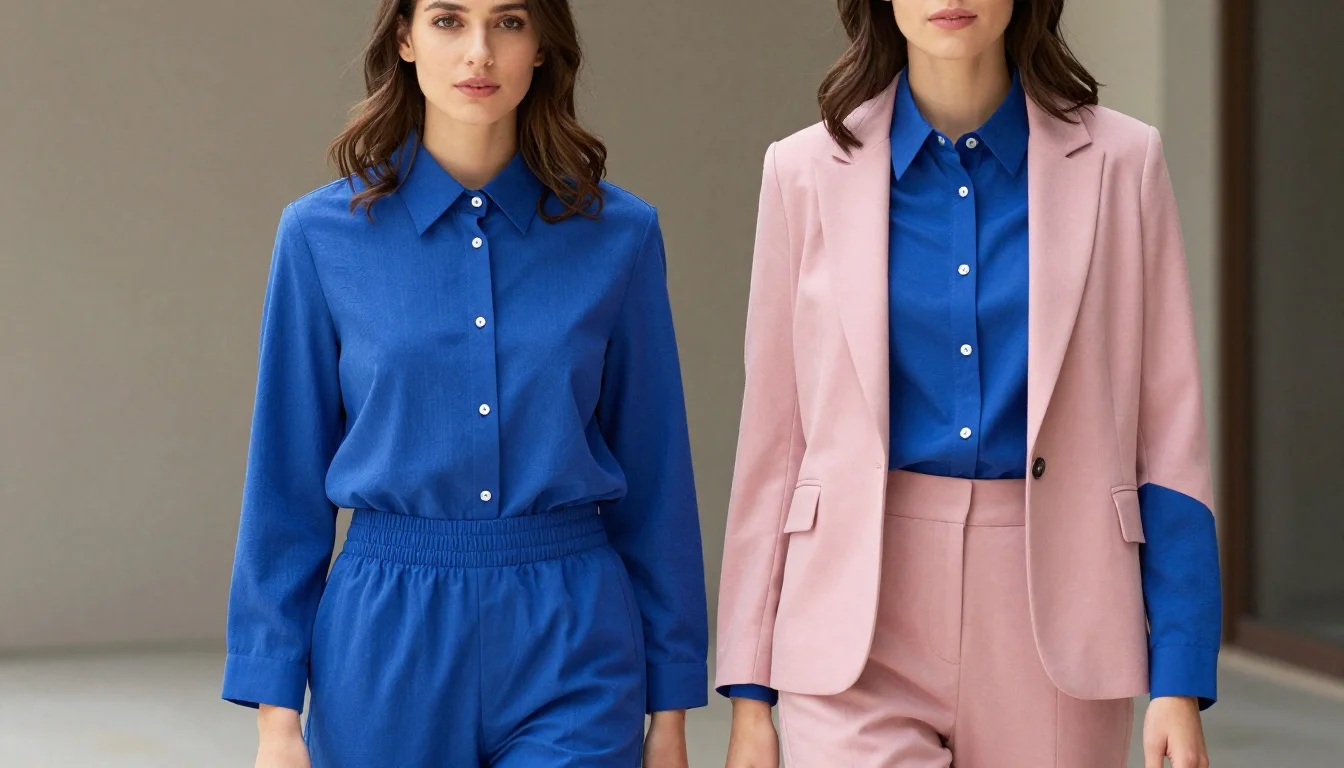
Signs You Might Be in the Wrong Cool Season
Vivid colors make you look harsh (might be Summer)
If bold, saturated colors like cobalt blue, vivid fuchsia, or bright emerald look slightly jarring against your face — too strong, too sharp, making your skin look pale or your features look harsh — you're likely a Summer. Summer's soft, blended coloring is overwhelmed by Winter-level saturation. Muted, dusty versions of the same colors will harmonize instead.
Soft muted colors look flat on you (might be Winter)
If dusty lavender, muted mauve, or soft grey-blue look grey, lifeless, or washed out against your face — like the color has no presence — you're likely a Winter. Winter's vivid, high-contrast coloring requires clear, saturated hues to match its energy. Muted colors simply don't have enough visual weight.
Black looks great (strong Winter signal)
Black is a Winter color — cool, stark, and high-contrast. If black near your face makes you look striking and polished rather than drained or harsh, that's a strong indicator of Winter. Summers typically look better in charcoal, slate grey, or deep cool navy than in true black.
Stop guessing — discover your exact palette
See myself in my colorsSummer vs Winter Color Swaps
Same cool family, different version — one for Summer, one for Winter.
Summers need soft, medium grey with a cool quality. Winters need stark, dark grey that holds up to their contrast. Generic mid-grey often lands in a flat zone for both.
Generic medium pink is too vivid for Summer and too muted for Winter. Summers need softened, dusty pink. Winters need fully saturated, vivid pink with no muddiness.
Summers look best in soft, dusty, cool blues. Winters look best in vivid, saturated cool blues. Medium blue often lacks the softness Summers need and the vividness Winters need.
Summers often look better in deep charcoal or very dark navy than in true black, which can be harsh near the face. Winters can wear true black as comfortably as any color.
Both seasons need a cool white rather than warm ivory. But Summers do better with a softer optical white, while Winters look most striking in the crispest, sharpest white available.
Medium purple is in-between. Summers need the muted, atmospheric quality of dusty lavender or cool mauve. Winters need vivid, saturated purple or deep rich plum with strong color presence.
Which Palette Might Be Yours?
Within Summer and Winter there are three sub-seasons each. Your exact fit depends on your depth, contrast, and how muted or vivid your coloring is.
Light Summer or Soft Summer
Learn moreLight Summer is the most delicate cool season — very fair, soft, low-contrast cool coloring. Soft Summer sits in the neutral-cool zone, with muted, blended coloring that can wear a wider range of muted hues. Both are gentle and need softened, low-saturation cool colors.
Deep Winter or Cool Winter
Learn moreDeep Winter has rich, dark, cool coloring — dark hair, vivid or dark eyes, deeper cool skin. Cool Winter is the most purely cool season — high-contrast or medium-depth cool coloring where clear, cool colors at all saturations work. Both can wear vivid colors and handle high contrast.
Bright Winter
Learn moreBright Winter sits at the extreme — very high contrast, very vivid coloring, where the sharpest and most saturated cool colors look the most flattering. Bright Winter sits close to Bright Spring and needs maximum clarity and contrast in colors.
Find Your Exact Colors
Summer or Winter is the foundation — but your specific sub-season and palette within it determine the exact shades that will make you look your best. Not all cool blues are Summer blues; not all vivid cool colors are Winter colors. A personalized color analysis pinpoints your precise season and gives you a working palette for every category of color.
Stop guessing — preview every color on you
Preview Yourself In Your Palette
Get my personalized analysisStop guessing — preview every color on you
Preview Yourself In Your Palette

Related Guides for Am I a Summer or Winter? How to Tell
Explore more personalized color advice based on your features.
Want to see these colors on you? What Colors Look Good on Me — free to try.
Frequently Asked Questions About Am I a Summer or Winter? How to Tell
What is the main difference between Summer and Winter color seasons?
Both are cool-toned, but Summer colors are soft, muted, and medium in depth — dusty rose, powder blue, soft lavender. Winter colors are vivid, clear, and high-contrast — cobalt, fuchsia, emerald, pure white, and true black. The difference is in clarity and depth: Summer is gentle and blended, Winter is striking and saturated.
Can a Summer wear bright colors?
Summers can wear some brighter colors, but they need to be cool-based and not at full vivid saturation. Soft raspberry, medium cobalt, or bright (but not neon) pink can work on a Summer. The test is whether the color overwhelms the gentle quality of Summer coloring — if it does, soften it.
Can a Winter wear soft or muted colors?
Some Winters — particularly those closer to the Cool or Soft Summer border — can wear medium-muted colors. But most Winters find that muted or dusty colors look flat and lifeless compared to the energy of saturated ones. Deep or vivid colors always work better for Winter; soft and muted are usually best avoided.
Do Summers and Winters both avoid warm colors?
Yes — warm, golden, or yellow-based colors sit off-palette for both cool seasons. Camel, warm orange, and mustard tend to clash with cool-toned skin. However, Winters can sometimes carry warm-looking colors that have a cool base — burgundy (cool red), forest green (if cool rather than olive) — in ways Summers may not.
What is the difference between Cool Summer and Cool Winter?
Cool Summer is the most purely cool of the Summer sub-seasons — it has medium depth, gentle contrast, and does best in medium-saturation cool colors. Cool Winter is also purely cool but with more depth and contrast, needing more vivid and dramatic cool colors. Both avoid warm hues but at completely different intensity levels.
Is high contrast coloring always Winter?
High contrast between light skin and dark hair or vivid eyes is a strong Winter indicator, particularly for Bright Winter and Deep Winter. However, Bright Spring also has high contrast with warm coloring. The key is whether the high contrast is warm (Bright Spring) or cool (Winter). Test with vivid warm vs vivid cool colors to confirm which direction suits your high-contrast coloring.