12-Season Color AnalysisExplained
The classic 4-season system expanded into 12 sub-seasons gives you far more precise color guidance. Discover how to find the colors that actually flatter your coloring.
The 4-season color analysis system — Spring, Summer, Autumn, Winter — transformed how people understood personal color. But within those four broad categories, the variation is enormous. A Deep Winter and a Bright Winter are both in the Winter family, yet they wear completely different palettes. The 12-season system solves this by identifying three distinct sub-types within each season, giving you precise, specific guidance rather than a broad category that may only partially apply to you.


3,000+
happy clients
Why 12 Seasons Outperforms 4 Seasons
The 4-season color analysis system — Spring, Summer, Autumn, Winter — transformed how people understood personal color. But within those four broad categories, the variation is enormous. A Deep Winter and a Bright Winter are both in the Winter family, yet they wear completely different palettes. The 12-season system solves this by identifying three distinct sub-types within each season, giving you precise, specific guidance rather than a broad category that may only partially apply to you.
The 4-season system was revolutionary when Carole Jackson introduced it in 1980. But its broad categories inevitably lumped together people with meaningfully different coloring. A person with deep, dark, richly saturated coloring and a person with bright, high-contrast, vivid coloring both landed in Winter — but their ideal palettes diverge significantly. The 12-season system, developed and refined over subsequent decades, identifies those differences precisely.
Each of the four original seasons is divided into three sub-seasons based on two additional dimensions: depth (deep versus light within the season) and chroma or clarity (bright/clear versus soft/muted). This creates three archetypes per season: one that is more deeply saturated, one that is lighter or softer, and one that represents the 'true' version of that season. These sub-seasons have distinct names — Deep Autumn, Soft Autumn, Warm Autumn — that communicate the defining quality of each palette.
The practical difference is significant. A Soft Autumn wears the earthy, muted tones of autumn in softened, lower-saturation versions — dusty terracotta, warm mushroom, sage green. A Deep Autumn wears darker, richer versions — chocolate brown, forest green, deep rust. Both are Autumn, but wearing each other's palette produces unflattering results. The 12-season system eliminates that confusion.
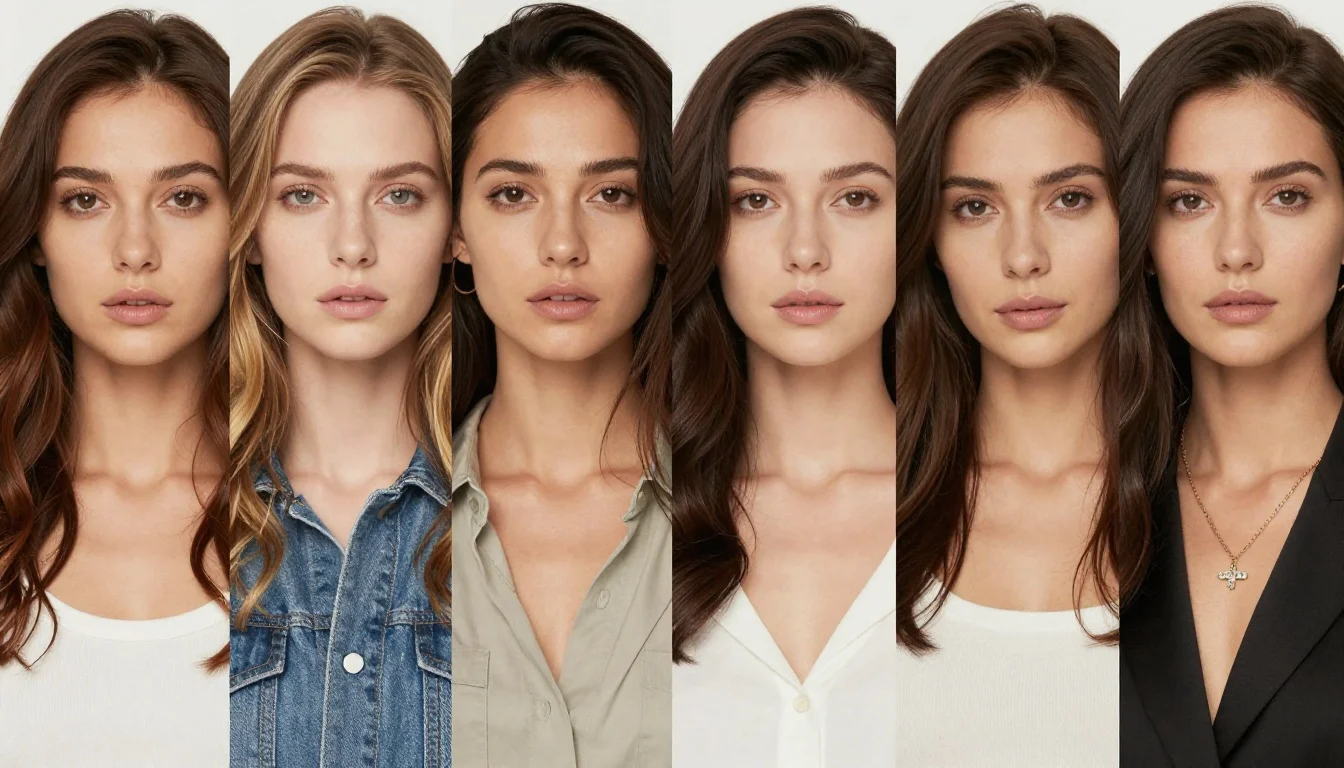
What is the difference between the 4-season and 12-season systems?
The 4-season system identifies four broad categories based primarily on undertone (warm/cool) and depth. The 12-season system adds chroma and specific depth variations, splitting each season into three sub-seasons. The 12-season system is significantly more precise — giving you a specific palette rather than a broad category that may only partially apply to you.
The Three Sub-Seasons of Each Season
Spring: Warm Spring, Light Spring, Bright Spring
Warm Springs have the most distinctly golden, warm coloring — their palette is full of rich warm tones from peach to terracotta. Light Springs have the lightest, most delicate coloring in the Spring family — their palette is pastel-adjacent but still warm-toned. Bright Springs have vivid, clear coloring with high contrast — their palette is saturated and clear, with the brightness of Spring but higher intensity than Warm or Light Spring.
Autumn: Warm Autumn, Soft Autumn, Deep Autumn
Warm Autumns have golden-warm, medium-depth coloring with an earthy palette of warm tones. Soft Autumns have muted, blended coloring — their palette is lower in saturation, with dusty, toned-down versions of Autumn colors. Deep Autumns have the darkest, most richly pigmented coloring in the Autumn family — their palette includes the deepest, most saturated earthy tones and benefits from high contrast.
Winter: Deep Winter, Cool Winter, Bright Winter
Deep Winters have the most intense, dark coloring in the Winter family — their palette includes true black and the deepest jewel tones with bold contrast. Cool Winters have distinctly cool, often blue or ash-toned coloring — their palette includes icy pastels and cool neutrals that would overwhelm most other types. Bright Winters have high-contrast coloring with vivid, saturated best colors — their palette is the most electric of all seasons, featuring clear, vivid hues.
Summer: Light Summer, Cool Summer, Soft Summer
Light Summers have the lightest, most delicate coloring — their palette uses pastel, powder-toned colors that harmonize with low-contrast, light features. Cool Summers have distinctly cool-toned coloring without being dark — their palette features clear cool tones, roses, and grey-neutrals. Soft Summers have muted, blended coloring with minimal contrast — their palette is dusty and toned-down, the most neutral of the Summer sub-seasons.

Not sure yet? See it on your face
Start my color analysisHow to Use the 12-Season System Practically
Start with your broad season
Before identifying your sub-season, confirm your broad season: Spring (warm, light, clear), Summer (cool, soft, muted), Autumn (warm, deep, muted), or Winter (cool, deep, clear). Undertone is the primary divider: warm undertones are Spring/Autumn, cool undertones are Summer/Winter. Depth and chroma then determine the sub-season.
Use depth to identify your sub-season
Within your confirmed season, assess your depth. Deep features (dark hair, rich skin, dark eyes) suggest the Deep sub-season. Very light features (blonde or grey hair, pale skin, light eyes) suggest the Light sub-season. Medium depth with high clarity or contrast suggests the Bright or True version. Soft, blended, low-contrast coloring suggests the Soft sub-season.
Build your wardrobe around neutrals first
Each sub-season has a set of core neutrals — colors that function like neutrals but come from the palette. For Deep Autumn these are chocolate brown, deep olive, and warm black. For Light Summer these are soft dove grey, powder blue, and warm white. Build your wardrobe foundation from these palette-specific neutrals and add color from the accent palette.
Focus colors near the face
The impact of wearing your seasonal palette is most pronounced near the face — tops, scarves, necklaces, earrings, and makeup. Trousers, shoes, and bags from outside your palette have far less effect on how your complexion looks. If resources are limited, prioritize getting tops and face-adjacent accessories in your palette colors.

Start with your undertone
Undertone is the foundation of all 12 seasons. Pin yours down with the interactive undertone checker first.
Common Mistakes When Using the 12-Season System
Staying in the wrong sub-season
People often land on the correct season but wrong sub-season. A Soft Autumn wearing Deep Autumn colors finds the palette too dark and saturated. A Bright Winter wearing Cool Winter colors finds the palette too icy and subdued. Getting your specific sub-season right matters as much as getting your season right.
Ignoring depth as a factor
Within any season, the depth of your coloring — how dark your hair, how rich your skin, how deep your eyes — determines whether you belong in the Deep, Light, or middle sub-season. Someone with very dark features who identifies as Autumn almost certainly belongs to Deep Autumn, not Soft or Warm Autumn. Depth is the clearest separator between sub-seasons.
Treating seasonal palettes as rigid rules
The 12-season system identifies your most flattering colors, not the only colors you can ever wear. Most people have colors that technically fall outside their palette but still suit them — and styling context matters. Wearing a "wrong" color as a trouser or shoe rather than near the face matters far less than wearing it next to your complexion.
Self-diagnosing without draping
Professional color analysis uses fabric draping — holding specific colored fabrics against your bare face — because seeing the actual physical interaction between color and skin is far more reliable than theoretical tests. Self-assessment can get you in the right neighborhood but professional draping is the most accurate method for identifying your specific sub-season.
Stop guessing — discover your exact palette
See myself in my colorsSwaps That Show the Sub-Season Difference
How getting the specific sub-season right transforms results.
Deep Autumns have the pigmentation to carry deep, rich colors. Soft Autumn mauve looks faded and washed against the depth of Deep Autumn coloring.
Bright Winter's vivid, saturated colors overpower the delicate, muted quality of Soft Summer coloring. Soft, toned-down colors let Soft Summer features come forward.
Bright Springs have the contrast and vivacity to carry clear, saturated colors. Warm Autumn tones are too muted and earthy for Bright Spring coloring.
Pure black overwhelms light, delicate Summer coloring. Soft greys provide the same contrast-anchoring function without the harshness.
Warm beige fights the distinctly cool undertones of Cool Winter skin. Icy, cool tones harmonize beautifully.
Cool lavender clashes with the golden warmth of Warm Spring coloring. Peach and warm gold complement it naturally.
Which Palette Might Be Yours?
The 12 sub-seasons each have a distinct set of characteristics. These three are good starting points for exploring the system.
Deep Autumn
Learn moreRich, warm coloring with dark hair, warm skin, and dark eyes. Palette centers on deep earth tones, warm darks, and rich jewel-adjacent colors like forest green, chocolate, and deep gold.
Cool Summer
Learn moreCool, soft coloring without high contrast. Palette features clear cool tones, roses, muted blues, and grey-neutrals. Best colors are cool without being icy or stark.
Bright Winter
Learn moreHigh contrast, vivid coloring with a cool base. Palette features the most saturated, electric colors of all seasons — vivid magenta, cobalt, true red, and bright white with black.
Find Your Exact Sub-Season
The 12-season system gives you more precision than any broad category can. Once you identify not just your season but your specific sub-season — with its unique combination of undertone, depth, and chroma — you have a curated palette of hundreds of specific colors that are virtually guaranteed to flatter you. A personalized color analysis identifies your exact sub-season through professional draping, the most accurate method available.
Stop guessing — preview every color on you
Preview Yourself In Your Palette
Get my personalized analysisStop guessing — preview every color on you
Preview Yourself In Your Palette

Related Guides for 12-Season Color Analysis Explained
Explore more personalized color advice based on your features.
Want to see these colors on you? What Colors Look Good on Me — free to try.
Frequently Asked Questions About 12-Season Color Analysis Explained
What is the difference between the 4-season and 12-season systems?
The 4-season system identifies four broad categories based primarily on undertone (warm/cool) and depth. The 12-season system adds chroma and specific depth variations, splitting each season into three sub-seasons. The 12-season system is significantly more precise — giving you a specific palette rather than a broad category that may only partially apply to you.
How do I know if I am Soft Autumn or Warm Autumn?
Warm Autumns have clearer, more distinctly golden-warm coloring with moderate contrast between features. Soft Autumns have blended, muted coloring with low contrast — hair, skin, and eyes that are all similarly muted and earthy. If you find that rich, warm Autumn colors look slightly too intense or saturated on you, you are likely a Soft Autumn.
Can I be between two sub-seasons?
The sub-seasons are points on a spectrum rather than rigid boxes. Some people sit on the border between two adjacent sub-seasons — such as Soft Autumn and Deep Autumn — and can wear colors from both palettes. This is common and expected. The goal is to identify where you are on the spectrum, not to force yourself into a single box.
Is professional color analysis necessary to use the 12-season system?
Professional analysis with fabric draping gives the most accurate result. However, many people successfully identify their sub-season through careful self-assessment using comparison images, testing colors near their face in natural light, and studying the characteristics of each sub-season. Professional analysis is ideal, but self-exploration provides real value.
What if I cannot find seasonal palettes in stores?
You do not need to shop by season name — you shop by color. Once you know your sub-season and have a sense of your palette colors, you are looking for specific hues: a particular shade of blue, a specific warmth in beige, a certain saturation of green. Learning your colors means you can shop anywhere, not just from seasonal color-specific collections.