Colors for Tan Skinand Dark Hair
Tan skin and dark hair create a naturally high-contrast, warm combination. Discover which shades complement your coloring — and which to avoid.
Tan skin and dark hair is a naturally striking combination — golden warmth at the surface, depth and richness in the frame. Dark hair anchors the palette and raises your contrast level, which means colors that might look subtle on lighter colorings look vivid and intentional on you. The best shades lean into that warmth and contrast rather than softening or neutralizing it.


3,000+
happy clients
Why Dark Hair Changes Everything for Tan Skin
Tan skin and dark hair is a naturally striking combination — golden warmth at the surface, depth and richness in the frame. Dark hair anchors the palette and raises your contrast level, which means colors that might look subtle on lighter colorings look vivid and intentional on you. The best shades lean into that warmth and contrast rather than softening or neutralizing it.
Tan skin carries golden warmth from melanin close to the surface — it has a luminous, sun-kissed quality that interacts beautifully with colors sharing warmth or creating contrast. Dark hair frames the face with depth, effectively raising your overall contrast level. Together, these features create a combination that reads clearly and powerfully in the right colors.
The framing effect of dark hair matters most for colors worn near the face. A rich cobalt shirt placed against both tan skin and dark hair looks more vivid than the same shirt on a light-haired person — the dark frame provides visual contrast that activates saturated colors. This means you can wear bolder, more saturated colors effectively and with intention.
Where tan skin and dark hair sometimes goes wrong is in reaching for colors that are too similar to the skin — warm beige, soft khaki, muted sand — or too soft to register against the dark hair frame. The contrast built into this combination needs to be honored. Colors with some richness, depth, or saturation will always outperform colors that blend in.
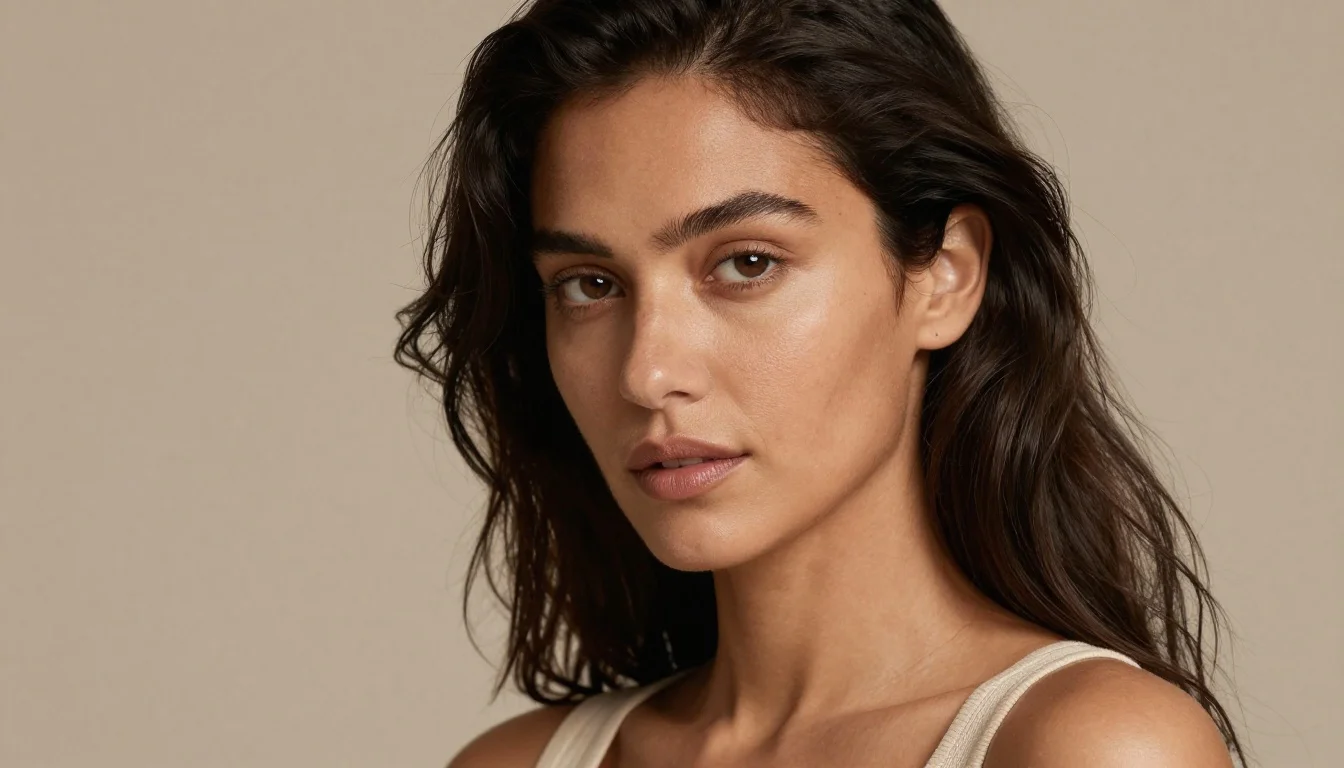
What colors look best on tan skin with dark hair?
Warm ambers and coppers, vivid brights like coral and turquoise, deep jewel tones like emerald and royal blue, and rich warm darks like chocolate and camel are the most flattering families. Dark hair raises your contrast level, meaning you can wear bolder, more saturated colors effectively. Colors that share the warmth of tan skin or create striking complementary contrast against it are your best choices.
Your Most Flattering Color Families
Warm Ambers & Copper Tones
Amber and copper tones resonate directly with the golden warmth of tan skin — they share the same warm-orange quality but with enough depth and richness to stand apart from the skin. Against dark hair, these warm metallics look deliberately rich rather than blending in. Burnished copper near the face catches light beautifully against both the golden skin and the dark frame of the hair. These colors feel like they were made for this combination.
Vivid, Clear Brights
High-contrast coloring — which tan skin and dark hair creates — can carry vivid, clear brights that would overwhelm lighter colorings. Vivid coral activates the warmth in tan skin and pops against the dark hair frame. Clear turquoise creates a warm-cool complementary contrast that makes tan skin look more golden. The dark hair anchor allows brighter colors to register as bold and intentional rather than jarring.
Deep Jewel Tones
Saturated jewel tones have the depth and richness to hold their own against this combination's natural contrast. Rich emerald creates a warm-cool tension that makes tan skin look luminous and dark hair look deeper. Royal blue provides the strongest complementary contrast with tan skin's warmth — the blue-orange relationship makes both the skin and the color look more vivid. Deep jewel tones work because they match the visual weight of dark hair.
Rich Warm Darks
Deep warm darks create a tonal richness that harmonizes with both tan skin's warmth and dark hair's depth. Deep chocolate brown has enough distinction from even the darkest tan skin to create a defined, elegant look — it reads as sophisticated rather than blending in. Dark camel bridges warm skin and dark hair beautifully, creating a warm monochromatic palette that feels unified and deliberately earthy.

Ready to see amber & burnished copper on your face?
Start my color analysisHow to Dress Tan Skin and Dark Hair
Using the dark hair frame
Dark hair creates a natural frame around your face — which means colors worn near the face are seen in the context of both your skin and your hair. This frame makes saturated, bold colors near the neckline look deliberately powerful rather than overwhelming. A rich emerald blazer or vivid coral silk blouse at the neckline will look more vivid on you than on someone with lighter hair. Use this contrast to your advantage: go a shade bolder than you think you need.
Warm contrast versus cool contrast
You have two equally effective approaches: warm resonance (amber, copper, coral — colors that echo and amplify your skin's warmth) and cool contrast (emerald, royal blue, aubergine — colors that create complementary contrast with tan skin's warmth). Warm resonance looks harmonious, golden, and glowing. Cool contrast looks striking, vivid, and deliberate. Neither is wrong — the question is whether you want the look to feel harmonious or bold.
Professional settings
Deep navy and forest green are your two most versatile professional colors — both have the richness to match your combination's visual weight and the depth to feel authoritative. Navy creates clean cool contrast with tan skin and resonates with dark hair's depth. Forest green is a striking alternative to standard navy that uniquely flatters this combination. Avoid cool grey suiting, which drains warmth from tan skin and lacks the richness to honor dark hair.
Summer and warm-light dressing
Tan skin and dark hair look particularly radiant in summer light. Vivid coral, warm turquoise, and burnished amber all catch sun in ways that make golden skin look luminous. Avoid reaching for white as your default summer color — warm ivory is far more flattering against tan skin's warmth. For casual summer dressing, rich earth tones in linen or cotton feel organic and deliberately beautiful rather than trying too hard.
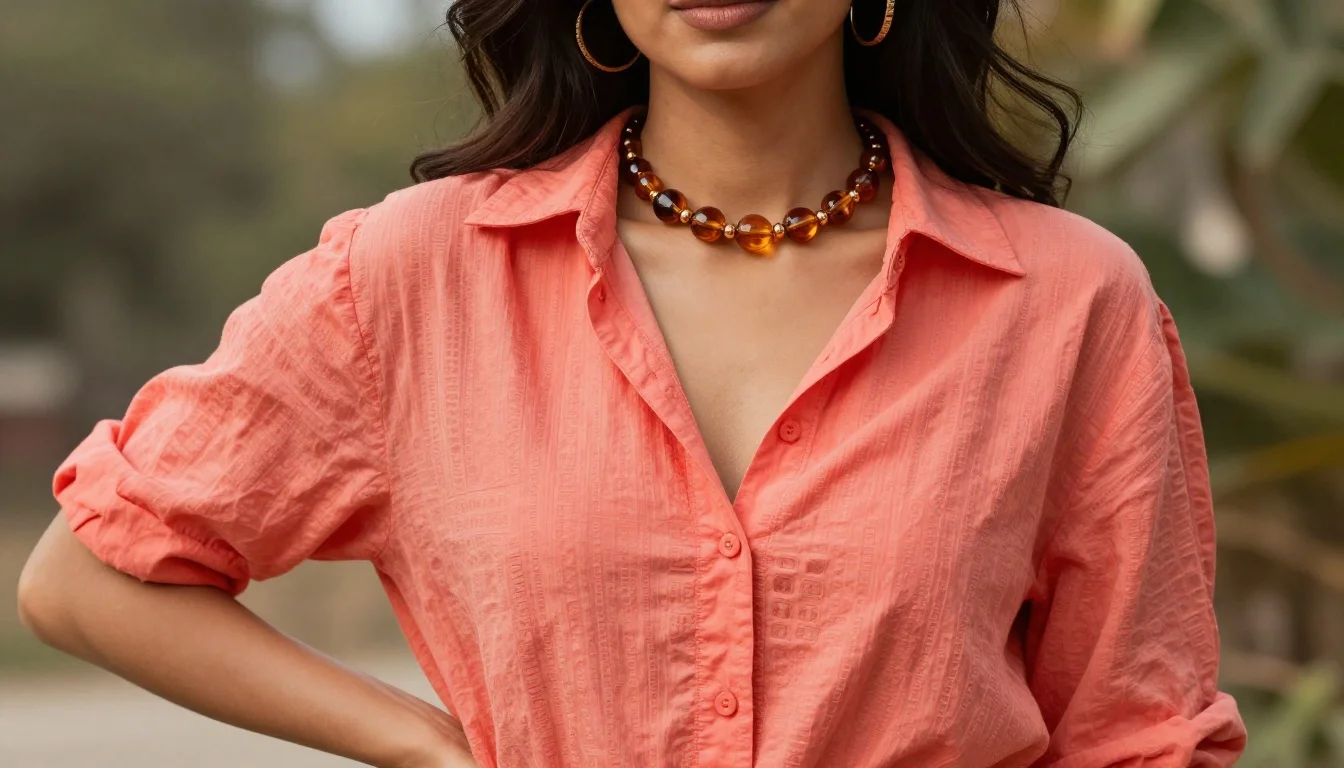
Colors That Work Against This Combination
Muddy khaki and washed-out sand
Khaki and washed-out sand tones sit too close to the muted-warm register of tan skin without the richness to create definition. They create a flat, undifferentiated look where clothing and skin blur together. There's not enough contrast to frame the dark hair either. If you want warm neutrals, choose deep camel or rich chocolate — they share the warmth but with definition.
Very pale or chalky pastels
Soft, chalky pastels — pale peach, dusty powder blue, faded lavender — lack the saturation and presence to register clearly against this combination's natural contrast. Dark hair raises your contrast baseline; very pale colors look washed out and underpowered in comparison. If you want softness, look for the warm, richer version: warm dusty rose over pale pink, deep sage over mint.
Warm yellow and bright mustard
Clear yellows and mustard tones sit in the same warm-golden register as tan skin, creating a monochromatic blur where the clothing and skin become indistinguishable. The golden quality in both tan skin and yellow merge rather than creating definition. Warm amber and copper give you similar warmth with enough brown depth to stand apart from golden skin.
Cool, desaturated greys
Cool or medium grey lacks the warmth to resonate with tan skin's golden quality and the depth to match dark hair's visual weight. It creates a flat, slightly draining look — neither warm enough to feel harmonious nor rich enough to create striking contrast. Charcoal or near-black work because of their depth; medium cool grey does not.
Stop guessing — preview every shade on you
See myself in my colorsYour Wardrobe, Upgraded
Replace colors that flatten or blend with this combination — with shades that honor its warmth and contrast.
Khaki blends into tan skin without definition. Amber and caramel share warmth but have the richness to stand apart.
Mustard creates a monochromatic golden blur with tan skin. Coral and copper activate the warmth without blending into it.
Flat grey drains warmth; beige disappears. Royal blue and emerald create vivid, professional contrast that shows up powerfully.
Cool grey clashes with tan warmth and lacks the depth for dark hair. Forest green and camel match the visual weight of both features.
Pale pastels look underpowered against dark hair's natural contrast. Jewel tones have the depth and saturation this combination demands.
Silver introduces cool contrast that fights the warmth of tan skin. Gold echoes the golden quality in both the skin and the warm registers of dark hair.
Which Palette Might Be Yours?
Tan skin and dark hair appears across several warm and deep seasonal palettes. Your exact season depends on your undertone's specific warmth, the depth and warmth of your dark hair, and your eye color.
Warm Autumn
Learn moreIf your tan skin has a clear warm-golden undertone and your dark hair is warm medium-to-dark brown (rather than near-black), Warm Autumn is a strong possibility. Your palette is warm, rich, and earthy: cognac, forest green, golden terracotta, warm rust, and golden camel. The richness of Warm Autumn suits this combination's warmth beautifully.
Deep Autumn
Learn moreIf your tan skin is deeper golden-brown and your dark hair is near-black or very dark espresso, Deep Autumn may be your palette. Deep Autumn's colors have the highest saturation and richest depth: dark terracotta, deep forest green, chocolate, warm burgundy, and burnished gold. This is the most intensely warm-and-deep seasonal palette, suited to the most striking versions of tan skin and dark hair.
Warm Spring
Learn moreIf your tan skin is lighter golden (warm medium rather than deep) and your dark hair has warm, almost brown-black tones with golden or chestnut undertones, Warm Spring may be yours. Warm Spring is clear and warm rather than muted: peach, warm coral, clear turquoise, golden cream, and warm aqua. The lightness of Warm Spring suits tan skin that's more golden-beige than deeply pigmented.
Find Your Exact Colors
Tan skin and dark hair is a combination with real range — from warm-golden lightness to deep earthy richness — and the best palette depends on where you fall on that spectrum. Your undertone's precise warmth, the depth of your dark hair, and your eye color all shift which specific colors make your version of this combination look most radiant. A personalized color analysis identifies exactly which shades amplify what you already have.
Stop guessing — preview every color on you
Preview Yourself In Your Palette
Get my personalized paletteStop guessing — preview every color on you
Preview Yourself In Your Palette

Related Guides for Best Colors for Tan Skin and Dark Hair
Explore more personalized color advice based on your features.
Want to see these colors on you? Virtual Hair Color Try-On — free to try.
Frequently Asked Questions About Best Colors for Tan Skin and Dark Hair
What colors look best on tan skin with dark hair?
Warm ambers and coppers, vivid brights like coral and turquoise, deep jewel tones like emerald and royal blue, and rich warm darks like chocolate and camel are the most flattering families. Dark hair raises your contrast level, meaning you can wear bolder, more saturated colors effectively. Colors that share the warmth of tan skin or create striking complementary contrast against it are your best choices.
What colors should I avoid with tan skin and dark hair?
Muddy khaki and washed-out sand, chalky pale pastels, warm yellows and mustard, and cool desaturated greys all work against this combination. Khaki blurs into tan skin without definition. Pale pastels look underpowered against dark hair's natural contrast. Yellow creates a monochromatic golden blur with tan skin. Cool grey drains the warmth without creating meaningful richness.
Does tan skin and dark hair suit jewel tones?
Yes — jewel tones are among the most flattering families for this combination. Dark hair acts as a visual anchor that allows saturated colors to register as bold and deliberate rather than overwhelming. Emerald green creates warm-cool tension that makes tan skin look luminous. Royal blue provides striking complementary contrast with the warmth of tan skin. Deep aubergine creates richness that matches the visual weight of dark hair.
Is gold or silver better for tan skin and dark hair?
Gold is consistently more flattering — warm gold, brass, and antique gold all resonate with both the golden quality of tan skin and the warm depth in dark hair. Silver introduces cool contrast that works against tan skin's warmth. Rose gold sits in the middle and works well if you prefer a slightly softer warm metal. For the most harmonious effect, reach for gold first.
What are the best neutrals for tan skin with dark hair?
Warm camel, deep chocolate brown, rich mahogany, and deep olive are your best neutrals — they all share warmth or depth with your natural coloring. Avoid cool beige, greige, and pale khaki, which blend into tan skin and lack the weight to complement dark hair. The rule: neutrals for tan skin and dark hair should always have warmth and depth, not coolness or pale muddiness.
What season is tan skin and dark hair?
Tan skin and dark hair most commonly falls into Warm Autumn, Deep Autumn, or Warm Spring seasonal palettes. Warm Autumn suits golden-tan with warm dark brown hair. Deep Autumn suits deeper tan with near-black hair. Warm Spring suits lighter golden tan with warm dark hair. Your eye color and the precise warmth of your undertone are the key variables that differentiate these seasons.