The Best Foundation Shades forPale Skin
Pale skin demands foundation precision — the wrong shade turns ghostly, orange, or mask-like in seconds. Discover which tones look natural on you — and which to skip.
Finding foundation for pale skin is one of the most frustrating experiences in all of makeup. Most ranges stop at 'light' and call it done — leaving very pale skin either darkened by shades that are too warm, pinked out by shades that are too cool, or looking masked by an obvious line at the jaw. The truth is that pale skin is not one thing: it spans cool porcelain, warm ivory, neutral alabaster, and everything in between. The right foundation for your pale skin is not the lightest shade in the range — it's the lightest shade with the correct undertone for your specific complexion. This guide breaks down exactly how to find it.


3,000+
happy clients
Why Foundation Shade Matching Is So Critical for Pale Skin
Finding foundation for pale skin is one of the most frustrating experiences in all of makeup. Most ranges stop at 'light' and call it done — leaving very pale skin either darkened by shades that are too warm, pinked out by shades that are too cool, or looking masked by an obvious line at the jaw. The truth is that pale skin is not one thing: it spans cool porcelain, warm ivory, neutral alabaster, and everything in between. The right foundation for your pale skin is not the lightest shade in the range — it's the lightest shade with the correct undertone for your specific complexion. This guide breaks down exactly how to find it.
Pale skin is the least forgiving complexion for foundation shade errors. Because very fair skin has so little melanin, it cannot absorb or blend mismatched foundation the way that medium or deep skin can. A foundation that is half a shade too dark creates an obvious mask effect with a visible jaw line. A foundation with the wrong undertone — warm on cool skin, or cool on warm skin — creates a color clash that reads immediately as painted-on product rather than skin.
The most common mistake on pale skin is choosing a foundation that is slightly too dark in an attempt to avoid looking washed out. This always backfires: a foundation that is slightly too dark on pale skin looks like a muddy mask, not like skin with more color. The correct approach is to match your exact skin tone and use blush, bronzer, and highlighter to add dimension. Your foundation's job is to disappear into your skin, not to add color to it.
Finish matters enormously on pale skin. Full-coverage matte foundations can make very pale skin look flat, dull, and mask-like because they eliminate the natural translucency that is one of the most beautiful qualities of a fair complexion. A satin or luminous finish preserves the light-reflecting quality of pale skin. Full coverage should be used only to spot-conceal rather than all-over on the palest skin tones.

What foundation shade is right for pale skin?
The right foundation shade for pale skin depends on your specific undertone, not just your depth level. Cool pale skin needs foundations with a pink-cool or neutral-cool undertone, such as cool ivory or light rose-beige. Warm pale skin needs foundations with a yellow or peachy undertone, such as warm ivory or golden porcelain. Neutral pale skin works best with true neutral shades like porcelain or alabaster. In all cases, choose the lightest shade in the correct undertone family — never a 'light medium' or 'warm light' shade that is positioned for more medium skin.
Your Foundation Shade Families for Pale Skin
Porcelain Neutrals: The Clean Canvas
Porcelain neutral shades are the most universally flattering foundation family for pale skin because they avoid committing hard to either warm or cool. A true neutral porcelain has no dominant pink or yellow — it simply reads as very light skin. These shades work especially well for pale skin that shifts between slightly warmer in summer and cooler in winter, or for those who have genuinely neutral-undertone skin. Look for shade names like Porcelain, Alabaster, or Shell in the lightest tier of any foundation range.
Cool Ivory: For Pink-Toned Pale Skin
Pale skin with a distinctly cool or rosy undertone — the type where veins at the wrist read clearly blue or purple — needs a foundation with a cool, slightly pink-toned base. A cool ivory foundation matches the natural tone of cool pale skin perfectly, avoiding the orangey or muddy cast that warm-toned foundations leave on cool complexions. Look for shade descriptors like 'cool,' 'pink-undertone,' 'rosy,' or 'C1' in a brand's shade system. These foundations often have a slight pink or neutral-cool cast that reads as natural skin on cool-undertone pale complexions.
Warm Ivory: For Cream and Golden Pale Skin
Pale skin with a warm, golden, or peachy undertone — where veins read green or blue-green at the wrist — needs a foundation with a warm, yellow-adjacent base. A warm ivory foundation adds the subtle warmth of the skin's natural golden undertone rather than fighting it with a pink or cool base. Look for shade descriptors like 'warm,' 'yellow-undertone,' 'golden,' or 'W1' in a brand's system. These foundations have a soft yellow or peach base that looks completely natural on pale skin with warm undertones — and looks orangey only on skin that doesn't have those warm undertones.
Translucent Fair: For the Very Palest Skin
For the very palest skin — so fair that most 'light' shades read as medium — translucent or ultra-fair shade families are essential. These are often the lowest-numbered shades in a brand's range, sometimes sold as '00' or '0.5' to indicate they go lighter than the standard range. The defining feature is that they have minimal pigment density, allowing the skin's natural translucency to show through rather than creating a mask. Translucent fair shades work best as sheer-to-medium coverage with a luminous or satin finish that complements the naturally light-reflective quality of very pale skin.

Ready to see yourself in porcelain & alabaster?
Start my color analysisFoundation Application Tips for Pale Skin
Match to your neck, not your face
Always swatch foundation on your neck or along your jawline — never on the back of your hand. Pale skin on the face often has more redness from capillaries or sun exposure than the skin on the hand, and swatching in the wrong place leads to a shade mismatch. Test two or three shades along your jaw in natural light and choose the one that disappears into your skin after blending. The correct shade leaves no line at the jaw.
Use a damp sponge for the most natural finish
A damp beauty sponge pressed and bounced into the skin (not dragged) gives pale skin the most natural, skin-like finish. Dragging a brush across very pale skin can disturb any natural redness, irritation, or dry patches and make them more visible. Pressing and bouncing the sponge sheer out the foundation where it naturally thins and builds where more coverage is needed, mimicking the look of real skin rather than an applied product.
Spot conceal before applying foundation
On pale skin, applying full-coverage concealer under the eyes and over any redness before a sheer foundation layer means you get targeted coverage exactly where you need it without building up product all over. This reverse technique — concealer first, then sheer foundation over everything — produces the most natural, skin-like result on pale complexions. The foundation sheers out the edges of the concealer while the concealer handles any areas that need real coverage.
Choose SPF foundations carefully
SPF foundations can cause white-cast flashback in photos on pale skin because the SPF minerals reflect light from a flash. If you use an SPF foundation during the day, consider a separate non-SPF setting powder to reduce flashback risk in photos, or choose chemical SPF formulas rather than mineral. On very pale skin, even a small amount of white mineral SPF can make the foundation look grey or chalky in photographs.
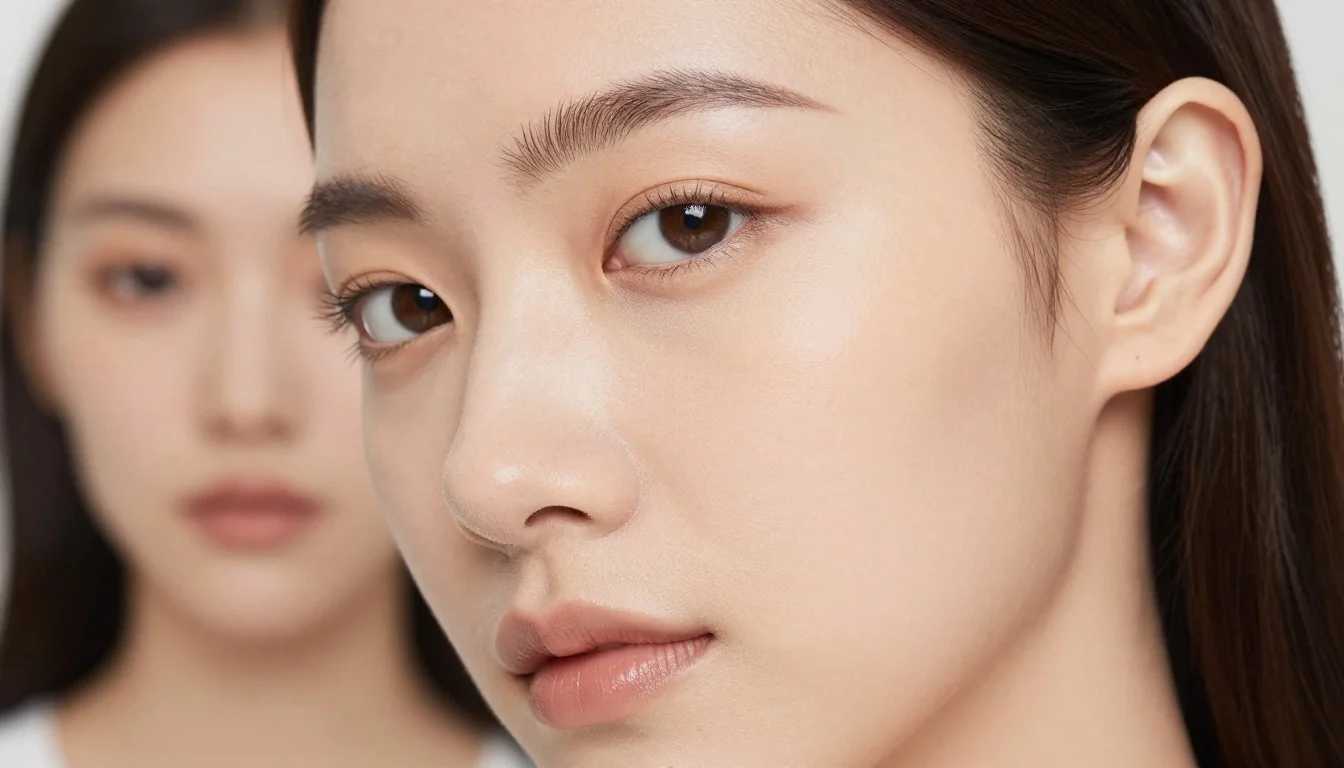
Foundation Shades That Don't Work on Pale Skin
Any shade darker than your neck
The cardinal sin of pale skin foundation is choosing a shade that is darker than the skin on your neck and chest. Many people do this intentionally, believing a slightly darker shade will make them look less pale — it does the opposite. It creates a visible mask line at the jaw that announces itself immediately. Your foundation should match the skin on your neck, not the skin on the back of your tanned hand.
Orange-toned or "light tan" foundations
Foundation shades positioned as 'light tan,' 'light medium,' or 'warm light' often have an orange or terracotta undertone designed for skin that carries actual warmth. On very pale skin, these shades produce a flat-out orange mask effect. Even pale skin with warm undertones is not warm enough to absorb a tan-toned foundation naturally. Warm pale skin needs warmth in its foundation, but the warm undertone of an ivory — not a tan.
Very pink or lavender-toned foundations on warm pale skin
Some foundations marketed as "fair" skew very pink or even lavender-toned. These can work on genuinely cool, rosy pale skin, but on warm or neutral pale skin they create a chalky, grey, or ashy appearance. The foundation looks like it has been mixed with white powder rather than matching living skin. Warm pale skin needs a foundation that contains some yellow or peach, not one that suppresses it.
Heavy full-coverage matte formulas
Very pale skin has a natural translucency that is part of what makes it beautiful. Full-coverage, heavy-matte foundations eliminate this translucency entirely, leaving pale skin looking flat, dull, and mask-like. For pale skin, satin or luminous finishes are almost always more flattering. Reserve full coverage for spot concealing, and use a sheer-to-medium foundation all-over.
Stop guessing — preview every shade on you
See myself in my shadesFoundation Shade Swaps for Pale Skin
Swapping out shades and formulas that work against pale skin for ones that make it extraordinary.
Light medium always skews too dark and too warm for pale skin. A true fair shade — matched to your undertone — disappears into your skin the way foundation should.
A neutral or warm ivory on cool pale skin reads as slightly orange or wrong in temperature. A cool-undertone ivory matches the rosy-pink quality of cool pale complexions.
Pink-toned foundations on warm pale skin produce an ashy or chalky appearance. A warm ivory with a subtle yellow base matches the natural golden warmth in warm-undertone pale skin.
Full-coverage matte eliminates the natural translucency that makes pale skin beautiful. A sheer luminous base plus targeted concealing covers what needs covering while preserving your skin's light-reflective quality.
Dragging a brush on pale skin disrupts texture and redness. A bouncing damp sponge blends foundation seamlessly and avoids disturbing any natural redness or dry patches.
Heavy mineral SPF in foundation causes white-cast flashback in photos on pale skin and can make the complexion look chalky. Layering SPF under foundation or choosing chemical SPF formulas avoids this.
Which Palette Might Be Yours?
Pale skin spans multiple seasonal color palettes. Your season determines not just which foundation undertone is most harmonious, but also which finish and coverage level suit your natural coloring best.
Light Spring
Learn morePale skin with a warm, peachy, golden undertone and light warm-toned features often belongs to Light Spring. Your ideal foundation: warm ivory or golden porcelain with a peachy-yellow base. A slightly luminous finish suits your bright, warm coloring. Avoid foundations with a pink or cool base — they grey out your skin's natural warmth.
Cool Summer
Learn morePale skin with a distinctly cool, rosy, or porcelain quality and cool-toned features often belongs to Cool Summer. Your ideal foundation: cool ivory or light rose-beige with a pink-cool undertone. A satin finish flatters your soft, cool complexion. Avoid foundations with yellow or warm undertones — they create an orange mismatch on your cool skin.
Bright Winter
Learn moreVery pale skin with high contrast — fair skin paired with dark or vivid hair and eyes — can belong to Bright Winter. Your ideal foundation: a neutral-cool porcelain or cool ivory that lets your natural high contrast do the work. A semi-matte or satin finish suits your crisp, clear coloring. Your strong contrast means you can handle slightly more coverage than other pale-skin seasons.
Find Your Exact Colors
Foundation matching for pale skin is ultimately a precision task — the right shade in the right undertone in the right formula makes pale skin look extraordinary. A personalized color analysis identifies your exact season, undertone, and contrast level so you know precisely which foundation families to shop, which finishes flatter your complexion, and how to build a full routine that works with your natural coloring rather than against it.

Related Guides for Foundation Shade for Pale Skin
Explore more personalized color advice based on your features.
Want to see these colors on you? What Colors Look Good on Me — free to try.
Frequently Asked Questions About Foundation Shade for Pale Skin
What foundation shade is right for pale skin?
The right foundation shade for pale skin depends on your specific undertone, not just your depth level. Cool pale skin needs foundations with a pink-cool or neutral-cool undertone, such as cool ivory or light rose-beige. Warm pale skin needs foundations with a yellow or peachy undertone, such as warm ivory or golden porcelain. Neutral pale skin works best with true neutral shades like porcelain or alabaster. In all cases, choose the lightest shade in the correct undertone family — never a 'light medium' or 'warm light' shade that is positioned for more medium skin.
Why does my foundation always look too dark or orange on my pale skin?
This happens for two reasons. First, many foundation brands don't offer enough shade variation in the lightest tier — what they call 'fair' is actually designed for light-medium skin. Second, warm-toned foundations that look neutral in the bottle read orange on very pale skin because pale skin has so little warmth of its own to absorb the foundation's warmth. The solution is to look specifically for shades designed for very fair skin — sometimes labeled '1,' '00,' or 'porcelain' — and to choose a neutral or cool undertone if you're unsure.
Should I go lighter or darker than my actual skin tone for pale skin?
Neither — your foundation should match your skin tone exactly, specifically at your jawline and neck. Going lighter creates a ghostly mask, and going darker creates the classic orange-mask effect. The impulse to go slightly darker to "add color" is understandable but always backfires. Add dimension to your face with blush, bronzer, and highlighter instead, and let your foundation disappear into your actual skin.
What foundation finish is best for pale skin?
Satin and luminous finishes are generally most flattering on pale skin. Very pale skin has a natural translucency and light-reflective quality — a luminous or satin finish preserves this. Full-coverage matte foundations eliminate the natural glow of pale skin and can look mask-like or flat. Use a light setting powder only where you need control (the T-zone), and leave the rest of your face in its luminous finish for the most natural result.
How do I avoid the white-cast foundation look on pale skin?
White cast on pale skin usually has one of three causes: a foundation with a pink or lavender undertone that reads chalky on warm pale skin, heavy mineral SPF in the foundation causing reflective flashback, or using a foundation that is genuinely too light. Match your undertone precisely, and if you have warm pale skin, avoid foundations with a distinctly pink base. For SPF foundations, test them in natural light and in flash photography before committing — and consider using chemical SPF rather than mineral if flashback is a concern.
Can pale skin wear full-coverage foundation?
Yes, but with caveats. Full-coverage foundations on pale skin work best in satin finishes rather than matte, applied with a damp sponge for the most natural result, and only when genuine coverage is needed. For everyday wear, most pale skin looks better with a sheer-to-medium coverage foundation because it allows the skin's natural translucency to show through. If you love full coverage, consider a luminous or skin-tint formula that provides coverage without the mask-like finish of a heavy matte.