Foundation Shadesfor Olive Skin
Olive skin is notoriously hard to match in foundation. Discover which tones look natural on you — and which to skip.
Finding foundation for olive skin is one of the most common beauty frustrations — and for good reason. The yellow-green quality of olive undertones doesn't fit neatly into 'warm' or 'cool' categories, and most foundation shade systems are built around fair-to-medium warm or cool skin, not the specific olive undertone. The result: foundations that match your depth but miss your undertone, leaving olive skin looking orange, grey, or simply flat. This guide explains exactly what to look for and how to find your match.


3,000+
happy clients
Why Olive Skin Is Hard to Match in Foundation
Finding foundation for olive skin is one of the most common beauty frustrations — and for good reason. The yellow-green quality of olive undertones doesn't fit neatly into 'warm' or 'cool' categories, and most foundation shade systems are built around fair-to-medium warm or cool skin, not the specific olive undertone. The result: foundations that match your depth but miss your undertone, leaving olive skin looking orange, grey, or simply flat. This guide explains exactly what to look for and how to find your match.
Olive skin gets its characteristic tone from a combination of melanin and a subtle green-yellow component from the way blood vessels interact with the skin's surface. This creates a cool-leaning warm undertone — neither straightforwardly golden (like warm peach skin) nor straightforwardly pink (like cool skin). Most foundation shade systems categorize undertones as warm (peachy/golden), cool (pink/rosy), or neutral (balanced). Olive falls outside this three-way system — it's warm but not peach, and has a greenish note that most 'warm' foundations don't include.
The most common foundation mistakes for olive skin: going too warm and orange (peachy-golden foundations miss the green note and look orange on olive skin), going too cool and grey (pink foundations obviously clash), or going 'neutral' and landing in beige (which looks flat and washes out olive's distinctive warmth). The right foundation for olive skin has a specific quality: warm but with a yellow-green or olive cast, not a peachy or pink cast.
The good news is that properly matched foundation on olive skin looks extraordinary — the olive depth and warmth creates a luminous, even base that photographs beautifully. The challenge is finding the match. The solution is: always test in natural daylight, always compare against neck and chest (not just the face), and always look for descriptions that include 'olive,' 'yellow,' or 'neutral-warm' in the undertone description rather than 'peach,' 'golden,' or 'pink.'
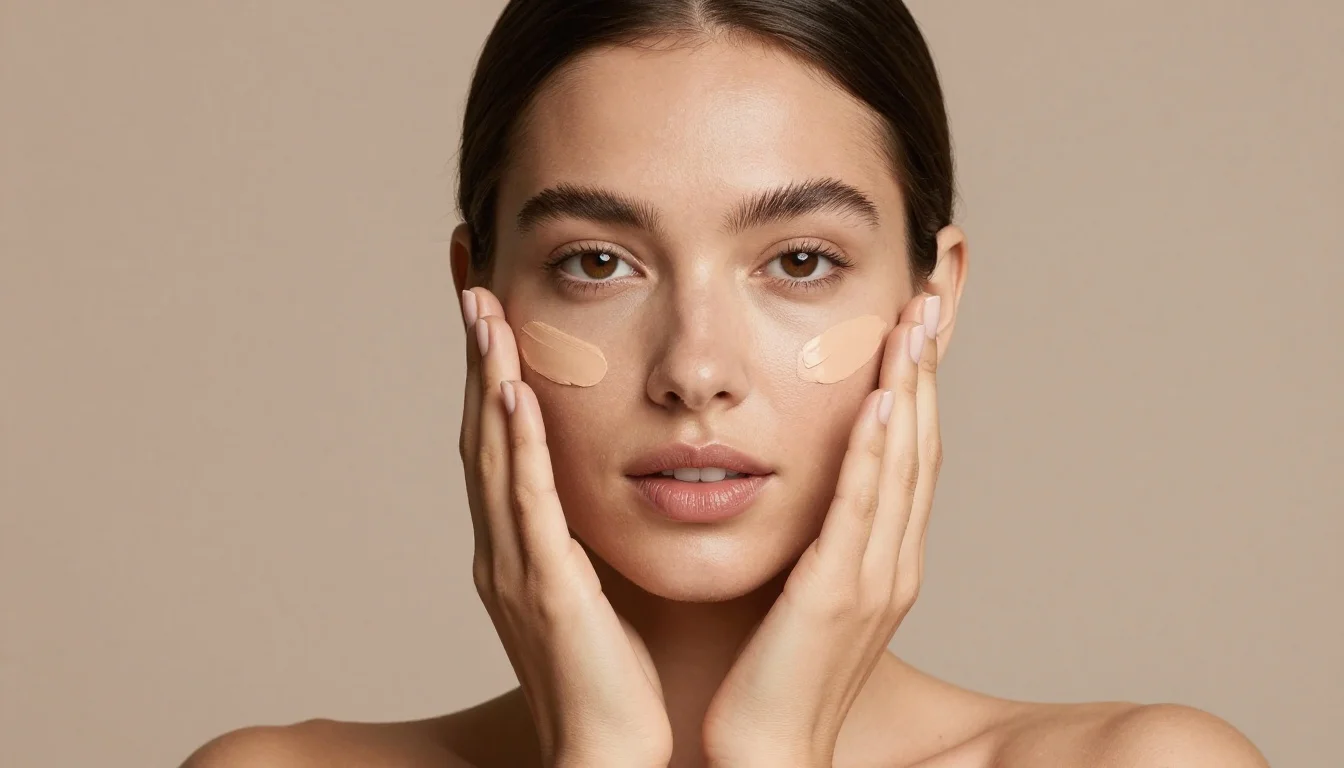
How do I find the right foundation shade for olive skin?
Look for foundations described as 'olive,' 'yellow-neutral,' or 'NC' (not NW, which leans peachy). Test three or four candidates by swatching on your jaw and stepping outside into natural daylight — the right shade will disappear into your skin. Avoid peachy-warm and pink shades. Compare against your neck, not just your face. Brands with strong olive coverage: MAC NC range, Fenty Beauty, NARS, Armani Luminous Silk.
What to Look for in Foundation for Olive Skin
Undertone Descriptors: Olive, Yellow-Neutral, or NC
Look specifically for foundation shades described as 'olive,' 'yellow,' 'neutral-warm,' or 'NC' (MAC's NC system specifically targets olive undertones). These are the descriptors that indicate a shade has the yellow-green quality olive skin needs. Avoid 'golden,' 'peach,' 'warm' without qualification, 'rosy,' and 'pink' — these indicate wrong-direction undertone. The NC system at MAC is specifically designed for olive and neutral-cool undertones; the NW system leans warm-peachy and often looks orange on olive skin.
Finish: Satin or Luminous
Olive skin looks most radiant in a satin or skin-like finish rather than a flat matte. Olive undertones have a natural depth and complexity that matte foundations can flatten and grey out. A satin or luminous finish allows the warmth and undertone complexity to show through while providing coverage. Full-matte foundations can create a muddy, flat effect on olive skin — if you need long-wear coverage, use a satin formula with a light setting powder rather than a fully matte foundation.
Coverage Level: Buildable Medium
Medium buildable coverage is ideal for olive skin — it provides enough coverage to even the tone while allowing the skin's natural olive quality to show through. Heavy full coverage can look flat and masklike on olive skin, eliminating the very undertone complexity that makes olive skin beautiful. Start with a light application of medium-coverage foundation and build only where needed. A skin tint as a base with concealer on specific areas is often more flattering than all-over heavy coverage.
Depth Range: Light-Medium to Medium-Deep
Olive skin spans a significant depth range. Light olive skin (often described as "light-medium") needs shades in the light-medium range with strong olive undertone. Medium olive is the most common — needs medium depth with clear yellow-neutral quality. Deep olive skin, including many Mediterranean, South Asian, and Latino complexions, needs medium-deep to deep shades with olive undertone. Depth and undertone are separate decisions — match depth to your actual skin depth, then find the undertone within that depth range.

Ready to see yourself in olive undertone & yellow neutral?
Start my color analysisHow to Find and Apply Foundation for Olive Skin
Test in natural outdoor light, always
Foundation testing under store lighting is notoriously unreliable — fluorescent light flattens undertone differences. Take three or four candidate shades (swatched on your jaw or inner arm) outside to natural daylight. The right shade will disappear into your skin; wrong undertones (too orange, too pink, too grey) will be immediately obvious in natural light. Test against both your face and your neck — the match should work against both. This five-minute outdoor test is the most reliable foundation-matching technique for olive skin.
Shop brands with dedicated olive shades
Some brands specifically formulate for olive undertones; others don't. Brands that typically have strong olive coverage: MAC (NC range), NARS (look for shades named after warm Mediterranean locations), Fenty Beauty (40 undertone shades with specific olive options), Giorgio Armani Luminous Silk (well-known for olive-friendly shades), and Clinique (Even Better range has olive options). When testing a new brand, ask specifically "which of your shades is best for olive undertones" — beauty advisors for these brands should know.
Use a yellow-toned color corrector if needed
If you can't find a perfect foundation match, a light application of yellow color corrector under foundation can neutralize any pinkness or ashiness in your best available foundation shade. A small amount of yellow corrector on the center of the face before foundation brings any slightly-off shade closer to olive territory. This is also useful when your skin's olive tone shifts seasonally — a touch more yellow corrector in winter when olive skin can look more grey.
Set with a warm-tone or translucent powder, not white
Setting powder matters for olive skin — a stark white or cool-toned translucent powder can create a grey cast on the surface of olive foundation. Use a translucent powder with a warm tint or a finely milled pressed powder matched to your foundation shade. Apply lightly, only where needed (T-zone), rather than all over. The goal is to set without adding any cool or white cast that disrupts the warm olive match you worked to achieve.
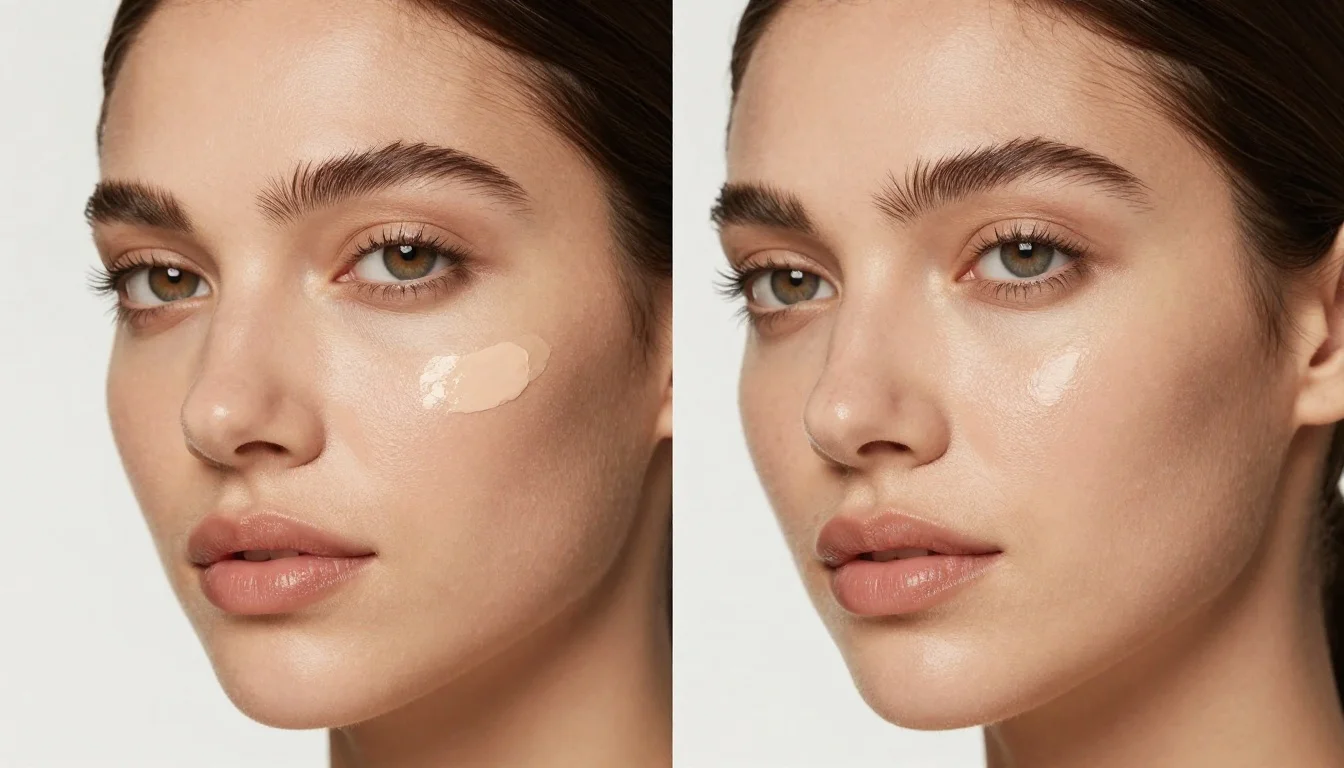
Foundation Mistakes to Avoid for Olive Skin
Peachy-golden or orange-warm foundation
The most common olive skin foundation mistake: a foundation labeled 'warm' or 'golden' that has a peachy-orange cast. On olive skin, this looks visibly orange — the peach-orange warmth conflicts with the yellow-green of olive undertones rather than matching it. If a foundation looks orange or peachy on the back of your hand, it will look orange or peachy on your face. Test and reject any shade with visible peach or orange before buying.
Pink-toned or rosy foundation
Pink and rosy foundation shades obviously conflict with olive's warm yellow-green quality — the cool pink fights the warm olive and creates an ashy, grey cast. Even "neutral" foundations that lean slightly pink can look wrong on olive skin. In the store, test against your inner arm: if the foundation looks more pink than your skin, it will look ashy on your face.
Foundation that's too pale (shade-matching lighter to brighten)
Going lighter than your actual skin tone in foundation creates a masklike effect on olive skin that's particularly visible — olive skin's undertone shows clearly against the wrong depth. Match your actual depth, including any summer tan if relevant. If you want to brighten, use a luminous finish formula or add illuminating primer rather than going lighter in shade.
Heavy matte full-coverage formula
Flat matte full-coverage foundation tends to flatten and grey out olive skin, eliminating the depth and warmth that make olive complexions beautiful. The matte formula removes the natural luminosity of olive skin and can make the undertone look muddier rather than cleaner. Satin and luminous finishes let the skin's natural quality show through while providing coverage.
Stop guessing — preview every shade on you
See myself in my shadesYour Foundation Approach, Upgraded
Common foundation mistakes on olive skin — and what to do instead.
Peachy-warm foundation reads orange on olive skin. Yellow-neutral and olive-specific shades include the yellow-green quality of olive undertones for a seamless match.
Matte full coverage flattens and greys olive skin. Satin and luminous finishes allow olive's natural warmth and depth to show through while providing coverage.
Fluorescent light hides undertone mismatches. Natural daylight immediately reveals if a foundation is too orange, pink, or grey against olive skin.
White setting powder creates a grey-white cast on olive skin, especially in photos. Warm-tinted powder maintains the warm olive match through setting.
All-over heavy coverage can look masklike on olive skin. Skin tint with concealer only where needed keeps olive's natural quality visible while evening tone.
Going lighter creates a visible depth mismatch that's more obvious on olive skin than others. Luminous finish and illuminating primer add brightness without the shade-mismatch mask effect.
Which Palette Might Be Yours?
Olive skin spans several warm seasonal palettes. Your season helps identify which depth and formula type within the olive foundation range is most yours.
Soft Autumn
Learn moreIf your olive skin is lighter-medium and muted in warmth, Soft Autumn may be your season. Foundation range: light-medium olive undertone, satin finish, NC30-NC40 equivalent. Your overall palette is warm and muted — foundation should provide subtle warmth without intensity.
Warm Autumn
Learn moreIf your olive skin has clear, rich warmth and medium depth, Warm Autumn likely fits. Foundation range: medium olive undertone with clear yellow-warm quality, NC40-NC45 equivalent. Your palette is richly warm — foundation should have enough warmth to feel like a natural continuation of your coloring.
Deep Autumn
Learn moreIf your olive skin is deeper and richly pigmented, Deep Autumn may be yours. Foundation range: medium-deep to deep with warm olive undertone, NC50+ equivalent. Deep Autumn can carry more depth and richness — foundation should have enough pigment to match without going flat.
Find Your Exact Match
Finding foundation for olive skin is harder than it should be, but once you find your match — the shade with the right depth and that specific yellow-green olive quality — it transforms your makeup. A personalized color analysis identifies your seasonal palette, which in turn pinpoints exactly which depth range and undertone family your foundation should fall within.

Related Guides for Foundation Shade for Olive Skin
Explore more personalized color advice based on your features.
Want to see these colors on you? What Colors Look Good on Me — free to try.
Frequently Asked Questions About Foundation Shade for Olive Skin
How do I find the right foundation shade for olive skin?
Look for foundations described as 'olive,' 'yellow-neutral,' or 'NC' (not NW, which leans peachy). Test three or four candidates by swatching on your jaw and stepping outside into natural daylight — the right shade will disappear into your skin. Avoid peachy-warm and pink shades. Compare against your neck, not just your face. Brands with strong olive coverage: MAC NC range, Fenty Beauty, NARS, Armani Luminous Silk.
Why does foundation look orange on olive skin?
Orange foundation on olive skin happens when the shade has a peachy-warm or golden-orange undertone that doesn't match the yellow-green quality of olive undertones. The 'warm' in peachy-warm is a different kind of warm than olive skin — orange foundation is missing the green note. Look specifically for 'yellow-neutral' or 'olive undertone' shades rather than 'warm golden' or 'peachy.'
What foundation brands are best for olive skin?
MAC (NC range), Fenty Beauty (wide undertone range with olive options), NARS (Deauville, Syracuse, and similar Mediterranean-named shades), Giorgio Armani Luminous Silk (widely loved by olive skin), and Clinique Even Better are frequently recommended for olive undertones. When trying any brand, ask specifically about their olive or yellow-neutral shades rather than "warm" shades.
Should olive skin use warm or cool foundation?
Neither in the conventional sense — olive skin needs a specific 'olive-neutral' that's warm but yellow-green rather than peachy. Warm foundations usually read orange; cool foundations read grey. Look for 'neutral-warm with olive or yellow undertone' — the yellow quality is the key marker. If a brand doesn't have a dedicated olive shade, a neutral shade with a slightly yellow color corrector underneath often works.
Does olive skin need a different foundation in summer vs winter?
Often yes — olive skin can deepen significantly with sun exposure in summer. Keep two foundations: a summer match and a winter match (or mix them in transition seasons). In winter, olive skin can also look greyer or more muted, which may mean needing a slightly warmer shade or a yellow color corrector underneath your usual formula. Test your summer and winter skin against your foundation at the start of each season.
What finish foundation is best for olive skin?
Satin and luminous finishes look most natural and radiant on olive skin. They allow the skin's natural warmth and undertone complexity to show through while providing coverage. Full matte foundations can flatten and grey olive skin. If longevity matters, use a satin foundation with a light warm-toned setting powder on the T-zone rather than an all-over matte formula.