Eyeshadow forDark Eyes
Dark eyes are the most versatile canvas for eyeshadow — but contrast is everything. Discover which tones look natural on you — and which to skip.
Dark eyes — deep brown, near-black, or black-brown — are the most flexible canvas for eyeshadow of any eye color. You can wear shades that would wash out lighter eyes completely. The problem isn't options; it's that most advice for dark eyes defaults to 'anything goes,' leaving you with neutral shadows that disappear against a dark iris. The eyeshadow that actually works on dark eyes is built around contrast and definition, not blending in.


3,000+
happy clients
Why Dark Eyes Need Contrast, Not Camouflage
Dark eyes — deep brown, near-black, or black-brown — are the most flexible canvas for eyeshadow of any eye color. You can wear shades that would wash out lighter eyes completely. The problem isn't options; it's that most advice for dark eyes defaults to 'anything goes,' leaving you with neutral shadows that disappear against a dark iris. The eyeshadow that actually works on dark eyes is built around contrast and definition, not blending in.
Dark irises — those in the deep brown to near-black range — absorb light rather than reflect it. This is both a challenge and an advantage. The challenge: dark shadow on a dark iris disappears. A brown smoky eye on dark brown eyes often looks like undefined darkness rather than intentional definition. The advantage: the dark iris provides a neutral backdrop that makes almost any saturated color pop with exceptional vibrancy. Jewel tones that would overwhelm lighter eyes look electric against dark irises.
The mechanics come down to contrast ratio. When you place a deep brown shadow on dark brown eyes, the contrast between shadow and iris is minimal — definition is barely visible. When you place a deep forest emerald or rich sapphire blue on dark eyes, the contrast is dramatic, and the iris appears to deepen and intensify in response. This is why dark eyes can pull off the most saturated, vivid eyeshadow looks with effortless elegance — the eye color itself becomes the grounding element.
The other key insight for dark eyes is shimmer and highlight placement. Because the iris is already deep, strategic light placement creates dimensional contrast. A brilliant gold or champagne shimmer pressed onto a dark lid creates a jewel-like quality that lighter eyes don't achieve as dramatically. Inner corner highlighting matters more for dark eyes than for any other eye color — it's often the single technique that most transforms the eye's appearance from flat to luminous.
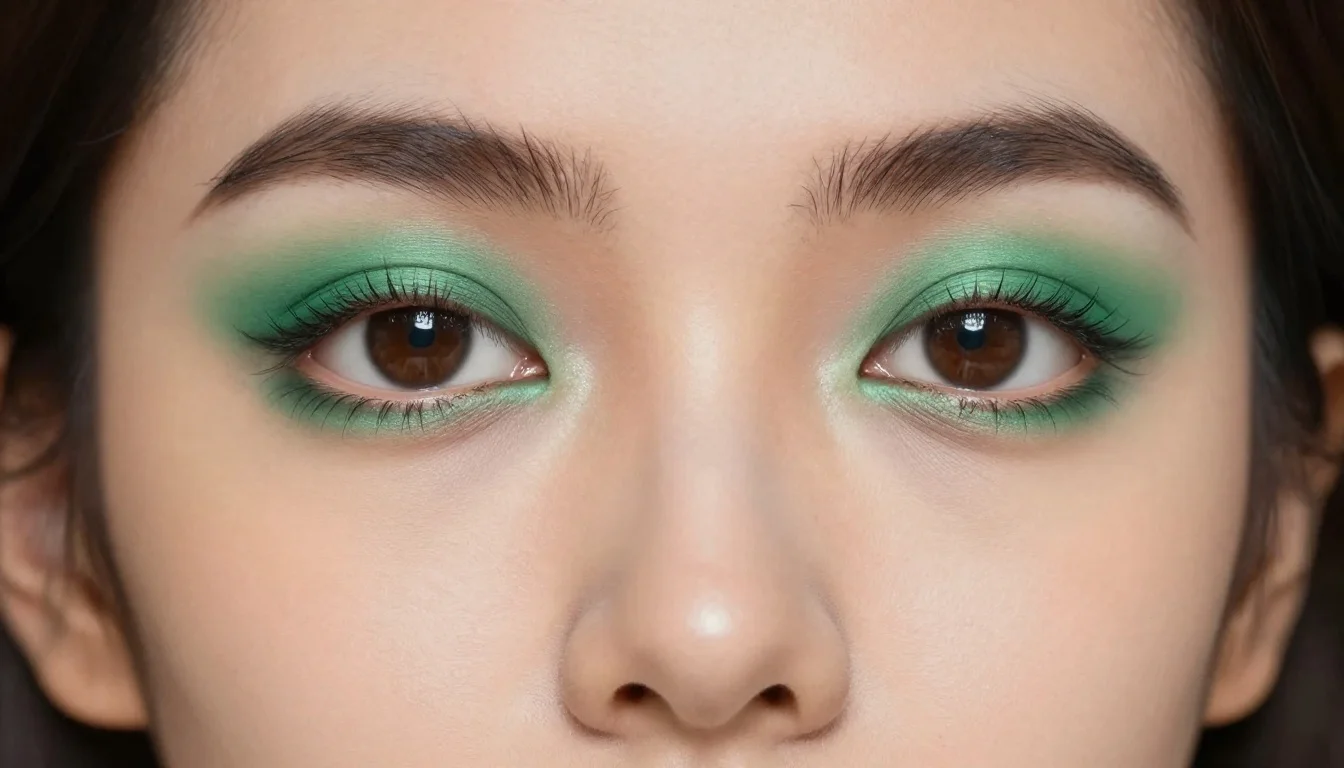
What eyeshadow makes dark eyes pop?
Rich jewel tones — deep emerald, sapphire blue, amethyst violet — create the most dramatic contrast against dark irises. High-contrast metallic shimmers (burnished gold, brilliant champagne) create luminous impact. The principle is contrast: dark eyes need eyeshadow that reads distinctly different from the iris rather than blending into it. Saturated colors and metallics achieve this; flat mid-tone neutrals do not.
Your Best Eyeshadow Shades
Rich Jewel Tones: Maximum Impact
Jewel tones are where dark eyes truly shine. Deep emerald, sapphire, and rich violet create high-contrast chromatic interest against dark irises that's simply not possible on lighter eyes — those colors would overwhelm a blue or green iris. On dark eyes, they read as intentional, sophisticated, and vivid. The dark iris grounds the saturated color and allows it to read clearly without competition. Pack emerald on the lid with deep brown in the crease; press sapphire blue along the lash line with a dark blended outer corner. The result is eyes that announce themselves.
Warm Terracotta & Copper: Luminous Warmth
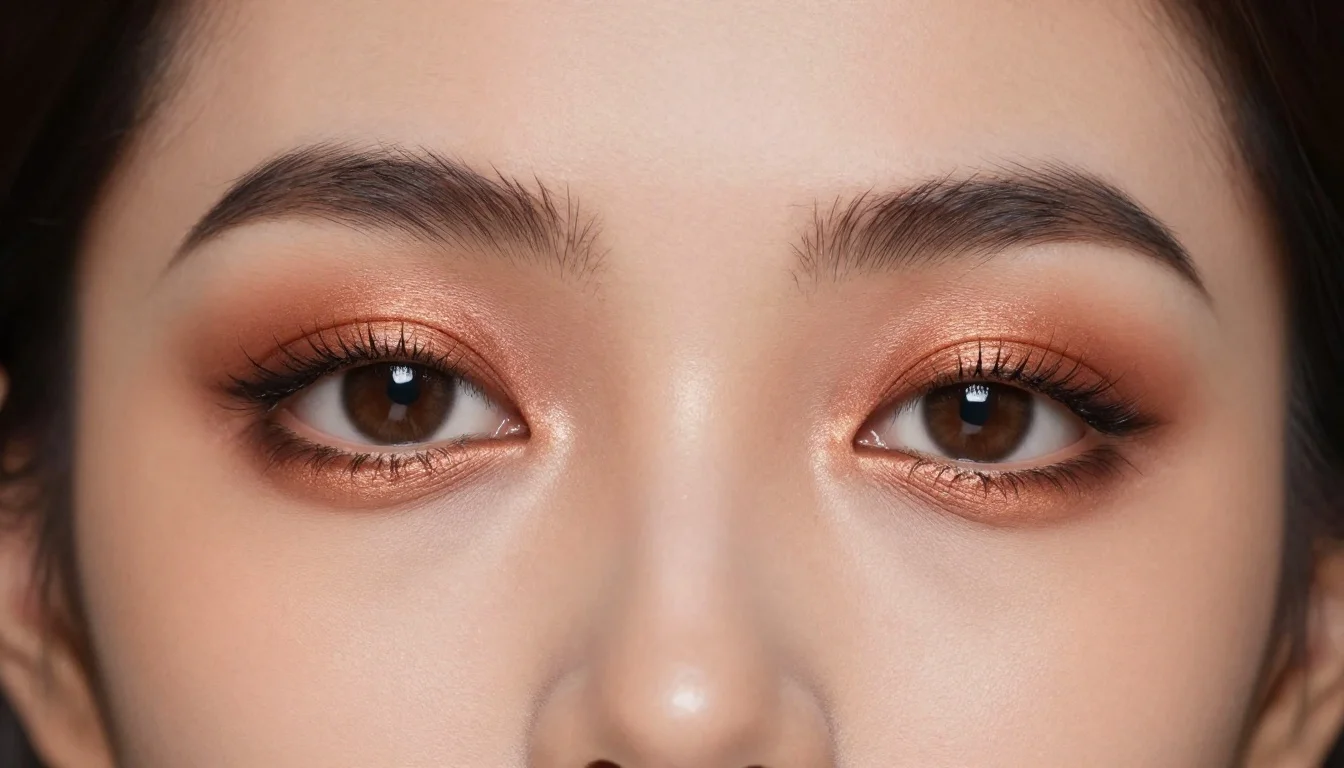
Warm terracotta and copper provide a different kind of contrast for dark eyes — tonal warmth against the cool depth of a dark iris. If your dark eyes have warm undertones (which many dark brown eyes do — amber flecks, warm golden rings), terracotta and copper create resonance that makes the warm elements of your iris glow. Copper shimmer on the lid against a deep dark iris looks particularly striking because the metallic warmth pops against the dark background. Burnt sienna in the crease with copper on the lid is a wearable daytime look that makes dark eyes look warm and alive.
Deep Matte Neutrals: Sculpted Definition
Deep matte neutrals don't disappear on dark eyes the way mid-tones do — the key is going truly deep. Rich espresso and deep charcoal work on dark eyes because they're dark enough to create contrast against the skin while still having tonal relationship with the iris. The technique matters: espresso in the crease and along the lash line creates sculpted definition that frames the dark iris. Charcoal blended into the outer corner creates shadow dimension. These are not the same as medium-brown or grey shadows that muddle — these are the deepest end of neutral that reads as intentional definition on dark eyes.
High-Contrast Shimmers: Inner Light
High-contrast shimmer is where dark eye technique diverges most sharply from advice for lighter eyes. On dark irises, a brilliant champagne or burnished gold on the lid creates a luminous jewel-like effect — the contrast between the sparkling shimmer and the depth of the dark iris creates dimensional brilliance. Gold shimmer makes dark eyes look warm and rich; silver creates a cooler, more dramatic contrast. Champagne works as an inner corner highlight that visually opens the eye and adds life. This is the one category where dark eyes have a decisive advantage over lighter eye colors.

Ready to see yourself in emerald & sapphire blue?
Start my color analysisHow to Apply Eyeshadow for Dark Eyes
Creating definition against a dark iris
The key rule for dark eyes: your crease and liner colors must be dark enough to show up, and your lid color must create contrast with the iris. Start by packing a transition shade — warm brown or taupe — into the crease just above the socket. Then choose your lid color with contrast in mind: a jewel tone, a metallic shimmer, or a matte color at least two shades different from your iris. Line the upper lash line with deep espresso, brown-black, or your darkest shadow pressed wet. This framing is what separates defined from undefined on dark eyes.
Lid versus crease placement for dark eyes
Dark eyes benefit from keeping the lid color saturated and bold while using the crease to create shadow depth rather than color. Apply your most impactful shade — emerald, copper shimmer, sapphire — on the mobile lid from lash line to crease. In the crease, blend a darker matte shade (espresso, deep brown, charcoal) to create shadow that gives the lid color something to pop against. Avoid placing your boldest color in the crease alone on dark eyes — it tends to get lost in shadow without the visual clarity of being on the flat lid surface.
Inner corner and highlight placement
Inner corner highlighting makes a more significant difference on dark eyes than on any other eye color. Apply a brilliant champagne, pale gold, or high-shimmer white at the inner corner of the eye — press it in with your finger for maximum impact. Extend this highlight slightly along the inner lower waterline. On the brow bone, sweep a matte cream or soft champagne just below the tail of the brow. This combination creates a light-dark interplay that makes dark eyes look wide, luminous, and dimensionally lit from within.
Waterline color choices for dark eyes
The waterline significantly impacts how dark eyes read. A dark brown or black kohl on the waterline deepens the eye further — dramatic and intense, but it can make small eyes appear smaller. For eyes that look more open and bright: use nude or flesh-tone pencil on the lower waterline to make dark eyes appear larger. For maximum drama: match the waterline pencil to your shadow color — emerald pencil on the lower waterline paired with emerald lid shadow creates total color immersion. Avoid using only white on the waterline of dark eyes — it can read as stark; nude or pale champagne is more flattering.
Eyeshadow That Vanishes on Dark Eyes
Mid-tone taupe and beige shadows as lid colors
Medium taupe and beige sit between the depth of the dark iris and the brightness of the skin — they create neither the contrast needed to define nor the resonance needed to enhance. On dark eyes, mid-tone neutral shadows look like nothing is there. Save taupe and beige for blending and transition shades in the crease; never make them your lid statement.
Pastel and light washes as a primary color
Light lilac, baby pink, and pale mint lack the saturation to create enough contrast against a dark iris. They can work as inner corner highlights or brow bone shimmers, but as a lid color they read as a washed-out smear against the intensity of dark eyes. If you want cool purple or pink tones, go deep: rich violet, deep berry, or vivid mauve — not the pale version.
Brown-on-brown as a complete look
Using only medium and dark brown shadows on dark brown eyes without any contrast element — no shimmer, no accent color, no liner definition — creates a muddy, undefined look. The iris and the shadow compete in the same tonal territory. If you use brown shadows, pair them with a high-contrast element: a gold shimmer on the lid, a deep forest green in the outer corner, or a bold liner along the lash line.
Stop guessing — preview every shade on you
See myself in my shadesEyeshadow Swaps That Change Everything for Dark Eyes
Small substitutions that shift from invisible to striking on dark irises.
Taupe disappears on dark eyes. Copper shimmer creates contrast through metallic warmth — it's still wearable for every day but actually shows up against a dark iris.
Brown on dark brown is tonal camouflage. Emerald or sapphire creates chromatic contrast that makes the iris look deeper and more vivid, not just darker.
Medium brown lacks the depth to create visible shadow definition on dark eyes. Deep espresso or charcoal creates genuine contrast between lid and crease that sculpts the eye.
Shimmer everywhere on dark eyes reads as flat brightness. Concentrated shimmer on the center lid against matte depth at the edges creates dimensional, jewel-like luminosity.
Dark eyes can look heavy without an inner corner highlight. A bright champagne at the inner corner opens the eye and creates light-to-dark contrast that makes the whole look dimensional.
Full black kohl on the waterline shrinks dark eyes. Nude waterline plus shadow on the lower lash line creates definition while keeping the eye open and bright.
Which Season Comes With Dark Eyes?
Dark eyes appear most often in deep and warm seasons — but your season determines whether your dark eyes lean toward jewel-tone drama, warm earthy richness, or muted sophistication. Knowing your season takes your dark eye looks from flattering to precise.
Deep Winter
Learn moreDeep Winter is the season most associated with dark, near-black eyes combined with cool or neutral undertones and high natural contrast. If your dark eyes appear cool-toned and intensely deep against fair or light-medium skin, Deep Winter likely applies. Your eyeshadow sweet spot is cool jewel tones: deep sapphire, pure amethyst, icy silver shimmer, and jet-black liner. High contrast and saturated cool colors are your power zone.
Deep Autumn
Learn moreDeep Autumn brings dark eyes with warm undertones — brown-black irises that have warmth in the depth, often with warm medium to deep skin. If your dark eyes feel rich and earthy rather than cool and intense, Deep Autumn is your likely match. Your eyeshadow works in warm jewel tones: deep forest green, burnt terracotta, antique bronze, and warm copper shimmer. Depth with warmth is your formula.
Warm Autumn
Learn moreWarm Autumn can also bring dark brown eyes — particularly those with visible amber, golden, or warm brown undertones in the iris. If your dark eyes have warmth you can see up close, and your overall coloring is warm and medium-to-deep, Warm Autumn may be your season. Your eyeshadow excels in warm, earthy tones: terracotta, rust, warm gold, and deep olive green. Warmth and richness over cool contrast.
Make Your Dark Eyes the Focal Point
Dark eyes aren't a limitation — they're a canvas that rewards contrast and bold choices. The key is understanding that your iris already provides depth; your eyeshadow job is to create the contrast and definition that make that depth visible and intentional. A personalized color analysis pinpoints your exact season, which refines which jewel tones, metallics, and techniques create the most striking look for your specific dark eyes and coloring.

Related Guides for Eyeshadow for Dark Eyes
Explore more personalized color advice based on your features.
Want to see these colors on you? What Colors Look Good on Me — free to try.
Frequently Asked Questions About Eyeshadow for Dark Eyes
What eyeshadow makes dark eyes pop?
Rich jewel tones — deep emerald, sapphire blue, amethyst violet — create the most dramatic contrast against dark irises. High-contrast metallic shimmers (burnished gold, brilliant champagne) create luminous impact. The principle is contrast: dark eyes need eyeshadow that reads distinctly different from the iris rather than blending into it. Saturated colors and metallics achieve this; flat mid-tone neutrals do not.
Can you wear dark eyeshadow with dark eyes?
Yes, but technique is critical. Dark shadow on a dark iris without contrast elements creates undefined heaviness. The solution: use your darkest shadows at the lash line and outer corner to create framing, keep the mobile lid lighter or metallic to create contrast, and always add a high-shimmer highlight at the inner corner. Deep charcoal or espresso as a liner works; deep charcoal all over the lid on dark eyes without any shimmer or contrast reads as muddy.
What is the best eyeshadow color for dark brown eyes?
Deep emerald green, sapphire blue, and warm copper shimmer are among the most striking choices for dark brown eyes. Emerald creates complementary contrast (green and the red-warmth in brown irises are complementary on the color wheel). Sapphire creates cool jewel-tone contrast. Copper and bronze create warm luminous resonance. Choose based on whether you want cool jewel-tone drama (emerald, sapphire) or warm glowing richness (copper, terracotta).
Should dark eyes use shimmer or matte eyeshadow?
Both — but placed deliberately. Matte shadows create depth in the crease and outer corner and are essential for framing. Shimmer is what makes dark eyes look luminous rather than flat — press it onto the center of the lid or at the inner corner for maximum impact. The combination of matte depth at the edges with shimmer at the center creates the dimensional, jewel-like effect that makes dark eyes stand out most.
Does blue eyeshadow work on dark eyes?
Deep, saturated blue — sapphire, navy, cobalt — works exceptionally well on dark eyes. The key word is saturated: a light sky blue lacks the contrast to register against a dark iris, but a deep jewel-toned blue creates dramatic cool contrast. Use deep sapphire on the lid or as a bold liner along the lash line with deep brown or charcoal in the crease. This is one of the bolder choices that dark eyes can support where other eye colors cannot.
What color liner works best for dark eyes?
Deep brown or espresso liner on the upper lash line gives definition with warmth — more nuanced than harsh black on warm-toned dark eyes. Black liner works for maximum drama and high-contrast looks. For a striking color choice, emerald or deep teal liner on the upper or lower lash line creates vivid contrast against dark irises that's visible even at a distance. On the waterline, nude pencil opens and brightens dark eyes; dark kohl waterline intensifies them — choose based on the effect you want.