Winter Colorsfor Warm Undertones
Warm undertones in winter need more than just dark colors. Discover which shades flatter you most — and which to skip.
Warm undertones and winter fashion have an uneasy relationship. The season defaults to cool and dark — navy, grey, icy white — and these fight the golden or peachy warmth in your skin. The solution is not to avoid dark or deep colors in winter. It is to choose the warm versions of each: forest green over cool teal, burgundy over cool plum, camel over grey, ivory over stark white. Warm undertones in winter look most luminous when the palette stays deep but skews warm.


3,000+
happy clients
Why Warm Undertones Need a Different Winter Strategy
Warm undertones and winter fashion have an uneasy relationship. The season defaults to cool and dark — navy, grey, icy white — and these fight the golden or peachy warmth in your skin. The solution is not to avoid dark or deep colors in winter. It is to choose the warm versions of each: forest green over cool teal, burgundy over cool plum, camel over grey, ivory over stark white. Warm undertones in winter look most luminous when the palette stays deep but skews warm.
Warm undertones — whether golden, peachy, or yellow-warm — reflect light with a warmth that creates a beautiful relationship with warm colors but a subtle friction with cool ones. In winter, the conventional palette skews cool: icy blues, cool greys, stark whites. Worn against warm-undertone skin, these colors can make the complexion look sallow or washed — the cool palette absorbs the warmth in your skin rather than reflecting it back.
The fix is temperature matching: deep, rich colors with warm undertones give you all of winter's darkness and sophistication without the cool-wash effect. Burgundy (red-warm) over cool plum. Forest green (yellow-warm) over cool emerald. Midnight navy with a slight warm tinge over a pure cool navy. Golden camel over grey. Cognac leather over silver accessories. Each substitution keeps the depth winter requires while adding the warmth your undertone needs.
Winter's heavy fabrics — wool, cashmere, velvet, corduroy — amplify color choices. A warm burgundy knit has richness that a summer linen version lacks. Deep forest green velvet reads as jewel-like in a way a cotton version can't. The fabric choice works in your favor in winter, because the material's natural richness adds visual warmth to whatever color you choose. Warm undertones can take full advantage of this — the fabric does additional warmth-work beyond the color itself.

What colors should warm undertones wear in winter?
Warm undertones look best in winter in warm-toned darks: rich burgundy, forest green, deep camel, warm rust, and cognac. These provide winter's depth without the cool-wash effect of navy, grey, or icy blue. Gold jewelry, warm ivory rather than stark white, and warm-toned fabrics complete the picture.
Best Winter Colors for Warm Undertones
Warm Darks: Burgundy, Forest Green & Deep Teal
Warm-toned darks are the foundation of a winter palette for warm undertones. Rich burgundy — a red-wine depth with warmth — is one of the most universally flattering colors for golden or peachy skin in cold months. It provides winter's depth without the cool-wash of navy or charcoal. Forest green has a yellow-warm quality that reads as rich and earthy rather than cool. Deep warm teal sits at the intersection of blue and green, carrying just enough warmth to harmonize with golden undertones while providing genuine winter depth.
Warm Neutrals: Camel, Cognac & Warm Ivory
Warm neutrals are winter's most underused palette for warm undertones. Rich camel — deeper and more saturated than typical camel — is a perfect winter neutral for golden skin: it provides warmth-on-warmth resonance that makes the complexion look golden and intentional. Cognac and warm chocolate brown function as dark neutrals with warmth built in. Warm ivory (cream-toned rather than blue-white) is a better winter light neutral than stark white — it resonates with warm undertones rather than creating a cool contrast.
Warm Reds & Spice Tones: Terracotta, Warm Rust & Crimson
Warm reds and spice tones are winter's highest-impact category for warm undertones. Rich crimson gives warm skin the jewel-tone drama that cool plum gives cool skin — the warm-red depth resonates with golden undertones and creates a striking winter look. Deep terracotta and warm rust are heavier autumn-to-winter transition colors that look particularly good in wool or chunky knit, where the texture amplifies the warmth. Spiced amber (a deep golden-warm) is a distinctive winter choice that photographs beautifully against warm complexions.
Deep Warm Navy & Olive: The Warm Dark Anchors
Navy is winter's default dark, but for warm undertones the navy should have a slight warm tinge rather than a pure cool-blue quality. Warm midnight navy reads as deep and sophisticated without the temperature conflict of a cool blue-navy. Deep olive — a muted yellow-green dark — is one of the most flattering cold-weather neutrals for golden skin: the yellow warmth in olive resonates with warm undertones and looks intentionally earthy. Dark warm denim (with a slight red or olive cast) also outperforms stark cool-indigo denim on warm-toned complexions in winter.

Ready to see burgundy & green on your face?
Start my color analysisBuilding Winter Outfits Around Warm Undertones
The warm-anchor rule
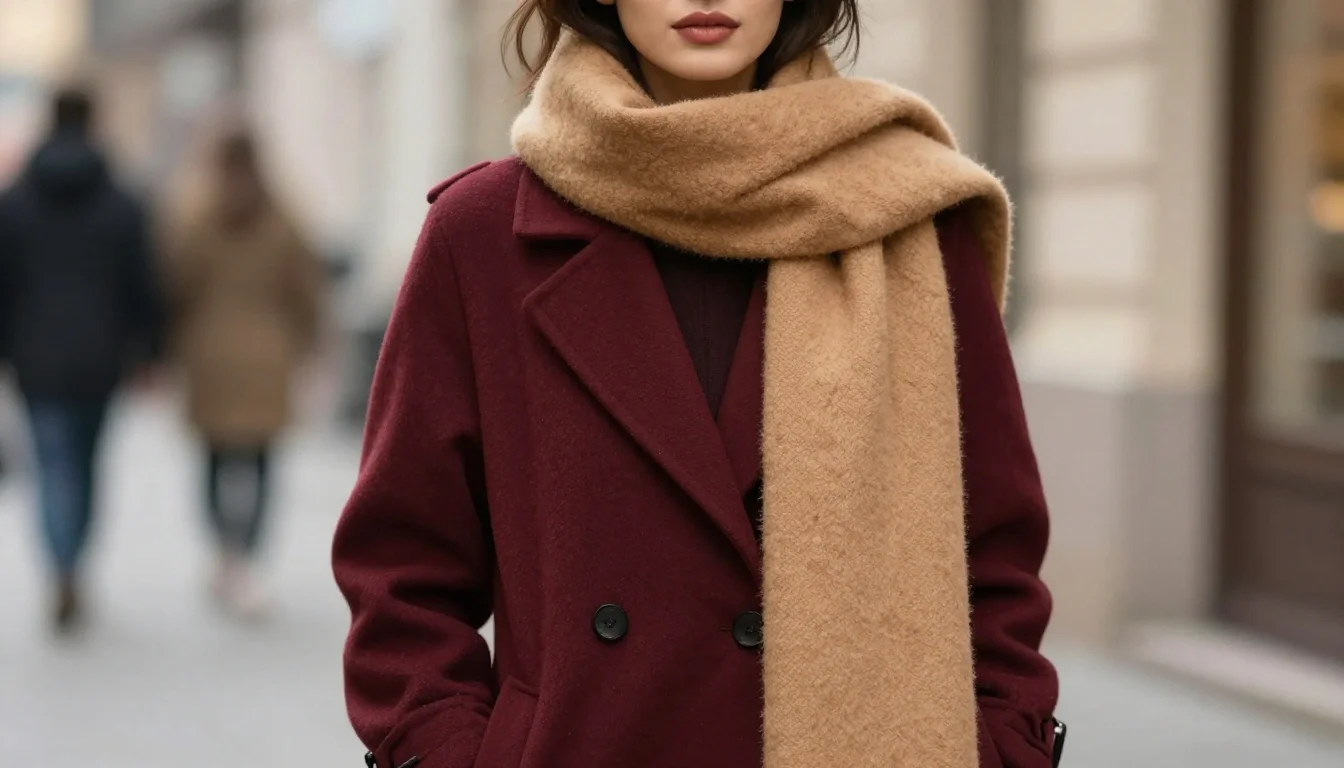
Every winter outfit for warm undertones should have at least one warm-toned anchor near the face. This can be a burgundy scarf, a camel coat, a warm ivory cream knit, or a forest green blazer. When the piece closest to your face has warmth in its color temperature, your complexion looks golden and alive regardless of what else is in the outfit. A warm anchor also prevents cool winter colors (grey trousers, dark denim) from reading as unflattering — because the warm piece at the face provides the temperature correction.
Building a warm winter capsule
A warm-undertone winter capsule starts with three warm anchors: a rich camel coat, a deep burgundy knit, and a forest green blazer. These three pieces pair with everything — warm ivory trousers, dark warm denim, olive corduroy — and create a cohesive winter palette with natural warmth. Add one warm accent (cognac leather boots, spiced amber bag) and the entire capsule works together without any cool-toned conflicts.
Using pattern and texture for warmth
In winter, texture and pattern add warmth beyond color. A warm houndstooth (cream and camel or burgundy) on warm undertones creates richness that solid cool colors can't. Camel cable knit, forest green corduroy, and warm rust tweed all use texture to amplify the color's inherent warmth. When the color is slightly cool (a grey-green or muted teal), a textured version reads warmer than a flat one — the texture catches light in a way that adds golden dimension.
Jewelry and metal choices for warm winter looks
Gold jewelry is essential in warm-undertone winter outfits — it amplifies the skin's golden warmth and ties together warm color palettes. A gold chain with a burgundy dress, gold studs with a camel coat, gold hoops with a forest green blazer. These combinations create visual cohesion where the jewelry and the skin temperature match. Rose gold works as a bridge in mixed-warm outfits. Silver and cool-toned metals create a slight temperature conflict with warm undertones — choose gold as your default for winter dressing.
Looking for the Warm Winter palette?
The seasonal-analysis phrase has a specific answer. See the Warm Winter color palette guide to compare Bright Winter, Deep Winter, and Warm Autumn.
Winter Colors That Fight Warm Undertones
Cool grey and slate
Grey has no warmth, and on golden or peachy skin it creates a cool-wash effect that can make the complexion look sallow or drained. Mid-grey and slate are particularly problematic: they provide insufficient contrast and insufficient warmth, landing in a middle ground where nothing works. If you want a cool dark neutral in winter, deep navy outperforms grey significantly. If you want a warm neutral, camel or cognac replace grey entirely.
Stark icy white and cool white
Icy white and cool white have a blue tinge that fights warm undertones — the cool-white creates a temperature clash that makes golden or peachy skin look yellowish rather than golden. Warm ivory, cream, and warm off-white are the correct winter light neutrals for warm undertones. The warmth in the white resonates with your undertone rather than opposing it.
Cool jewel tones: icy blue, cool violet, and bright cobalt
Cool jewel tones — particularly icy blue, pure cool violet, and bright cobalt — have a temperature that conflicts with warm undertones in winter. They can create a flattering high-contrast look in summer contexts, but in winter's heavier fabrics and cooler ambient light, the cool-over-warm combination reads as slightly wrong. Warm teal, warm plum with red in it, and forest green are better alternatives that provide similar jewel-tone drama with warmth built in.
Stop guessing — preview every look on you
See these looks on my photoWinter Color Upgrades for Warm Undertones
Swap the cool winter defaults for warm versions that make golden and peachy skin glow.
Grey fights warm undertones. Camel provides the neutral sophistication with warmth built in; burgundy gives depth with resonant red-warmth.
Cool navy and grey have a temperature that drains warm undertones in winter. Forest green and burgundy provide equal depth with warmth that makes golden skin glow.
Cool charcoal has no warmth to offer warm-toned skin. Deep olive and forest green provide professional depth with yellow-warm tones that complement golden undertones.
Stark white has a cool blue tinge that fights warm undertones. Warm ivory resonates with golden or peachy skin and looks intentional rather than cold.
Cool jewel tones create a temperature conflict with warm undertones. Crimson and warm teal provide the same jewel-tone drama with warmth that makes your complexion look luminous.
Silver introduces cool temperature that conflicts with warm undertones. Gold and cognac resonate with golden skin and complete the warm palette.
Which Warm-Undertone Season Might Be Yours?
Warm undertones span several seasonal palettes — your specific season tells you how deep, how vivid, and how earthy your winter colors should be.
Warm Autumn
Learn moreIf your skin has rich warm-golden undertones and your coloring feels earthy and natural, Warm Autumn fits. Your winter sweet spot: deep terracotta, warm rust, forest green, cognac, rich camel. Avoid anything cool-toned or icy — your warmth is your strength in winter.
Warm Spring
Learn moreIf your warm undertones lean more peachy-clear and your coloring is lighter and brighter, Warm Spring fits. Your winter sweet spot: vivid coral-red, warm periwinkle, golden camel, bright forest green. You carry clearer, more vivid warm tones than Warm Autumn — less earthy, more vivid.
Deep Autumn
Learn moreIf your warm undertones are combined with deeper, richer coloring — dark hair, dark or warm-rich eyes — Deep Autumn fits. Your winter sweet spot: the richest warm-darks available: deep burgundy, dark forest green, warm chocolate, burnt sienna, cognac. You carry the deepest and most saturated warm tones most powerfully.
Build a Winter Wardrobe Around Warm Undertones
Cold-weather colors for warm undertones depend on how warm you are, how deep your coloring is, and your contrast level. Deep Autumn can handle darker, higher-contrast combinations, while Warm Autumn needs more medium-depth warmth. A personalized analysis identifies where you sit and builds a complete seasonal wardrobe around your coloring.
Stop guessing — preview every color on you
Preview Yourself In Your Palette
Get my personalized paletteStop guessing — preview every color on you
Preview Yourself In Your Palette

Related Guides for Winter Colors for Warm Undertones
Explore more personalized color advice based on your features.
Want to see these colors on you? Skin Undertone Test — free to try.
Frequently Asked Questions About Winter Colors for Warm Undertones
What colors should warm undertones wear in winter?
Warm undertones look best in winter in warm-toned darks: rich burgundy, forest green, deep camel, warm rust, and cognac. These provide winter's depth without the cool-wash effect of navy, grey, or icy blue. Gold jewelry, warm ivory rather than stark white, and warm-toned fabrics complete the picture.
Can warm undertones wear navy in winter?
Yes, but the navy should have a warm tinge — a blue with a slight green or purple warmth rather than a pure cool cobalt navy. Straight cool navy can fight warm undertones, creating a subtle sallow effect. Warm midnight navy, or navy mixed with a slight warm tinge, harmonizes better. Forest green and deep warm teal are often stronger alternatives for golden or peachy skin.
Does grey look good on warm undertones in winter?
Grey is one of the least flattering winter colors for warm undertones. It has no warmth to resonate with golden or peachy skin, and provides insufficient contrast to look intentional. Navy outperforms grey for dark neutrals; camel outperforms grey for warm neutrals. If you love the grey aesthetic, a very warm charcoal (with a brown undertone) is the closest grey to what works — but even that competes with true warm alternatives.
What coat color is best for warm undertones?
Rich camel, deep burgundy, and forest green are the best winter coat colors for warm undertones. Camel is the most versatile — it functions as a warm neutral that complements nearly any warm-toned outfit and makes golden skin look luminous. Burgundy makes a powerful statement and photographs beautifully. Both dramatically outperform grey or charcoal for warm-undertone complexions.
What should warm undertones wear to a winter party?
For a winter event, warm undertones look most striking in rich crimson or deep burgundy, warm teal, or forest green in a luxe fabric — velvet, silk, or satin. These colors provide the jewel-tone drama of the season while resonating with golden or peachy undertones. Add gold jewelry and you have a warm winter look that photographs beautifully under indoor party light.
Is burgundy good for warm undertones in winter?
Burgundy is one of the best winter colors for warm undertones. The red-wine depth has warmth built into it — the red component resonates with golden and peachy undertones while the depth provides full winter sophistication. Rich burgundy in cashmere, velvet, or wool is a go-to warm winter combination that looks intentional on warm-toned complexions from office to evening events.