Winter Colorsfor Pale Skin
Pale skin in winter can look radiant or washed out depending entirely on your colors. Discover which shades flatter you most — and which to skip.
Pale skin is often treated as a liability in winter — wash it out in beige, drown it in black. Both are wrong. Winter's deep, saturated color range is one of the most flattering environments for fair complexions if you choose the right shades. The key is contrast: winter colors work when they frame pale skin rather than blending into it or creating a stark clash. This guide identifies the exact shades that make pale skin look like porcelain and luminous in winter light.


3,000+
happy clients
Why Pale Skin Has a Unique Relationship With Winter Color
Pale skin is often treated as a liability in winter — wash it out in beige, drown it in black. Both are wrong. Winter's deep, saturated color range is one of the most flattering environments for fair complexions if you choose the right shades. The key is contrast: winter colors work when they frame pale skin rather than blending into it or creating a stark clash. This guide identifies the exact shades that make pale skin look like porcelain and luminous in winter light.
Pale skin operates at the lightest end of the value scale — it reflects more light than any other complexion type. In winter, when natural light is low-angle and cool, this creates both a challenge and an opportunity. The challenge: colors that are also light (pale beige, grey, washed pastels) blend with pale skin, making the whole look flat. The opportunity: the deep, saturated colors that define winter fashion — forest green, cranberry, deep navy, rich burgundy — create exactly the contrast and warmth that make pale skin look luminous.
Your undertone shapes which end of the winter palette works best. Cool pale skin — rosy or neutral-cool — thrives in cool winter tones: deep navy, plum, cool emerald, icy rose. Warm pale skin — ivory or peachy undertones — looks best in winter shades that lean warm even while being deep: forest green, rich burgundy, warm camel, cognac. The mistake is thinking winter must mean cool. Warm pale skin in a cool-grey palette looks ashy and drained rather than striking.
Winter's indoor environments add another variable: artificial light. Fluorescent office light drains all complexions, but pale skin is most vulnerable. Colors that hold their warmth or saturation — deep jewel tones, warm reds, rich earthy darks — look most consistent. The colors that drain under fluorescent light — greys, muted beiges, cool pastels — look worst on pale skin because there is no warmth or depth to buffer the flattening effect.

What colors look best on pale skin in winter?
Pale skin looks best in winter in deep, saturated colors that create contrast: rich burgundy, midnight navy, forest green, and deep plum are the most flattering. These frame light skin without the harshness of flat black or the invisibility of grey and beige. Warm ivory and holly red also work — the contrast makes pale skin look electric rather than washed out.
Best Winter Colors for Pale Skin
Rich Winter Jewels: Emerald, Sapphire & Plum
Deep jewel tones are winter's most powerful colors for pale skin. The saturated depth of emerald or sapphire creates dramatic, elegant contrast against fair skin — the color does the visual work while pale skin becomes a luminous canvas. Deep emerald is particularly effective: the green-depth reads as sophisticated against fair complexions without the harshness of very cool tones. Sapphire and plum sit at the cool end, making them best for cool pale skin with pink or neutral undertones. Vivid teal bridges warm and cool and works across most pale undertones.
Deep Warm Tones: Burgundy, Forest Green & Cognac
Warm-depth colors are winter's most universally flattering palette for pale skin — they provide seasonal richness while keeping warmth that prevents the ashy effect. Rich burgundy is arguably the single best winter color for pale complexions: the red-warmth creates a beautiful counterpoint to fair skin, making the skin look peachy and alive. Forest green has a muted warmth that reads as organic and intentional. Deep cognac and warm crimson work especially well for pale skin with warm-ivory undertones, where cool jewel tones can feel slightly foreign.
Deep Neutrals: Navy, Camel & Chocolate
Winter neutrals for pale skin need depth and either warmth or rich cool saturation. Midnight navy is the best dark neutral for fair complexions — it provides the same depth as black but with a cool richness that frames pale skin elegantly rather than creating a stark void. Deep camel is winter's best warm neutral: rich enough to create definition, warm enough to complement fair undertones. Rich chocolate functions as a dark neutral with built-in warmth — sophisticated rather than harsh on pale skin.
Contrast Brights: Warm Ivory, Holly Red & Clear Crimson
Winter's high-contrast brights work beautifully with pale skin when the contrast is intentional. Warm ivory is pale skin's white — clean, bright contrast without the starkness of cool white. Holly red (vivid, slightly warm red) on pale skin creates one of winter fashion's most iconic combinations: maximum warm-cool contrast makes both the color and the skin look electric. These work best when you commit fully — a half-hearted muted red on pale skin looks faded rather than vivid.

Ready to see emerald & sapphire on your face?
Start my color analysisBuilding Winter Color Around Pale Skin
The contrast formula for winter
Pale skin in winter works on contrast — build outfits around one deep anchor color near the face. A deep burgundy turtleneck, a forest green blazer, a midnight navy coat. The deep color frames your fair complexion and the skin becomes the canvas. Avoid spreading pale and mid-toned colors across the whole outfit — it creates flatness. The formula: deep color near the face, lighter or neutral pieces below.
Using warm accents to prevent the winter chill effect
Pale skin in all-cool-winter colors (icy blue, cool grey, silver) can look cold rather than elegant. A warm accent prevents this — a cognac scarf with a navy coat, a burgundy bag against grey, a warm camel belt on a cool-toned dress. This warmth pulls the look toward your undertone and makes pale skin appear peachy rather than ashy. It is a small addition with a significant visual effect in winter's cool ambient light.
Holiday and evening: maximizing impact
Winter evenings are pale skin's highest-opportunity dressing moment. Candlelight, golden indoor light, and rich fabrics all work in your favor. Deep red velvet on pale skin at a holiday dinner is a combination that has worked for centuries. Deep emerald silk or rich plum satin photograph beautifully against fair complexions in warm interior light. The rule for winter evenings: commit to richness and depth. Pastels and neutrals have no place in evening looks for pale skin in winter — your skin already provides the light; the outfit provides the drama.
Winter coat color strategy
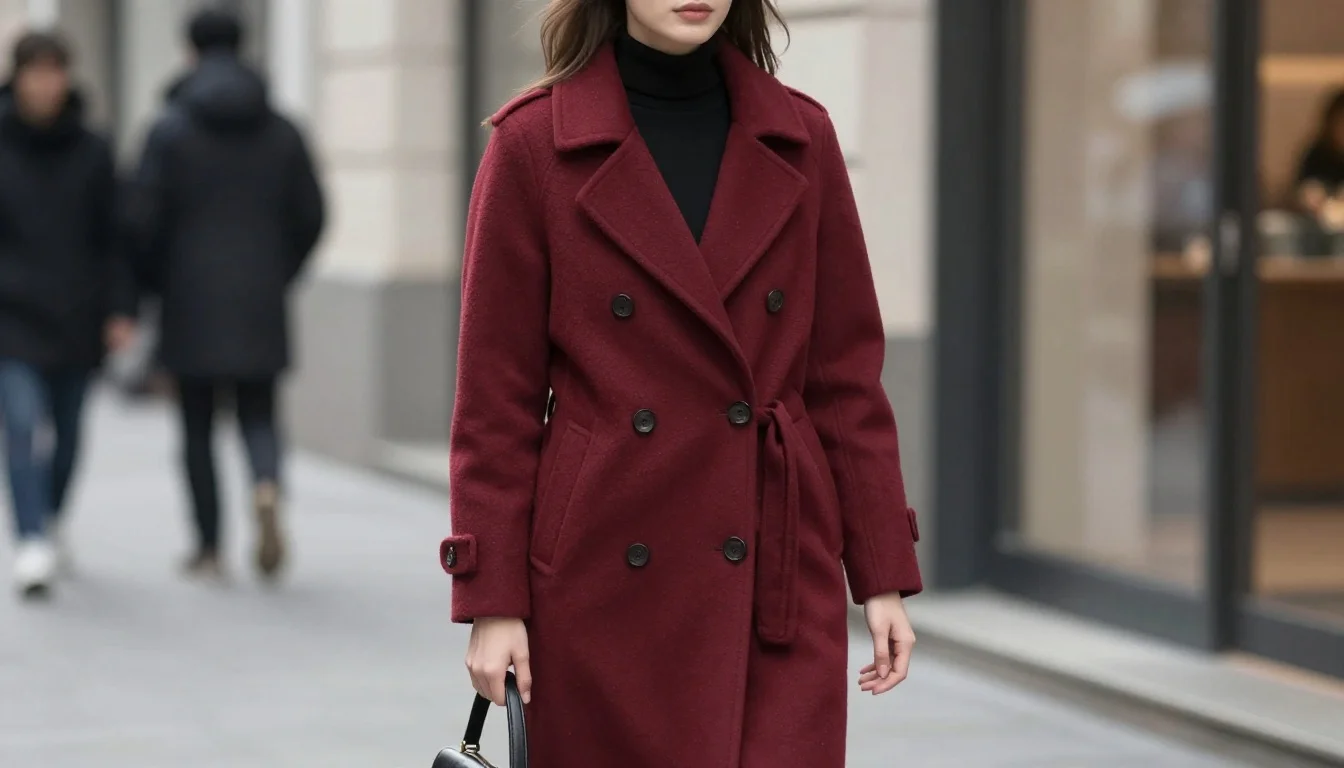
Your coat is the most visible winter color you wear. For pale complexions, coats in deep camel, rich burgundy, forest green, or midnight navy are the most flattering. Deep camel is particularly versatile — it provides clear contrast against pale skin while functioning as a warm neutral. Black coats work for cool-toned pale skin with high-contrast features. Standard camel or beige coats at pale skin's own light value tend to read as one undifferentiated pale mass from a distance — a richer coat color makes your whole presence sharper.
Winter Colors That Wash Out Pale Skin
Grey in all its forms
Grey is the most consistently unflattering winter color for pale skin. Mid-grey provides no warmth and minimal contrast — it drains fair complexions without offering the depth of navy or the warmth of camel. Light grey reads as almost skin-tone adjacent on very pale complexions, creating a washed-out blur. Even charcoal has a flatness on pale skin that navy, forest green, or deep burgundy do not. If you want a dark neutral, navy or deep warm charcoal both significantly outperform grey.
Washed pastels and muted winter tones
Pale sage, dusty mauve, blush pink, and other muted pastels blend with pale complexions in winter's cool low light into an undifferentiated pale mass. They work in summer or spring when warm light supports them. In winter, pale skin needs deep, saturated colors to look defined — not more pale tones layered over it.
Flat black as a default
Black is not automatically flattering for pale skin despite being the conventional winter choice. Very fair, cool-toned pale skin can carry stark black elegantly. But warm or neutral pale skin in flat black looks harsh rather than striking — the cool dark tone fights the skin's warmth. Deep navy, rich burgundy, or forest green give the same depth with better undertone harmony. If you wear black, choose rich fabrics like velvet or cashmere that add visual warmth through texture.
Tan and warm beige
Beige and tan are pale skin's worst neutral winter choice. These mid-toned warm neutrals land right at the skin-adjacent register for fair complexions — not light enough to create contrast, not dark enough to frame the face. In winter, when you want warmth and richness, beige provides neither. Choose deep camel for warmth with depth, or warm ivory for lightness with clarity.
Stop guessing — preview every look on you
See these looks on my photoWinter Color Upgrades for Pale Skin
Swap the shades that drain pale skin in winter for ones that make it look porcelain and luminous.
Grey drains pale skin without providing useful contrast. Burgundy and forest green give winter depth with warmth that makes fair complexions look alive.
Standard camel blends into pale skin's light value. Deep camel with true richness, or navy, creates the contrast that makes fair complexions look defined.
Flat black can feel harsh against warm pale skin. Navy and forest green provide equal professionalism with better undertone harmony for fair complexions.
Pastels blend with pale skin in winter indoor light. Deep plum and burgundy create the contrast that makes fair skin look striking in candlelit settings.
Pale grey and beige lack contrast against fair skin. Warm ivory gives clean brightness; vivid red creates the maximum warm contrast that makes pale skin look electric.
A pale scarf near the face provides no color lift for pale skin. A deep vivid scarf creates framing contrast that makes fair complexions appear more vivid and defined.
Which Palette Might Be Yours?
Pale skin spans several cool and light seasonal palettes. Your specific season tells you whether to reach for cool winter jewels or warm winter depths — and which exact shades suit your version of pale skin.
Cool Winter
Learn moreIf your pale skin has a porcelain-cool quality — neutral or pink undertones, vivid eye color — Cool Winter fits. Your winter color sweet spot: stark cool white, midnight navy, cool emerald, deep plum, icy rose. The cool, high-contrast end of winter works perfectly for your clear, high-impact coloring.
Light Summer
Learn moreIf your pale skin has soft cool undertones and your overall coloring is low-contrast and muted, Light Summer fits. Your winter sweet spot is the softer end of winter: cool dusty rose rather than vivid red, soft teal rather than vivid cobalt. Deep saturated winter tones can overwhelm your delicate coloring — stay in the softer, less intense registers.
Light Spring
Learn moreIf your pale skin has warm-neutral or peachy undertones and you look best in warm, clear colors, Light Spring fits. Your winter sweet spot: warm ivory, coral-red, warm periwinkle, cognac, deep peach. Even in winter, warm versions of each color family suit you — deep burgundy over deep plum, forest green over cool emerald.
Find Your Exact Winter Palette
Winter colors for pale skin vary significantly depending on whether your complexion runs cool or warm — and your specific seasonal palette identifies the exact shades of navy, burgundy, or emerald that suit your version of pale skin. Light Summer, Cool Winter, and Light Spring all have distinctly different winter sweet spots. A personalized color analysis tells you exactly which winter colors make your pale complexion look luminous rather than flat.
Stop guessing — preview every color on you
Preview Yourself In Your Palette
Get my personalized paletteStop guessing — preview every color on you
Preview Yourself In Your Palette

Related Guides for Winter Colors for Pale Skin
Explore more personalized color advice based on your features.
Want to see these colors on you? What Colors Look Good on Me — free to try.
Frequently Asked Questions About Winter Colors for Pale Skin
What colors look best on pale skin in winter?
Pale skin looks best in winter in deep, saturated colors that create contrast: rich burgundy, midnight navy, forest green, and deep plum are the most flattering. These frame light skin without the harshness of flat black or the invisibility of grey and beige. Warm ivory and holly red also work — the contrast makes pale skin look electric rather than washed out.
Should pale skin avoid black in winter?
Not entirely — but black is not automatically flattering for pale skin. Cool-toned pale skin with high contrast features can wear stark black powerfully. Warm or neutral pale skin often looks better in deep navy, forest green, or rich burgundy — same depth, better undertone harmony. In rich fabrics like velvet or cashmere, black gains visual warmth through texture and works for more pale undertones.
Why does pale skin look washed out in winter?
Pale skin looks washed out in winter when outfit colors are too similar in value — grey, beige, muted pastels, and pale neutrals blend into fair complexions rather than framing them. Winter's cool ambient light also flattens everything, so colors with warmth or richness built in perform better than flat or muted shades. The fix is contrast: deep, saturated colors near the face provide definition.
What colors should pale skin avoid in winter?
Grey is the most consistently unflattering winter color for pale skin — it drains without providing useful contrast. Tan and beige also disappear against fair complexions. Washed pastels look flat against pale skin in winter's cool light. Flat black can look harsh for warm-toned pale skin. The alternatives: navy over grey, deep camel over tan, jewel tones over pastels.
What is the best coat color for pale skin?
Deep camel, midnight navy, rich burgundy, and forest green are the most flattering coat colors for pale skin. Deep camel is particularly versatile — it provides clear contrast against fair complexions while pairing with most winter colors. Black coats work for cool, high-contrast pale skin. Tan and beige coats at pale skin's own lightness level create an undifferentiated effect from a distance.
What holiday colors look best on pale skin?
Holly red on pale skin is one of winter fashion's most striking combinations — maximum warm-cool contrast. Deep emerald is equally effective. Rich burgundy and deep plum photograph beautifully under candlelight and warm indoor holiday light. Avoid dusty or muted holiday colors — pale skin in blush or dusty rose disappears in winter indoor settings.