The Intentional Wardrobe Built AroundYour Blonde Coloring
Build an intentional 15-piece capsule wardrobe as a blonde. Discover how to build looks with shades that actually flatter you.
Blonde hair and the complexion that accompanies it create a specific color story — one that thrives when the wardrobe is intentional rather than random. Too many blondes default to a cluttered mix of neutrals, pastels, and occasional brights with no underlying system. The result is a closet where nothing quite connects. This guide builds a strict 15-piece color system around your exact coloring: 2 neutrals, 2 accents, every piece working with every other piece.


3,000+
happy clients
Why a Curated Color System Works Best for Blonde Coloring
Blonde hair and the complexion that accompanies it create a specific color story — one that thrives when the wardrobe is intentional rather than random. Too many blondes default to a cluttered mix of neutrals, pastels, and occasional brights with no underlying system. The result is a closet where nothing quite connects. This guide builds a strict 15-piece color system around your exact coloring: 2 neutrals, 2 accents, every piece working with every other piece.
Blonde hair — whether warm golden, cool ash, or strawberry — creates a naturally light, soft color story. Your hair, skin, and often your eyes all sit in the lighter range of the value scale. This means the colors you wear have a disproportionate impact on how your overall appearance reads. The wrong colors drain light coloring completely; the right colors make it luminous and defined.
The challenge for blondes is that there is a wide range of blonde coloring — warm golden blonde behaves completely differently than cool ash blonde, and what flatters one can actively undermine the other. The minimalist approach solves this by requiring you to choose a tight color system that is built specifically around your undertone, not just your hair color. Your undertone determines whether your neutrals should be warm camel or cool navy, and whether your accent should be terracotta or burgundy.
With a curated 3-4 color system, every piece in your wardrobe connects to every other piece. You stop making the mistake of buying beautiful items that only work with one other thing. You stop wondering why your closet feels full but nothing matches. A 15-piece minimalist wardrobe built around your specific blonde coloring does more with less — by design.
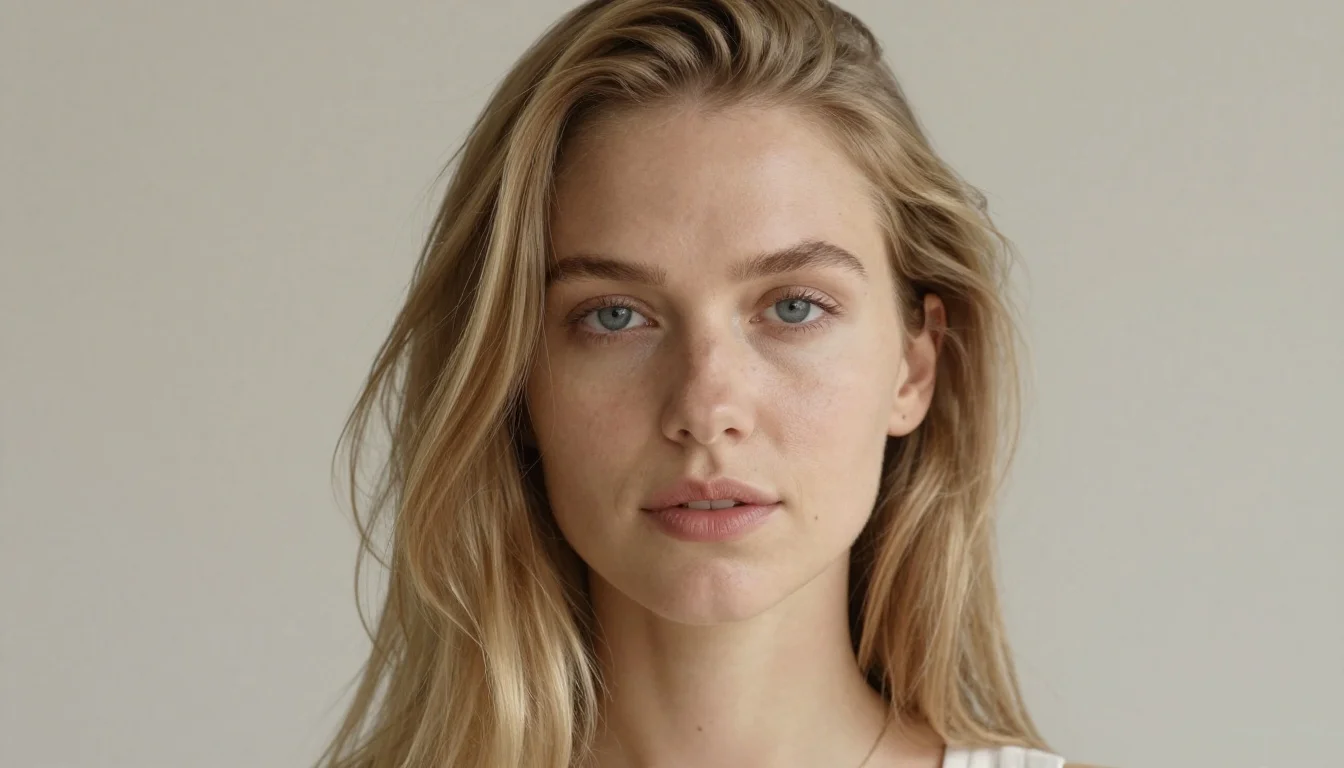
What colors look best on blonde hair in a minimalist wardrobe?
The best minimalist wardrobe for blonde hair is built on 2 neutrals and 2 accents chosen to match your specific blonde undertone. Warm golden blondes: camel, warm ivory, dusty rose, and warm sage. Cool ash blondes: deep navy, crisp white, rich burgundy, and deep teal. The key is matching the temperature of your colors to the temperature of your specific blonde — warm blonde coloring needs warm-toned palette, cool blonde needs cool-toned palette.
Your Minimalist Color Palette
Neutral 1: Soft Navy or Warm Camel (Choose Your Undertone)
Warm-blonde and golden blondes: camel and tan harmonize with your golden hair and skin warmth — this is your primary neutral. Cool-blonde and ash blondes: deep navy harmonizes with your cooler, more silvery hair and any pink or rosy quality in your skin. Choose the one that matches your specific undertone, not just your hair color.
Neutral 2: Warm Ivory or Crisp White
Warm blonde coloring: warm ivory is your light neutral, harmonizing with the golden tones in your hair. Cool blonde coloring: crisp cool white creates a clean, fresh contrast. In both cases, avoid the opposite — cool white washes out golden blondes; warm ivory introduces sallowness against cool-ash complexions.
Accent 1: Warm Dusty Rose or Rich Burgundy
Pink and rose tones have an affinity for blonde hair — they echo and enhance the warmth or coolness in light coloring rather than competing with it. Warm dusty rose (peach undertone) suits warm blondes; rich burgundy or cool berry suits ash blondes. One or two pieces in this family makes every neutral piece in your wardrobe feel finished.
Accent 2: Warm Sage or Deep Teal
A cool, earthy green provides depth and contrast without overwhelming light blonde coloring. Warm sage complements golden blondes; deep teal and cool forest green enhance ash and platinum blondes. This is the balancing color in your system — a visual anchor that prevents the palette from reading as overly soft or washed-out.

Ready to see your palette on your face?
Start my color analysisThe Minimalist Formula for Blonde Coloring
The Color Ratio
70% of your wardrobe is your two core neutrals (your primary neutral — camel or navy — and your light neutral — ivory or white). 20% is your primary accent (dusty rose or burgundy). 10% is your secondary accent (sage or teal). In 15 pieces: 10-11 neutral pieces, 3 accent pieces, 2 green pieces. Every piece connects to every other piece through the shared color story of your specific blonde coloring.
The 15-Piece Formula
5 tops (2 in your primary neutral, 2 in your primary accent, 1 in your secondary accent) + 3 bottoms (2 in your primary neutral, 1 in an accent tone) + 2 outerwear (1 in your primary neutral, 1 in your secondary accent) + 2 dresses (1 in your primary accent, 1 in your light neutral) + 2 shoes (your primary neutral shade and a clean light neutral) + 1 bag (your primary neutral or accent). Every combination works within the system.
How Every Piece Earns Its Place
The minimalist rule: every new piece must connect to at least four existing pieces in your wardrobe. For blonde coloring specifically, this means every piece must also pass the mirror test — does it make your hair color look luminous and intentional, or does it compete with your natural coloring? Blonde hair is a statement in itself; your wardrobe should frame it, not fight it.
Contrast Creates Definition for Light Coloring
Blonde coloring benefits from at least one element of deliberate contrast in every outfit. A dark neutral paired with a light top, or a saturated accent against a soft neutral, gives visual definition that light coloring does not generate on its own. Avoid all-light, all-soft outfits — they tend to blur together with light hair and skin rather than creating a defined, intentional look.
Colors That Drain Blonde Coloring
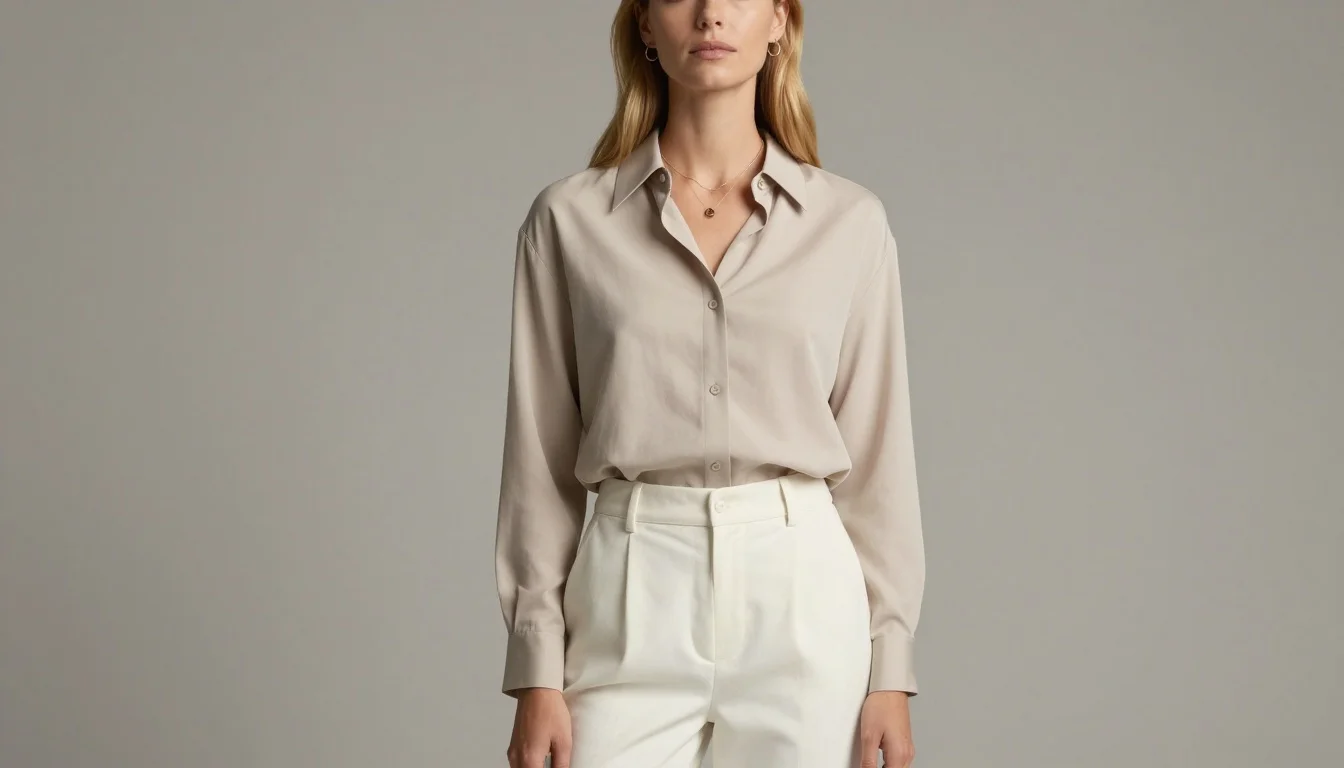
Muddy or Ashy Beige
Grey-beige or putty tones sit too close to the value and muted quality of light blonde skin, creating a washed-out effect. The color appears neither intentional nor flattering — it simply merges with the complexion instead of complementing it.
Neon or Highly Saturated Brights
Vivid neon yellow, electric orange, or fluorescent pink overwhelm light blonde coloring rather than enhancing it. The contrast is jarring rather than striking. If you want saturation, choose medium-depth colors like dusty rose or sage rather than electric brights.
Overly Warm Orange-Based Tones (for Cool Blondes)
If you are an ash, platinum, or cool-toned blonde, orange-based terracotta and warm rust can fight your undertone and introduce an unflattering warmth near your face. Cool blondes should lean toward burgundy and teal rather than terracotta as their accent.
Overly Cool Icy Pastels (for Warm Blondes)
If you are a warm golden or strawberry blonde, icy lavender, cool mint, and pale silver-blue can wash out your complexion rather than enhancing it. Warm blondes need the warmth in their accents — dusty rose and warm sage rather than icy cool pastels.
Stop guessing — preview every look on you
See these looks on my photoSwaps That Build Cohesion Into Your Blonde Wardrobe
Replace disconnected pieces with ones that belong to the same intentional system
For warm golden blondes, camel harmonizes with the warmth in both hair and skin. Black and grey are functional but create no tonal connection to your natural coloring.
Navy shares the cool quality of ash and platinum blonde hair, creating a harmonious, intentional look. Brown introduces warmth that can fight cooler blonde undertones.
Matching the temperature of your light neutral to your undertone is the single most important swap for getting correct color near the face.
Multiple disconnected accent colors prevent a minimalist wardrobe from cohering. One primary accent that works with every neutral piece multiplies outfit options rather than dividing them.
Three near-identical lights compete for the same role. Replacing them with one clear light and one deeper tone creates contrast and reduces redundancy.
Grey outerwear is the "safe" choice that connects to neither warm nor cool blonde coloring. Your undertone-matched neutral does the same job while actively flattering your complexion.
Which Palette Might Be Yours?
Blonde hair spans multiple seasonal palettes depending on whether your hair has warm (golden, honey, strawberry) or cool (ash, platinum, sandy) tones, and how light or soft your overall coloring is. These are the most common seasonal types for blonde-haired complexions.
Light Spring
Learn moreThe most common season for warm golden blondes with light, clear, warm-toned skin and eyes. Light Spring palettes are bright, warm, and delicate — warm ivory, peach, coral, light camel, and warm dusty rose. Clear, warm colors in lighter values are your ideal; heavy or muted colors feel too much.
Light Summer
Learn moreThe most common season for cool ash or sandy blondes with soft, cool-toned features. Light Summer palettes are cool, muted, and delicate — soft navy, cool rose, dusty mauve, lavender, and soft teal. Vivid or warm colors overwhelm; the softest, coolest versions of every color suit you best.
Warm Spring
Learn moreFor golden or strawberry blondes with more warmth and saturation in their features than Light Spring allows. Warm Spring allows richer versions of the same warm palette — deeper camel, richer terracotta, and warmer corals. If Light Spring feels too pale, Warm Spring provides the same warmth with more depth.
Find Your Exact Colors
This minimalist system gives you the framework — warm or cool blonde determines the direction, but the exact shades within each category depend on your specific undertone depth, eye color, and the precise tone of your blonde. A Palette Hunt color analysis identifies your exact seasonal palette so every piece in your 15-piece wardrobe is precisely right, not just approximately right. No more beautiful items that somehow never look quite right.
Stop guessing — preview every color on you
Preview Yourself In Your Palette
Get my personalized paletteStop guessing — preview every color on you
Preview Yourself In Your Palette

Related Guides for Minimalist Wardrobe for Blonde Hair
Explore more personalized color advice based on your features.
Want to see these colors on you? Virtual Hair Color Try-On — free to try.
Frequently Asked Questions About Minimalist Wardrobe for Blonde Hair
What colors look best on blonde hair in a minimalist wardrobe?
The best minimalist wardrobe for blonde hair is built on 2 neutrals and 2 accents chosen to match your specific blonde undertone. Warm golden blondes: camel, warm ivory, dusty rose, and warm sage. Cool ash blondes: deep navy, crisp white, rich burgundy, and deep teal. The key is matching the temperature of your colors to the temperature of your specific blonde — warm blonde coloring needs warm-toned palette, cool blonde needs cool-toned palette.
Should blondes wear navy or camel as their primary neutral?
It depends on your blonde undertone. Warm golden and strawberry blondes find camel and warm tan most flattering — these share the yellow-golden warmth of warm blonde hair. Cool ash and platinum blondes find deep navy most flattering — navy shares the cool, blue-silver quality of cooler blonde tones. When in doubt, hold both near your face and see which makes your skin look healthier and more luminous.
Do blondes look good in black?
Black works for blondes, particularly high-contrast blondes (light blonde hair with dark eyes). However, navy, deep burgundy, or forest green typically create a more flattering look because they have an undertone quality that connects to blonde coloring rather than simply being neutral. In a minimalist wardrobe, black is acceptable but your undertone-matched neutral will almost always serve you better.
What colors should blondes avoid?
Blondes should avoid: muddy ashy beige (too close to light skin in value), neon brights (too jarring against light coloring), orange-based terracotta (if you are a cool ash blonde), and icy cool pastels (if you are a warm golden blonde). The most important thing to avoid is colors that sit in the same value range as your light complexion without providing any contrast or tonal harmony.
How many pieces should a minimalist wardrobe have for a blonde?
A minimalist wardrobe for blonde hair works well at 15-20 pieces following the formula: 5 tops, 3 bottoms, 2 outerwear, 2 dresses or versatile layers, 2 shoes, and 1 bag. Every piece must work with at least four others, and every color must belong to the 3-4 color system built around your specific blonde undertone. The number matters less than the cohesion — 15 perfectly connected pieces outperform 50 scattered ones.
What are the best colors for strawberry blonde hair?
Strawberry blonde is a warm blonde with a distinctive orange-pink quality. The most flattering minimalist system for strawberry blonde hair leans warm: ivory or cream as the light neutral, warm camel or tan as the dark neutral, and dusty rose or warm coral as the primary accent. Avoid cool, ashy colors — they fight the warmth in both the hair and the typically peach or rosy complexion that accompanies strawberry blonde coloring.