How to WearCamel
Camel is one of the most versatile and luxurious-looking neutrals. Discover how to wear them confidently — matched to your undertone.
Camel has a quality that few colors share: it looks expensive without effort. A good camel coat, blazer, or knit projects warmth, sophistication, and ease simultaneously — and it pairs with almost everything. But camel also has a way of disappointing when the shade is wrong. Too yellow and it looks muddy. Too pale and it disappears. Too orange and it competes with skin. Getting camel right is about identifying the specific shade that works with your undertone and understanding which pairings make it look intentional rather than default.


3,000+
happy clients
Why Camel Is More Nuanced Than It Looks
Camel has a quality that few colors share: it looks expensive without effort. A good camel coat, blazer, or knit projects warmth, sophistication, and ease simultaneously — and it pairs with almost everything. But camel also has a way of disappointing when the shade is wrong. Too yellow and it looks muddy. Too pale and it disappears. Too orange and it competes with skin. Getting camel right is about identifying the specific shade that works with your undertone and understanding which pairings make it look intentional rather than default.
Camel describes a broad range of warm, light-to-medium browns — from pale, almost-ivory tan to deep, almost-terracotta amber camel. The shade variation within this family is enormous, and the wrong version can create undertone conflicts that make both the color and the wearer look worse. A camel with too much orange reads poorly against warm skin tones; a camel with too much grey disappears against cool or fair skin.
Camel's behavior as a color is warm-neutral: it creates no real contrast on its own, functioning instead as a backdrop or complement to other colors. This means camel's success depends entirely on what surrounds it. With rich darks (navy, burgundy, charcoal), camel looks luminous. With other warm neutrals (tan, beige, cream), it can blend into a flat, monochromatic mass. Understanding camel's role — as the warm neutral anchor in an outfit rather than the statement — is fundamental to wearing it well.
Fabric also plays an unusual role with camel. Camel in cashmere, fine wool, or soft suede looks inherently luxurious. Camel in cheap polyester or thin cotton looks exactly like its price point. More than most colors, camel rewards quality fabric — because when both are right (shade and material), camel is one of the most consistently elegant neutrals available.
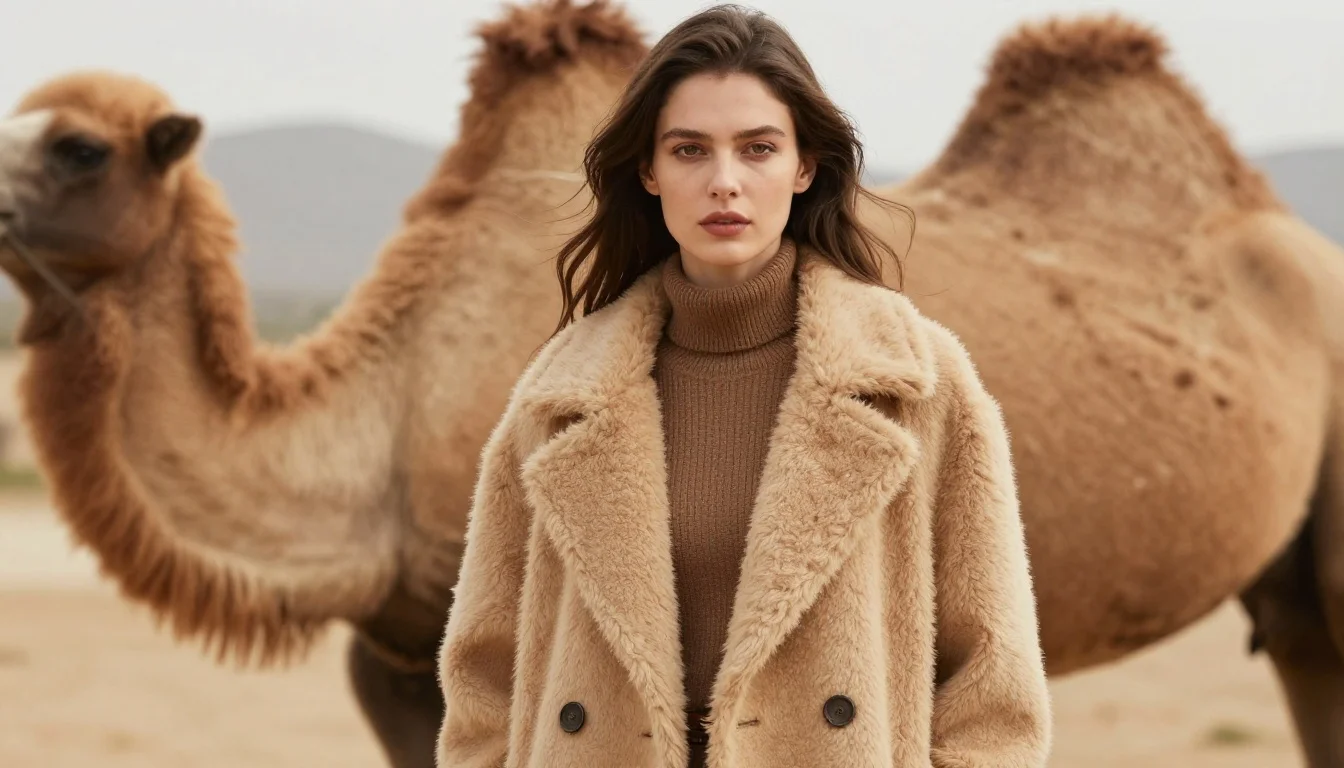
What colors go with camel?
Navy is the definitive camel pairing — warm and cool together in one of the most sophisticated neutral combinations. White, cream, charcoal, burgundy, and forest green all pair beautifully with camel. Black with camel creates a striking warm-cool contrast. Avoid orange, rust, and khaki alongside camel — they compete or blend rather than complement.
Shades of Camel That Work Best
Classic Golden Camel
Classic golden camel is the shade most people picture when they think 'camel coat.' It has a warm, medium-depth tone with clear golden undertones — not too orange, not too pale. This version works across the widest range of skin tones and pairs most reliably with navy, white, cream, and charcoal. It photographs well and reads as sophisticated in most contexts. This is the camel to invest in.
Pale Sand Camel
Pale camel approaches off-white — it's lighter, more neutral, and behaves more like a warm ivory than a true camel. This is the most summery version of the family, working well in lightweight fabrics for warm-weather dressing. It creates a clean, bright effect with cool colors but can be too similar in tone to fair or very pale skin. Best for medium to deep skin tones where it creates visible contrast.
Deep Amber Camel
Deep amber camel pushes toward tan and brown — it has more depth and richness than classic camel and less yellow. This version is the most flattering for warm undertones where it creates a harmonious glow, and it provides more visual weight in outfits. A deep amber camel coat or structured bag has a richness that classic camel can't match. It pairs particularly well with cream, burgundy, and forest green.
Cool-Toned Camel
Cool-toned camel has been neutralized with grey, creating something between warm beige and true camel. This is the most forgiving version for cool undertones — the grey desaturates the warmth enough to prevent the orange-yellow conflict. It pairs best with cool darks (navy, charcoal, cool grey) and keeps a clean, understated quality throughout.

Ready to see camel & golden tan on your face?
Start my color analysisHow to Wear Camel in Real Outfits
The camel coat as wardrobe anchor
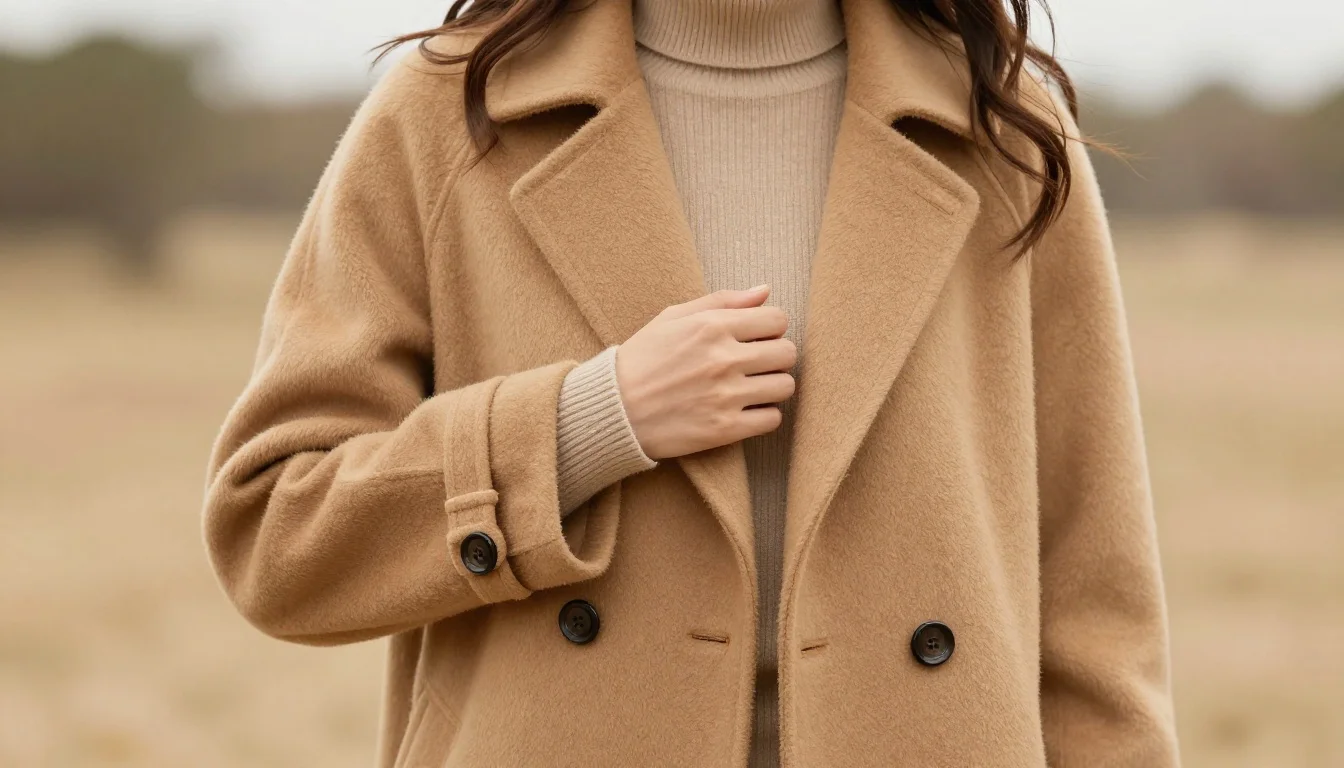
A well-made camel coat in classic golden camel is one of the best wardrobe investments available. It works over black for warmth, navy for sophistication, grey for ease, and white for freshness. The coat itself requires no styling thought — it belongs with almost everything. Choose a structured, slightly oversized silhouette in a quality wool blend for the most versatile result.
Camel with navy: the definitive combination
Camel and navy is the warm-cool neutral pairing — the equivalent of black and white but with warmth and ease. A camel knit with navy straight-leg trousers, or a navy blazer with camel trousers and a white shirt. This combination works in professional, smart-casual, and even elevated casual contexts. It photographs exceptionally well and requires no accessories to look complete.
Head-to-toe camel
Tonal dressing in camel — different shades and textures of the same warm neutral family — is one of the most sophisticated looks available. The key is contrast through texture: a deep amber camel coat over a classic golden camel knit, worn with pale sand trousers and tan leather boots. Everything is warm and neutral but nothing is the same depth. Add a single item in dark contrast — a burgundy bag, a navy scarf — to prevent the look from becoming too monochromatic.
Camel and black: the unexpected luxury pairing
Camel with black is not a neutral pairing — the warm-cool contrast is significant. But done right, it's one of the most striking combinations. A camel trench over all-black, a camel bag with a black dress, or a camel blazer as the single warm element in an otherwise black outfit. The camel reads as the considered, luxurious choice against the backdrop of black.
What Undermines Camel
Bright white with pale camel
Pale camel and bright white create a washed-out, undefined combination — neither color has enough contrast to make the other look intentional. Ivory, cream, or off-white works with camel; bright optical white creates a bleached effect. If you pair camel with white, use a warm white with a yellow or cream undertone.
Orange or rust at high intensity alongside camel
Orange and rust sit too close to camel in the warm-color family — they create a visual echo rather than contrast. Camel with a rust blouse or an orange accessory looks as though the outfit is trying to match and failing slightly. If you want warmth in the outfit, use burgundy or tan instead of rust and orange.
Khaki or army green with yellow-toned camel
Yellow-toned camel with khaki green creates a palette so close in tone and temperature that the two colors blur together. There's not enough contrast to see where one ends and the other begins. Deep olive works with camel; khaki with similar yellow-warmth does not.
Stop guessing — preview every look on you
See these looks on my photoCamel Swaps That Lift the Wardrobe
Upgrading basic neutrals to camel — and getting warmth and elegance without complexity.
A camel bag warms up every outfit it touches and pairs with navy, grey, black, and white equally.
Camel coats read as more considered and luxurious than black while working with the same range of outfits underneath.
Camel cashmere has a warmth and richness that grey can't match — it's the version of this piece that actually looks expensive.
Camel trousers with a white or navy blouse is a combination that grey can match in professionalism but not in warmth.
Camel boots with denim, olive trousers, or a navy dress adds warmth and visual interest at the base of an outfit.
A camel scarf is a transformative accessory — it warms every neutral outfit it touches and requires no styling thought.
Which Seasons Wear Camel Best
Camel is a warm-neutral color that most naturally belongs to warm seasonal palettes, but the specific shade shifts significantly by season.
Warm Autumn
Learn moreDeep amber camel, rich toffee, and golden camel are all core Warm Autumn colors. The depth and warmth of these shades align perfectly with the season's earthy, golden palette. Camel is one of the most natural neutrals for this season.
Warm Spring
Learn moreWarm Spring wears lighter, more golden camels — classic golden camel and pale sand camel. The freshness of the season means very deep or very amber camel can feel heavy; lighter, brighter versions work better.
Soft Autumn
Learn moreSoft Autumn benefits from the muted, neutralized camels — warm greige and neutral tan. The softness of the palette means very bright or orange-toned camel is too intense; the greyed, neutralized versions are the right temperature.
Find Your Camel
The right camel shade for your undertone looks effortlessly expensive. The wrong one looks flat or clashing. A personal color analysis identifies exactly where in the warm-neutral spectrum your best camel sits — so you invest once and wear it endlessly.
Stop guessing — preview every color on you
Preview Yourself In Your Palette
Get my personalized paletteStop guessing — preview every color on you
Preview Yourself In Your Palette

Related Guides for How to Wear Camel
Explore more personalized color advice based on your features.
Want to see these colors on you? What Colors Look Good on Me — free to try.
Frequently Asked Questions About How to Wear Camel
What colors go with camel?
Navy is the definitive camel pairing — warm and cool together in one of the most sophisticated neutral combinations. White, cream, charcoal, burgundy, and forest green all pair beautifully with camel. Black with camel creates a striking warm-cool contrast. Avoid orange, rust, and khaki alongside camel — they compete or blend rather than complement.
Does camel suit cool undertones?
Yes, with the right shade. Cool-toned camel (greige-camel, neutral tan) is specifically designed for cool undertones — the grey neutralizes the yellow warmth that can conflict with cool skin. Pair cool-toned camel with charcoal, navy, or cool grey rather than warm browns for the best result.
What is the difference between camel and beige?
Camel is warmer, deeper, and more golden than beige. Beige is a lighter, more neutral tone — closer to cream. Camel has a distinct warm brown undertone that beige lacks. In practice, camel creates more visual interest and warmth; beige is more purely neutral.
What to wear with a camel coat?
A camel coat works over almost any base outfit. All-black underneath a camel coat is the most striking combination. Navy outfit under a camel coat is the most sophisticated. White or cream base under camel creates a tonal warm-neutral look. The camel coat requires no specific consideration for the outfit beneath it — that's its greatest quality.