Deep Autumn Minimalist WardrobeColor Guide
Build a Deep Autumn minimalist wardrobe around three anchor colors: chocolate brown. Discover how to build looks with shades that actually flatter you.
As a Deep Autumn, you are uniquely well-positioned for a minimalist wardrobe — because your palette is inherently cohesive. Choose chocolate brown as your dark neutral, forest green as your statement color, and cognac as your warm mid-tone, and you have a three-color system where every piece pairs with every other piece. No mismatches, no decision fatigue, no wasted purchases. Twelve pieces in these three colors — plus a warm cream or ivory for light-layer relief — can cover every occasion in your life elegantly.


3,000+
happy clients
Why Deep Autumn Is the Ideal Season for Minimalism
As a Deep Autumn, you are uniquely well-positioned for a minimalist wardrobe — because your palette is inherently cohesive. Choose chocolate brown as your dark neutral, forest green as your statement color, and cognac as your warm mid-tone, and you have a three-color system where every piece pairs with every other piece. No mismatches, no decision fatigue, no wasted purchases. Twelve pieces in these three colors — plus a warm cream or ivory for light-layer relief — can cover every occasion in your life elegantly.
Minimalist wardrobes rely on perfect color cohesion — every piece must work with every other piece. Deep Autumn is one of the most naturally cohesive seasonal palettes precisely because its colors all share the same undertone family: warm, rich, and deep. Chocolate brown, forest green, cognac, burgundy, and olive all occupy the same warm-dark color territory. Mix them freely and everything looks intentional.
The challenge most people face with minimalism is that a limited palette quickly becomes visually monotonous. Deep Autumn solves this problem through texture and tone variation. The same forest green in velvet, in knit, and in linen reads as three distinct pieces. Cognac in suede, in silk, and in brushed cotton provides variety without adding any new color to manage. Minimalism through texture rather than color proliferation.
A Deep Autumn minimalist system also travels exceptionally well. Pack four pieces in your three-color system and every combination works for a week of varied occasions. The visual coherence of a warm, earthy palette reads as intentional and sophisticated in any context — exactly what a minimalist wardrobe should do.

What are the three best colors for a Deep Autumn minimalist wardrobe?
The ideal Deep Autumn three-color minimalist system is chocolate brown (dark neutral), forest green (statement color), and cognac (warm mid-tone). Add warm cream as a light-neutral relief color and you have a four-tone system that covers every occasion while remaining completely cohesive. Every piece in these colors pairs with every other piece.
Your Deep Autumn Three-Color System
Anchor 1: Chocolate Brown (Your Dark Neutral)
Chocolate brown in its deepest, warmest form is your foundational dark neutral — it does everything black does (grounding, anchoring, pairing with everything) while harmonizing with Deep Autumn warm undertones instead of fighting them. Every piece in this color anchor acts as the base that all other tones can rest against.
Anchor 2: Forest Green (Your Statement Color)
Forest green in its deepest, warmest form is your statement anchor — the color that makes your minimalist wardrobe feel alive rather than monotonous. One or two pieces in this family transform even the simplest outfit. As a statement color, it provides the "color story" of your minimalist wardrobe without requiring variety in color choice.
Anchor 3: Cognac (Your Warm Mid-Tone)
Cognac and rich camel sit between your dark anchor (chocolate) and your light option (cream) and provide the mid-tone warmth that stops a minimalist wardrobe from feeling either too dark or too light. In a three-color system, this is your most-used transitional tone — it bridges dark and light, statement and neutral.
Relief Color: Warm Cream (Your Light Neutral)
A strictly three-color minimalist wardrobe needs one light option for relief and for warm weather. Warm cream or ivory fills this role without breaking the warm undertone consistency of your palette. This is not a fourth true anchor — it is a relief valve that prevents visual heaviness in your most minimal wardrobe.

Ready to see espresso brown & chocolate on your face?
Start my color analysisThe Deep Autumn Minimalist 12-Piece System
The Core 12 Pieces
Chocolate anchor: one structured trouser, one knit or casual bottom (skirt or relaxed trouser). Forest green anchor: one structured top or blouse, one knit or sweater, one statement blazer or jacket. Cognac anchor: one trouser or skirt, one shirt or blouse, one knit. Warm cream: one light blouse or shirt. Outer layers: one chocolate or cognac coat, one forest green utility or casual jacket. These 12 cover every combination.
The Outfit Formula
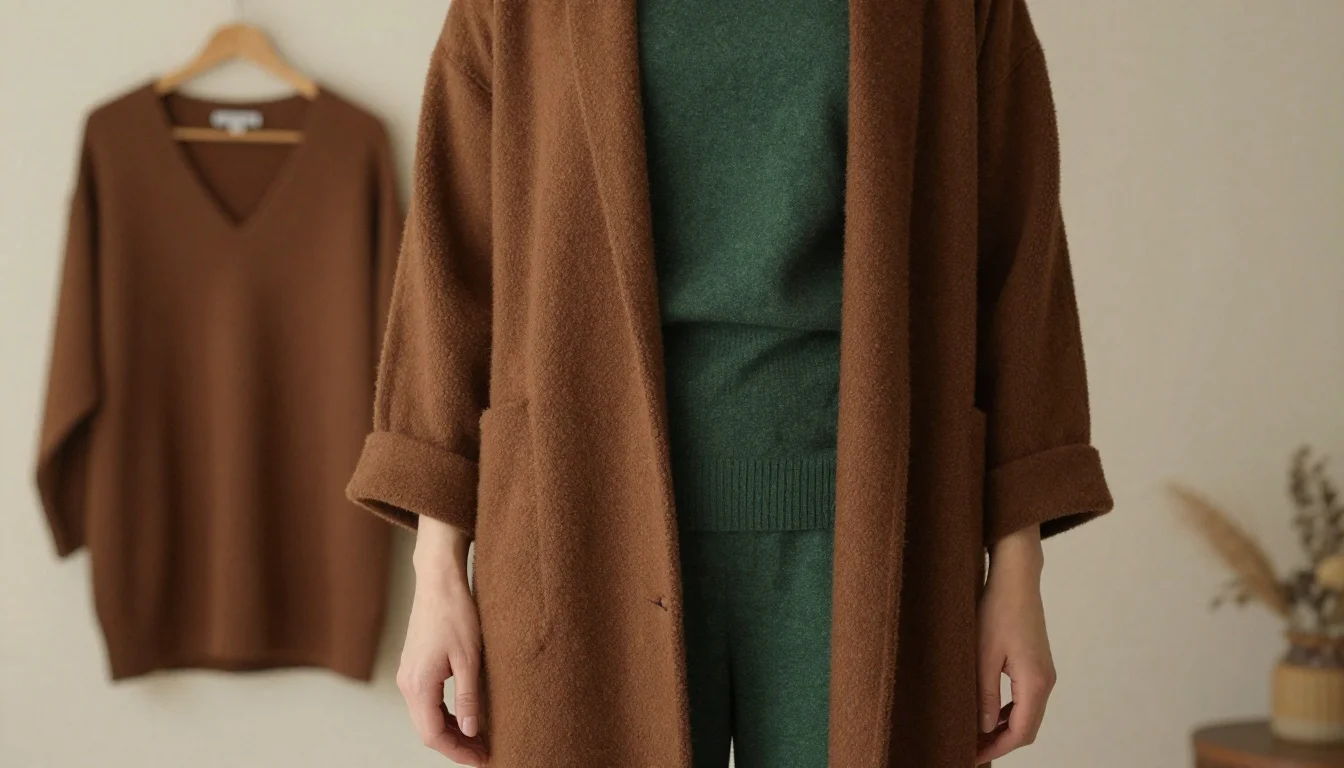
Two-tone formulas work best for Deep Autumn minimalism. Chocolate bottom plus forest green top. Cognac trouser plus chocolate knit. Forest green dress with cognac accessories. You rarely need three colors in one outfit — the depth of each piece does enough visual work on its own. Let each piece breathe.
Texture as Your Variety
In a palette this cohesive, texture provides all the variety you need. A forest green in matte linen looks completely different from forest green in velvet or ribbed knit. Invest in one or two pieces per palette color in different textures and weights — this is how your 12-piece wardrobe covers every season and occasion without adding new colors.
Accessories as Cohesion Tools
Your accessories should live in the same palette: warm gold jewelry (not silver), cognac and tan leather bags and shoes, a forest green or chocolate scarf. In a minimalist wardrobe, accessories do not add new colors — they reinforce the existing palette and create finishing cohesion for every outfit.
Colors That Break Deep Autumn Minimalist Cohesion
Any Cool Neutral (Grey, Navy, Black)
Cool-toned neutrals are the enemy of a Deep Autumn minimalist wardrobe — they cannot pair naturally with your warm chocolate, cognac, and forest anchors. A grey or navy piece breaks the warm undertone consistency that makes your minimalist system work.
Bright or Saturated Accent Colors
In a minimalist wardrobe, accent colors create management problems — they only pair with a subset of your pieces, not all of them. Deep Autumn minimalism keeps all depth and warmth consistent so every piece is always compatible. A bright or cool accent disrupts this.
Stark White
Stark white cannot integrate into a warm minimalist system — it reads as a cool intruder. More importantly, it fails near Deep Autumn faces by creating harsh cool contrast. Warm cream fills the same functional role and stays within your palette.
Pastels or Light Cool Tones
Light cool tones — lavender, powder blue, mint — have neither the warmth nor the depth to function in a Deep Autumn minimalist system. They cannot pair naturally with chocolate, forest, or cognac and will always feel like outliers in your wardrobe.
Stop guessing — preview every look on you
See these looks on my photoMinimalist Color Swaps for Deep Autumns
Replace generic minimalist capsule colors with your Deep Autumn three-color system
Your dark anchor should be warm — chocolate brown pairs naturally with every other Deep Autumn color where black creates a cool disconnect
Forest green provides depth and visual interest that camel cannot — it is the statement color that stops a minimalist wardrobe from reading as monochromatic beige
Cognac has the same mid-tone function as beige but with the warmth and richness that actually flatters Deep Autumn coloring
Cream maintains the warm undertone consistency of your minimalist system where white and light grey would break it with cool contrast
A richer, deeper warm coat anchors your entire minimalist wardrobe — it pairs with every piece in your system unlike a cool black coat
Warm-toned footwear in your palette completes every outfit without breaking the cohesion — you only need one or two pairs to work with your entire 12-piece system
Your Deep Autumn Palette
The minimalist approach works particularly well for Deep Autumns because all three autumn sub-seasons share the same warm undertone base. Understanding where you sit helps identify exactly how saturated your anchor colors should be.
Deep Autumn
Learn moreThe most richly saturated autumn season. Your minimalist anchors should be at full depth — the deepest chocolate, the richest forest green, the most saturated cognac. Your coloring demands and can carry full-intensity palette colors without them reading as overwhelming.
Soft Autumn
Learn moreA muted, lower-saturation autumn. If your three-anchor system feels too heavy or intense, you may lean Soft Autumn — where the chocolate should be softer, the forest green more muted olive, and the cognac lighter and dustier.
Warm Autumn
Learn moreThe warmest and most golden autumn. If your minimalist system works best with warm golden amber instead of cognac and lighter warm sage rather than deep forest green, Warm Autumn may be your sub-season.
Find Your Exact Colors
A Deep Autumn minimalist wardrobe works best when you know the exact depth and saturation of each anchor color that suits your individual coloring. Not all Deep Autumns need the same darkness of chocolate brown or the same intensity of forest green. A personal color analysis identifies precisely which tones within the Deep Autumn range make your specific coloring look most vital, so every piece in your minimalist system earns its place.
Stop guessing — preview every color on you
Preview Yourself In Your Palette
Get my personalized paletteStop guessing — preview every color on you
Preview Yourself In Your Palette

Related Guides for Deep Autumn Minimalist Wardrobe
Explore more personalized color advice based on your features.
Want to see these colors on you? What Colors Look Good on Me — free to try.
Frequently Asked Questions About Deep Autumn Minimalist Wardrobe
What are the three best colors for a Deep Autumn minimalist wardrobe?
The ideal Deep Autumn three-color minimalist system is chocolate brown (dark neutral), forest green (statement color), and cognac (warm mid-tone). Add warm cream as a light-neutral relief color and you have a four-tone system that covers every occasion while remaining completely cohesive. Every piece in these colors pairs with every other piece.
How many pieces does a Deep Autumn minimalist wardrobe need?
A functional Deep Autumn minimalist wardrobe can be built in 12 pieces: two pieces each in chocolate and cognac, three in forest green, one warm cream blouse or shirt, and two outerwear pieces. These 12 items create enough outfit variety for a full week in any context — work, casual, and evening — without any redundancy or color management complexity.
Can a Deep Autumn minimalist wardrobe include burgundy?
Yes, but use burgundy as an accent rather than a fourth anchor. In a three-color minimalist system, adding a burgundy piece works if that piece can pair naturally with your chocolate, forest green, and cognac anchors — which it can, since burgundy is native to the Deep Autumn palette. One statement burgundy piece (a coat, a dress) adds richness without breaking your system.
Is a minimalist wardrobe suitable for Deep Autumns or do they need variety?
Deep Autumns are actually one of the best seasons for minimalist wardrobes precisely because their palette is so cohesive. The warm, dark, earthy quality of Deep Autumn colors means every piece naturally works with every other piece. Variety comes from texture and silhouette rather than color proliferation — which is the essence of high-quality minimalism.
Should Deep Autumns use black or chocolate brown in a minimalist wardrobe?
Chocolate brown is always the better choice for a Deep Autumn minimalist wardrobe. It functions identically to black as a dark anchor — grounding, pairing universally, reading as sophisticated — while harmonizing with the warm undertones of Deep Autumn coloring instead of fighting them. A chocolate brown trouser or blazer looks dramatically more flattering on a Deep Autumn than the same piece in black.