Bright Winter Colors forHigh-Contrast Coloring
Bright Winter colors for high-contrast features. Discover which shades flatter you most — and which to skip.
High-contrast coloring means a dramatic difference between your lightest and darkest features — typically very dark hair against light skin, or vivid eyes against a dark-light combination. Bright Winter's palette is built for exactly this dynamic. Electric brights, stark black-and-white contrasts, and vivid jewel tones match the intensity of your natural features. Muted colors look wrong on you because they cannot keep up with what your face is already doing.


3,000+
happy clients
Why High Contrast Demands Bright Winter's Boldest Colors
High-contrast coloring means a dramatic difference between your lightest and darkest features — typically very dark hair against light skin, or vivid eyes against a dark-light combination. Bright Winter's palette is built for exactly this dynamic. Electric brights, stark black-and-white contrasts, and vivid jewel tones match the intensity of your natural features. Muted colors look wrong on you because they cannot keep up with what your face is already doing.
High-contrast coloring creates a visual intensity that clothing must match or it looks mismatched. When your features span a wide value range — dark hair to light skin, dark lashes to bright eyes — your face already operates at full volume. Clothing in muted, medium-value colors sits below that volume level. The eye perceives a disconnect: your face is vivid and your outfit is flat. This is why high-contrast people instinctively feel wrong in dusty pastels and warm earth tones.
Bright Winter solves this by providing colors at equivalent intensity. True white and true black span the full value range, matching the contrast in your features. Vivid fuchsia, cobalt, and emerald provide saturated color at the same energy level as your natural coloring. When the clothing intensity matches the feature intensity, everything clicks — the outfit looks like it belongs with the face rather than fighting it.
The other critical factor is clarity. High-contrast features are inherently clear — the boundaries between dark hair, light skin, and vivid eyes are sharp and well-defined. Muddied or dusty colors blur those boundaries visually. Clear, vivid colors reinforce them. This is why Bright Winter, the clearest of all seasonal palettes, is the natural home for high-contrast coloring.
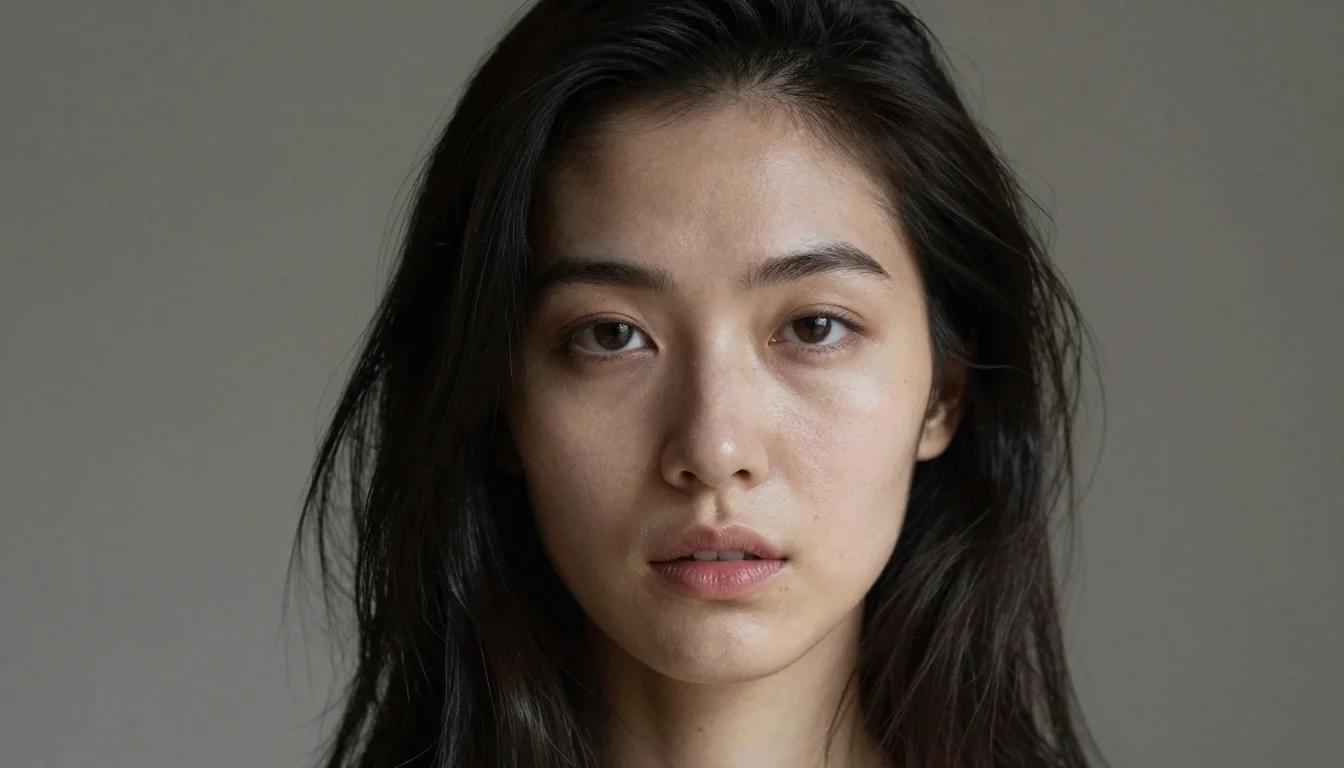
What does high-contrast coloring mean for Bright Winter?
High contrast means a dramatic value difference between your lightest and darkest features — typically light skin with dark hair, or vivid light eyes against dark hair and brows. Bright Winter's palette matches this intensity with true white, true black, and vivid clear colors that operate at the same visual volume as your features.
Your Most Flattering Bright Winter Colors
Stark Contrasts
True white and true black are the foundation of high-contrast Bright Winter dressing. These extremes match the value range in your features — dark hair to light skin. Every outfit should reference this contrast range. True white alone brightens high-contrast faces. True black alone provides matching depth. Together they create the sharp, clean energy that high-contrast coloring demands.
Electric Vivids
Hot fuchsia, electric cobalt, vivid violet, and bright red are your power colors. These fully saturated, clear tones match the intensity of high-contrast features without being overwhelmed. Where someone with low-contrast coloring would be overpowered, your features hold their own. The vivid color and your vivid face exist at the same energy level — neither dominates the other.
Vivid Jewels
Clear emerald, vivid cerulean, bright magenta, and vivid tangerine bring jewel-tone richness with Bright Winter clarity. These are richer than the electric brights but still fully clear — never muted, never dusty. They work for professional and evening contexts where electric brights feel too casual but muted tones would be wrong for your contrast level.
Icy Clear Tones
Icy blue, icy pink, icy mint, and icy violet provide lighter moments in the Bright Winter palette. Against high-contrast features, these icy tones still read as sharp because the dark elements in your coloring — hair, brows, lashes — provide the contrast anchor. Icy tones near a high-contrast face look crisp and luminous rather than washed out.

Ready to see your palette on your face?
Start my color analysisHow to Dress for High-Contrast Bright Winter Coloring
Match your outfit contrast to your face contrast
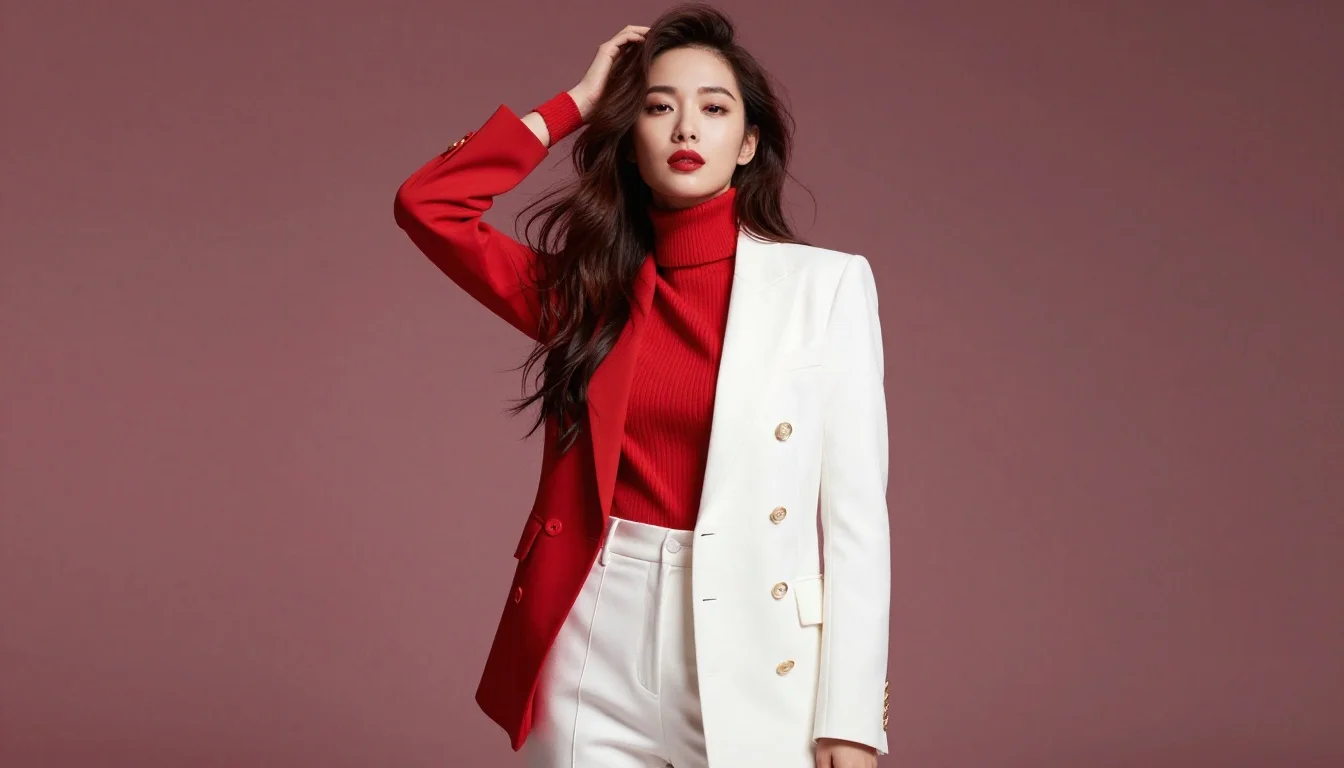
Your clothing should span the same value range as your features. Pair true white with true black. Pair vivid cobalt with white. Pair hot fuchsia with charcoal. Low-contrast outfits — all medium tones, all beige — look like they belong to someone else. Your face is high-contrast; your wardrobe should be too.
Use one vivid statement per outfit
The cleanest Bright Winter styling for high contrast is one vivid statement piece against clean neutrals. A hot fuchsia blazer over a white tee and black trousers. A vivid emerald dress with black heels. This structure lets the vivid color interact with the high contrast in your features without competing with other vivid elements.
Avoid tonal, all-medium outfits
All-camel, all-grey, all-muted-pink outfits reduce the contrast in your clothing below what your features require. If you want a monochromatic look, do it in the extremes — all true white, all true black — or in a single vivid color. The contrast should come from your face or from the outfit, never from a mismatch between the two.
Leverage the classic black-and-white base
True black and true white is the easiest, most reliable starting point for high-contrast Bright Winter dressing. A white shirt under a black blazer lets your face be the most vivid element. Add one bright accessory — a cobalt bag, fuchsia shoes, emerald earrings — and the outfit is complete. This formula works for every occasion.
Colors That Fight High-Contrast Features
Muted and dusty tones
Dusty rose, sage, mauve, and muted lavender operate at a lower intensity than your features. The disconnect is immediately visible — your face reads as vivid while the outfit reads as faded. Muted tones blur the sharp boundaries between your features rather than reinforcing them.
Medium-value warm neutrals
Camel, warm tan, beige, and khaki sit in the middle of the value range without reaching either extreme. High-contrast coloring needs colors that match its full range — either very light, very dark, or very vivid. Medium-warm tones create a flat, undynamic look that contradicts your natural drama.
Warm muted earth tones
Olive, warm brown, rust, and terracotta combine warmth with mutedness — the double opposite of Bright Winter's cool clarity. Against high-contrast features, these tones make the coloring look accidental rather than striking. They ground the outfit in a register that has nothing in common with your face.
Stop guessing — preview every look on you
See these looks on my photoBright Winter Swaps for High-Contrast Coloring
Trade low-contrast defaults for colors that match your natural intensity.
Warm beige sits below your contrast level. True white matches the lightest element in your features; icy blue adds clear brightness that high contrast can carry.
Camel lacks the intensity for high contrast. True black provides depth that matches your hair; vivid cobalt creates a striking, high-energy statement.
Oatmeal and sage fade against high-contrast features. Vivid knits near the face create the intensity-matched effect that makes high-contrast coloring look intentional.
Muted evening tones underdress your features. True red and electric blue provide the vivid clarity that high-contrast Bright Winter coloring demands for evening.
Warm mid-tones flatten high contrast. A white coat creates striking contrast with dark hair; a vivid coat matches your feature intensity.
Warm accessories lower the contrast and clarity. Cool silver and bright enamel extend the Bright Winter crispness to every detail.
Seasonal Palettes for High-Contrast Coloring
High contrast appears most commonly in Winter palettes. Your specific season depends on whether your coloring emphasizes vivid clarity, cool temperature, or deep richness.
Bright Winter
Learn moreThe most vivid and clear of the Winter palettes. Electric brights, true white, true black, and icy accents. If your high contrast is paired with vivid, clear eyes and you look best in electric color, Bright Winter is your palette.
Deep Winter
Learn moreShares the high contrast but emphasizes depth over vividity. If your high contrast comes from very dark features overall and you look better in deep sapphire than electric cobalt, Deep Winter's rich jewel tones may be a closer match.
Bright Spring
Learn moreShares the vivid clarity but leans warm. If your high contrast includes warm undertones — warm dark hair, warm bright eyes — and you look better in vivid coral than vivid fuchsia, Bright Spring combines clarity with warmth.
Find Your Exact Bright Winter Palette
High-contrast coloring is one of your most distinctive features. A personalized color analysis confirms whether Bright Winter is your season, identifies your exact contrast level, and gives you the precise vivid shades that match your natural intensity without overpowering or underdressing your features.
Stop guessing — preview every color on you
Preview Yourself In Your Palette
Get my personalized paletteStop guessing — preview every color on you
Preview Yourself In Your Palette

Related Guides for Bright Winter Colors for High-Contrast Coloring
Explore more personalized color advice based on your features.
Want to see these colors on you? What Colors Look Good on Me — free to try.
Frequently Asked Questions About Bright Winter Colors for High-Contrast Coloring
What does high-contrast coloring mean for Bright Winter?
High contrast means a dramatic value difference between your lightest and darkest features — typically light skin with dark hair, or vivid light eyes against dark hair and brows. Bright Winter's palette matches this intensity with true white, true black, and vivid clear colors that operate at the same visual volume as your features.
Why do muted colors look wrong on high-contrast people?
Muted colors operate at a lower visual intensity than high-contrast features. When your face is vivid and your outfit is muted, the eye perceives a mismatch — the outfit looks like it belongs to someone with softer, lower-contrast coloring. Colors need to match or exceed your feature intensity to look harmonious.
Can high-contrast Bright Winters wear subtle outfits?
Yes — through clean neutrals rather than muted tones. A true-white shirt, true-black trousers, and silver jewelry is subtle but still high-contrast. The restraint is in silhouette and simplicity, not in reducing color intensity. Avoid making subtle mean muted — for high contrast, subtle means clean.
How do I know if I am high contrast or medium contrast?
Hold a piece of true white paper next to your face and hair. If there is a dramatic difference between the paper, your skin, and your hair — three clearly distinct values — you are high contrast. If the differences are gradual and blended, you are medium contrast and may suit Cool Winter or a Summer palette better.
What is the easiest outfit formula for high-contrast Bright Winter?
True white top, true black bottom, one vivid bright accessory or outerwear piece. This formula matches your natural contrast range, lets your face be the focal point, and adds the vivid energy Bright Winter requires. It works for casual, professional, and evening contexts with minor adjustments to formality.