Best Silk Colors forWarm Undertones
Silk reflects light and shows colors at their most saturated. Discover which shades flatter you most — and which to skip.
Silk is the most light-reactive fabric you can wear. It doesn't absorb color — it amplifies it, throwing light back toward your face with every subtle shift in the fabric. For warm undertones, this is either a gift or a liability. The right silk shades turn your golden or peachy complexion luminous. The wrong ones — particularly cool silvers and blue-based tones — reflect harshly against warm skin, making it look sallow or washed out. Understanding how silk's reflective behavior interacts with your undertone is the key to getting this fabric exactly right.


3,000+
happy clients
Why Silk Behaves Differently Than Other Fabrics
Silk is the most light-reactive fabric you can wear. It doesn't absorb color — it amplifies it, throwing light back toward your face with every subtle shift in the fabric. For warm undertones, this is either a gift or a liability. The right silk shades turn your golden or peachy complexion luminous. The wrong ones — particularly cool silvers and blue-based tones — reflect harshly against warm skin, making it look sallow or washed out. Understanding how silk's reflective behavior interacts with your undertone is the key to getting this fabric exactly right.
Silk's tight, smooth weave creates a mirror-like surface on the thread level. When light hits silk, it bounces back in a specular highlight — a concentrated, bright reflection — rather than scattering diffusely the way cotton or wool does. This means the color you see in silk is color at its most vivid and true. There's no texture to soften it, no fiber structure to mute it. What's on the bolt is what hits your face.
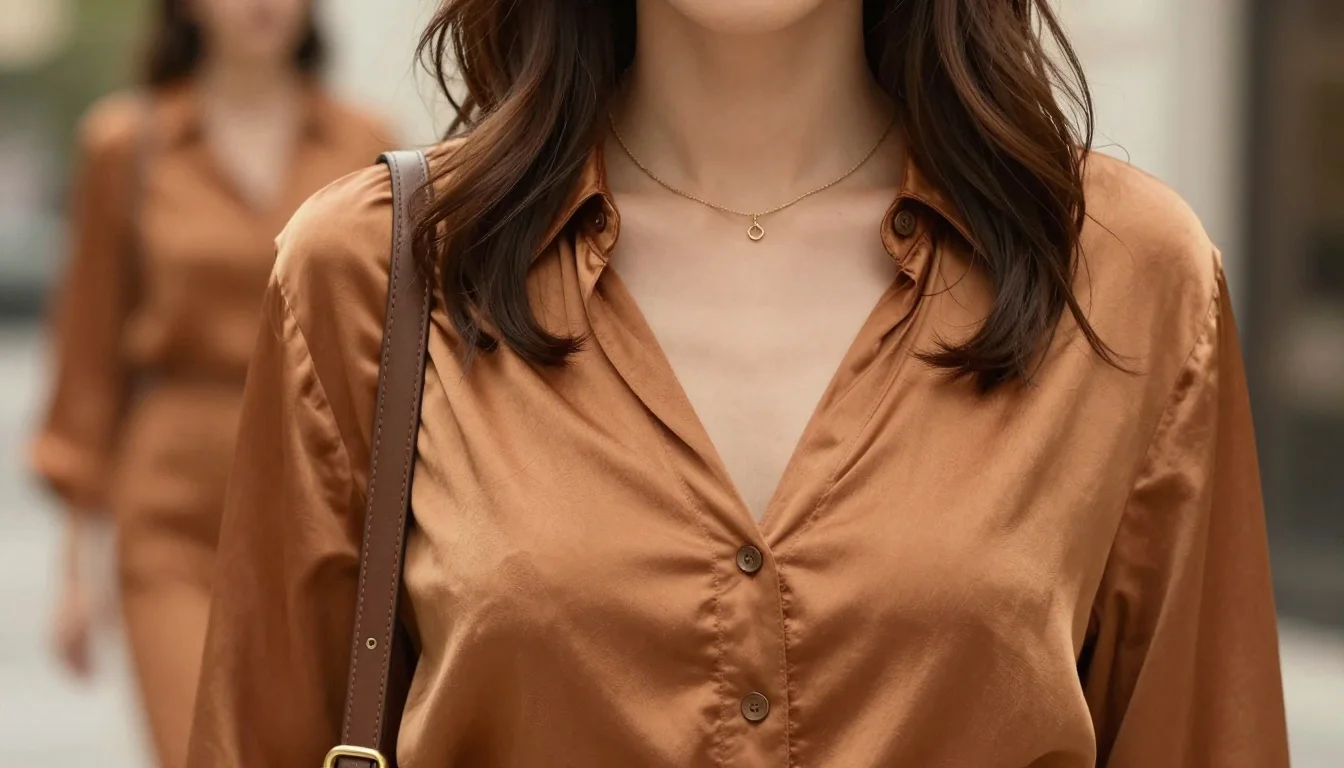
For warm undertones, this amplification works in your favor when the silk color has warm or golden undertones itself. Ivory silk doesn't just read as 'off-white' — it reads as warm, golden, and luminous next to warm skin. Terracotta silk in a blouse creates a real synergy with peach-golden skin. The fabric's reflectivity makes those warm tones broadcast back toward your face, creating a glow effect that's genuinely difficult to achieve with matte fabrics.
The risk comes from cool-toned silks. A blue-grey silk or silver charmeuse will reflect those cool, metallic tones directly onto warm skin, emphasizing any yellow in the complexion in an unflattering way — creating the 'sallow' look that warm-undertoned people often experience with the wrong colors. Silk makes this error more visible than most fabrics, because it doesn't let the color sit quietly.

What silk colors work best for warm undertones?
Warm ivory, champagne, terracotta, coral, golden yellow, and warm amber are the most flattering silk colors for warm undertones. Silk reflects light and amplifies color temperature — these warm-toned shades reflect warmth back at the face, creating a luminous glow. Cool silks like silver, icy blue, or cool white reflect unfavorably against warm complexions.
Your Most Flattering Silk Colors
Warm Ivory and Champagne
Ivory silk is one of the single most flattering shades for warm undertones. Where pure white silk can reflect with stark coolness, ivory silk's slight warmth interacts with the reflective surface to create a golden luminosity near warm skin. The fabric amplifies this to a glow. Champagne and buttercream silks do the same at a slightly richer depth — they read as genuinely warm without going as saturated as yellow. These are your fail-safe 'always looks beautiful' silk choices.
Terracotta, Rust, and Burnt Orange
Earth-toned silks are particularly powerful for warm undertones because of how silk's reflectivity handles warm pigment. Terracotta and rust contain the same golden-red warmth that lives in warm undertones — the reflective surface sends this warmth back toward the face, creating a synergy that looks almost as if the color was mixed to match. These shades work for casual silk pieces and dressy ones equally. On silk, they look richer than they do on any other fabric.
Golden Yellow and Amber
Yellow is the color closest to the warm undertone itself — and silk's light-reflecting quality makes warm yellows look genuinely radiant against golden skin rather than overwhelming. A marigold silk blouse on warm undertones looks sun-drenched. Saffron and amber silks create the impression that the warmth is emanating from the skin, not just sitting on top of it. The key is choosing yellows that lean golden or orange rather than chartreuse or lemon, which contain green and can read as cool.
Warm Jewel Tones: Coral, Peach, and Warm Rose
Silk's reflective surface makes coral and peach particularly luminous for warm undertones. These colors share the peachy-golden quality of warm complexions, and in silk they broadcast that warmth back at the face with an intensity no matte fabric can match. The result is a flushed, glowing look that's incredibly flattering. Warm rose — rose with yellow rather than blue in it — works the same way. These are excellent choices for evening silk pieces where luminosity is the goal.

Ready to see ivory & champagne on your face?
Start my color analysisHow to Wear Silk Well with Warm Undertones
Invest in ivory first
If you own one silk piece, make it ivory. A well-cut ivory silk blouse is one of the most universally flattering garments for warm undertones — and silk makes ivory read as genuinely warm and luminous rather than pale and plain. It works with every warm-toned outfit and every occasion from office to evening. The reflective quality of the fabric elevates it far above a cotton or linen equivalent.
Use warm jewel-tone silk for evening
Evening is where silk's reflective properties are most dramatic — candlelight and dim venue lighting bounce off the fabric in ways daylight doesn't. For warm undertones, this is an opportunity. A coral, terracotta, or warm amber silk dress in an evening setting creates a genuine luminous effect. The fabric, the light, and your undertone all work together.
Be precise about which neutrals you choose
In silk, the difference between warm ivory and cool white is more pronounced than in any other fabric. Hold silk pieces near your face in natural light before buying. Warm-toned silks will create a glow; cool-toned ones will create flatness or harshness. This is particularly important for shirts and blouses that live at the neckline.
Layer silk as a warm accent
A warm-toned silk scarf or cami under a jacket amplifies the glow effect even when the outer layer is a neutral or cool color. The silk's reflective warmth near the face does the heavy lifting — a champagne silk scarf with a navy blazer, for instance, reads as warm and polished simultaneously.
Silk Colors That Work Against Warm Undertones
Cool silver and grey silk
Silver and grey silks are particularly problematic for warm undertones because silk's reflective quality amplifies their cool, metallic cast. Where a matte grey might sit neutrally, a grey charmeuse throws cool, silvery light directly at warm skin — emphasizing yellow tones in an unflattering way. The fabric makes the mismatch inescapable.
Icy blue and cool periwinkle
Blue-toned silks in pale, icy shades reflect cool light that clashes with warm undertones. On a matte fabric, a periwinkle might look muted enough to be wearable. In silk, the blue reflectivity is pronounced and broadcasts directly at the face. This is one of the clearest examples of how fabric quality amplifies the color-undertone interaction.
Pure cool white silk
Pure white silk with a blue or cool cast is visually harsh against warm undertones. Unlike ivory or warm white — which return warmth — pure white silk reflects with a stark, bright coolness that makes warm skin look yellowish by comparison. If you want white silk, look for varieties described as 'warm white,' 'natural,' or 'ivory,' which have an antique quality that works for warm complexions.
Lavender and cool lilac silk
Cool-toned purples and lavenders in silk reflect a bluish-pink tone that doesn't harmonize with warm undertones. The reflective quality of silk makes the cool cast of lavender particularly visible at the neckline, where it interacts directly with warm skin. Warm-toned purples — those with reddish or fuchsia undertones — are significantly better for this undertone.
Stop guessing — preview every look on you
See these looks on my photoSilk Color Swaps for Warm Undertones
Small changes in silk make a bigger difference than in any other fabric.
Cool white silk reflects with a stark bluish cast against warm skin. Ivory's warmth creates genuine luminosity — same fabric, completely different result.
Grey silk reflects cool light that clashes with warm undertones at the neckline. Amber and terracotta return warmth, making skin look richer.
Cool silks reflect bluish light that emphasizes the yellow in warm undertones unfavorably. Warm coral reflects light that creates a genuine glow.
A blue silk cami at the neckline reflects cool tones directly at warm skin. Ivory or golden yellow creates a warm, luminous base layer.
Cool rose has blue in it that clashes with warm undertones in reflective silk. Warm rose — with peach or golden quality — creates harmony instead.
Cool emerald reflects blue-green tones that can look harsh against warm skin in reflective silk. Warm olive and moss contain yellow-green that harmonizes.
Which Season Are You?
Warm undertones with a preference for rich, reflective fabrics like silk tend to fall in the Autumn or Spring seasonal families. Your specific season depends on whether your warmth runs deep and muted or bright and clear.
Warm Autumn
Learn moreIf your warm undertones run deep, golden, or olive — your best silk colors are the richest of the warm palette: terracotta, deep amber, warm rust, and olive gold. Autumn types look most luminous in silk when the colors have depth and earthiness. The fabric's reflective quality brings out the richness in Autumn's muted-warm palette.
Warm Spring
Learn moreIf your warm undertones are bright and peachy rather than deep and golden, Spring silks are your domain: coral, warm peach, clear golden yellow, and bright ivory. Spring types benefit from silk's reflective saturation — it makes bright warm tones even more vivid and creates that characteristic Spring luminosity.
Soft Autumn
Learn moreIf your warmth is present but muted — golden without being dramatic, olive without being deep — Soft Autumn silks suit you best in their more understated warm tones: warm taupe, dusty peach, soft terracotta. You still benefit from silk's warmth-amplifying quality, but in softer shades.
Find Your Exact Silk Palette
Silk is the fabric that makes the right colors magnificent and the wrong ones unmistakable. The precise shades that work best for your warm undertones depend on whether your warmth runs peachy or golden, deep or bright, and what level of contrast your hair and eyes bring to your overall coloring. A personalized color analysis identifies your exact season within the warm family and gives you the precise silk palette that makes your complexion luminous every time you wear it.
Stop guessing — preview every color on you
Preview Yourself In Your Palette
Get my personalized paletteStop guessing — preview every color on you
Preview Yourself In Your Palette

Related Guides for Best Silk Colors for Warm Undertones
Explore more personalized color advice based on your features.
Want to see these colors on you? Skin Undertone Test — free to try.
Frequently Asked Questions About Best Silk Colors for Warm Undertones
What silk colors work best for warm undertones?
Warm ivory, champagne, terracotta, coral, golden yellow, and warm amber are the most flattering silk colors for warm undertones. Silk reflects light and amplifies color temperature — these warm-toned shades reflect warmth back at the face, creating a luminous glow. Cool silks like silver, icy blue, or cool white reflect unfavorably against warm complexions.
Why does silk make such a difference compared to other fabrics?
Silk's tight weave creates a reflective surface that amplifies color and sends it back toward your face. Unlike matte fabrics that absorb light, silk broadcasts the color's temperature directly at your skin. This means the warm-versus-cool quality of the silk color matters more in this fabric than in almost any other.
Can warm undertones wear white silk?
Yes — but choose ivory or warm white rather than pure cool white. Cool white silk reflects with a bluish cast that clashes with warm undertones, making skin look yellowish. Ivory silk has a slight warmth that interacts with the reflective surface to create luminosity instead. Always check the undertone of white silk pieces before buying.
Is terracotta silk good for warm undertones?
Terracotta is an excellent silk color for warm undertones. It shares the same golden-red warmth as many warm complexions, and in silk's reflective fabric the color creates a synergy that looks as if it was mixed specifically for warm skin. It works for both casual silk pieces and formal ones.
What season has warm undertones that look best in silk?
Warm Autumn and Warm Spring types typically look most extraordinary in silk. Autumn types shine in deeper warm silks like terracotta, rust, and amber. Spring types glow in brighter warm silks like coral, peach, and clear golden yellow. Both benefit from silk's reflective quality amplifying their natural warmth.