Best Shirt Colorsfor Men with Warm Undertones
Warm undertones in men mean golden, peachy, or yellow-adjacent skin. Discover how to find the colors that actually flatter your coloring.
If your skin has a golden, peachy, or yellow-based quality — if gold jewelry looks more natural on you than silver, or if your veins run green rather than blue-purple — you have warm undertones. Warm undertones span a range from fair ivory to medium tan to deep bronze, and the shirt colors that work best share the same logic across all of them: lean into the warmth, use earthy contrast, and avoid cool-toned shirts that fight the natural pigmentation.


3,000+
happy clients
How Warm Undertones Interact with Shirt Colors
If your skin has a golden, peachy, or yellow-based quality — if gold jewelry looks more natural on you than silver, or if your veins run green rather than blue-purple — you have warm undertones. Warm undertones span a range from fair ivory to medium tan to deep bronze, and the shirt colors that work best share the same logic across all of them: lean into the warmth, use earthy contrast, and avoid cool-toned shirts that fight the natural pigmentation.
Warm undertones are caused by the presence of more yellow and red pigment in the skin — specifically carotenoids alongside melanin. This creates a golden, peachy, or tawny quality that you can sometimes see most clearly in the neck and jawline. Warm-undertoned skin reflects warm-wavelength colors (reds, oranges, yellows, earthy greens) more favorably and can clash against strongly cool-toned colors like cool lavender, icy blue, or stark blue-grey.
The primary risk with warm undertones is choosing shirt colors that create a temperature conflict. A cool grey shirt on warm-undertoned skin can make the complexion look slightly washed-out or sallow — the grey introduces a coolness that clashes at the undertone level. Conversely, a warm rust or camel shirt reinforces the warmth and looks natural and cohesive. Navy is an interesting middle ground — it's technically cool, but its depth and neutrality mean it usually works.
Understanding warm undertones also helps avoid a common mistake in the opposite direction: men with warm undertones sometimes over-correct toward only wearing orange, rust, and yellow, which can make the overall look monotonous. The goal is to use warmth as a foundation while introducing enough variation — via depth, saturation, and selective contrast — to build a versatile wardrobe.
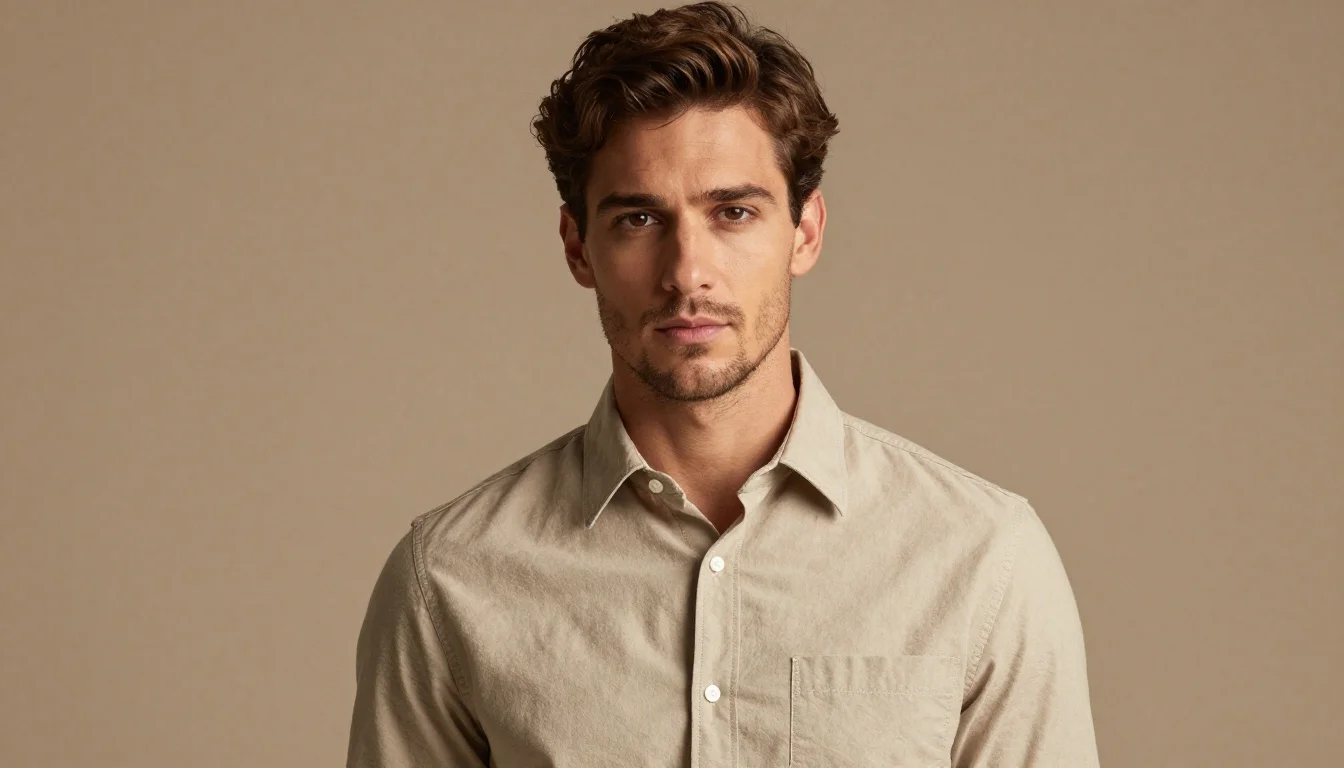
What shirt colors look best on men with warm undertones?
Earth tones (rust, terracotta, camel), warm greens (olive, army), warm reds (brick red, burnt orange), and warm whites (ivory, cream) are the strongest choices. Navy works as a neutral contrast. The key is choosing shirts that share or complement the warm wavelength in the skin — avoiding cool-toned colors that fight the undertone.
Shirt Colors for Warm Undertones
Earth Tones and Warm Neutrals
Earth tones share the warm, yellow-red wavelength of warm-undertoned skin, creating a harmonious, cohesive look. Rust and terracotta are the strongest choices — they're warm enough to work with the undertone but have enough saturation to provide visual interest. Camel is a reliable neutral that works across contexts. Sandy beige and warm khaki are excellent for casual linen and summer shirts. These colors look natural and intentional on warm skin.
Warm Greens
Green with warm undertones — olive, army, and khaki green — resonates beautifully with warm-undertoned skin because the yellow-base in these greens mirrors the yellow quality of the skin. Olive green shirts are particularly strong. Army green creates a clean, masculine look. Avoid cool greens (icy mint, teal) — the coolness fights warm undertones. Warm forest green works well for both casual and smarter contexts.
Warm Reds and Oranges
Warm reds share the temperature of warm skin and create a harmonious, rich look. Brick red and burnt orange are both excellent — they have enough depth to create visual interest without the artificial quality of neon. Warm coral works for summer casual shirts. Pure red works when it has a warm cast; avoid cool reds with a blue base (these tend toward the magenta end). These shades look confident and grounded on warm undertones.
Warm Whites and Creams
Warm white and ivory harmonize with warm-undertoned skin rather than fighting it. Optical white — which has a cool, blue cast — can make warm skin look slightly sallow by introducing a temperature contrast. Ivory and cream whites are softer and more cohesive. For dress shirts, warm white is preferable to bright white. Cream linen shirts in summer look particularly natural on warm-undertoned men.

Ready to see rust & terracotta on your face?
Start my color analysisBuilding a Shirt Wardrobe for Warm Undertones
The daily rotation
Build your everyday rotation around three shirt anchors: a rust or terracotta Oxford for casual days, a warm ivory or light tan OCBD for versatility, and a navy shirt as your neutral contrast option. These three cover most daily scenarios for warm-undertoned men. Add an olive green linen for summer and a cognac or warm brown flannel for winter and the rotation covers all seasons.
Work and business-casual shirts
For business settings, a warm white or light cream dress shirt under a camel, tan, or warm brown blazer is a strong combination. Navy works as a contrast and reads as professional. For business-casual offices, olive green or muted rust shirts with dark chinos look polished and intentional. Avoid cool grey dress shirts entirely — they fight warm undertones most visibly under office lighting.
Smart-casual and layering
For dinners, events, or smart-casual occasions, a brick red or cognac shirt under a tan or camel blazer creates a rich, put-together look. An olive green shirt under a warm brown suede blazer works similarly. These combinations leverage the warmth in the skin, shirt, and outerwear to create a cohesive, intentional result. Avoid layering cool-toned pieces here.
Contrast when you want it
If you want contrast — and a strong visual statement — navy is your go-to. A deep navy shirt on warm-undertoned skin creates clean contrast without a temperature conflict. Forest green (not icy mint, but warm forest) also works. These are your 'controlled contrast' options — cool enough to stand out, neutral enough not to clash.
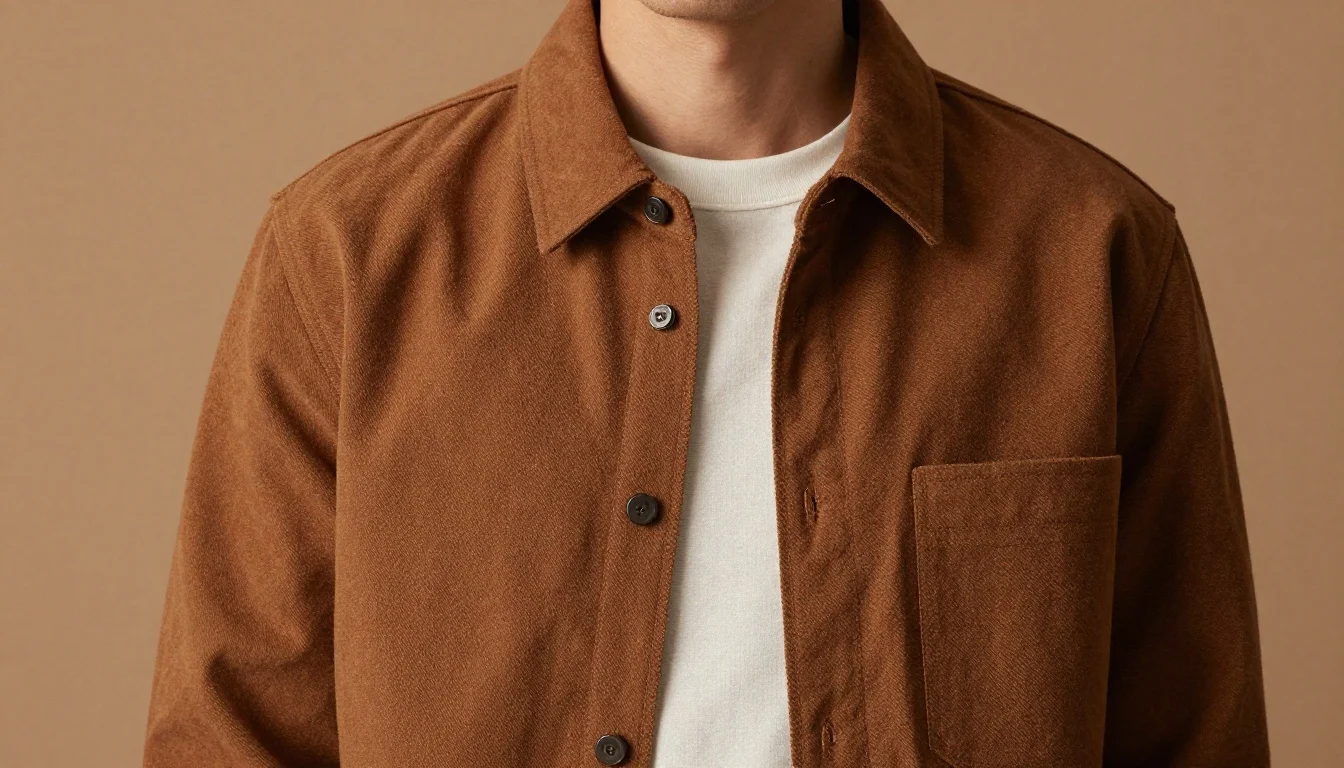
Shirt Colors That Fight Warm Undertones
Cool grey and blue-grey
Cool grey shirts introduce a cold temperature that directly conflicts with warm undertones. The result is that the skin can look slightly washed out or sallow — the grey cools the complexion down in an unflattering way. Charcoal (deep grey) works because the contrast is the point; mid-tone cool grey does not.
Icy pastels and cool lavender
Very cool, icy pastels — icy blue, cool lavender, pale lilac — create a temperature clash against warm undertones. The cool cast in these shirts pulls the skin toward a slightly ill or sallow appearance. If you want light colors, choose warm pastels: peachy blush, light cream, warm mint rather than cool mint.
Fuchsia and cool pink
Cool, blue-based pinks and fuchsia have a cool-magenta quality that fights warm undertones. The blue cast in fuchsia directly conflicts with the yellow-red warmth of warm-undertoned skin. Warm peach, salmon, and coral pinks are completely different and work well.
Stark optical white
Very bright, optically white shirts have a slight blue cast that can make warm skin look less luminous. Warm ivory or cream is a more cohesive choice for dress shirts. The difference is subtle but real — in photographs especially, warm white on warm skin looks natural where bright white can create a slightly cool disconnection.
Stop guessing — preview every look on you
See these looks on my photoShirt Swaps for Warm Undertones
Trading the temperature conflicts for the warm-harmonious alternatives.
Cool grey fights warm undertones and can make skin look sallow. Rust and camel harmonize with the warmth naturally.
Bright white has a cool cast that creates subtle temperature conflict with warm undertones. Ivory harmonizes cleanly.
Icy blue is too cool for warm undertones in casual settings. Cream and olive both harmonize and look natural in linen.
Cool lavender clashes at the undertone level. Terracotta and brick red share the warm wavelength of the skin.
Fuchsia has a blue cast that fights warm undertones. Coral and salmon are warm pinks that harmonize perfectly.
Blue-grey flannel introduces cool temperature. Warm-toned flannels in rust and cognac create a cohesive winter combination.
Your Likely Color Season
Warm undertones run through the Autumn and Spring seasonal families, and occasionally into Warm Winter. Your specific season depends on the depth and contrast of your overall coloring.
Warm Autumn
Learn moreIf your warm undertones come with medium-to-deep skin depth (olive to tan to medium-brown), warm brown or hazel eyes, and dark or warm-toned hair, Warm Autumn is likely your season. Your shirts should be rich and muted: rust, terracotta, cognac, warm olive green, deep camel. Avoid bright or vivid colors — your palette is earthy and rich, not bright.
Warm Spring
Learn moreIf your warm undertones sit on lighter, fair-to-medium skin with golden warmth, and you have lighter eyes (green, hazel, warm brown) with lighter hair, Warm Spring is often the fit. Your shirts are brighter and fresher than Autumn: warm coral, golden yellow, warm peach, bright rust, light olive. Your warmth is luminous and lively rather than rich and earthy.
Deep Autumn
Learn moreIf your warm undertones are on deeper skin with high contrast between a warm complexion and dark features, Deep Autumn captures both the warmth and the depth. Your shirts lean deeper: cognac, burnt sienna, forest green, deep rust. You have the range to wear richer and darker warms than lighter warm-undertoned types.
Find Your Exact Palette
Warm undertones give you a natural advantage in menswear — a cohesive base that makes earthy, warm shirt choices look effortless. The specific shades that work best depend on how warm, how deep, and how much contrast your overall coloring has. A personalised color analysis identifies your exact season within the warm family and gives you a precise shirt palette to shop with confidence.
Stop guessing — preview every color on you
Preview Yourself In Your Palette
Get my personalized paletteStop guessing — preview every color on you
Preview Yourself In Your Palette

Related Guides for Best Shirt Colors for Men with Warm Undertones
Explore more personalized color advice based on your features.
Want to see these colors on you? Skin Undertone Test — free to try.
Frequently Asked Questions About Best Shirt Colors for Men with Warm Undertones
What shirt colors look best on men with warm undertones?
Earth tones (rust, terracotta, camel), warm greens (olive, army), warm reds (brick red, burnt orange), and warm whites (ivory, cream) are the strongest choices. Navy works as a neutral contrast. The key is choosing shirts that share or complement the warm wavelength in the skin — avoiding cool-toned colors that fight the undertone.
Can men with warm undertones wear white shirts?
Yes — but warm ivory or cream white is preferable to optical bright white. Optical white has a slight cool cast that can create a subtle temperature conflict with warm undertones. Warm ivory looks more natural and cohesive. For formal dress shirts, warm white reads just as polished.
Do cool-toned shirts work with warm undertones?
Some cool-toned shirts work as contrast — navy is the best example. Deep navy is technically cool but its depth and neutrality mean it creates clean contrast without fighting warm undertones. Very cool shirts (icy blue, cool lavender, fuchsia) do not work well — they create a temperature conflict that makes warm skin look slightly off.
What colors should warm-undertoned men avoid in shirts?
Avoid cool grey, icy pastels, cool lavender, fuchsia, and optical bright white. These all have cool casts that conflict with warm skin undertones. The result is typically that the complexion looks slightly washed out, sallow, or tired rather than looking its warmest and most vibrant.
Do olive green shirts work for warm undertones?
Yes — olive and army green are excellent for warm-undertoned men. The yellow-green base in olive resonates with the warm yellow quality of the skin, creating a harmonious look. These shirts look natural and intentional on warm-toned men across all skin depths.
What is the best navy shirt option for warm undertones?
Classic navy works well as a neutral contrast for warm-undertoned men — it's dark and neutral enough to provide visual structure without fighting the warm undertone. Avoid shirts that cross from navy into cool blue-grey territory. A warm, slightly greenish navy (like many classic Oxford navies) works better than a pure cool indigo.