Autumn Colors forRed Hair
Red hair and autumn coloring were made for each other. Discover which shades complement your coloring — and which to avoid.
Red hair and the autumn season are a near-perfect alignment. Autumn's palette — warm, earthy, rich, and deep — shares its genetic root with red hair: warmth. Both are built on golden, copper, and amber undertones. When you wear autumn colors with red hair, you're not dressing around your hair color; you're dressing with it. The result is an effortless, harmonious look where your hair and outfit feel like they belong to the same painting.


3,000+
happy clients
Why Autumn Is the Natural Home for Red Hair
Red hair and the autumn season are a near-perfect alignment. Autumn's palette — warm, earthy, rich, and deep — shares its genetic root with red hair: warmth. Both are built on golden, copper, and amber undertones. When you wear autumn colors with red hair, you're not dressing around your hair color; you're dressing with it. The result is an effortless, harmonious look where your hair and outfit feel like they belong to the same painting.
Red hair exists on a spectrum from bright strawberry through copper, auburn, and deep mahogany-red. What almost all red hair has in common is warmth — a golden or orange-based pigment (pheomelanin) that gives it its distinctive fire. The autumn seasonal palette is built on exactly that same warm foundation: golden yellows, burnt oranges, earthy browns, rich teals, and deep warm greens.
When you wear colors from the autumn spectrum — mustard, rust, cognac, olive, warm teal — those shades resonate with the undertone in your hair rather than conflicting with it. The warmth in the clothing and the warmth in your hair are speaking the same language. Your hair looks more vivid, your skin looks warmer and more alive, and your overall appearance has a richness and coherence that cooler colors simply can't produce.
Many people with red hair have been warned to avoid orange and red — the advice usually focuses on what 'clashes.' But autumn thinking flips this: warm, earthy shades don't clash with red hair; they amplify it. The real enemies of red hair are cool, stark, or very pale colors that sit in a completely different temperature zone and make red hair look garish or isolated against them.
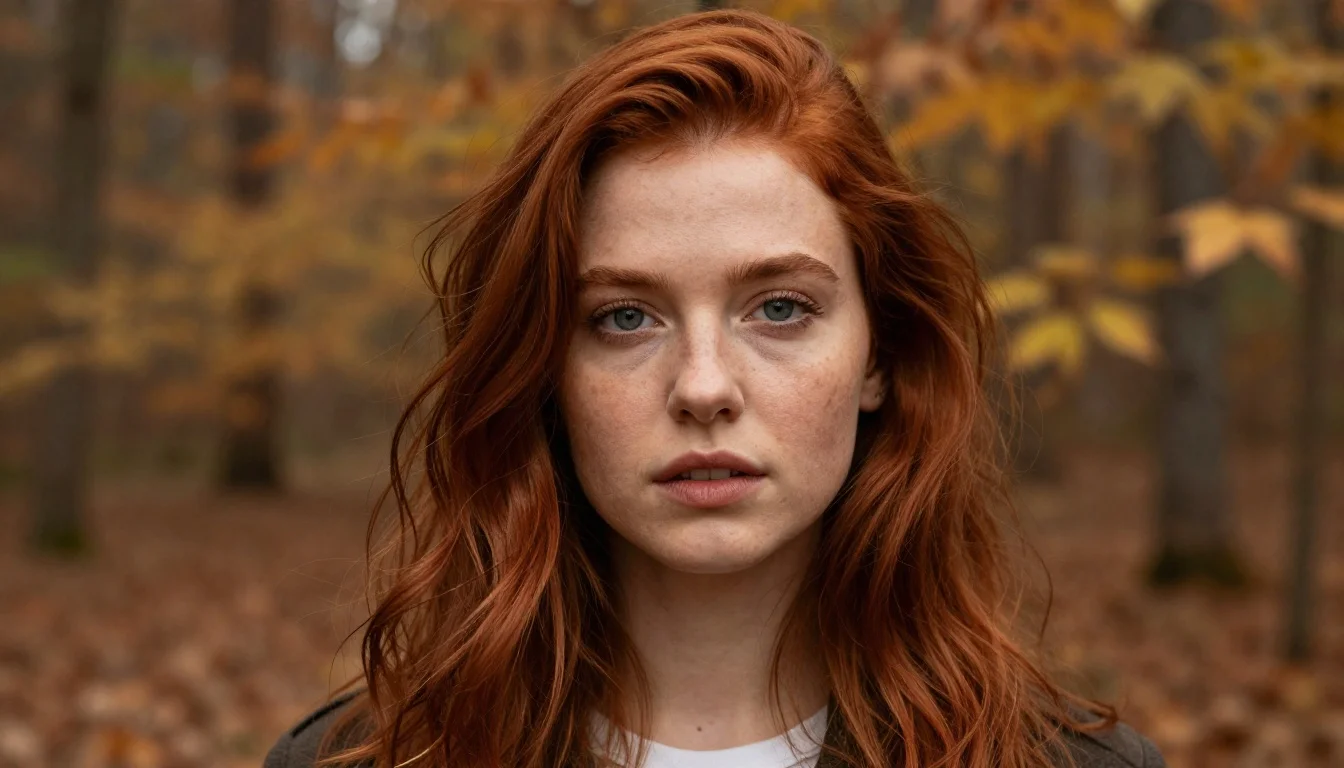
What autumn colors look best with red hair?
Warm earth tones are the most flattering autumn colors for red hair: terracotta, burnt sienna, cognac, mustard, and camel. Warm greens — olive, forest green, moss — create beautiful complementary contrast. Deep warm darks like burgundy and warm plum add richness. All of these share the warm, golden undertone of red hair, creating a cohesive look rather than a conflict.
The Autumn Colors That Make Red Hair Blaze
Warm Earth Tones
Earth tones are the core of autumn dressing and the foundation of red hair's best wardrobe. Burnt sienna and terracotta share the orange-brown frequency of copper-red hair — not matching it, but harmonizing with it. Deep camel and cognac provide warmth without competing with hair color. These are the shades that make red hair look like a deliberate, brilliant accessory rather than something to work around.
Rich Warm Greens
Green is the complementary color to red on the color wheel, which means warm greens create a naturally beautiful contrast with red hair. Olive and moss are particularly effective — they have yellow and brown warmth that aligns with red hair's undertone while providing the complementary contrast that makes red hair pop visually. Forest and hunter green work best when they lean warm and deep rather than cool or blue-toned.
Deep Autumnal Jewels
Deep, warm-toned dark colors provide the richness and depth that match the intensity of red hair. Warm burgundy is particularly effective: it's within the red family but dark enough to create contrast rather than blend. Deep aubergine and warm plum add purple depth without the cool starkness of pure violet. Dark chocolate brown works beautifully with auburn and mahogany-red hair, creating a tonal harmony.
Golden and Amber Warmth
Yellow and amber tones share the golden pigment that underlies most red hair. Mustard and golden yellow are particularly powerful for strawberry blonde and bright copper hair — the shared warmth creates a glowing, cohesive look. Amber is essentially the liquid version of red hair's own warmth. Warm sand works as a neutral that doesn't fight the hair's temperature. These are colors that make the skin look sun-kissed and the hair look luminous.
Ready to see sienna & terracotta on your face?
Start my color analysisHow to Dress Red Hair Through Autumn
Lean into the earth palette
Autumn is your season to stop hedging. Terracotta, burnt orange, rust, and mustard that other people have to think carefully about are natural territory for red hair. A burnt sienna knit, rust linen trousers, or a mustard wool coat requires no second-guessing — these colors are built for you. Build your autumn wardrobe around the warm earth tones first; they require the least effort and produce the most consistent results.
Use green as your contrast color
If you want an outfit with real visual dynamism, pair red hair with olive, forest, or warm hunter green. The complementary color relationship between red and green creates an eye-catching contrast that photographs beautifully. Keep the green warm-toned — olive, moss, warm hunter — rather than cool jade or seafoam. A deep olive coat or forest green blazer with any warm-neutral outfit makes red hair look intentionally styled.
Work events and professional settings
For professional contexts, deep warm tones read as polished and authoritative. Warm burgundy, rich forest green, and deep camel are all excellent choices for work. Avoid the corporate default of grey suiting if you have red hair — warm charcoal or rich brown are better alternatives. A warm camel blazer is the red-haired person's equivalent of a navy blazer: reliable, authoritative, and consistently flattering.
Layering and pattern-mixing
Autumn is the layering season, and red hair thrives in layered, textured outfits. Combine warm earth tones in different depths — a mustard turtleneck under a cognac blazer, or a rust cami under a forest green jacket. The key is keeping everything warm-toned within the layering palette. Plaid patterns in warm autumn colors are particularly well-suited to red hair — the earthy, multi-tonal warmth of classic autumn plaids mirrors the multi-tonal richness of red hair itself.
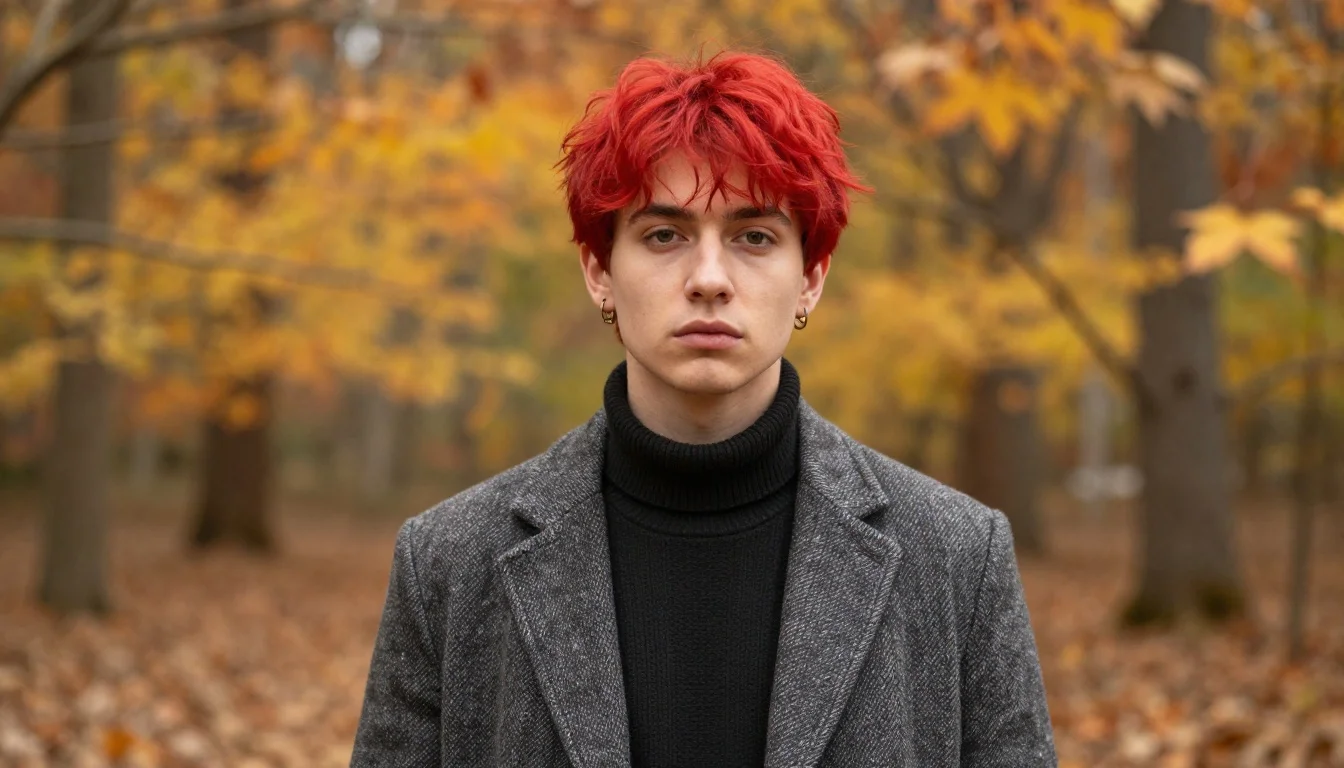
Colors That Work Against Red Hair in Autumn Dressing
Cool grey and blue-grey
Cool grey has no warmth to harmonize with red hair. Against the warm golden undertones of red hair, cool grey creates a temperature conflict that makes red hair look brash and isolated — the hair color stands out but not in a flattering way. It looks like your outfit and hair are fighting each other. Deep charcoal is somewhat better, but the cooler grey family generally drains the warm glow from red hair.
Very pale, icy colors
Icy whites, pale icy blues, and frosty pastels belong to winter and cool summer palettes — they're the opposite temperature to red hair. Against these stark, cool backgrounds, red hair looks vivid in a jarring way rather than a beautiful way. The contrast is harsh rather than striking. If you want a light neutral, warm ivory and cream are the correct choice for red hair.
Fuchsia and hot pink
Bright, cool pinks clash with the warm undertone in red hair in a particularly visible way. The magenta frequency in hot pink conflicts with the orange-based warmth of red hair, creating a color-clash that's hard to ignore. Warm rose and terracotta-pink are fine; it's specifically the blue-based pinks that create problems. Soft, muted pinks work better than vivid cool ones.
Stark, bright white
Pure bright white creates too high a temperature contrast against most red hair. The cool brightness of white makes red hair look overly vivid, almost artificially bright, and the starkness of white near skin with warm undertones can flatten the complexion. Warm ivory, cream, and off-white are far more flattering for red-haired individuals.
Stop guessing — preview every look on you
See these looks on my photoAutumn Swaps for Red Hair
Replacing the shades that fight red hair with ones that make it look intentional.
Cool grey conflicts with red hair's warmth. Mustard and burnt sienna share the same golden undertone — the whole look becomes cohesive.
Pale beige is too close to white — too cool, too flat. Rich camel amplifies the warm glow in both red hair and fair-to-warm skin.
Grey suiting drains warmth from red hair. Burgundy and forest green create flattering depth and complementary contrast.
Cool whites and icy blues isolate red hair and make it look jarring. Cream and olive work with the hair's warmth, not against it.
Cool pinks clash with red hair's orange-warm base. Deep plum and burgundy provide richness and a warm-cool contrast that flatters.
Pastels (unless warm) look disconnected from red hair's warmth. Terracotta and rust share the same earthy frequency as red hair — it looks effortless.
Which Autumn Season Are You?
Red hair can fall in several autumn sub-seasons depending on the specific tone of your hair, your skin undertone, and your overall contrast level. Identifying your exact autumn type sharpens your palette further.
Warm Autumn
Learn moreIf your red hair is bright copper or strawberry-golden, your skin has distinctly warm or peachy undertones, and your overall look is vivid and warm without being very high-contrast, Warm Autumn is likely your season. Your palette is the warmest and most saturated of the autumn types: clear oranges, bright mustards, vivid warm greens. You can handle the most color intensity within the autumn family.
Deep Autumn
Learn moreIf your red hair is deeper — auburn, mahogany-red, or dark copper — with rich dark eyes and a skin tone that creates high contrast with your hair, Deep Autumn may fit better. Your palette goes darker and richer: deep chocolate, forest green, rich teal, dark wine. You have more depth in your overall coloring and can handle the deepest autumn shades most effectively.
Soft Autumn
Learn moreIf your red hair is muted — more of a warm auburn or reddish-brown than a vivid copper — your skin has soft, muted undertones, and your overall look is gentle and blended rather than vivid, Soft Autumn may be your season. Your palette is the most muted autumn type: dusty rose, warm mauve, muted terracotta, faded olive. Less saturation, more softness.
Find Your Exact Autumn Palette
Red hair in autumn colors is one of the most naturally harmonious combinations in color dressing. But within the autumn spectrum, the specific shades that work best depend on the exact tone of your hair — bright copper versus deep auburn — your skin undertone, and how much contrast your coloring carries. A personalised color analysis pinpoints exactly which autumn type you are and provides a precise palette that makes your red hair the defining feature of a cohesive, intentional look.
Stop guessing — preview every color on you
Preview Yourself In Your Palette
Get my personalized paletteStop guessing — preview every color on you
Preview Yourself In Your Palette
Related Guides for Autumn Colors for Red Hair
Explore more personalized color advice based on your features.
Want to see these colors on you? Virtual Hair Color Try-On — free to try.
Frequently Asked Questions About Autumn Colors for Red Hair
What autumn colors look best with red hair?
Warm earth tones are the most flattering autumn colors for red hair: terracotta, burnt sienna, cognac, mustard, and camel. Warm greens — olive, forest green, moss — create beautiful complementary contrast. Deep warm darks like burgundy and warm plum add richness. All of these share the warm, golden undertone of red hair, creating a cohesive look rather than a conflict.
Can redheads wear orange in autumn?
Yes — and this surprises many people. Warm, earthy oranges like terracotta, rust, and burnt orange actually harmonize beautifully with red hair because they share the same warm, golden undertone. The key is to choose earthy, muted versions rather than bright neon oranges. A terracotta knit or rust trousers looks rich and intentional with red hair, not 'too much.'
What colors should redheads avoid in autumn?
Cool-toned colors that sit in a completely different temperature zone from red hair are the main problem: cool grey, icy whites, frosty blues, and bright cool pinks (fuchsia, magenta). These create a temperature conflict that makes red hair look harsh or isolated rather than beautiful. Stick to warm undertones within whatever color you choose.
Is green a good autumn color for redheads?
Warm greens are one of the best autumn choices for red hair. Olive, forest green, and moss create a complementary contrast — green is opposite red on the color wheel — that's visually striking in a beautiful way. The key is keeping the green warm-toned. Cool jade or icy mint don't have the same effect. Deep olive and warm forest green are the most reliable choices.
What season are most redheads in color analysis?
Most people with natural red hair fall into the Autumn seasonal family — most commonly Warm Autumn or Deep Autumn, depending on their hair depth and skin undertone. The warm pigment (pheomelanin) in red hair is the defining feature of autumn coloring. Some auburn-haired individuals with notably cool or muted skin tones may fall into Soft Autumn or occasionally Spring, but Autumn is by far the most common home for red hair.
Can redheads wear burgundy?
Yes — warm burgundy is an excellent color for most red-haired people. It's rich enough to create real contrast against hair and skin while sharing the warm red undertone of red hair itself. Deep, warm burgundy (not cool or blue-toned) works particularly well with auburn and mahogany-red hair. It's one of the most elegant autumn choices available to this coloring.