A Capsule Wardrobe Built AroundYour Muted Autumn Palette
As a Soft Autumn, you have one of the most naturally wearable seasonal palettes for building a capsule wardrobe. Your colors — warm camel, dusty rose, mushroom brown, warm sage, muted teal — all share the same low-chroma, warm-neutral quality that makes them effortlessly mix and match. A Soft Autumn capsule wardrobe doesn't require careful coordination because every piece already speaks the same tonal language. The result is a wardrobe that looks considered and cohesive every single day.
Preview Yourself In Your PaletteWhy Soft Autumn Colors Make the Ideal Capsule
A capsule wardrobe works best when every item shares an underlying color logic. For Soft Autumn, that logic is built in: all your best colors are muted, warm-neutral, and medium in depth. Warm camel, mushroom brown, and warm beige form a neutral base so harmonious that any of them can stand in for each other. Add dusty rose, warm sage, or muted teal as accent colors, and every combination works without thought.
The challenge Soft Autumns face in building a capsule is resisting the pull of colors that seem neutral but aren't right for the palette — stark white, cool grey, and navy are common wardrobe defaults that actively work against Soft Autumn's muted warmth. Replacing these with their Soft Autumn equivalents (warm ivory, warm mushroom grey, muted teal) gives you the same wardrobe function but with colors that flatter your coloring.
Soft Autumn's medium depth is also a capsule advantage. Your colors are neither too light nor too dark, which means they work across all seasons, occasions, and lighting conditions. A camel coat, a dusty rose blouse, and warm beige trousers work for autumn and spring equally. The palette doesn't read as seasonally heavy — it reads as quietly elegant year-round.
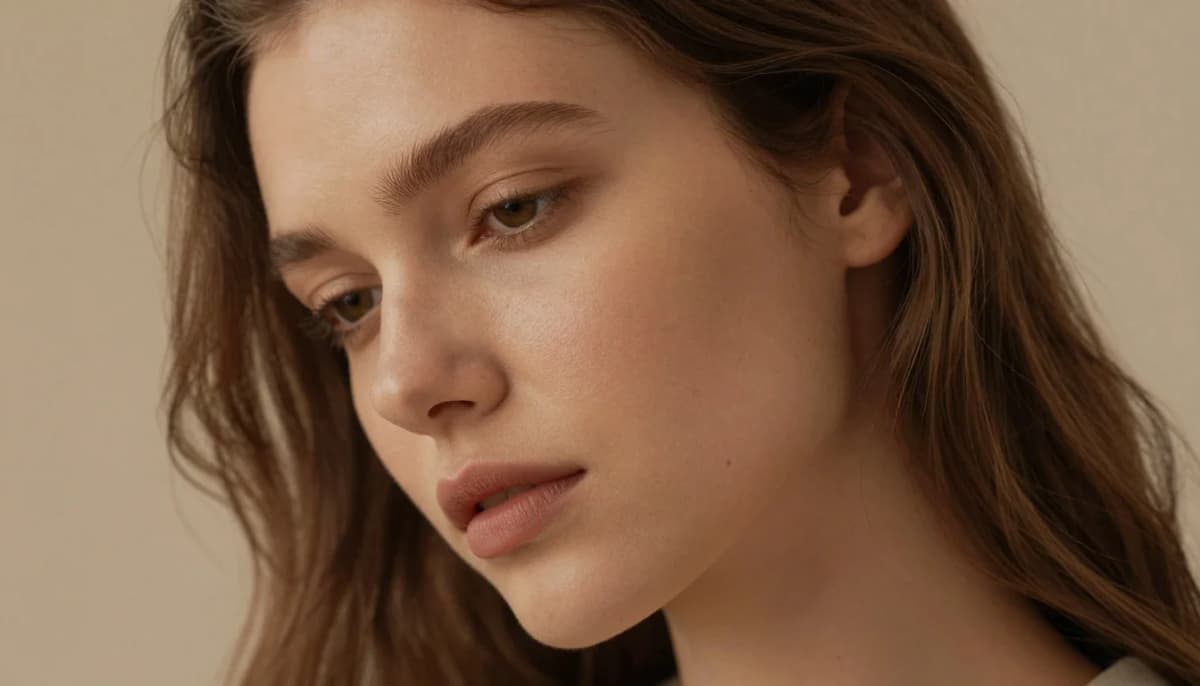
Your Soft Autumn Capsule Color Palette for Your Muted Autumn Palette
Warm Neutrals: Camel, Beige & Mushroom
These are the foundation of every Soft Autumn capsule wardrobe. Camel and warm beige are the Soft Autumn equivalent of grey or white — they pair with everything in your palette and flatter your warm, muted coloring. Mushroom brown adds depth without going too dark. Warm ivory is your white alternative, giving you a light neutral that doesn't introduce the cool contrast that stark white creates against Soft Autumn skin.
Muted Accent: Dusty Rose & Terracotta
Dusty rose and muted terracotta are the signature accent colors of the Soft Autumn palette. They bring warmth and femininity without being loud — the muted quality keeps them firmly in Soft Autumn territory. In a capsule context, one or two pieces in dusty rose or muted terracotta are enough to inject color into an all-neutral base. These shades also photograph beautifully and read as polished in professional and casual settings alike.
Soft Greens & Sage
Warm sage and soft olive are the green family's contribution to the Soft Autumn capsule. They provide visual contrast to the warmer rose and camel tones without introducing cool or bright colors. A sage knit or soft olive shirt layers naturally over warm beige or camel bottoms. These muted greens are understated enough to function almost as neutrals in the Soft Autumn capsule — they pair with everything.
Depth Tones: Muted Teal & Soft Burgundy
Every capsule wardrobe needs a few deeper tones for grounding and occasion-dressing. Muted teal and soft burgundy are Soft Autumn's deep accent colors — they have enough depth to anchor an outfit and read as sophisticated, but they stay within the palette's muted, warm-neutral register. Soft burgundy in particular works as a near-neutral for Soft Autumns, pairing naturally with camel, dusty rose, and mushroom.
Ready to preview yourself in your palette?
Start free — find my colorsBuilding Your Soft Autumn Capsule in Practice
The neutral base (5-7 pieces)
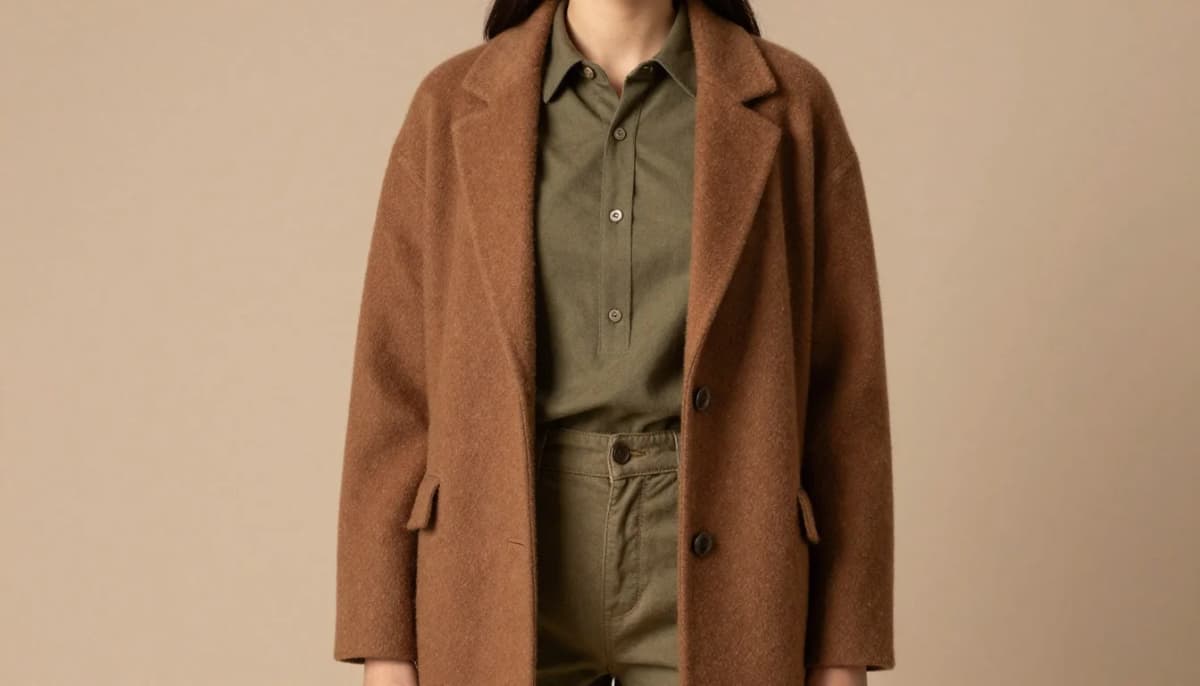
Start with camel, warm beige, and mushroom as your capsule's neutral foundation. These three tones form a base that pairs naturally with every accent color in your palette. Practically: a camel coat or blazer, warm beige or mushroom trousers, a warm ivory or camel knit, and a mushroom or warm greige overshirt covers your neutral base. Everything here coordinates with everything else, and with every accent color you add.
Accent colors (3-4 pieces)
Add depth and personality with 3-4 pieces in your accent colors. Dusty rose blouse, warm sage knit, muted teal scarf or accessory, soft burgundy cardigan or skirt. These accent pieces work because they're all in the same muted, warm register as your neutrals — they add variety without creating coordination complexity. One or two accent pieces per outfit against your neutral base is all you need.
Layering within the palette
Soft Autumn's muted, analogous tones make tonal layering particularly effective. Wearing camel, warm beige, and mushroom together in one outfit creates a sophisticated, effortless look because the tones are harmonious but distinct. Add a dusty rose or sage element and the result is put-together without effort. This tonal layering works because your palette's low chroma means the colors blend visually rather than compete.
Fabric and texture to add interest
Because your palette is intentionally muted and quiet, texture and fabric carry more weight in Soft Autumn dressing than they do for brighter seasons. Linen, brushed cotton, suede, bouclé, and knit textures add visual richness to your muted palette without introducing color contrast. A camel bouclé jacket and warm beige linen trousers in the same color family read as interesting and elevated because the texture contrast does the work.
Colors That Undermine Your Capsule Cohesion
Stark white and cool grey
White and cool grey are the default neutrals in most capsule wardrobe formulas, but for Soft Autumn they introduce a cool, bright contrast that fights the muted warmth of your palette. Everything else in a Soft Autumn capsule leans warm and muted — one cool grey piece breaks the internal harmony and makes coordination harder. Swap white for warm ivory and grey for mushroom or warm greige.
Bright, vivid colors — cobalt, emerald, magenta
Vivid, high-chroma colors overwhelm Soft Autumn's muted palette. They demand attention in a way that overpowers your softer coloring rather than enhancing it. In a capsule context they also create coordination problems — bright cobalt won't mix easily with your camel, dusty rose, and sage pieces. Stick to muted versions: instead of cobalt, choose muted teal; instead of emerald, choose soft olive.
Navy and black
Navy and black are too high-contrast for Soft Autumn's medium-depth, muted palette. They create a stark contrast against the warm, gentle tones that suit your coloring. A Soft Autumn wearing head-to-toe black looks washed out or overwhelmed — the depth exceeds what the palette can carry comfortably. Use soft burgundy or deep mushroom for depth instead.
Cool pastels — baby blue, icy lavender, mint
Cool pastels are both too bright and too cool for Soft Autumn. Icy lavender, baby blue, and mint introduce a fresh, cool quality that is the opposite of Soft Autumn's warm, muted character. They don't coordinate with your camel and dusty rose base and they create a visual discord near your face. Warm blush and dusty rose are the Soft Autumn pastel equivalents — they have the lightness without the cool temperature.
Stop guessing — preview every color on you
Preview Yourself In Your PaletteCapsule Wardrobe Color Swaps for Soft Autumn
Replace the common wardrobe defaults that fight your palette with Soft Autumn versions that enhance your coloring.
Even within camel, Soft Autumn benefits from the more muted, dusty version rather than the bright, saturated camel that suits Warm Autumn. The dustier tone stays within Soft Autumn's low-chroma register.
Stark white introduces a brightness and cool undertone that fights Soft Autumn's muted palette. Warm ivory has the same light, fresh function but with the warm undertone that resonates with Soft Autumn coloring.
Cool grey is the most common Soft Autumn mistake. Mushroom and warm greige have the same neutral function — they pair with everything — but their warm undertone keeps them harmonious with the rest of your palette.
Vivid coral and saturated terracotta belong to Warm Autumn. Soft Autumn needs the same warm hue but in its muted form — dusty coral and muted terracotta have the same warmth without the chroma that overwhelms Soft Autumn's coloring.
Black is too high-contrast for the Soft Autumn palette. Soft burgundy and deep mushroom provide depth and grounding — the same wardrobe function — without the stark contrast that makes Soft Autumn coloring look washed out.
Indigo and navy denim are cool and high-contrast for Soft Autumn. A warmer, mid-wash denim or one with a dusty, faded quality sits closer to the palette's warmth and muted depth. It coordinates better with camel, dusty rose, and sage pieces.
Your Soft Autumn Palette
Soft Autumn sits at the gentle intersection of warmth and mutedness. Understanding your closest seasonal neighbors helps you fine-tune the depth and vibrancy that works best within your palette.
Soft Autumn
Learn moreYour season. Muted, warm, medium depth. All your best colors — camel, dusty rose, warm sage, muted teal, mushroom — share the low-chroma, warm-neutral quality that makes them harmonious in a capsule context. The palette is your greatest wardrobe asset.
Deep Autumn
Learn moreIf you find Soft Autumn's colors slightly too light and you carry deeper coloring — rich warm brown hair, deeper warm skin — Deep Autumn's richer, more saturated versions of the same warm hues may suit you better. The palette overlaps but runs darker and more intense.
Soft Summer
Learn moreIf your coloring feels more cool than warm — ashy rather than golden hair, cool-neutral rather than warm skin — Soft Summer shares Soft Autumn's muted quality but shifts the undertone cooler. The capsule logic is the same, but the colors lean toward rose-grey and dusty blue instead of camel and sage.
Find Your Exact Colors
A Soft Autumn capsule wardrobe works best when you know precisely which temperature and depth of each color flatters your specific coloring. The difference between dusty camel and bright camel, muted teal and vivid teal, can be subtle on a hanger but visible on your skin. A personalized color analysis identifies your exact Soft Autumn palette — the specific tones of each color family that make your skin glow — so every piece you add to your capsule is a guaranteed keeper.
Start free — find my colorsFrequently Asked Questions About Your Muted Autumn Palette
What are the best neutral colors for a Soft Autumn capsule wardrobe?
The best Soft Autumn neutrals are warm camel, warm beige, mushroom brown, and warm ivory. These replace the cool-neutral defaults (white, grey, navy) with warm-undertoned equivalents that harmonize with Soft Autumn's palette. They pair naturally with accent colors like dusty rose, warm sage, and muted teal, making every combination in the capsule feel coordinated without effort.
How many colors should a Soft Autumn capsule wardrobe have?
A Soft Autumn capsule works well with 3-4 neutral tones (camel, warm beige, mushroom, warm ivory) and 3-4 accent colors (dusty rose, warm sage, muted teal, soft burgundy). This gives you enough variety to create distinct outfits without exceeding the palette's muted, harmonious character. Because all Soft Autumn colors share the same warm-neutral undertone, more colors don't create more coordination problems — they still mix naturally.
Can a Soft Autumn capsule wardrobe include black?
Black is generally too high-contrast for Soft Autumn's medium-depth, muted palette. It creates a stark contrast that makes Soft Autumn coloring look washed out rather than glowing. Deep mushroom, dark warm brown, and soft burgundy provide the depth and grounding that black offers in other capsule formulas, but within the palette's warm-neutral register. If you love dark pieces, soft burgundy is the closest Soft Autumn equivalent to black.
What accent color works best in a Soft Autumn capsule?
Dusty rose is the most versatile Soft Autumn accent color for a capsule wardrobe. It's warm enough to harmonize with camel and mushroom neutrals, feminine without being loud, and works across casual and professional contexts. Warm sage is a close second — it provides green-toned contrast to the rose and camel base and is understated enough to function almost as a neutral. Together, dusty rose and warm sage cover most of your accent needs.
Why don't cool neutrals work for Soft Autumn?
Cool neutrals — stark white, cool grey, navy — work against Soft Autumn because they introduce a cooler, brighter quality that clashes with the palette's muted warmth. Near the face, cool neutrals can make Soft Autumn skin appear sallow or washed out. In a capsule context they also break the internal harmony — a cool grey piece doesn't coordinate naturally with camel, dusty rose, and sage in the way that warm mushroom does. The swap to warm equivalents solves both problems.
How do I add variety to a Soft Autumn capsule without adding new colors?
Texture and fabric are the most effective tools for adding variety within a Soft Autumn capsule. Because your palette is intentionally quiet and muted, textural contrast — linen versus knit, smooth cotton versus bouclé, matte versus subtle sheen — creates visual interest without introducing color contrast. Tonal dressing (wearing two or three Soft Autumn neutrals together) is also a powerful variety strategy: camel, warm beige, and mushroom together in one outfit look considered and sophisticated.