Goal
Bring out green
- Best shades
- Plum, aubergine, burgundy, violet
- Finish
- Satin or soft shimmer
- Placement
- Lid and lower lash line
Choose eyeshadow by the part of your hazel eyes you want to emphasize: green, gold, or warm brown.
Hazel eyes shift between green, gold, amber, and brown. The best eyeshadow depends on which note you want to pull forward. Plum and violet intensify green, copper and bronze reveal gold, and olive or warm brown deepen the eye without flattening its natural variation.


3,000+
happy clients
Plum, violet, burgundy, copper, bronze, antique gold, olive, and warm chocolate make hazel eyes pop. Choose purple to emphasize green, metallic copper or gold to reveal amber flecks, and olive or warm brown for a softer everyday look. Blackened plum or espresso gives evening definition without masking the eye color.
Hazel eyes shift between green, gold, amber, and brown. The best eyeshadow depends on which note you want to pull forward. Plum and violet intensify green, copper and bronze reveal gold, and olive or warm brown deepen the eye without flattening its natural variation.
Hazel eyes respond to eyeshadow differently than single-tone irises because there are multiple pigment registers to activate or suppress. The iris contains green (from rayleigh scattering and some pigment), amber-gold (from pheomelanin), and brown (from eumelanin) in proportions that vary between individuals and shift with light. Eyeshadow placed around the eye creates a chromatic frame that makes the iris's dominant register compete differently with the surrounding color — complementary contrast pulls one register forward while the others recede.
Formula matters as much as color. Matte shadows create depth and define the socket, making crease work more effective for color activation — a plum matte crease reaches into the eye socket and creates a sustained color relationship with the iris throughout the day. Shimmer and metallic shades on the lid reflect light toward the iris and create luminosity, amplifying the golden register when you use warm metallic tones. Satin finishes split the difference and work across both zones. Matte lid shades suppress the eye rather than amplifying it — use them in the crease and outer corner, not across the full lid.
Primer is non-negotiable for hazel eyeshadow activation. Without a primer, matte shades fade and crease within hours, eliminating the sustained color contrast that hazel eyes need. An eye primer also deepens shadow pigmentation — a plum matte becomes more concentrated and effective on primed skin. This means the contrast signal to your iris stays strong from morning through evening, and the color-activation effect remains visible in photographs and at conversational distance.
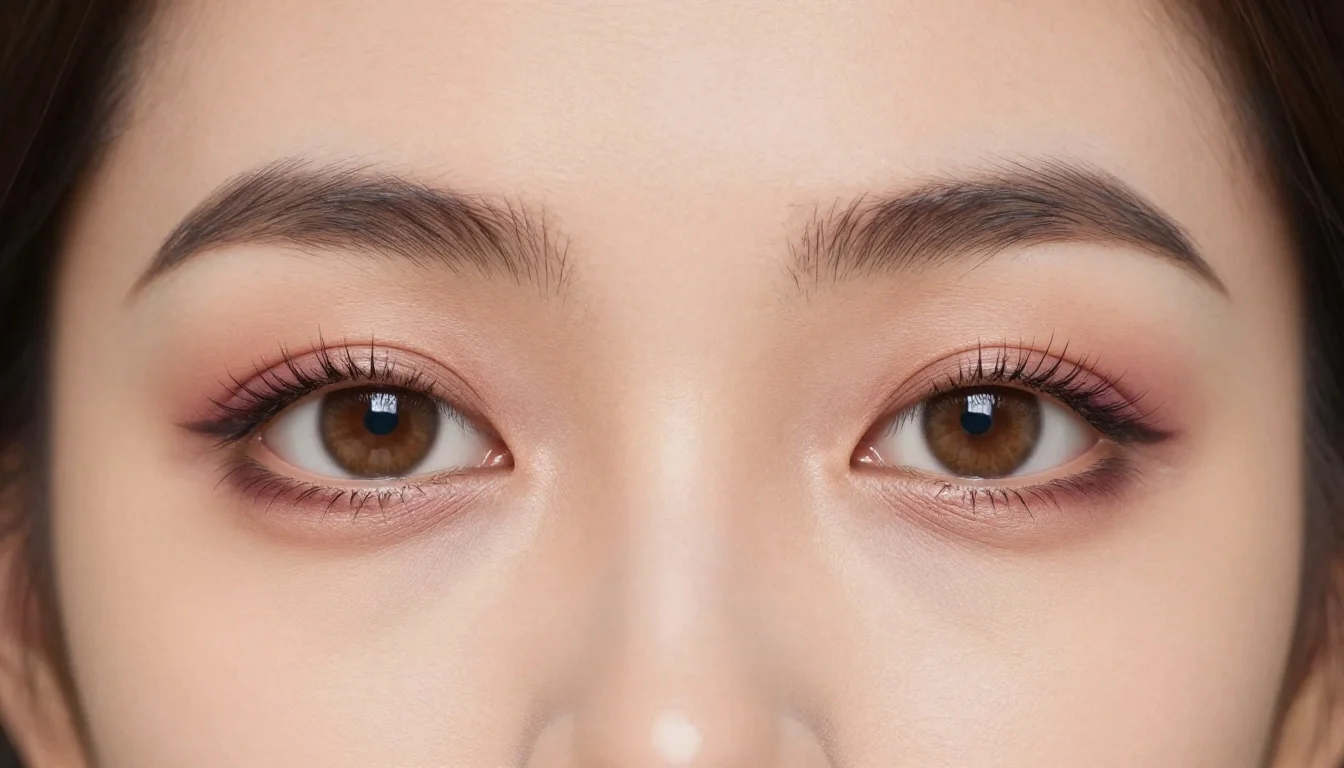
Purple and red-violet are complementary to green on the color wheel — placing them adjacent to a green-containing iris creates the strongest possible chromatic contrast, making the green pigments in hazel read as vivid and dominant. Deep plum matte in the crease is the single most reliable technique for making hazel eyes appear intensely green. Use it from the outer corner into the socket, blending upward. Dusty mauve matte is the softer everyday version — less drama, same direction of activation. Burgundy-plum bridges the plum and brown registers for a more complex look that activates green while adding depth.
The copper-bronze family shares the same warm orange-amber temperature as the gold-amber pigments in hazel eyes, creating harmonic resonance that pulls the golden register forward. Burnished copper pressed onto the lid — particularly a metallic or foiled formula — reflects warm light into the iris and makes hazel eyes appear almost entirely gold. Deep bronze satin in the crease creates graduated warmth without the full metallic intensity. Warm rose gold occupies the midpoint between copper activation and a romantic, editorial finish. Use copper on the lid and bronze in the crease for a dimensional warm look that works in any lighting.
Warm brown mattes are the transition and crease workhorses that anchor eyeshadow looks without competing with the iris. Chocolate brown with a golden undertone in the crease amplifies the brown-amber depth of hazel rather than flattening it — it connects to the warm register rather than dulling it. Khaki-olive creates a smudgy, editorial crease effect that resonates with the green-brown quality of the iris and adds complexity without dramatic contrast. Use a warm caramel matte as your transition shade between lid and crease — it creates gradient depth while keeping the look cohesive.
Deep teal and navy create a two-channel activation for hazel: blue tones are complementary to the amber-gold register (the blue-orange relationship on the color wheel), while the green undertone in teal resonates tonally with the green register of hazel. This dual effect makes hazel eyes appear more vivid and complex than any single-register activator. Apply deep teal to the outer half of the lid and blend into a dark bronze at the inner corner. Forest green shimmer pressed to the center lid activates the green register through tonal amplification while the metallic finish adds luminosity. These are statement shades for hazel eyes, not everyday options.
Start with the result you want, then choose the shade, finish, and placement that brings that part of your iris forward.
Goal
Goal
Goal
Goal
Goal
| Goal | Best shades | Finish | Placement |
|---|---|---|---|
| Bring out green | Plum, aubergine, burgundy, violet | Satin or soft shimmer | Lid and lower lash line |
| Bring out gold | Copper, bronze, antique gold, amber | Metallic or foil accent | Center lid and inner third |
| Deepen brown | Chocolate, espresso, warm taupe | Matte or satin | Crease and outer corner |
| Soft daytime look | Rose bronze, olive taupe, champagne | Sheer satin | Wash across the lid |
| Evening definition | Blackened plum, deep bronze, forest green | Matte plus shimmer | Outer V and lash line |
If your skin undertone is cool, favor plum and rose bronze. Warm undertones usually carry copper, antique gold, and olive most easily.
The most effective hazel eye looks follow a five-layer structure. Start with eye primer across the lid and into the socket — this extends wear and deepens pigmentation for better color activation. Apply a warm transition matte (caramel-beige) from the crease upward with a fluffy brush to create a gradient foundation. Pack your activation shade into the crease with a pencil brush — plum matte for green activation, warm bronze for gold activation. Apply your lid shade last (copper metallic, teal satin, or a warm matte depending on the look). Finish with liner close to the lash line to frame without suppressing the iris. This sequence builds color activation from the deepest zone outward rather than applying flat color over the whole lid.
Hazel eyeshadow works best when it's intentional. Before you open your palette, decide: which register are you targeting today? For green: your crease shade is deep plum or red-violet matte, your liner is plum or forest green pencil, your mascara is plum or dark brown. For gold: your lid shade is burnished copper or rose gold metallic, your liner is bronze or warm gold, your mascara is brown or black. For brown-amber depth: your crease is warm chocolate matte, your liner is caramel pencil, your look stays in the warm neutral zone. Mixed-register looks exist but intentional single-register looks create the most striking effect on hazel eyes.
The crease is where color activation happens most powerfully for hazel eyes, and concentration matters more than diffusion. A pencil brush or a small round blending brush allows you to pack plum, bronze, or teal shadow into the socket crease with precision. After packing, use a fluffy brush to blend the edges only — preserving concentration in the center of the crease while softening the perimeter. This creates a visible ring of color around the iris when the eyes are open, which is the most effective placement for sustained color-activation contrast throughout the day.
Liner for hazel eyes works best when it reinforces the eyeshadow register rather than creating a separate dominant statement. For a plum crease targeting green hazel: a dark plum pencil tightlined on the upper waterline continues the color contrast without adding a separate line element. For a copper lid targeting gold hazel: a bronze or deep brown pencil along the upper lash line maintains the warm register without the harshness of black. Avoid black liner all-around for hazel eyes — particularly on the lower waterline, which closes the eye and suppresses color variability. A warm mahogany or bronze lower lash line liner leaves space for hazel's shift to read.

Match your eyeshadow with blush and lipstick using the free makeup color matcher before you buy another palette.
Grey matte on the full lid creates no chromatic relationship with any register of hazel — not the green, not the gold, not the brown. The iris looks dull against a grey lid because there is no contrast or resonance to activate it. If you want a neutral eye, warm taupe or caramel matte creates far more activation than any cool grey.
Icy white and silver-white shimmer reflect cool light that competes with and flattens the warm amber register in hazel. A warm champagne or pale gold shimmer on the inner corner amplifies hazel; icy white suppresses it. The temperature difference matters more than the shade value.
Pure orange and yellow-orange eyeshadow blends into the amber register of hazel rather than creating contrast or resonance with it. The iris doesn't pop — both the eye and the shadow occupy the same warm-yellow zone without either element reading distinctly. Warm copper and bronze have enough brown depth and metallic quality to stand apart from the eye color itself.
There is a version of olive that works for hazel — a clean khaki-green matte. And there is a version that doesn't — muddy olive-grey with no clear hue identity. The grey component suppresses hazel's color registers while the yellow-green component creates no clean contrast. If you want olive shadow, choose a clean khaki or yellow-green matte rather than a desaturated grey-olive.
Simple product swaps that activate your hazel instead of leaving it flat.
Cool beige has no temperature relationship with hazel's warm registers. Warm caramel begins the chromatic conversation before you even add your activation shade — it creates a warm gradient that amplifies both plum crease work and copper lid work.
Generic mid-brown crease shades don't activate green or deepen gold — they just add generic depth. Deep plum targets the green register through complementary contrast. Warm chocolate amplifies the brown-amber register harmonically. Pick the one that matches your register intention.
Silver-based champagne reflects cool light that competes with the warm amber register. Copper and warm rose gold reflect warm light that resonates with hazel's gold pigments, making the iris appear luminous and golden rather than washed out.
Dark grey and black in the outer corner create generic drama without contributing to hazel activation. Deep plum or burgundy-brown in the outer corner continues the green-activation register all the way to the lash line and creates a more sophisticated, color-intentional look.
Black liner on the lower waterline closes the eye and suppresses hazel's color shift. A warm liner on the lower lash line (plum, mahogany, or bronze depending on your register) keeps the iris visible and activated, and the lighter frame lets hazel's variability show in different lighting.
Cool taupe has no activation for hazel. A khaki-olive wash resonates with the green-brown quality of the iris tonally, and a warm brown crease adds depth — creating a look that works professionally while still activating hazel's register rather than neutralizing it.
Hazel eyes appear across several seasonal palettes, with the dominant register and skin undertone determining which season fits. These three are the most common hazel-eye seasons, each with a different eyeshadow sweet spot.
If your hazel eyes lean heavily toward gold-amber rather than vivid green, your skin is warm golden or peachy-bronze, and your hair is warm brunette or auburn, Warm Autumn is likely your season. Your eyeshadow sweet spot is the copper-bronze-chocolate family: burnished copper on the lid, warm chocolate in the crease, deep bronze as your outer corner depth shade. The green register exists but the amber-gold quality dominates your iris and your overall palette.
If your hazel eyes have a grey-green quality rather than vivid green or golden amber, your skin undertone is cool-muted, and your overall coloring feels blended and gentle, Soft Summer may be yours. Your eyeshadow sweet spot is muted mauve-plum and dusty rose matte shades — not vivid purple, but soft dusty violet that activates the cool-green register without demanding high saturation. Avoid vivid copper, which can look too warm against cool-muted skin.
If your hazel eyes shift dramatically between green and golden-brown, your skin is light warm or peachy, and your overall coloring is clear and bright, Warm Spring is a strong candidate. Your eyeshadow sweet spot is vivid warm copper and clear teal — the registers that create the most dramatic activation of hazel's two main pigment zones. Your high clarity skin contrast means you can wear bolder lid shades without them overwhelming your coloring.
Hazel eyes exist on a spectrum — some lean warm and gold-dominant, some lean cool and grey-green, some shift dramatically in different lighting. The specific eyeshadow shades that work best for your version of hazel depend on your iris's exact color distribution, your skin undertone, and your natural contrast level. A personalized color analysis identifies not just which register to target but which exact product shades, finishes, and placements will make your hazel eyes look most vivid on your coloring.
Explore more personalized color advice based on your features.
Want to see these colors on you? What Colors Look Good on Me — free to try.
Deep plum matte and red-violet matte shadows are the most effective for making hazel eyes appear intensely green. Purple and violet are complementary to green on the color wheel, which means they create maximum contrast that pulls the green pigments in the iris forward. Apply plum matte in the socket crease with a pencil brush. For a more subtle version, dusty mauve matte creates the same direction of activation with less drama. A plum or burgundy liner at the upper waterline reinforces the effect.
Burnished copper metallic, deep bronze satin, and warm rose gold shimmer are the most reliable for making hazel eyes appear golden. These shades are in the same warm orange-amber temperature as the gold register in hazel, creating harmonic resonance that pulls the golden pigments forward. Press copper to the lid and blend bronze into the crease for a graduated warm look. Deep navy or cobalt liner also activates gold through the blue-orange complementary effect — navy liner makes hazel eyes read as golden in a different way than copper does.
Use both strategically. Matte shades belong in the crease, outer corner, and as transition shades — they create depth and color activation without reflecting light away from the iris. Shimmer and metallic shades belong on the lid, where they reflect light toward the iris and amplify the golden register. Matte plum crease plus shimmer copper lid is a high-impact combination for hazel eyes. Avoid matte shades across the full lid — they can make hazel eyes appear flat rather than luminous.
Cool grey matte on the full lid creates no chromatic relationship with any hazel register and visually dulls the iris. Icy white or silver-white shimmer reflects cool light that suppresses the warm amber register. Pure orange or yellow eyeshadow blends into the amber register rather than creating contrast, making both the shadow and the iris look muddy. Muddy olive-grey is too desaturated to create either tonal resonance or complementary contrast with hazel.
The crease-focused technique creates the most sustained color activation for hazel eyes. Apply a warm transition shade (caramel matte) broadly through the socket first. Then pack your activation shade — plum matte for green, warm bronze for gold — into the crease specifically, with a pencil brush. Follow with your lid shade (shimmer or metallic). This concentrates the complementary-contrast color in the zone that the iris sees constantly when the eyes are open, creating stronger and more persistent color activation than a lid-only approach.
Yes — significantly more than for simpler eye looks. Color-activation eyeshadow on hazel eyes relies on the crease shade maintaining its concentration throughout the day. Without primer, matte crease shades migrate and fade within a few hours, eliminating the sustained color contrast that activates the green register. Primer also deepens the pigmentation of matte shadows, making a plum matte appear more saturated and therefore more effective as a complementary-contrast activator. Apply primer to both the lid and into the socket before any shadow.