Soft Autumn Colorsfor Hazel Eyes
Hazel eyes are one of the most color-reactive eye colors in existence — they contain amber, green, gold, and brown tones that shift and respond to nearby colors in real time. If you have hazel eyes and have identified Soft Autumn as your seasonal palette, you have a remarkable advantage: the palette's warm, muted, earthy tones are uniquely positioned to activate the most beautiful aspects of hazel eye color. This guide explains why and shows you exactly which colors make hazel eyes look their most vivid, complex, and captivating.
Discover Your ColorsWhy Hazel Eyes Respond So Strongly to Soft Autumn Colors
Hazel eyes are defined by their multi-tonal, changeable quality — they contain varying amounts of green, amber, gold, brown, and sometimes copper or olive tones. This richness makes them highly reactive to nearby colors: different shades pull out different tones from the iris, visually shifting the eye color. Someone with hazel eyes might appear to have green eyes in one outfit and warm brown eyes in another.
The Soft Autumn palette activates hazel eyes from two directions simultaneously. The palette's warm, golden-brown tones (camel, tobacco, warm terracotta) resonate with the amber and gold tones in hazel eyes, pulling those tones forward and making the eyes appear warmer and more golden. The palette's muted greens and sages create complementary contrast with the green element in hazel eyes, pulling the green tones forward and making the eyes appear greener. The result is an eye color that looks genuinely complex and multi-tonal — which is hazel at its best.
The mutedness of Soft Autumn is also specifically important for hazel eyes. Bright, saturated colors near hazel eyes can create an overwhelming visual environment where the eye color is difficult to read. Muted, warm tones allow the eye's own complex coloring to be the most vivid element in the picture. This is why Soft Autumn's gentle warmth is more activating for hazel eyes than Deep Autumn's intense saturation.
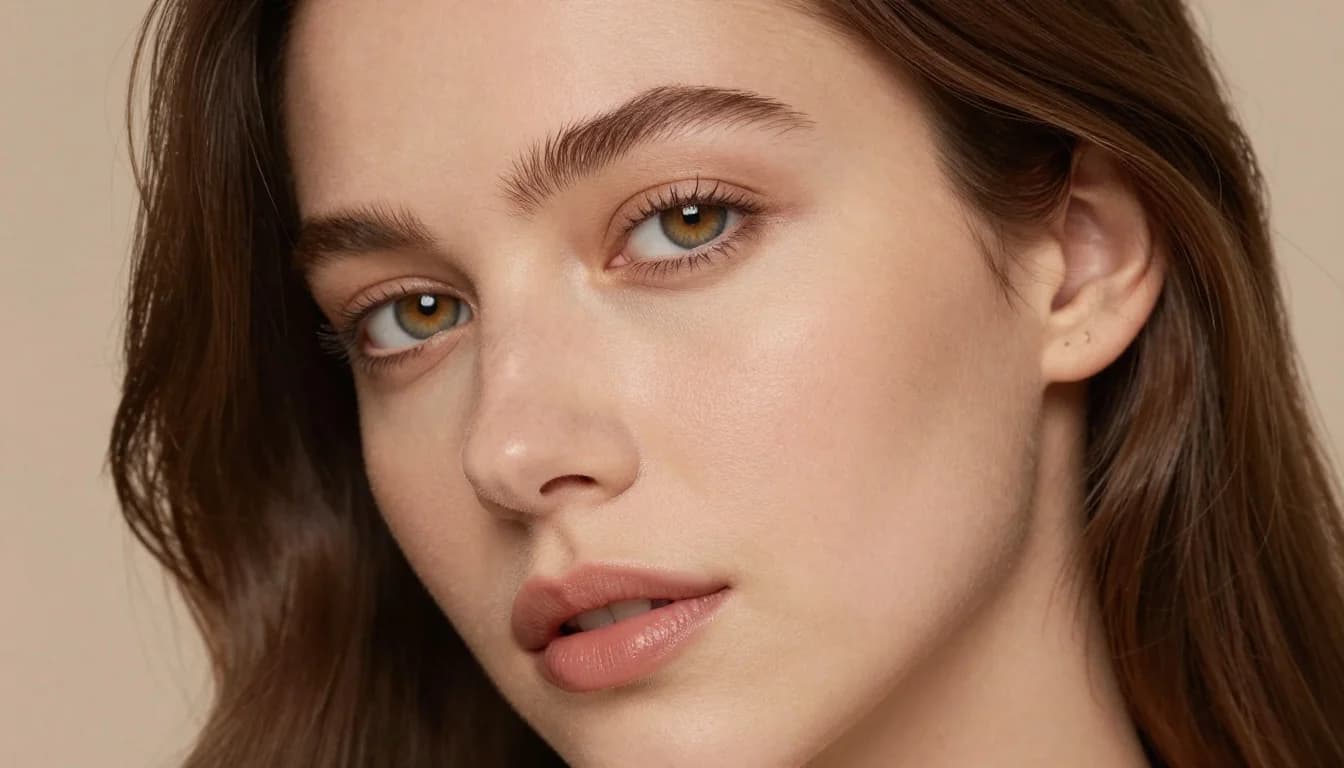
Colors That Make Hazel Eyes Shift and Glow for for Hazel Eyes
Warm Sage and Muted Green
Muted warm greens are the single most powerful eye-color activator for hazel eyes. They pull out the green tones in the iris through complementary resonance, making hazel eyes appear distinctly and beautifully green. Warm sage is especially effective because it's muted enough to not overwhelm the eye while being green enough to trigger the green response. Hazel eye-wearers frequently discover that sage makes their eyes appear a completely different color.
Warm Amber and Cognac
Amber and cognac tones activate the gold and amber within hazel eyes, pulling those warm tones to the surface and making the eyes appear more golden and luminous. These colors create a harmonic resonance — mirroring the warmth already in the iris rather than contrasting with it. The effect is a warm, glowing quality in the eyes that reads as particularly rich and multi-tonal.
Muted Warm Terracotta and Rust
Muted terracotta and rust tones occupy a warm, earthy middle ground between green and amber that makes all the warm tones in hazel eyes simultaneously more visible. Rather than pulling one specific tone forward, these colors create an overall warm glow that makes the entire hazel eye look richer and more dimensional.
Warm Burgundy and Dusty Rose
Warm burgundy creates an interesting interaction with hazel eyes — the red-warmth in the burgundy pulls out the amber and copper tones in the iris, making hazel eyes appear distinctly warm and golden. Dusty rose with a warm cast does the same at a lighter register. These colors work because they're warm enough to resonate with the amber in hazel eyes without the visual competition of bright saturation.
Ready to Find Your Best Colors?
Get Your Color AnalysisDressing to Show Hazel Eyes at Their Best
Choose your eye story
Because hazel eyes shift with nearby colors, you can consciously choose which aspect of your eye color you want to emphasize on a given day. Wear warm sage or dusty olive to bring out the green. Wear cognac, amber, or warm camel to bring out the gold and amber. This is a genuine superpower of hazel eyes in Soft Autumn — you're not locked into one eye color appearance.
Layer warm tones for maximum depth
A head-to-toe warm Soft Autumn outfit creates the most favorable visual environment for hazel eyes to appear vivid and multi-tonal. Warm camel trousers, a dusty terracotta blouse, and a warm cognac bag create an overall warm glow that makes hazel eyes look richest. Every element of the visual field is pulling the warmth in the iris forward simultaneously.
Eye makeup in warm tones
Warm copper, bronze, and dusty terracotta eyeshadow enhances hazel eyes by deepening and amplifying the amber and gold within the iris. Warm sage or olive liner creates the green-activating effect from within the eye itself. Avoid cool grey and taupe shadows — they're the makeup equivalent of wearing cool grey clothing near hazel eyes.
Sage is your statement
Among all the Soft Autumn colors, warm sage occupies a unique position for hazel eyes: it's the one color that consistently makes hazel eyes appear to shift and glow in a way that's visibly striking to others. A warm sage top or sage-toned scarf near your face will reliably generate comments about your eye color. This is your go-to garment when you want your eyes to be the focal point.
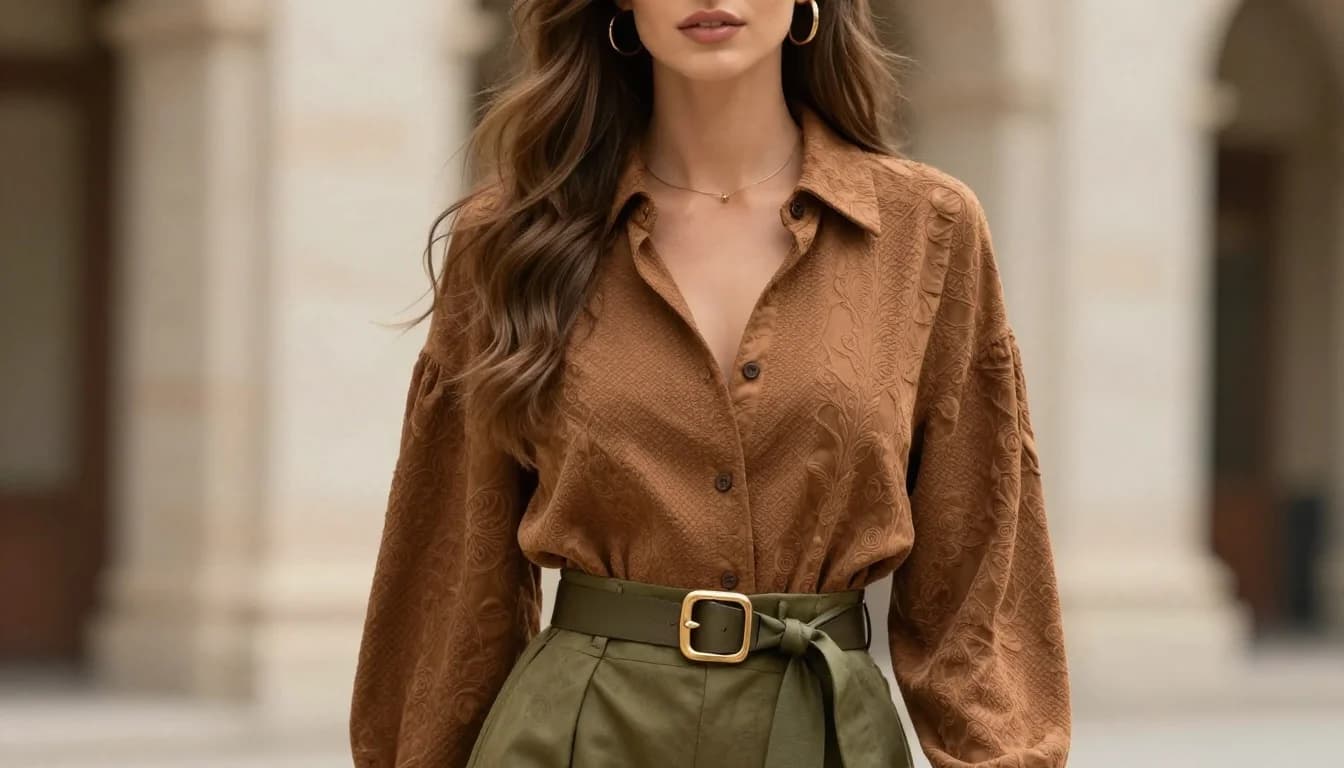
Colors That Flatten Hazel Eyes
Cool grey and ashy tones
Cool grey is possibly the most flattening color for hazel eyes. It suppresses all the warmth in the iris — amber, gold, and even the warm-green tones recede — leaving the eye appearing a flat, indistinct grey-brown. The irony is that many hazel-eyed people wear grey frequently because it seems neutral, not realizing it's actively working against their eye color.
Cool blue and lavender
Cool blue and lavender create a temperature clash with the warm tones in hazel eyes. The warmth in the iris gets suppressed, and the remaining cool-green tones can look muddy rather than vivid. Cool blue doesn't create the same green-activating effect that warm sage does — the temperature mismatch prevents it.
Bright, saturated vivid colors
Very saturated colors overwhelm hazel eyes rather than activating them. The color of the garment becomes the dominant visual element, and the complexity of hazel eye color — its most beautiful quality — disappears into the background. Soft Autumn's muted versions of colors are specifically more flattering than the bright versions for this reason.
Pure white and stark contrast
Stark white creates a high-contrast environment that doesn't favor the gentle, blended character of hazel eyes. The contrast between white fabric and whatever color the eye is doing at that moment can look jarring. Warm cream and soft ivory are much more flattering — they maintain the warmth that allows hazel eye color to show at its best.
Stop Guessing, Start Wearing Your Colors
Discover Your PaletteSwaps That Unlock Hazel Eye Color
Trading colors that suppress hazel eyes for Soft Autumn shades that make them vivid.
Cool grey suppresses all warmth in hazel eyes. Warm sage activates the green in the iris; terracotta activates the amber — both make hazel eyes dramatically more vivid.
Navy and charcoal suppress hazel eye warmth. Warm olive echoes the green tones; tobacco resonates with the amber — both are professional and enormously more flattering.
Cool lavender creates a temperature clash with hazel eye warmth. Amber and cognac mirror the gold in the iris, creating a warm glow effect that makes hazel eyes appear richer.
Stark white is too cool and high-contrast for gentle hazel coloring. Dusty warm rose and terracotta create the warm environment hazel eyes need to appear at their most vivid.
Black and cool jewels suppress hazel warmth. Warm muted burgundy activates amber tones; deep olive activates green tones — both create striking hazel eye visibility for evening.
Silver reinforces cool temperature that suppresses hazel warmth. Brushed gold and amber accessories extend the warm color field around hazel eyes, amplifying their golden quality.
Hazel Eyes Across the Autumn Seasons
Hazel eyes appear in all three autumn seasons. Here's how Soft Autumn differs from its warm-season neighbors for hazel-eyed people.
Soft Autumn
Learn moreThe primary fit for hazel eyes with neutral-warm skin at lower contrast. Your hazel eyes have a blended, gentle quality — they shift between green and amber but are never stark. Muted warm tones are your natural register, and bright colors tend to overwhelm rather than enhance your coloring.
Warm Autumn
Learn moreIf your hazel eyes are more distinctly golden-amber and your overall coloring has a more vivid, orange-warm quality, Warm Autumn may be the better fit. The palette allows for more warmth and saturation — more orange-based tones rather than the muted earthy character of Soft Autumn.
Soft Summer
Learn moreIf your hazel eyes lean more green-grey and your overall coloring has cool or neutral-cool undertones — a lack of warmth in skin and hair — Soft Summer may fit better. It's a blended, muted palette like Soft Autumn but at a cool temperature rather than a warm one.
Discover Your Full Soft Autumn Palette
Hazel eyes in the Soft Autumn palette have an exceptional advantage: the ability to shift and glow in different warm tones depending on what you wear. A personalised color analysis pinpoints your exact seasonal fit, identifies which end of the Soft Autumn palette activates your specific hazel combination most powerfully, and gives you a precise color card to take the guesswork out of every wardrobe and beauty decision.
Get Your Color AnalysisFrequently Asked Questions About for Hazel Eyes
Are hazel eyes common in Soft Autumn?
Yes — hazel eyes are very common in Soft Autumn and are one of the most naturally suited eye colors for this palette. The palette's warm, muted tones are specifically well-positioned to activate the complex mix of green, amber, and gold within hazel eyes.
What colors make hazel eyes pop in Soft Autumn?
Warm sage and dusty olive are the most powerful for pulling out the green in hazel eyes. Warm amber, cognac, and honeyed camel activate the gold and amber tones. Muted terracotta and warm burgundy create an overall warmth that makes all tones in hazel eyes appear more vivid and complex.
Why does sage make hazel eyes look so different?
Warm sage creates complementary contrast with the green in hazel eyes — the eye's green tones are visually enhanced by the surrounding green fabric tone through a reflected color effect. The eye appears to shift toward green, making the hazel appear more vivid and distinctly green-gold rather than nondescript brown. It's one of the most dramatic color-eye interactions in the entire seasonal system.
Can Soft Autumn hazel eyes wear blue?
Only warm, muted versions of blue — deep teal with warmth or dusty teal. Cool blue and bright blue create a temperature clash that suppresses the warmth in hazel eyes. If you want a blue-adjacent color, deep warm teal is the Soft Autumn version that doesn't fight the eye color.
What eyeshadow suits hazel eyes in Soft Autumn?
Warm copper, bronze, and dusty terracotta in the crease deepen and activate hazel amber tones. Warm olive or sage liner creates the green-activation effect from within the eye. Warm gold or amber shimmer in the inner corner adds brightness without coolness. Avoid cool grey, silver, and blue-toned shadows — they suppress the warmth that makes hazel eyes most beautiful.