Colors That Bring OutYour Best After 60
Find the colors that make you look vibrant and youthful after 60. Discover which shades flatter you most — and which to skip.
At 60 and beyond, your coloring has evolved significantly — and your wardrobe should evolve with it. Fully grey or white hair, softer skin tones, and changed contrast levels all mean that the palette rules from your 30s and 40s may no longer apply. The exciting part: many women discover that their most powerful colors emerge after 60, when silver hair creates a stunning frame for jewel tones they never considered before.


3,000+
happy clients
How Your Coloring Changes After 60
At 60 and beyond, your coloring has evolved significantly — and your wardrobe should evolve with it. Fully grey or white hair, softer skin tones, and changed contrast levels all mean that the palette rules from your 30s and 40s may no longer apply. The exciting part: many women discover that their most powerful colors emerge after 60, when silver hair creates a stunning frame for jewel tones they never considered before.
By 60, most women have experienced a significant shift in their natural coloring. Hair has moved substantially or fully to grey, silver, or white. Skin may have lost some of the warmth or cool intensity it had at a younger age. The overall contrast between hair, skin, and eyes has often shifted — sometimes dramatically. These changes mean that your relationship with color needs recalibration, not retreat.
The most important shift is understanding your new contrast level. With silver or white hair, your hair-to-skin contrast may have decreased (if you were a dark brunette) or remained similar (if you were already fair-haired). This determines whether you need medium-depth colors to create gentle definition, or whether you can still carry high-contrast pairings like deep navy against white hair.
One liberating truth: silver and white hair is the most neutral hair color possible. It clashes with nothing. This means your skin undertone becomes the primary factor in choosing flattering colors — and without competing hair pigment, your best shades often look even more striking than they did decades ago.
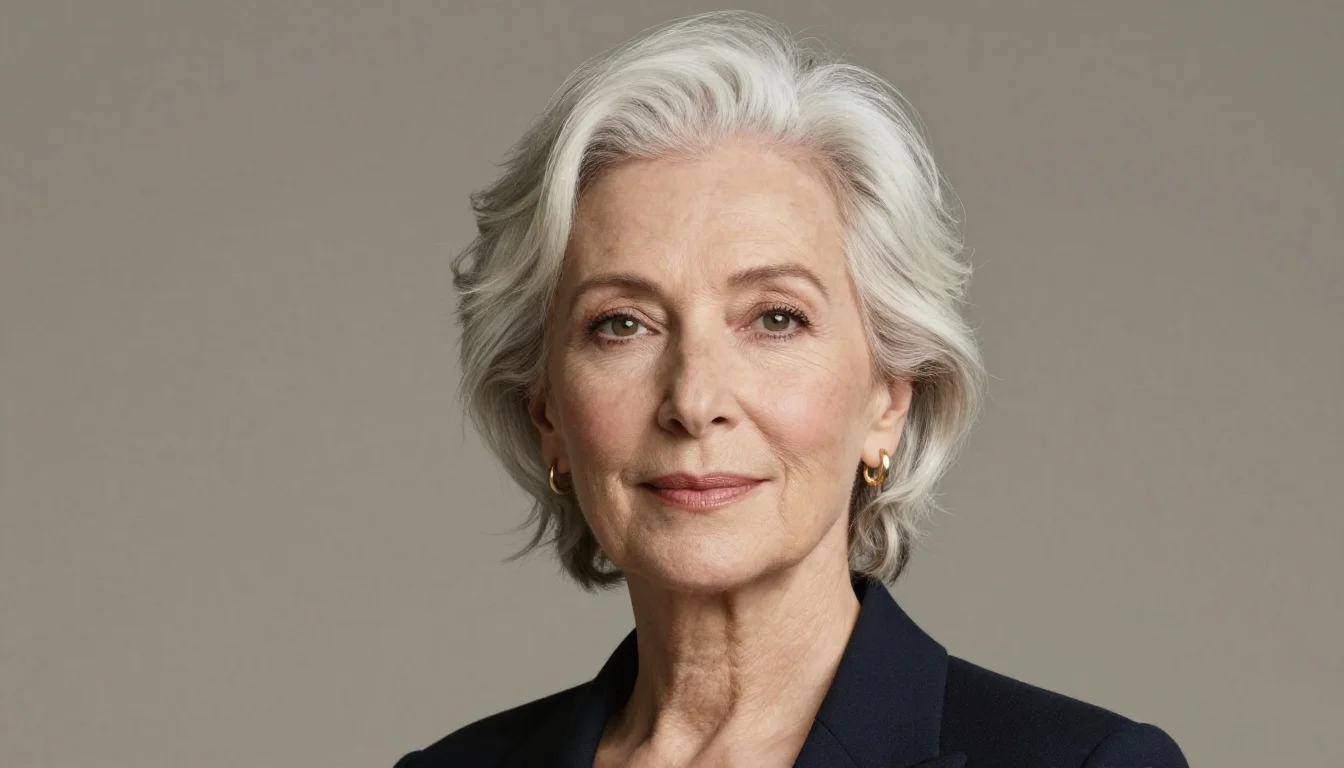
What colors look best after 60?
Medium-depth jewel tones — soft teal, warm raspberry, amethyst, sapphire — are consistently flattering after 60. Brightening shades like soft coral and warm rose near the face add healthy vibrancy. Warm navy makes the best dark neutral. The key is choosing colors with enough saturation to create energy without being harsh.
Your Most Flattering Colors After 60
Medium-Depth Jewel Tones
Medium-depth jewels are the sweet spot after 60 — rich enough to create energy near the face, but not so dark that they create harsh contrast against lighter skin. Soft teal flatters nearly every undertone. Warm raspberry brings healthy color to the cheeks. These are the shades that prompt compliments.
Brightening Soft Tones
These lighter, warm-leaning shades act as face brighteners — they reflect warm light upward and counteract any sallowness or grey cast in the skin. Soft coral is particularly powerful worn as a scarf or blouse near the jawline. Medium periwinkle flatters cool undertones beautifully. These are your go-to colors for looking rested and fresh.
Sophisticated Neutrals
Your neutrals should have either warmth or enough depth to create gentle definition against your hair and skin. Warm navy is the single most useful neutral after 60 — it provides structure without harshness. Soft charcoal offers a gentler alternative to black. Warm taupe bridges your neutrals and brightening colors seamlessly.
Statement and Evening
For occasions and evening wear, deeper saturated colors create drama without severity. Deep teal against silver hair is genuinely striking. Rich plum adds warmth and depth. Warm magenta provides bold energy for women who refuse to disappear into beige. Soft gold metallic in accessories and fabrics adds luminous warmth.

Ready to see teal & raspberry on your face?
Start my color analysisHow to Wear Color Confidently After 60
The neckline brightener
The single most impactful color choice is what sits at your neckline. A soft coral scarf, a warm rose blouse, a teal necklace — any saturated, flattering color between your chin and collarbone will reflect light onto your face and create a vibrant, healthy appearance. This one change outperforms an entire wardrobe overhaul.
Silver hair as a superpower
Silver and white hair creates a gorgeous cool-neutral frame that makes jewel tones absolutely sing. Deep teal, rich plum, warm raspberry, and sapphire look more dramatic against silver hair than against most natural hair colors. Instead of mourning your former hair color, lean into the new possibilities it opens.
The warm navy foundation
Build your wardrobe on warm navy rather than black. Navy trousers, a navy blazer, a navy cardigan — these foundation pieces pair with every jewel tone and brightening shade in your palette while being kinder to mature features than black. Navy with soft coral is one of the most universally flattering combinations after 60.
Texture adds interest without brightness
When you want visual interest without adding more color, lean on texture. A cashmere knit in soft teal, a silk scarf in warm rose, a linen blazer in warm navy — rich textures in your best colors create depth and sophistication that makes simple outfits look considered and elegant.
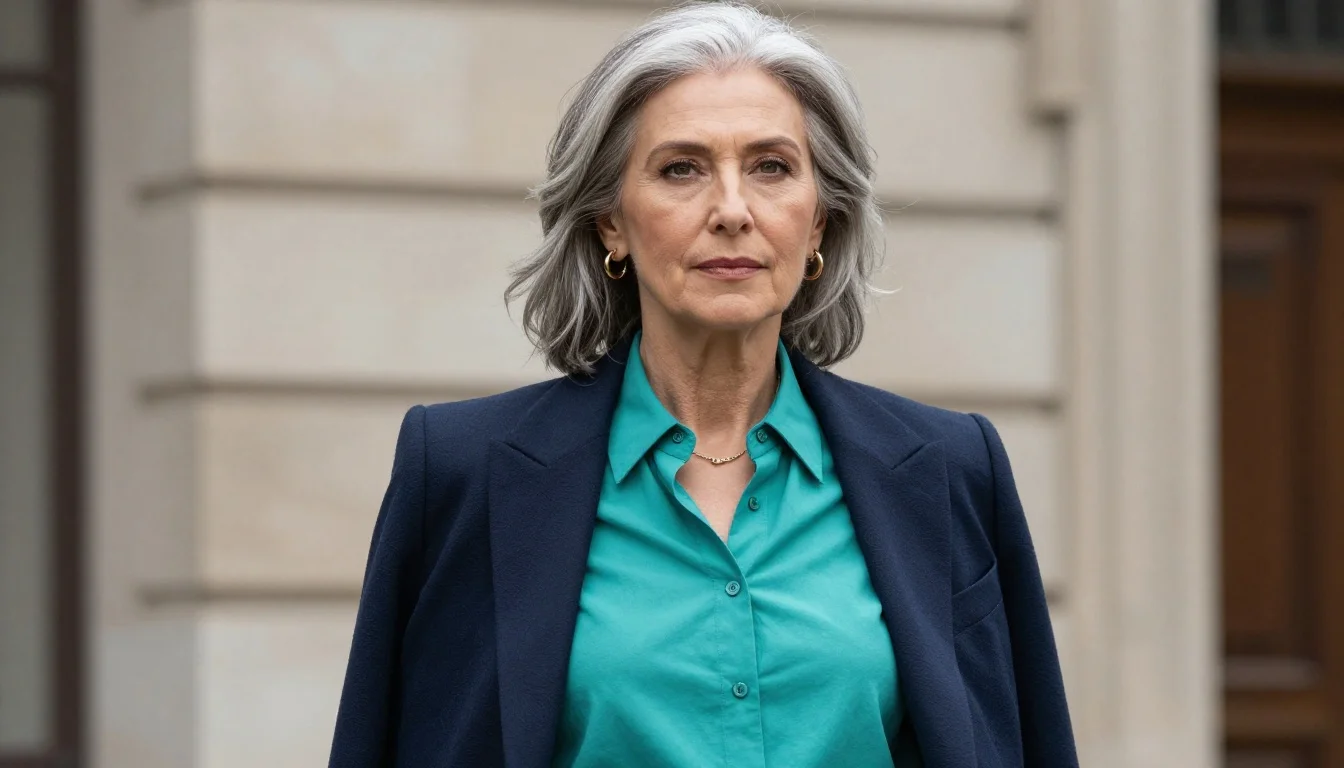
Colors That Can Make You Look Older
Head-to-toe beige and camel
Monochromatic beige creates a washed-out, faded appearance that ages rather than flatters. After 60, skin needs contrast and color near the face to look vibrant. If you love beige, keep it below the waist and add a jewel-toned top.
Jet black in large areas
Against silver hair and softened skin, large blocks of jet black can look severe and create unflattering shadows. Deep navy, soft charcoal, and rich espresso provide the same visual weight with a kinder effect on mature features.
Very pale, washed-out pastels
Baby pink, pale sky blue, and light lilac lack enough pigment to register against mature skin tones. They can make you look ghostly rather than fresh. Choose versions with slightly more depth: warm rose instead of baby pink, medium periwinkle instead of pale blue.
Muddy olive and khaki
Olive and khaki in their dull, military forms can make mature skin look sallow and tired. If you want green, choose soft teal or clear sage. If you want an earthy neutral, warm taupe or espresso serves the purpose without the sallow effect.
Stop guessing — preview every shade on you
See myself in my colorsColor Swaps That Take Years Off
Simple replacements that make your existing wardrobe work harder for you after 60.
Faded neutrals near the face create a washed-out appearance. Teal and warm rose add healthy color that makes mature skin look vibrant and rested.
Black can look severe against silver hair and softened skin. Navy and charcoal provide the same anchoring with a more flattering, gentle effect.
Beige blends into mature skin tones and disappears. Warm taupe adds gentle definition. Periwinkle adds a brightening cool lift.
Muted browns and olives can look drab against silver hair. Deep teal and plum create striking, elegant contrast that celebrates grey hair.
A neutral scarf near the face misses the opportunity to brighten. A jewel-toned or coral scarf acts as an instant face-lifter.
All black in the evening can look stark. Rich plum or teal with gold metallic accents creates warm, luminous drama that flatters under evening light.
Which Palette Might Be Yours?
Your underlying color season remains the same throughout your life — but how you express it shifts as your coloring evolves. Understanding your season after 60 helps you choose the exact right shades.
Soft Summer
Learn moreIf your silver hair has a cool quality, your skin is cool-toned, and you look best in muted, gentle colors — dusty blue, soft rose, cool taupe — Soft Summer is likely your season. You thrive in gentle, cool tones with soft contrast.
Soft Autumn
Learn moreIf your grey hair has a warm silver or golden quality, your skin has warm undertones, and you look best in muted warm shades — warm sage, soft coral, golden taupe — Soft Autumn may be your match.
Cool Winter
Learn moreIf your silver hair is bright and striking, your skin is clearly cool, and you can still carry vivid, clear colors — true red, sapphire, cool emerald — Cool Winter may still apply. Silver hair and Winter coloring is a powerful combination.
Discover Your Best Colors at Any Age
Your unique combination of undertone, contrast, and coloring depth determines exactly which shades make you look most vibrant after 60. A personalized color analysis identifies your precise palette — the exact teal, the right rose, the perfect navy — so every piece you wear brings out your best.
Stop guessing — preview every color on you
Preview Yourself In Your Palette
Get my personalized paletteStop guessing — preview every color on you
Preview Yourself In Your Palette

Related Guides for Best Colors After 60
Explore more personalized color advice based on your features.
Want to see these colors on you? What Colors Look Good on Me — free to try.
Frequently Asked Questions About Best Colors After 60
What colors look best after 60?
Medium-depth jewel tones — soft teal, warm raspberry, amethyst, sapphire — are consistently flattering after 60. Brightening shades like soft coral and warm rose near the face add healthy vibrancy. Warm navy makes the best dark neutral. The key is choosing colors with enough saturation to create energy without being harsh.
Should you stop wearing bright colors after 60?
Absolutely not. Color becomes more important after 60, not less. Rich jewel tones and warm brights make mature skin look vibrant and youthful. Retreating into beige and grey actually ages you more. Choose medium-depth rather than neon intensity, but never give up color.
What colors should you avoid after 60?
Head-to-toe beige, jet black near the face, very pale washed-out pastels, and dull olive-khaki tones tend to age. These either drain the face of color or create harsh contrast. Replace with rich mid-tones and warm neutrals.
Does grey hair change what colors look good on you?
Grey and silver hair actually broadens your color options. It is the most neutral hair color, so it clashes with nothing. Many women find jewel tones look more striking with silver hair than they ever did with their natural color. Your skin undertone becomes the primary guide.
What is the most flattering color for silver hair?
Deep teal, warm raspberry, and rich plum are exceptionally striking against silver hair. The cool neutrality of silver creates a beautiful frame for saturated jewel tones. Navy and soft coral also create gorgeous combinations with grey or white hair.
Can you wear black after 60?
Yes, but strategically. Keep black below the waist or as a background for brighter accessories near the face. Deep navy and soft charcoal are often more flattering as your primary darks. If you wear a black top, add a warm scarf or colorful necklace to soften the effect near your face.