Deep Autumn Hair Color: Rich, Warm Tones That Glow

Discover the most flattering hair colors for Deep Autumn coloring. From rich auburn to dark mahogany, find your perfect shade and learn how to maintain your warm, luxurious hair color.
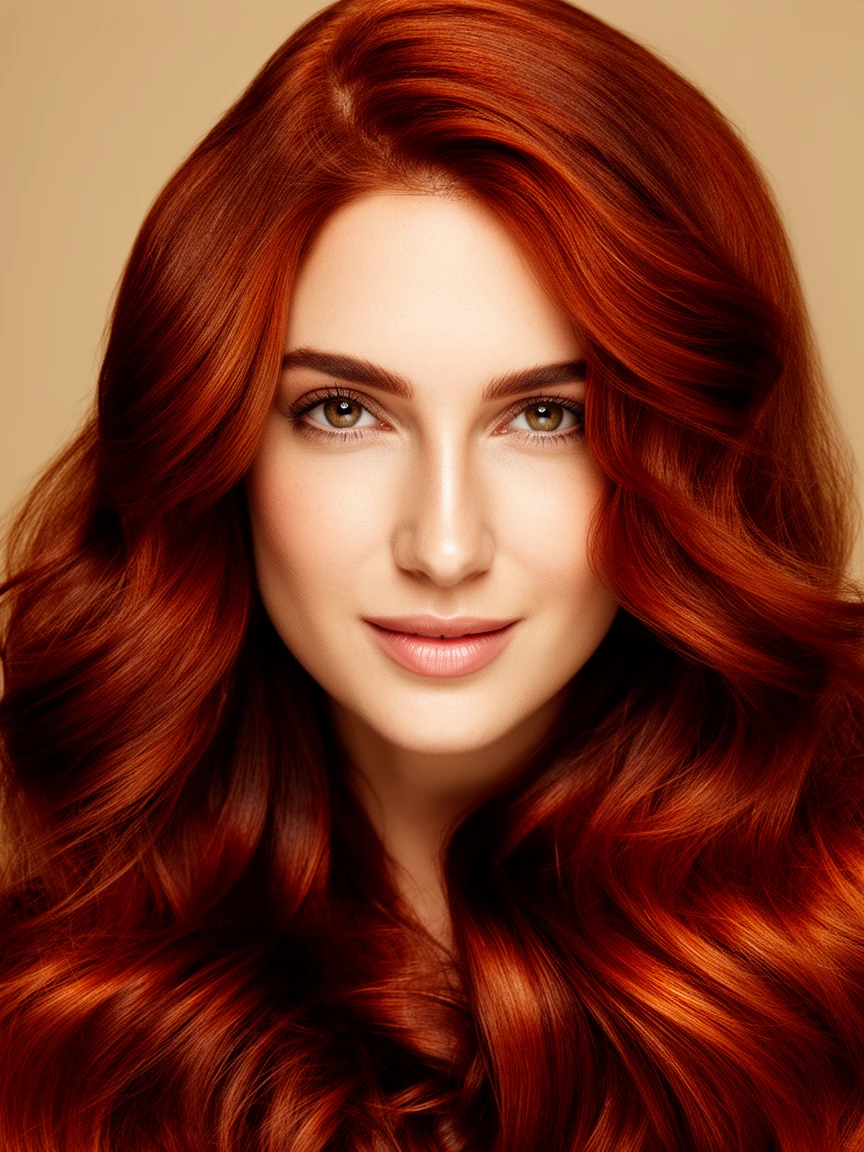
If you're a Deep Autumn, you possess one of the most striking and rich color palettes in seasonal color analysis. Your deep, warm undertones create a perfect canvas for luxurious hair colors that radiate warmth and sophistication. The right hair color doesn't just look good—it makes your skin glow, your eyes sparkle, and brings out your natural warmth in a way that feels effortlessly beautiful.
Deep Autumn is characterized by deep coloring, warm undertones, and rich, muted tones. Think of autumn leaves at their most intense—deep copper, rich mahogany, warm chocolate browns. These are your colors. Unlike lighter autumn types, Deep Autumn can carry darker, more dramatic hair colors while still maintaining that essential warmth.
For a complete guide to your seasonal colors including wardrobe and makeup, see our Deep Autumn Color Palette Guide.
Your Deep Autumn Hair Color Palette
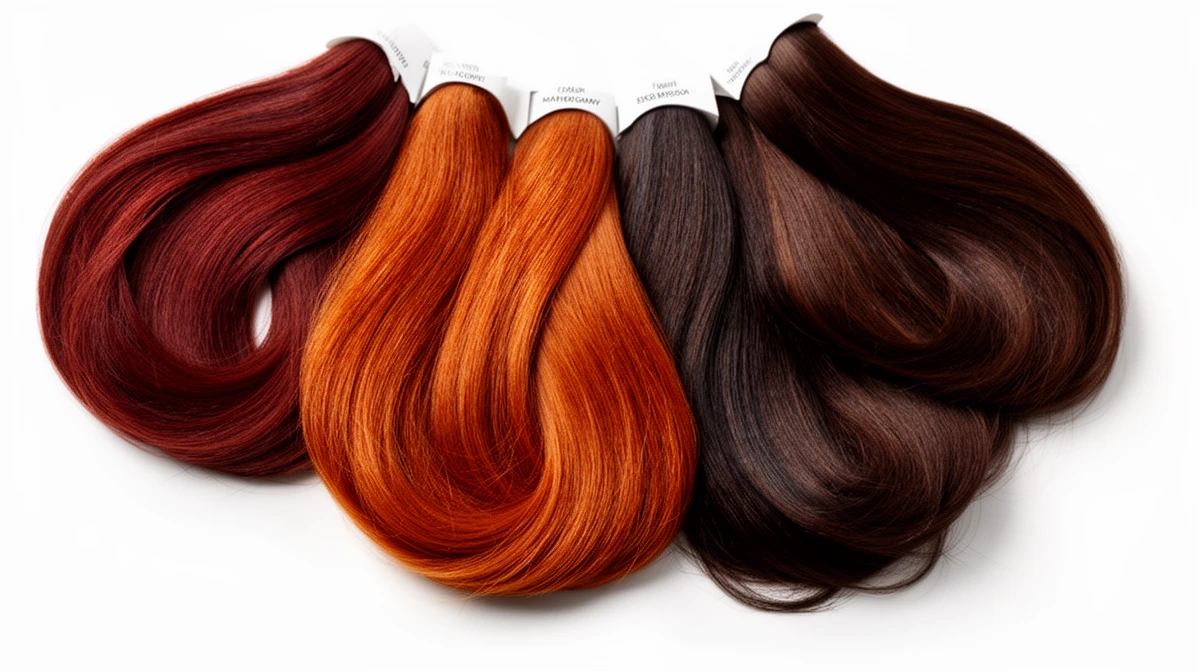
DEEP AUTUMN HAIR COLOR PALETTE
Flattering hair shades that enhance deep, warm undertones
RICH AUBURNS
WARM DEEP BROWNS
DEEP COPPER TONES
AVOID THESE
Best Natural-Looking Hair Colors for Deep Autumn
These are the shades that look like they grew from your head—effortlessly beautiful and perfectly harmonious with your Deep Autumn coloring.
Rich Auburn (Level 4-5)
This is the quintessential Deep Autumn hair color. Think Jessica Chastain's natural red—deep, rich, with copper undertones that catch the light beautifully. It's warm without being brassy, deep without being dark. In hair color terms, look for shades labeled "5RR" (medium auburn) or "4R" (dark auburn).
Dark Chocolate Brown (Level 3-4)
A rich, warm chocolate brown with subtle red undertones. This isn't the cool espresso of Winter types—it's warmer, softer, with a hint of auburn that becomes visible in sunlight. Look for "4N Natural Dark Brown" or "4WR Warm Dark Red Brown."
Dark Mahogany (Level 3-4)
Mahogany is auburn's sophisticated cousin—deeper, richer, with a hint of burgundy warmth rather than copper. It's perfect for Deep Autumns who want drama without going too red. Try "3M Medium Mahogany Brown" or "4RV Dark Red Violet Brown" (the violet adds depth, not coolness).
Copper Bronze (Level 5-6)
For Deep Autumns who can carry a bit more lightness (especially those with naturally lighter hair), copper bronze is stunning. It's deeper than standard copper—think antique copper penny, not bright new penny. Look for "6RC Light Red Copper" or "5C Medium Copper."
💡 Pro Tip: Understanding Hair Color Levels
Hair color levels range from 1 (black) to 10 (lightest blonde). Deep Autumn typically looks best in levels 3-6, with most falling into the 4-5 range. The letter codes indicate tone: R (red), C (copper), N (neutral), W (warm). Deep Autumn should look for R, C, W, and RR codes while avoiding A (ash), V (violet), or B (blue).
Best Auburn & Red Shades for Deep Autumn
Auburn is Deep Autumn's signature color family. These rich, warm reds are incredibly flattering and create that coveted "born with it" look.
Rich Auburn (The Classic)
This is the Deep Autumn color. It's what people think of when they imagine "redhead"—but deeper, richer, and more sophisticated. The perfect balance of red and brown, with copper highlights that shimmer in the sun.
Box dye recommendations: L'Oréal Féria R57 "Cherry Crush", Garnier Nutrisse 56 "Medium Burgundy" (despite the name, it's actually auburn), Clairol Natural Instincts 6R "Light Auburn"
Dark Auburn (For Maximum Depth)
One level darker than rich auburn, this shade is perfect for Deep Autumns with deeper natural coloring or those who want a more dramatic, evening-appropriate look. It's auburn, but you need to catch it in the right light to see the red tones.
Box dye recommendations: John Frieda Precision Foam Colour 5R "Medium Auburn", Revlon ColorSilk 48 "Burgundy", L'Oréal Paris Superior Preference 5RB "Medium Reddish Brown"
Copper Auburn (For Brightness)
This leans more copper than burgundy, giving you a brighter, more orange-red result. It's stunning on Deep Autumns with golden or peachy undertones and those who want their hair to be a statement feature. For a comprehensive guide to copper shades, check out our Copper Hair Color Guide.
Box dye recommendations: Garnier Nutrisse 643 "Light Natural Copper" (goes darker on dark hair), Schwarzkopf Color Ultime 5.6 "Light Auburn", Wella Koleston Perfect 6/43 "Dark Blonde Red-Gold"
Mahogany (Sophisticated Warmth)
Mahogany adds a touch of burgundy warmth to brown, creating a sophisticated, rich color that's perfect for professional settings. It's less obviously "red" than auburn but still has that essential warmth. For more on auburn variations including mahogany tones, see our Auburn Hair Color Guide.
Box dye recommendations: L'Oréal Excellence Crème 4.56 "Deep Mahogany", Revlon ColorSilk 49 "Auburn Brown", Clairol Nice'n Easy 4R "Dark Auburn"
Best Brunette Shades for Deep Autumn
Not every Deep Autumn wants to embrace auburn. If you prefer brunette shades, the key is choosing browns with warm undertones—never ash, never cool, always with a hint of red or gold.
Warm Chocolate Brown (Level 4-5)
This is milk chocolate, not dark chocolate—warm, soft, with reddish undertones that become visible in direct light. It's a versatile, professional shade that still honors your warm coloring.
Best for: Deep Autumns who want low-maintenance color, professional environments, or a subtle change from natural hair color.
Try: Garnier Nutrisse 50 "Medium Natural Brown", L'Oréal Excellence Crème 5 "Medium Brown", Clairol Natural Instincts 5 "Medium Brown"
Chestnut Brown (Level 4)
Chestnut has more red than standard warm brown—think of actual chestnuts, with their rich, reddish-brown shells. It's a beautiful middle ground between chocolate and auburn.
Best for: Deep Autumns who want subtle red tones without committing to full auburn, those transitioning from darker to lighter or vice versa.
Try: Schwarzkopf Simply Color 4.0 "Espresso", Madison Reed Reggio Emilia (Chestnut Brown), Revlon ColorSilk 40 "Medium Ash Brown" (despite the name, it reads warm on warm hair)
Dark Chocolate with Red Tones (Level 3)
For Deep Autumns who want to go darker, this deep brown has hidden red tones that add warmth and dimension. In regular light it looks like a rich brown, but in sunlight, those red tones come alive.
Best for: Deep Autumns with naturally dark hair, high contrast coloring, or those who want a more dramatic look.
Try: L'Oréal Superior Preference 3 "Soft Black" (it's actually dark brown with red), Garnier Nutrisse 30 "Darkest Brown", Clairol Nice'n Easy 3 "Natural Black" (reads as warm dark brown)
Bronze Brown (Level 5-6)
Bronze brown is essentially brown with strong golden-copper undertones. It's lighter than most Deep Autumn shades but can work beautifully on those with naturally lighter hair or golden skin tones.
Best for: Lighter Deep Autumns (those on the border with Soft Autumn), those with golden or olive skin tones.
Try: Wella Color Charm 6RG "Light Red Gold Brown", Ion Color Brilliance 6RC "Light Red Copper Brown", Clairol Professional 6G "Light Golden Brown"
❌ Browns to Avoid
Steer clear of any shade with "ash," "cool," "neutral," or "natural" in the name (natural is often code for cool-toned). Also avoid shades labeled with A (ash), AB (ash brown), or any shade that looks grayish or taupe-y in the photos. These will make your skin look sallow.
Can Deep Autumn Go Blonde?
The short answer: Generally, no. The long answer: It's complicated, and there are very limited exceptions.
Why Blonde Doesn't Work for Deep Autumn
- Contrast issues: Deep Autumn has naturally deep coloring (dark eyes, warm-toned skin, often dark brows). Blonde hair creates too much contrast and looks artificial.
- Cool undertones: Most blonde shades—especially the flattering ones—are cool-toned (ash, platinum, champagne). These clash with Deep Autumn's warm undertones.
- Lack of depth: Your coloring needs depth and richness. Blonde, even golden blonde, lacks the depth to complement your features.
- Maintenance nightmare: Going blonde from dark hair requires bleaching, which is damaging. Maintaining it while fighting your warm undertones is expensive and time-consuming.
The Only Exceptions
If you absolutely must have lighter hair, here are the only approaches that might work:
- Subtle honey highlights: On a dark auburn or chocolate base, add a few deep honey (level 6-7) face-framing highlights. Think of warm caramel rather than true blonde.
- Copper balayage: Not blonde per se, but copper highlights can add lightness without losing warmth. Keep them to level 6-7 maximum.
- Natural lightering only: If your hair naturally lightens in summer, embrace it. But don't try to recreate it year-round or enhance it artificially.
Bottom line: If you're tempted by blonde, try a temporary rinse or clip-in extensions first. Most Deep Autumns find that blonde washes them out, ages them, or simply doesn't look like "them." Your rich, deep coloring is an asset—embrace it rather than fighting it.
Deep Autumn Balayage & Highlights Guide
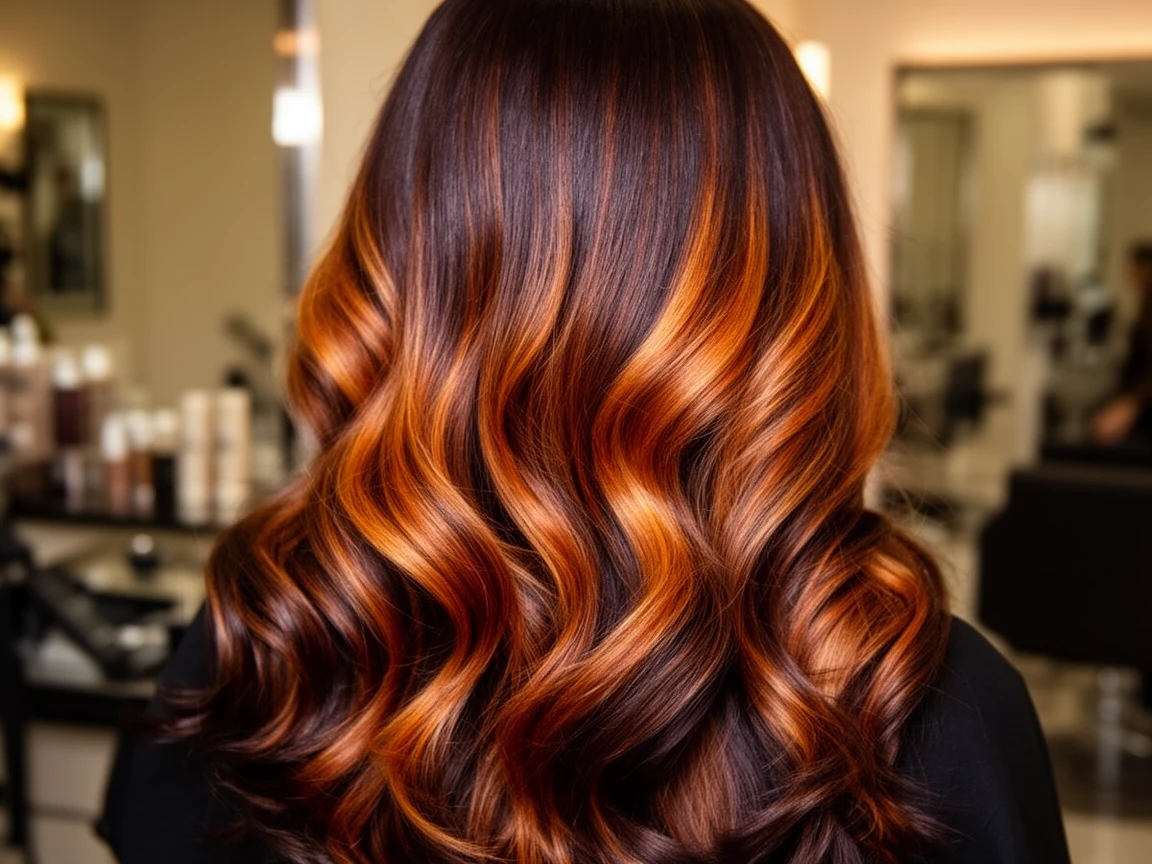
Balayage and highlights can add beautiful dimension to Deep Autumn hair—but only if done right. The key is maintaining warmth and not going too light or too cool.
Best Balayage Colors for Deep Autumn
Rich Copper Balayage (Most Flattering)
Base: Level 3-4 dark brown or auburn
Highlights: Level 6-7 copper or bright auburn
Effect: Adds warmth and dimension without lightening too much
What to tell your stylist: "I want copper balayage, keeping my natural depth. Place the highlights around my face and mid-lengths, not at the roots. Use warm, copper tones—no golden or honey tones."
Caramel Balayage (Subtle Dimension)
Base: Level 4-5 chocolate brown or chestnut
Highlights: Level 6-7 warm caramel or bronze
Effect: Sun-kissed warmth, very natural-looking
What to tell your stylist: "I want subtle caramel balayage with warm, bronze tones. Keep it natural—just a hint of lightness, focused on the ends and a few face-framing pieces."
Auburn Highlights (Traditional Dimension)
Base: Level 3-4 dark brown
Highlights: Level 5-6 auburn or light copper
Effect: Adds red tones to brown hair for multidimensional warmth
What to tell your stylist: "I want traditional foil highlights in auburn, staying within 2 levels of my base. I want them blended throughout for all-over dimension, not chunky pieces."
Mahogany Lowlights (For Added Depth)
Base: Level 4-5 auburn or light brown
Lowlights: Level 3-4 dark mahogany or auburn brown
Effect: Adds depth and richness to lighter bases
What to tell your stylist: "I want mahogany lowlights to add depth. Keep them warm-toned with red undertones. Place them underneath and at the roots for a shadow effect."
Placement & Technique Tips
Best for Deep Autumn
- • Face-framing balayage (brightens face)
- • Partial balayage (top section only)
- • Money piece highlights (front sections)
- • Subtle all-over highlights (low density)
- • Deep root shadow with lighter ends
Avoid These
- • Chunky highlights (too harsh)
- • Blonde balayage (too light, often cool)
- • All-over lightening (loses depth)
- • Ombré that goes too light at ends
- • Cool-toned highlights (ash, beige)
💰 Budget Tip: Partial vs. Full
Full balayage costs $200-400 and can look overwhelming on Deep Autumn. Instead, ask for "partial balayage" or "half-head highlights" focusing on the top section and face-framing areas. It costs $100-250, looks more natural, and you'll need touch-ups less frequently (every 3-4 months vs. 6-8 weeks).
Hair Colors Deep Autumn Should Avoid
These colors will clash with your warm undertones, wash out your complexion, or simply look artificial against your natural coloring.
Ash Tones (Any Level)
Ash blonde, ash brown, ash anything—these cool, grayish tones are Deep Autumn's worst enemy. They make your skin look muddy or sallow and create an unflattering contrast with your warm undertones. If a shade has "ash" in the name or the letter "A" in the code, run away.
Platinum Blonde
Platinum is both too light and too cool for Deep Autumn. It creates harsh contrast, requires constant maintenance, and ages most Deep Autumns significantly. Even "warm" platinum leans cool. Save this look for Winters and Light Summers.
Cool Black / Blue-Black
While Deep Autumn can go dark, cool black (level 1) with blue undertones is too harsh. It lacks the warmth you need and can look severe or artificial. If going very dark, choose dark brown with red undertones (level 2-3) instead.
Cool Burgundy / Wine Red
Not all reds work for Deep Autumn. Cool burgundy and wine shades have blue or purple undertones that clash with your warm coloring. If you want red, stick to auburn and copper—warm reds with orange undertones, not violet.
Mushroom Brown / Taupe
These trendy "greige" tones are essentially brown with gray added—the opposite of what Deep Autumn needs. They'll make you look washed out and tired. Your browns need to be rich and warm, not muted and cool.
Brassy Orange (Badly Done Warm Color)
This isn't technically a color to avoid—it's what happens when warm colors are done incorrectly. If your auburn or copper turns brassy orange, it's either box dye on previously colored hair, or toner wearing off bleached hair. See a professional to correct it to proper auburn.
🚨 The #1 Mistake Deep Autumns Make
Going ash brown to "tone down" brassiness. When warm hair color starts to fade, it can look brassy. The solution is not ash toner—that will turn it muddy. Instead, use a warm-toned gloss or demi-permanent in your target shade to refresh the color while maintaining warmth.
At-Home vs. Salon: Dyeing Tips for Deep Autumn
Should you DIY your Deep Autumn hair color or see a professional? Here's the honest breakdown.
When to DIY (At-Home Dyeing)
- • You're going darker or staying the same level
- • You want all-over single-process color
- • You're covering gray hair
- • Your hair is virgin (never colored) or one consistent color
- • You want to refresh faded color
- • You're comfortable with slight color variation
- • Budget is limited ($10-30 vs. $80-200)
When to See a Salon
- • You want highlights, balayage, or dimension
- • You're lightening more than 1-2 levels
- • Your hair is previously colored (especially dark to light)
- • You have very dark hair and want auburn/copper
- • You're correcting a color mistake
- • You want a complex, multidimensional color
- • Your hair is damaged or fragile
Best At-Home Dye Brands for Deep Autumn
L'Oréal Paris Superior Preference
Best for: Rich, salon-quality color with good gray coverage
Deep Autumn shades: 5RB (Medium Reddish Brown), 4R (Dark Auburn), 6R (Light Auburn)
Price: ~$10-12
Pros: Fade-resistant, rich color payoff, good for covering gray
Cons: Can be slightly darker than expected
Madison Reed
Best for: Clean ingredients, accurate color, and natural-looking results
Deep Autumn shades: Lucca (Medium Ash Brown with red), Reggio Emilia (Chestnut Brown), Firenze (Auburn)
Price: ~$30
Pros: No ammonia, PPD-free, color comes out as expected, excellent gray coverage
Cons: More expensive, online ordering only
Garnier Nutrisse
Best for: Budget-friendly, nourishing formula
Deep Autumn shades: 56 (Medium Burgundy), 50 (Medium Natural Brown), 643 (Light Natural Copper)
Price: ~$7-9
Pros: Conditioning formula, affordable, widely available
Cons: Color can be less predictable on previously colored hair
Clairol Natural Instincts
Best for: Semi-permanent color, low commitment
Deep Autumn shades: 6R (Light Auburn), 5 (Medium Brown), 4R (Dark Auburn)
Price: ~$9-11
Pros: No ammonia, lasts 28 washes, great for trying a new shade
Cons: Won't cover stubborn gray, fades faster than permanent
At-Home Dyeing Tips for Deep Autumn
Strand Test First
Always do a strand test 48 hours before full application. Cut a small hidden section, apply dye, and check the result. This is especially important if you have previously colored hair.
Don't Wash Before Dyeing
Apply box dye to dry, unwashed hair (1-2 days since last wash). Natural oils protect your scalp and help the color process evenly.
Section Your Hair
Divide hair into 4 sections (left front, right front, left back, right back). Apply dye systematically to each section, starting at the roots and working down. This ensures even coverage.
Buy Two Boxes
If your hair is past shoulder length or very thick, buy two boxes. Running out mid-application leads to uneven color. You can return unopened boxes if you don't need them.
Follow Timing Exactly
Set a timer for the recommended processing time. Leaving dye on longer won't make it "more vibrant"—it can damage hair or result in overly dark color. For auburn/red, don't go over 30-35 minutes.
Use the Included Conditioner
Most box dyes include color-sealing conditioner. Use it! It helps lock in color and adds shine. Follow up with deep conditioning weekly.
What to Tell Your Stylist (Salon Coloring)
Communication is key to getting the color you want. Here's exactly what to say:
If you want all-over color:
"I'm a Deep Autumn and need to stick with warm tones. I want [specific shade from this guide] at level [3-6]. Please use a warm-based color—no ash or cool tones. I'd prefer demi-permanent if possible for less damage. Can you show me the formula before we start?"
If you want balayage/highlights:
"I want [copper/caramel/auburn] balayage with face-framing highlights. My undertones are warm, so I need warm highlight shades—no gold or beige tones. I want subtle dimension, not dramatic lightening. Please keep me within 2 levels of my base color."
If you're covering gray:
"I need to cover [XX%] gray with warm-toned color. I'm a Deep Autumn, so cool shades make my skin look dull. I want [specific warm shade]. Will this formula provide full gray coverage? How often will I need to touch up?"
🎨 Bring Visual References
Bring at least 3 photos showing your desired color in different lighting (indoor, outdoor, flash). Include photos of celebrities from the section above or save the hair color palette from this article on your phone. Stylists are visual—"rich auburn" means different things to different people.
Maintaining Your Deep Autumn Hair Color
Deep Autumn colors—especially auburn and copper—are notorious for fading quickly. Here's how to keep your color vibrant and rich between salon visits.
Essential Maintenance Products
Color-Safe Shampoo for Red/Auburn Hair
Regular shampoo strips red pigment faster than any other color. Invest in sulfate-free shampoo specifically for reds.
Recommendations: Joico Color Infuse Red Shampoo, Redken Color Extend Brownlights, Pureology Reviving Red Shampoo, Overtone Ginger Coloring Shampoo
Color-Depositing Conditioner
These conditioners add pigment back into your hair while conditioning, extending time between dye jobs.
Recommendations: Overtone Ginger Deep Treatment, John Frieda Radiant Red Color Depositing Conditioner, Celeb Luxury Gem Lites Colorwash in Burnt Sienna, Kristin Ess Rose Gold Temporary Tint
UV Protection Spray
Sun exposure is the #1 cause of red hair fading. UV protection is non-negotiable if you want vibrant color.
Recommendations: Sun Bum Beach Formula Hair Protect Spray, Kenra Platinum Color Charge UV Shield, Aveda Sun Care Protective Hair Veil
Gloss Treatment
Use a warm-toned gloss every 4-6 weeks to refresh color, add shine, and blend regrowth.
Recommendations: dpHUE Gloss+ in Copper, Rita Hazan Weekly Remedy Treatment, Redken Shades EQ Gloss (salon), Kristin Ess Gloss Temporary Tint
Do These
- • Wash hair in cool/lukewarm water (hot water opens cuticle and releases color)
- • Wash 2-3x per week maximum (use dry shampoo between washes)
- • Apply leave-in conditioner to ends daily
- • Deep condition weekly
- • Sleep on silk pillowcase to reduce friction and fading
- • Rinse with cool water after conditioning to seal cuticle
- • Use color-depositing conditioner weekly
- • Protect hair from sun with hats or UV spray
Avoid These
- • Washing hair daily (strips color rapidly)
- • Hot water when washing (opens cuticle, releases pigment)
- • Chlorine exposure (turns auburn green or brassy)
- • Excessive heat styling without protectant
- • Purple/blue toning products (these are for cool tones)
- • Clarifying shampoo (strips color completely)
- • Extended sun exposure without protection
- • Sulfate-containing shampoos
Touch-Up Schedule
Auburn/Copper Hair
- • Root touch-up: Every 4-6 weeks
- • Full color refresh: Every 6-8 weeks
- • Gloss treatment: Every 4 weeks
- • At-home color-depositing treatment: Weekly
Brown Hair (with warm tones)
- • Root touch-up: Every 6-8 weeks
- • Full color refresh: Every 8-10 weeks
- • Gloss treatment: Every 6 weeks
- • At-home color-depositing treatment: Bi-weekly
Balayage/Highlights
- • Root touch-up (if needed): Every 6-8 weeks
- • Highlight refresh: Every 3-4 months
- • Toning/Gloss: Every 6-8 weeks
- • At-home maintenance: As needed with color-depositing products
💡 Budget Hack: Root Touch-Up Stick
Between colorings, use a root touch-up stick or powder to hide gray regrowth. Try Rita Hazan Root Concealer Touch-Up Stick in Auburn or Dark Brown, or Style Edit Root Concealer. These temporary solutions buy you 1-2 extra weeks between salon visits, saving $50-100 per year.
Frequently Asked Questions
What's the difference between Deep Autumn and Dark Autumn hair colors?
Deep Autumn and Dark Autumn are similar seasons, but Deep Autumn has slightly more muted, rich tones while Dark Autumn is deeper and more dramatic. In hair color terms, Deep Autumn looks best in rich auburn, warm mahogany, and chocolate browns (levels 3-5), while Dark Autumn can go even darker (levels 2-3) with very deep auburn or near-black with warm undertones. Both should avoid cool tones and maintain warmth.
Can Deep Autumn dye their hair bright copper or should it be more subdued?
Deep Autumn can absolutely wear copper, but it should be rich copper (deep, warm, with some depth) rather than bright, light copper. Think copper penny or burnished copper—not new shiny penny. Level 5-6 rich copper works beautifully. If you want brighter copper, consider adding it as highlights on a darker base rather than all-over color to maintain the depth your coloring needs.
Will auburn hair make me look older?
No! When done right, auburn hair is incredibly youthful and flattering for Deep Autumn. What does age you is the wrong shade—cool ash tones, harsh black, or overly light blonde. Auburn brings warmth to your complexion, creates a soft contrast with your features, and looks natural on Deep Autumn coloring. The key is choosing the right level of auburn (not too bright, not too dark) and maintaining it properly so it doesn't fade to brassy orange.
How do I prevent my auburn hair from turning orange or brassy?
Brassiness happens when red pigment fades, leaving behind orange. Prevent it by: (1) Using sulfate-free shampoo for color-treated hair, (2) Washing in cool water, (3) Limiting sun exposure and using UV protection spray, (4) Using color-depositing conditioner weekly (Overtone Ginger or John Frieda Radiant Red), (5) Getting gloss treatments every 4-6 weeks, and (6) Touching up color before it gets too faded. If your auburn has already gone brassy, a salon gloss in your target auburn shade will fix it immediately.
I have a lot of gray hair. What's the best Deep Autumn color for coverage?
For gray coverage, permanent color is your best bet (demi-permanent may not fully cover). The best Deep Autumn shades for covering gray are: Rich auburn (level 5R)—vibrant enough to cover stubborn gray; Dark auburn brown (level 4RB)—provides full coverage with less dramatic color change; or Warm chocolate brown (level 4-5 with red undertones)—sophisticated and professional with excellent gray coverage. Avoid going too dark (level 3 or darker) as gray hair can resist very dark dyes. Touch up roots every 4-6 weeks for best coverage.
Can Deep Autumn have highlights if they have dark hair?
Yes! Highlights can add beautiful dimension to dark Deep Autumn hair. The key is keeping them warm-toned and not going too light. On dark hair (level 3-4), add copper or rich caramel highlights at level 6-7 maximum. Focus them around your face for a brightening effect, or do partial balayage for subtle dimension. Avoid blonde highlights, which will look too contrasted and require excessive bleaching. The goal is sun-kissed warmth, not dramatic lightening.