Hair Color That Keeps You LookingVibrant After 40
At 40, the first greys arrive and your old shade may not work anymore. Discover which shades complement your coloring — and which to avoid.
Forty is when hair color gets interesting. The first serious greys are arriving — maybe scattered, maybe concentrated at the temples. Your natural base may have shifted from the rich brunette or warm blonde of your twenties to something flatter, more ashy, less vibrant. The box dye that once looked fine now seems one-dimensional. This is the decade where strategic hair color makes the biggest difference — not covering up, but upgrading to something that works with how you look now.


3,000+
happy clients
What Happens to Hair Color in Your 40s
Forty is when hair color gets interesting. The first serious greys are arriving — maybe scattered, maybe concentrated at the temples. Your natural base may have shifted from the rich brunette or warm blonde of your twenties to something flatter, more ashy, less vibrant. The box dye that once looked fine now seems one-dimensional. This is the decade where strategic hair color makes the biggest difference — not covering up, but upgrading to something that works with how you look now.
Melanin production begins declining noticeably in your 40s. This is why natural hair color loses its richness even before grey fully takes over. A brunette at 40 often has a duller, ashier version of the brown she had at 25 — not grey exactly, but less vibrant. Natural blondes may notice their hair darkening or losing its golden quality. This underlying color shift is why the exact same dye shade can look different at 40 than it did at 30.
Grey hairs in your 40s tend to be coarser and more resistant to color than the rest of your hair. They also grow in unevenly — often thicker at the temples and hairline, creating a halo effect that draws attention. This means a one-size-fits-all approach to color often fails. The grey areas need different treatment than the rest of the hair, which is why dimensional techniques like highlights and lowlights work better in your 40s than flat all-over color.
Your skin is changing too. Subtle loss of warmth, slight changes in undertone, the first signs of less contrast between your features and your complexion. A hair color that matched your skin beautifully at 32 may now create either too much contrast (dark hair pulling harshly against softening skin) or too little (flat medium-brown hair blending into medium skin without enough definition). Recalibrating hair color to match your current skin — not your remembered skin — is the key move at 40.
What is the best hair color for women over 40?
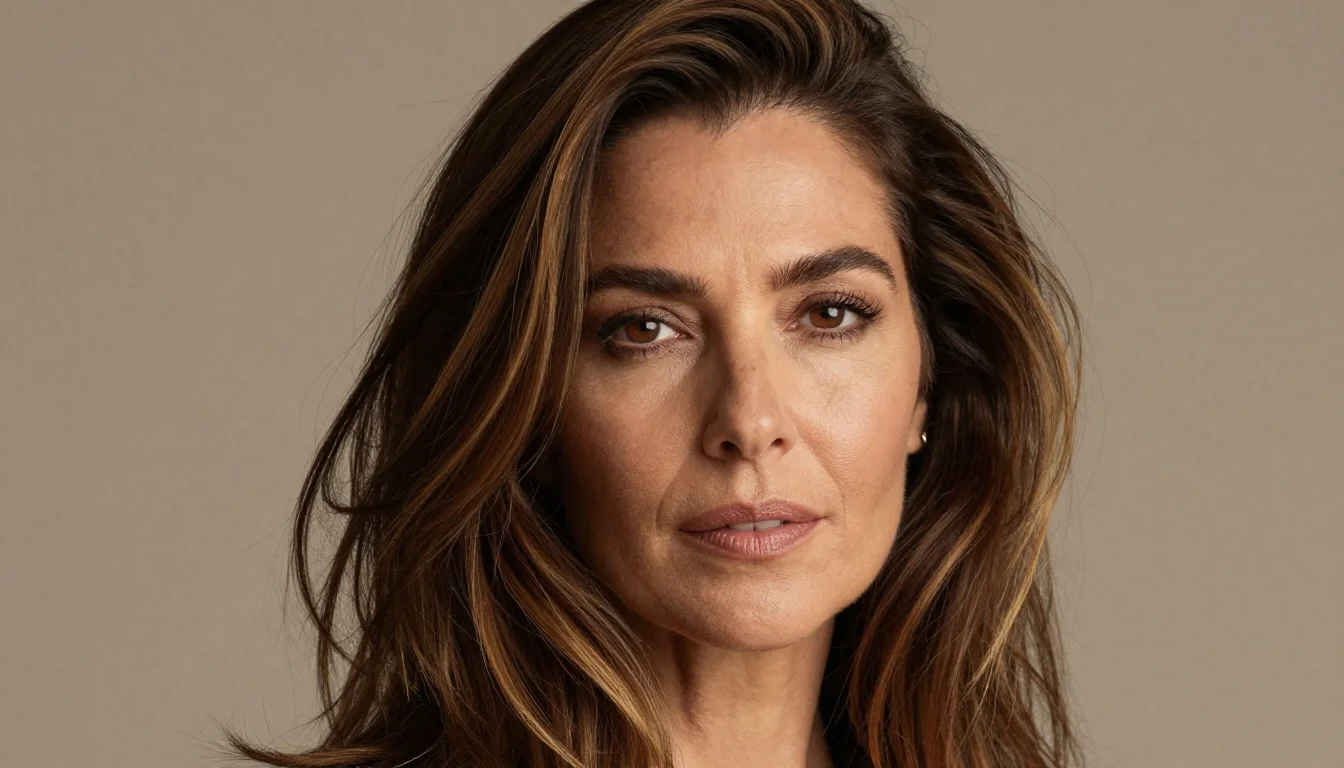
The most universally flattering approach at 40 is going one shade lighter and adding dimension through highlights or balayage rather than flat single-process color. Warm chocolate, honey caramel, and soft auburn are popular choices that brighten the face. Match the temperature of the hair to your skin's undertone — warm skin gets warm hair, cool skin gets cool hair.
The Best Hair Color Shades in Your 40s
Dimensional Brunettes
If you've been brunette your whole life, the 40s upgrade is adding dimension rather than changing your base. Warm chocolate with strategically placed caramel highlights creates depth and movement that flat single-process brown cannot. Rich chestnut brings warmth to faces that are losing natural rosiness. Espresso with golden balayage keeps the drama of dark hair while softening the frame around the face. This is about evolution, not revolution.
Strategic Blondes & Highlights
Blonde or near-blonde tones in your 40s serve a specific function: they reduce the visible contrast between your growing grey and your base color, extending time between appointments. Bronde — the blend of brown and blonde — is one of the most requested colors for women in their 40s because it's warm, dimensional, and the grey that grows in doesn't scream. Golden caramel highlights lift the complexion. Soft honey balayage ages better than all-over platinum.
Warm Reds & Auburn Tones
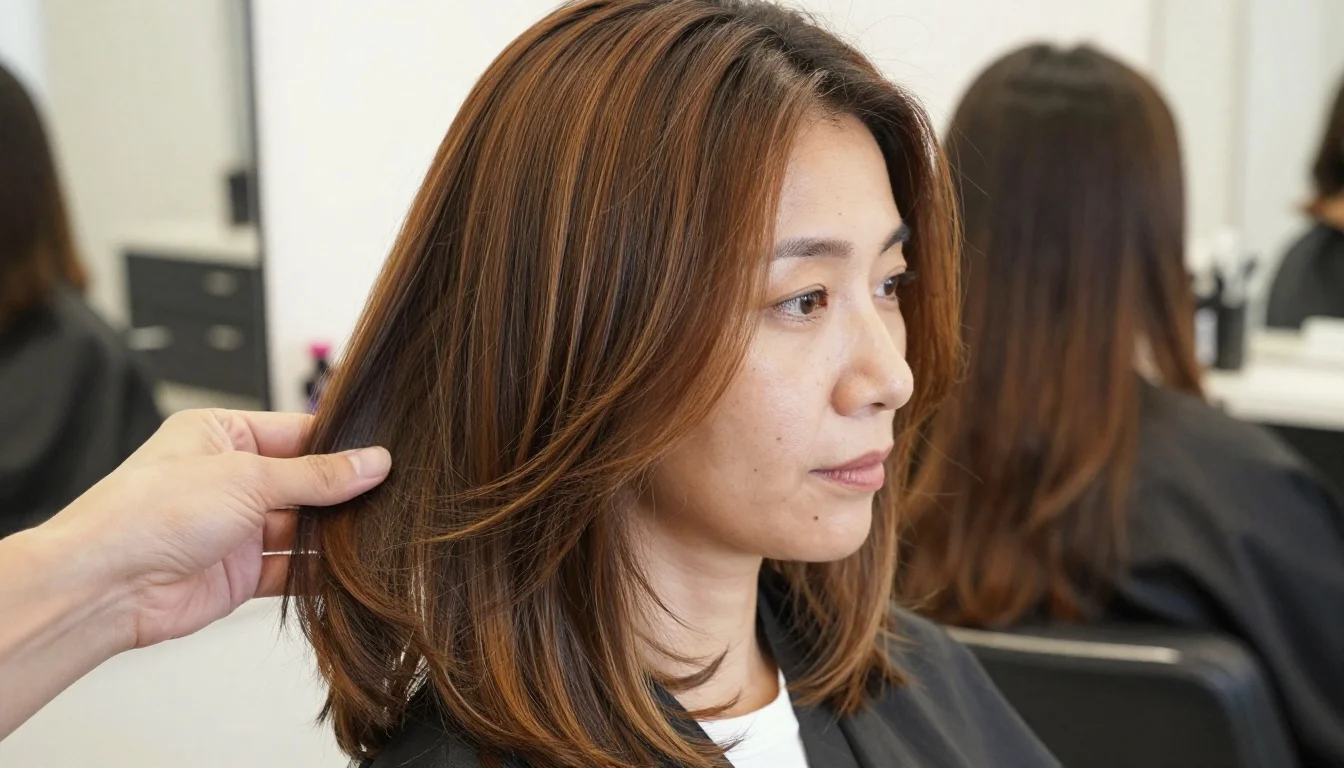
Red tones are the secret weapon for women in their 40s who want to add life to their face without going lighter. Rich auburn on warm-toned skin restores the vibrancy that natural color is losing. Warm cinnamon suits olive and golden complexions. Copper balayage — where warm red-gold is painted through the mid-lengths and ends — creates a sun-kissed warmth that looks natural rather than dyed. Mahogany adds depth for those who want richness without full-on red.
Grey-Blending Options
If your 40s grey is coming in fast and you're tired of the coverage treadmill, grey-blending techniques create a deliberate, polished look rather than a growing-it-out look. Silver-threaded highlights weave grey-toned pieces through your existing color so natural grey blends seamlessly. Warm beige root blend softens the line between grey roots and colored lengths. This approach means appointments every 10-12 weeks instead of every 3-4.

Ready to see yourself in chocolate with & chestnut?
Start my color analysisHow to Choose and Style Hair Color in Your 40s
Audit your current shade honestly
Stand in natural daylight — not bathroom lighting — and look at your roots where they meet your face. Is the contrast between your current color and your skin flattering or harsh? Does the color at your temples blend with incoming grey or fight it? Does the overall tone match your skin's current warmth? This honest daylight assessment often reveals that the shade you've been maintaining on autopilot no longer serves your face. Take a selfie in this light to show your colorist.
Ask for dimension over flat coverage
Tell your colorist you want dimension rather than one uniform shade. Highlights, lowlights, balayage, or a combination create the kind of multi-tonal effect that looks natural on 40s hair. This also means your grow-out looks intentional rather than neglected. The initial appointment costs more than single-process, but you'll go 8-12 weeks between visits instead of 3-4, often saving money and time overall.
Use demi-permanent for grey blending
If your grey is still under 30-40%, demi-permanent color is often a better choice than permanent dye. It fades gradually rather than growing out with a hard line. It covers grey softly — blending rather than masking. And it's far less damaging to hair that's already becoming more fragile. The result looks more natural and the maintenance cycle is more forgiving. Switch to permanent only when grey exceeds 50% and you want full coverage.
Protect your investment at home
Color-treated hair in your 40s needs more care than it did in your 30s because the hair shaft is more porous and holds onto product differently. Wash with sulfate-free shampoo every other day rather than daily. Use a color-depositing mask in your shade family once a week to refresh vibrancy between appointments. Apply a heat protectant before every blow-dry. These habits extend salon color by 2-3 weeks and keep hair looking healthy, which matters more for color impact than the shade itself.
Hair Color Pitfalls in Your 40s
The exact shade you wore at 25
Clinging to the identical color from two decades ago almost always looks off now. Your skin has changed in warmth, vibrancy, and contrast. The espresso or golden blonde that was perfect then now either washes you out or looks too harsh. Allow yourself to evolve — usually one to two shades lighter and slightly warmer than your original natural color is the sweet spot.
Box dye in a single flat shade
Drugstore box dye deposits one uniform color from root to tip. On hair in your 40s — which has varying porosity, some grey, and different textures throughout — this creates an unnatural, flat finish. Worse, the grey areas often grab color differently, turning brassy or overly dark. Professional dimensional color or at minimum a demi-permanent with face-framing pieces will always look more natural.
Cool ash tones on warm skin
Ash-brown and cool blonde shades on warm-toned skin (golden, peachy, or olive undertones) create a washed-out, sickly disconnect. As your natural warmth decreases in your 40s, adding cool-toned hair on top of warming skin creates an even bigger mismatch. If you're warm, stay warm — golden, caramel, copper, and honey will always serve you better than ash, mushroom, or cool taupe.
Ultra-light platinum all-over
Full platinum requires aggressive bleaching that damages already-aging hair. The maintenance is brutal — roots every two to three weeks, toning sessions, bond treatments. And against 40s skin that's lost some of its natural contrast, all-over white-blonde can look harsh rather than fresh. If you love light hair, champagne blonde or warm highlights on a natural base achieves brightness without the damage.
Stop guessing — preview every shade on you
See myself in my shadesHair Color Upgrades for Your 40s
Trading the autopilot color choices that no longer serve you for ones that work with your current complexion.
One flat shade looks increasingly artificial as hair changes in your 40s. Dimension creates movement and blends grey growth naturally.
Full coverage is a treadmill that accelerates as grey increases. Blending techniques extend appointments to 8-12 weeks and look more natural.
Espresso against softening 40s skin looks harsh. A lighter base with warm highlights brightens the face and creates the dimension that single-process lacks.
Warm tones flatter 40s skin better than cool. Balayage with a root shadow means no hard grow-out line and warmer, more natural-looking brightness.
Professional warm reds fade gracefully into golden tones. Box reds fade to brassy orange and deposit unevenly on grey-resistant areas.
This switch alone extends your color life by 2-3 weeks and keeps 40s hair looking healthier and more vibrant between appointments.
Your Seasonal Palette Guides Your Best Hair Color
Your seasonal color palette determines the temperature and depth of hair color that will look most harmonious. In your 40s, the right seasonal match becomes even more important as natural contrast shifts.
Warm Autumn
Learn moreIf your skin has golden or warm-olive tones, your eyes are warm brown, hazel, or green-gold, and you look best in earthy warm colors, Warm Autumn is your palette. Your best hair colors are warm and rich: golden brown, auburn, copper, and warm chestnut. Avoid anything cool or ashy — it will clash with your inherent warmth.
Light Summer
Learn moreIf your skin is cool-pink or neutral with a soft quality, your eyes are light blue, grey, or green, and you suit muted, cool colors, Light Summer fits. Your hair color sweet spot is soft ash-blonde, cool mushroom brown, or cool champagne highlights. Warm golden tones will look disconnected from your naturally cool coloring.
Bright Spring
Learn moreIf your skin is clear and warm, your eyes are vivid blue or green, and you can carry bright colors well, Bright Spring may be your season. Your hair color should be warm and clear: golden blonde, warm honey, or clear warm brown. Muted or ashy tones will dull the natural clarity and brightness of your coloring.
Find Your Ideal Hair Color
The most flattering hair color for your 40s depends on your skin's current undertone, how your grey is growing in, and the level of contrast that still looks natural on your face. A personalized color analysis identifies your seasonal palette and gives you a specific hair color roadmap — the temperature, depth, and technique that will make your 40s coloring look vibrant and intentional rather than faded.

Related Guides for Hair Color for Women Over 40
Explore more personalized color advice based on your features.
Want to see these colors on you? Virtual Hair Color Try-On — free to try.
Frequently Asked Questions About Hair Color for Women Over 40
What is the best hair color for women over 40?
The most universally flattering approach at 40 is going one shade lighter and adding dimension through highlights or balayage rather than flat single-process color. Warm chocolate, honey caramel, and soft auburn are popular choices that brighten the face. Match the temperature of the hair to your skin's undertone — warm skin gets warm hair, cool skin gets cool hair.
Should I go lighter or darker at 40?
Lighter is almost always more flattering. Lighter hair softens the face, extends time between grey touch-ups, and creates easier grow-out than dark color. This doesn't mean going blonde — it means lightening your current shade by one to two levels and adding warm highlights. A warm chestnut instead of dark espresso, or honey caramel highlights through a brown base.
How do I cover grey hair in my 40s?
If grey is under 40%, demi-permanent color blends it softly without a hard grow-out line. If grey is over 40%, permanent color with dimensional highlights prevents the flat, wiglike look of single-process coverage. Grey-blending highlights are the most natural-looking option — they weave grey-toned pieces through your color so natural grey blends in rather than standing out.
Is balayage good for women over 40?
Balayage is one of the best techniques for women over 40 because the hand-painted highlights create a natural gradient with no hard line at the root. This means grey grows in blended rather than creating a visible stripe. The grow-out period extends to 10-12 weeks, reducing salon frequency. And the dimensional effect looks more natural than all-over color on 40s hair.
How often should I color my hair in my 40s?
It depends on your technique. Single-process permanent color requires touch-ups every 3-4 weeks as grey grows in. Demi-permanent fades over 4-6 weeks with no hard line. Balayage and highlights last 8-12 weeks because the grow-out is intentionally soft. Choosing a lower-maintenance technique saves time and money and is gentler on hair that's becoming more fragile.
Should I stop dyeing my hair at 40?
That's a personal choice, not a rule. Some women embrace grey beautifully at 40. Others find that strategic color refreshes their entire look. If you want to stop, do it with intention — ask your colorist for transition highlights that blur the line between dyed and natural. If you want to continue, shift to dimensional techniques that evolve with your grey rather than fighting it.