Bronzer forFair Skin
Fair skin sits in an interesting sweet spot. Discover how to find the colors that actually flatter your coloring.
Fair skin sits in an interesting sweet spot — light enough that bronzer shows up clearly, but warm enough to carry a genuine sun-kissed look. You have more natural pigment to build on than very pale skin, which means warm peachy-brown bronzers can give you a believable glow. The challenge is restraint: fair skin telegraphs overdo-it mistakes faster than almost any other complexion, and the wrong shade can swing quickly from 'natural warmth' to 'orange stripe.'


3,000+
happy clients
Why Fair Skin Needs a Lighter-Touch Bronzer
Fair skin sits in an interesting sweet spot — light enough that bronzer shows up clearly, but warm enough to carry a genuine sun-kissed look. You have more natural pigment to build on than very pale skin, which means warm peachy-brown bronzers can give you a believable glow. The challenge is restraint: fair skin telegraphs overdo-it mistakes faster than almost any other complexion, and the wrong shade can swing quickly from 'natural warmth' to 'orange stripe.'
Fair skin — distinct from pale skin — has some natural warmth or neutral pigment in it. You may notice a slight peachy, golden, or neutral tone in your skin that pale skin lacks. This natural pigment means bronzer actually blends into your skin instead of sitting on top of it, giving you room for a more authentic-looking warmth. The key word, though, is "room" — not license to pile on rich, dark bronzers designed for tan or deep complexions.
The placement principle matters enormously with fair skin. Bronzer should go only where the sun naturally catches your face: the temples, across the tops of the cheekbones, and the very bridge of the nose. Avoid sweeping it across the entire face or dragging it down into the hollows of the cheeks — that creates a muddy, streaky result rather than a healthy warmth. A light diffused sweep across three sun-catching zones is far more flattering.
The streaky orange look almost always comes from two mistakes: using a bronzer that is too deep or too red-based, and applying too much product. For fair skin, look for bronzers described as 'peachy-brown,' 'warm nude bronze,' or 'light warm tan.' Tap off excess product from your brush before touching your face. One sheer layer, well blended, beats three heavy passes every time.
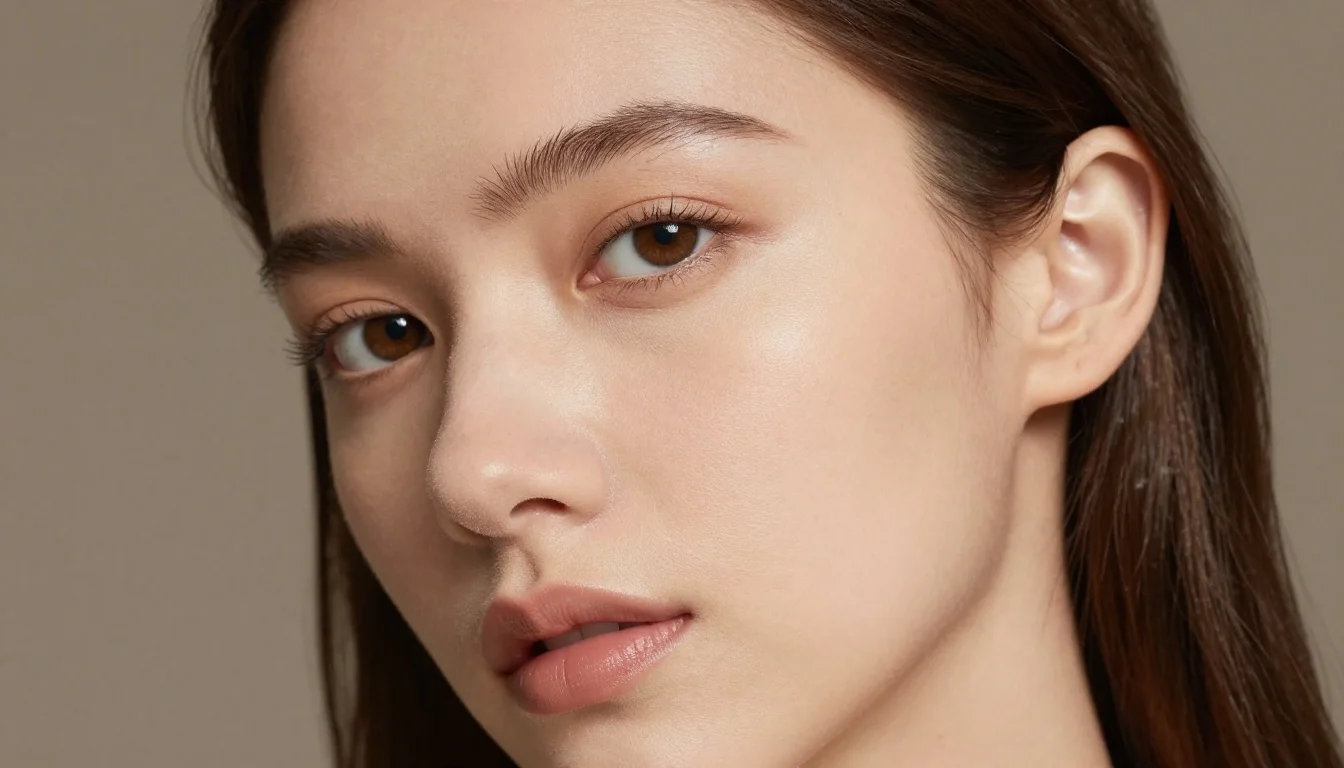
What is the best bronzer for very fair skin?
Look for bronzers labeled 'fair,' 'light,' or 'sheer' with a warm peachy-brown or golden undertone. Finely milled powder bronzers are easiest to control on fair skin because they build gradually. Cream bronzers in a warm peach-brown shade are excellent for a more natural look. Avoid anything labeled 'deep,' 'rich,' or 'intense,' as these are formulated with more pigment than fair skin can absorb believably.
Your Most Flattering Bronzer Shades
Warm Peachy-Brown
Warm peachy-brown is the gold standard everyday bronzer for fair skin. The peach undertone echoes the natural flush in light complexions, while the brown depth gives genuine warmth without tipping into orange. It reads as a believable sun-kissed result rather than an obvious cosmetic effect.
Sheer Satin Bronze
Sheer, light-reflecting bronzers give fair skin a luminous glow without heavy pigment. The buildable coverage means you can add warmth gradually and the satin finish mimics natural sun-warmed skin. Perfect for a no-makeup-makeup look that still has dimension.
Terracotta Light
For fair skin that leans warmer or golden, a light terracotta bronzer adds earthy warmth that harmonizes with peachy undertones. Choose a terracotta that lists brown or clay before orange in its pigment mix — these read as natural rather than artificial on lighter complexions.
Matte Warm Taupe
For definition-focused bronzing without shimmer, a matte warm taupe sculpts without adding an obvious metallic sheen. This is ideal for contouring the temples or lightly defining the cheekbones on fair skin — it creates shadow that reads as natural depth rather than a bronzed glow.

Ready to see yourself in peach bronze & nude brown?
Start my color analysisHow to Apply Bronzer on Fair Skin
Start Sheer and Build Slowly
Fair skin reveals excess bronzer immediately. Always tap your brush firmly against the side of the pot or your hand to remove excess product before applying — you want a dusting, not a full load. Apply in light, circular motions and step back to assess after each layer. Building slowly from sheer gives you control that over-application cannot undo.
Target Sun-Catching Zones Only
Apply bronzer only where the sun would naturally hit your face: the high temples near the hairline, across the tops of the cheekbones, and a gentle sweep along the very bridge of the nose. Avoid the apples of the cheeks (that's blush territory) and the under-cheek hollows (which can make the result look muddy on fair skin). Three targeted zones create warmth; all-over application creates a mask.
Use the Right Brush
A large, fluffy, dome-shaped brush is your best tool for a diffused, natural look on fair skin. Stiff or dense brushes deposit too much product at once. Fan brushes work brilliantly for a very sheer sweep across the nose bridge. For any sculpting or temple application, a tapered blending brush gives more precision without hard edges.
Pair with a Warm Blush for Balance
Bronzer alone on fair skin can look flat or one-dimensional. Layer a soft warm blush — peach, coral, or warm rose — on the apples of the cheeks and blend it up toward the cheekbone to meet the bronzer's edge. The combination creates natural-looking dimension. Keep both products sheer; the layered effect reads as genuine warmth rather than heavy makeup.
Bronzer Shades That Tend to Clash with Fair Skin
Deep, richly pigmented bronzers designed for tan skin
Bronzers formulated for medium-to-tan complexions have far too much pigment for fair skin — even a light application will look dark and unblended. The contrast between the bronzer and your natural skin tone is too stark to look believable. Stick to shades described as 'light' or 'fair' within any bronzer line.
Orange-cast bronzers
Orange undertones in a bronzer are much more obvious on fair skin than on deeper complexions. Without enough brown pigment to ground it, an orange-based bronzer will make fair skin look like a spray tan gone wrong. Always swatch bronzers in natural light before committing — if it looks orange on the back of your hand, it will look orange on your face.
Heavy glitter or chunky shimmer bronzers
Chunky glitter particles sit on top of fair skin rather than blending into it, creating an obvious disco-ball effect rather than a natural glow. On light skin, every particle of shimmer is visible. Choose bronzers with finely milled shimmer or a satin finish if you want luminosity — the glow will be more subtle and elegant.
Stop guessing — preview every shade on you
See myself in my shadesBronzer Shade Swaps for Fair Skin
Subtle changes in pigment and undertone make all the difference. Here is what to reach for instead.
Bronzer ranges designed for light skin have calibrated pigment levels that build gradually — you can layer up, but you cannot undo over-application.
Warm taupe creates believable shadow on fair skin without the grey cast that cool contour shades can produce — which on light skin reads as a bruise rather than bone structure.
Cream formulas melt into fair skin naturally, creating a warmth that looks like your own skin rather than a product sitting on top.
Satin shimmer reflects light elegantly without chunky particles that catch in fine texture on fair skin.
Fair skin requires the lightest touch on the nose — a tiny amount of warmth on the bridge is all you need to create natural definition.
Layering products gives you more control over depth than switching to a dramatically darker shade, which risks the dreaded orange-stripe effect on fair skin.
Which Palette Might Be Yours?
Fair skin appears across several color analysis seasons, particularly in the lighter, warmer palettes. Your ideal bronzer will align with your seasonal undertone — here are the three most common seasonal homes for fair skin.
Warm Spring
Learn moreIf your fair skin has a distinctly peachy or golden warmth and you light up in ivory and warm camel tones, you may be a Warm Spring. Warm peachy-brown bronzers and golden sheer bronzers are your most flattering options.
Light Spring
Learn moreLight Springs have very fair, delicate skin with a warm or peachy quality. Light golden bronze and sheer satin bronzers work beautifully — the emphasis is on luminosity rather than depth.
Soft Autumn
Learn moreSome fair skin falls into Soft Autumn — a warm, muted palette. If your fair skin has a peachy-tan quality and you look best in dusty, earthy tones, a light terracotta bronzer gives you the most believable warmth.
Find Your Exact Colors
Knowing you have fair skin is a strong starting point — but the perfect bronzer also depends on whether your undertone is peachy-warm, golden, or neutral, and how fair you sit on the spectrum. Palette Hunt's AI color analysis identifies your precise undertone and seasonal palette, so you can choose bronzers with complete confidence and stop second-guessing every swatch.

Related Guides for Bronzer for Fair Skin
Explore more personalized color advice based on your features.
Want to see these colors on you? What Colors Look Good on Me — free to try.
Frequently Asked Questions About Bronzer for Fair Skin
What is the best bronzer for very fair skin?
Look for bronzers labeled 'fair,' 'light,' or 'sheer' with a warm peachy-brown or golden undertone. Finely milled powder bronzers are easiest to control on fair skin because they build gradually. Cream bronzers in a warm peach-brown shade are excellent for a more natural look. Avoid anything labeled 'deep,' 'rich,' or 'intense,' as these are formulated with more pigment than fair skin can absorb believably.
Why does bronzer look orange on my fair skin?
Orange-looking bronzer on fair skin is almost always caused by a bronzer with too much red or orange pigment and not enough brown to ground it. The contrast with light skin makes even a small amount of orange stand out. Switch to a bronzer described as 'peach-brown,' 'warm taupe,' or 'golden brown' — these have balanced pigments that read as natural warmth rather than artificial color.
Can I use bronzer to contour if I have fair skin?
Yes — use a matte warm taupe bronzer for contouring fair skin. A matte finish avoids the sheen that shimmer bronzers add, and a warm taupe shade creates believable shadow without the grey cast that cool contour powders can leave on light skin. Apply it only to the temples, lightly along the perimeter of the forehead, and just beneath the cheekbones — and blend thoroughly.
Should fair skin use powder or cream bronzer?
Both work — they just have different finishes. Powder bronzer is easier for beginners to control and blends well over full-coverage foundation. Cream bronzer gives a more skin-like, natural result and works beautifully over moisturizer or tinted moisturizer on low-makeup days. Liquid bronzer is also excellent for a seamless flush of warmth. Whatever formula you choose, start with less than you think you need.
How many shades darker should my bronzer be than my fair skin?
For fair skin, one to one-and-a-half shades deeper than your natural tone is the sweet spot for a natural result. Two shades deeper is generally the maximum before the contrast becomes obviously cosmetic. Unlike deeper skin tones where bronzer needs to be further from the base to show up, fair skin telegraphs depth clearly — restraint always wins.
Do I need blush if I already use bronzer on fair skin?
Yes — bronzer adds warmth and depth across the face, but blush provides the specific cheek flush that looks like a natural flush of color. On fair skin in particular, blush is important because the light complexion makes the absence of cheek color very visible. A soft peach or warm rose blush applied to the apples of the cheeks and blended up toward the bronzer on the cheekbones creates natural-looking, multi-dimensional color that bronzer alone cannot replicate.