Autumn Colors forWarm Undertones
Autumn is the season built for warm undertones. The fall palette — burnt orange, terracotta, deep rust, forest green, warm camel, rich burgundy — shares the same golden, peachy temperature as your skin. Where other people have to hunt for autumn shades that do not wash them out, you can lean in fully. The season amplifies your natural warmth rather than fighting it. Knowing exactly which autumn shades hit hardest for warm skin turns a good fall wardrobe into a great one.
Discover Your ColorsWhy Warm Undertones and Autumn Are a Natural Match
Undertone describes the underlying warmth or coolness in your skin — the golden, peachy, or yellow-warm quality that shows through regardless of how light or deep your complexion is. When you wear a color that shares your undertone temperature, both skin and clothing look more vibrant. When you wear a color at the opposite temperature, both can look dull.
Autumn's palette is built entirely on warmth. Burnt orange draws its pigment from iron-rich earth. Terracotta is fired clay. Camel is sun-bleached wheat. Forest green leans yellow-warm rather than blue-cool. Rich burgundy carries red-warm rather than blue-cool base. Every signature autumn shade has golden or orange warmth woven into it — the same golden warmth that exists in your skin.
The result: autumn is one of the few seasons where you can go deeper and more saturated than you might dare at other times of year. The season's intensity matches your undertone's warmth, which means rich, full-bodied shades amplify your glow instead of overwhelming it. A cool-undertoned person in vivid terracotta can look orange; you look radiant.
Autumn Colors That Work Best for Warm Undertones for Warm Undertones
Terracotta and Burnt Orange
Terracotta and burnt orange are the quintessential autumn shades for warm undertones. Their orange-red warmth resonates directly with the golden and peachy undertone in your skin, creating a harmonious temperature match rather than a clash. Rust adds depth. Warm sienna is a more muted option that still carries the orange-warm signal. These shades make warm-toned skin look luminous — they pull out the golden quality and amplify it.
Forest Green and Warm Olive
Forest green — the yellow-warm version — is one of the most powerful autumn colors for warm undertones because it provides rich contrast without the cool temperature conflict. Green sits opposite red on the color wheel, so it makes warm-toned skin appear more vivid and defined. The key is warm forest green, not blue-based emerald or cool teal. Warm olive and moss green are more muted options that work especially well for golden and olive-warm skin tones.
Deep Cognac and Rich Burgundy
Cognac and burgundy bring autumn's depth to warm undertones without losing the warmth. Cognac is golden-brown with red richness — it mirrors the warm quality in your skin while adding evening sophistication. Burgundy, when it carries a red-warm rather than blue-cool base, flatters warm undertones beautifully. Mahogany and deep wine share the same warm-dark register. These are your best choices for autumn occasion dressing.
Warm Camel and Golden Tan
Warm neutrals in the camel-to-golden-tan range are foundational autumn shades for warm undertones. They share the skin's golden warmth, creating an elegant, sun-warmed harmony. The secret is choosing a camel with genuine golden warmth — not a greyish or pink-beige that sits closer to neutral or cool. Honey tan and warm oat work especially well as light layers. These shades let warm skin glow without the high contrast of deeper colors.
Ready to Find Your Best Colors?
Get Your Color AnalysisHow to Wear Autumn Colors With Warm Undertones
Go deeper and richer than you think
Warm undertones can carry saturation and depth that other undertones struggle with in autumn. Vivid terracotta, rich forest green, deep cognac — you can wear these at full intensity. Many warm-toned people underestimate how well they handle autumn richness. If a color feels almost too warm or vibrant on the hanger, try it on; the resonance with your undertone usually makes it look better on your skin than it did in isolation.
Use contrast strategically for definition
Where warm undertones need to be careful is depth contrast. Muted, mid-value autumn shades at a similar lightness to your skin will blend rather than define. Use deep forest green or rich cognac near the face when you want definition. Use lighter camel and warm oat for layers that are farther from the face. Build outfits with a clear light-to-dark contrast rather than staying in one mid-value range throughout.
Build around the three autumn anchors
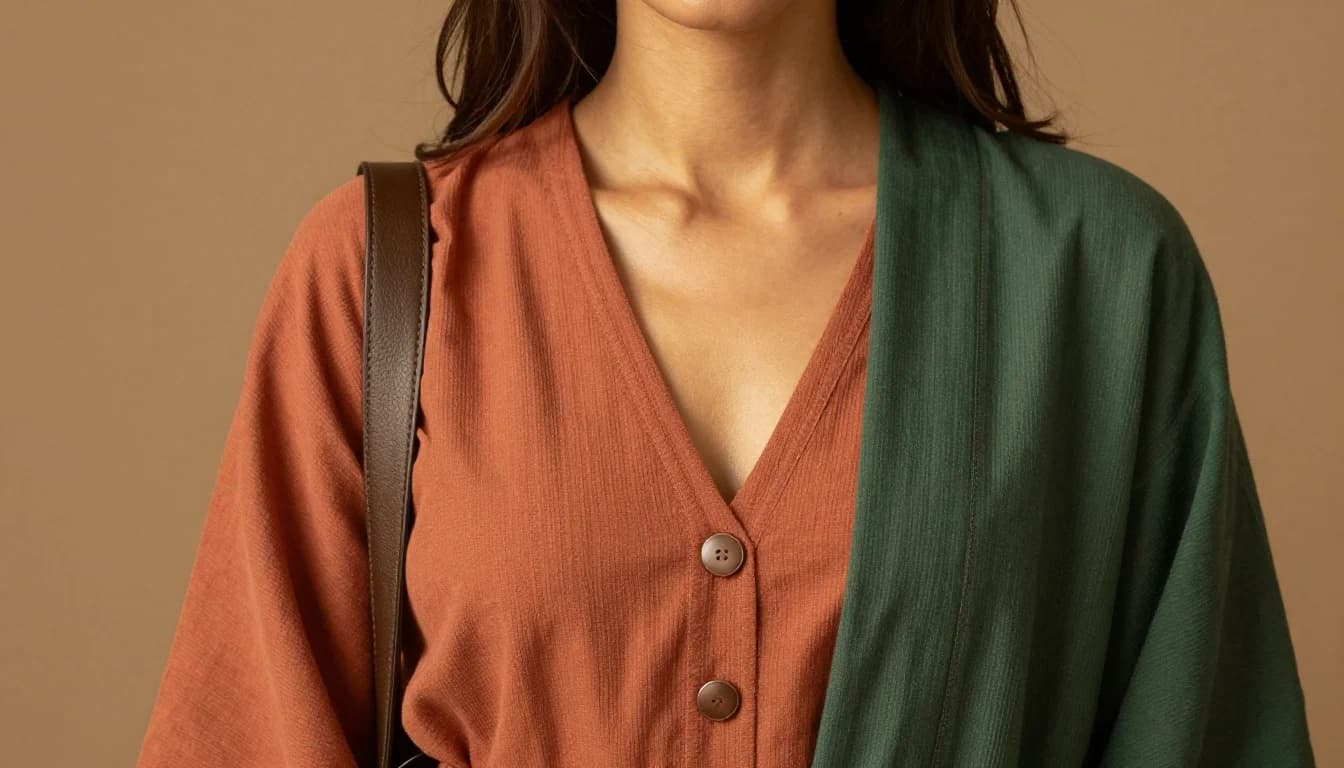
Three colors anchor a warm-undertone autumn wardrobe: deep forest green, rich cognac, and warm camel. These work as coat, trouser, and knitwear foundations that pair effortlessly with each other and with terracotta and rust accents. Once you have these three in quality fabrics — a camel coat, a cognac leather bag or belt, a forest green knit — the rest of the wardrobe builds around them naturally.
Metals and accessories in gold and bronze
Warm undertones look best with gold and bronze metals. In autumn, copper jewelry adds a rich warmth that amplifies the season and the skin temperature simultaneously. Rose gold works if it leans warm. Silver and platinum look disconnected from both the autumn palette and warm undertones — they introduce a cool note that sits at odds with the season's warmth. Stick to gold, bronze, and copper for autumn accessories.
Autumn Shades That Can Flatten Warm Undertones
Very muted, olive-brown tones at a similar value to your skin
Warm undertones can run into a specific problem with muted, olive-brown autumn shades when those shades are close in lightness to your skin tone. When the color value matches the skin value, there is not enough contrast to define where the outfit ends and your complexion begins. The result looks washed out and formless. Fix this by choosing a shade either noticeably darker or lighter than your skin, not one that sits at the same mid-range.
Cool-based burgundy and plum (blue-undertone)
Not all burgundies are created equal. Burgundy and plum with a distinctly blue-cool base — those that lean toward purple-cool rather than red-warm — can create a temperature conflict with warm undertones. Your skin reads warm; the fabric reads cool; the combination looks incongruent. Stick to burgundy that has red-warm depth, not blue-purple base.
Ash grey and cool taupe
While not technically "autumn" colors, ash grey and cool taupe often get mixed into autumn wardrobes as supposed neutrals. For warm undertones, these cool neutrals push the warmth in your skin toward an orange reading — your natural warmth looks sallow next to cool grey rather than golden. Swap them for warm oat, honey tan, or warm camel.
Icy or bright cool tones (bright cobalt, icy pink)
Cool, high-chroma shades like bright cobalt or icy pink are outside the autumn palette entirely, but they occasionally appear in fall collections. They directly clash with warm undertones — the cool temperature of the color pulls the warmth in your skin toward a muddy or sallow appearance. Save these for brands and looks that are not playing in the autumn register.
Stop Guessing, Start Wearing Your Colors
Discover Your PaletteAutumn Color Swaps for Warm Undertones
Replacing shades that flatten warm skin with ones that make it glow.
Cool grey neutralizes the warmth in your undertone. Warm camel resonates with it, creating a cohesive golden-warm look from skin to coat.
Mid-value muted olive merges with warm skin at the same lightness. Deep forest green provides defining contrast. Terracotta amplifies the warmth. Both outperform a same-value muddy middle.
Cool burgundy introduces a blue-temperature note that conflicts with warm undertones. Warm burgundy keeps the richness while staying in the same warm register as your skin.
Cool taupe makes warm undertones look slightly sallow. Warm camel and honey tan share the skin's warmth and create a seamless, elegant base for any autumn top.
Dusty rose and mauve lean cool-pink, which can make warm undertones look peachy in a flat way. Cognac and rust share the red-warm base that makes warm skin look vibrant for evening occasions.
Bright cobalt is cool and high-contrast in a way that clashes with warm undertones. Warm hunter green provides the contrast with correct temperature alignment. Deep rust is the autumn essential layer.
Which Palette Might Be Yours?
Warm undertones appear across three color seasons in the 12-season analysis system. Which one fits depends on whether your warmth runs saturated and golden, deep and rich, or fresh and light.
Warm Autumn
Learn moreIf your skin has distinctly golden or peachy undertones, your hair is warm brown, auburn, or golden, and your overall coloring has earthy depth and richness, Warm Autumn may be your season. This palette is the most saturated autumn type — vivid terracotta, rich warm olive, golden yellow, deep cognac. You can handle the full strength of autumn color without it overpowering your natural warmth.
Deep Autumn
Learn moreIf your warm undertones come with deep, rich coloring — dark hair, deep brown or dark hazel eyes, medium-to-deep skin — Deep Autumn may fit better. This palette shares the autumn warmth but runs darker and more dramatic: deep chocolate brown, rich burgundy, dark forest green, deep camel. The warmth is present but the depth and contrast are higher than in Warm Autumn.
Warm Spring
Learn moreIf your warm undertones feel light and fresh rather than deep and earthy — golden skin, light warm hair, bright eyes — Warm Spring may be your season rather than any Autumn type. Warm Spring shares the warm temperature but uses lighter, more saturated shades: warm coral, golden peach, bright warm yellow, clear camel. The warmth is the same; the value and saturation are lighter and more vivid.
Find Your Exact Autumn Palette
Warm undertones are a strong indicator of autumn or spring seasonal coloring, but the exact palette depends on your full coloring — depth, saturation, hair, eyes, and skin together. A personalised color analysis identifies which of the warm seasons fits you precisely and gives you a curated palette of exact shades. Instead of guessing which terracotta or how deep a forest green, you get a specific roadmap for autumn dressing that works every time.
Get Your Color AnalysisFrequently Asked Questions About Warm Undertones
Do autumn colors suit warm undertones?
Yes — autumn is one of the best seasons for warm undertones. The fall palette is built on warm, earthy shades: burnt orange, terracotta, rust, forest green, cognac, camel, and warm burgundy. These all share the golden or peachy temperature of warm undertones, creating a natural resonance. Warm-toned people can wear the full richness of autumn color without it clashing or looking harsh.
What autumn colors are best for golden skin undertones?
Terracotta, warm forest green, deep cognac, warm camel, and rich burgundy are the strongest autumn choices for golden skin undertones. Terracotta and burnt orange share the golden-orange pigment in warm skin. Forest green provides defining contrast. Cognac and camel harmonize with the skin's warmth without creating same-value blending. Rich burgundy adds depth with a warm red base.
Can warm undertones wear orange in autumn?
Yes — warm undertones handle burnt orange and terracotta exceptionally well. These shades share the orange-warm quality of the undertone, so they create resonance rather than clash. Vivid pumpkin-orange can be bolder, but it still works for warm undertones better than it does for cool or neutral skin. The earthy, burnished versions of orange — rust, terracotta, burnt sienna — are the strongest choices.
Should warm undertones wear camel in fall?
Deep, warm camel is one of the best autumn investments for warm undertones. It shares the skin's golden warmth, creating a cohesive warmth-on-warmth look that reads as elegant rather than blended. The key is a genuinely golden camel — not a greyish or pinkish beige — and enough depth to provide some contrast against the skin. A rich camel wool coat is a foundational autumn piece for warm-toned wardrobes.
What colors should warm undertones avoid in autumn?
Cool-based shades are the main ones to avoid: ash grey, cool taupe, cool burgundy (blue-plum base), and icy or bright cool tones. Also watch for very muted, olive-brown shades at the same lightness value as your skin — these create a blended, formless look without enough contrast. The fix is to choose autumn shades with clear depth or warmth rather than those sitting in an indeterminate cool-muted middle.
What jewelry metals work with warm undertones in autumn?
Gold, bronze, and copper are the best metals for warm undertones in autumn. These warm metals share the skin's temperature and amplify the season's richness. Copper is particularly powerful in fall — it harmonizes with terracotta, rust, and cognac simultaneously. Rose gold works if it leans warm. Silver and platinum create a cool note that sits at odds with both warm undertones and the autumn palette's warmth.