Bright Winter Hair Color: Best Shades, Dyes & Styling Ideas

Discover the most flattering hair colors for Bright Winter's cool, vivid coloring. From dramatic jet black to stunning platinum blonde, find your perfect shade with expert dyeing techniques and maintenance tips.
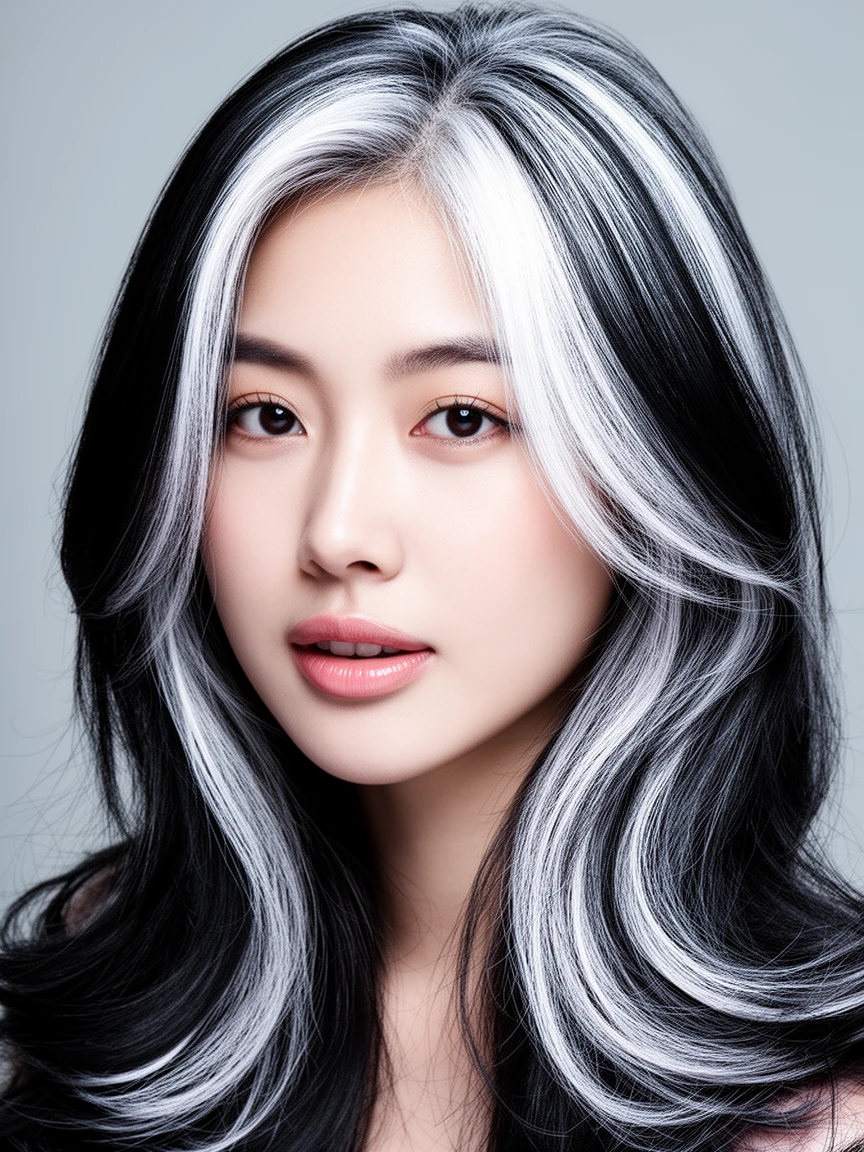
BRIGHT WINTER HAIR COLOR PALETTE
Flattering hair shades that enhance cool, vivid undertones with high contrast
COOL BLONDES
COOL BROWNS & BLACKS
VIVID COOL REDS
AVOID THESE (TOO WARM)
Best Natural-Looking Hair Colors for Bright Winter
If you want hair color that looks like you were born with it, these shades offer the most natural-looking results for Bright Winter:
Deep Espresso (Level 3-4)
A rich, cool dark brown that's almost black but with subtle brown tones. This is perfect for Bright Winters who want dark hair without going full black.
Dye recommendation: Wella Koleston Perfect 3/0 (Dark Brown) or L'Oréal Excellence Creme 3 (Natural Darkest Brown)
Jet Black (Level 1-2)
True, cool black without any warm red or brown undertones. This creates maximum contrast and drama—ideal for Bright Winters with fair to medium skin.
Dye recommendation: Garnier Nutrisse 12 (Blue Black) or Madison Reed Giulietta (True Black)
Cool Ash Brown (Level 5-6)
A medium brown with ash (gray) undertones. This is perfect for Bright Winters who want to lighten from very dark hair without going blonde.
Dye recommendation: Clairol Natural Instincts 5A (Medium Cool Brown) or dpHUE Gloss+ 6A (Medium Ash Brown)
Ash Blonde (Level 7-8)
A medium to light blonde with cool, ashy tones. This looks most natural on Bright Winters with naturally lighter hair or fair skin.
Dye recommendation: Wella Color Charm 8A (Light Ash Blonde) or Schwarzkopf Simply Color 8.0 (Medium Blonde)
Key tip: When choosing a natural-looking shade, consider your natural hair color history and skin tone. If you naturally had dark hair as a child, black or dark brown will look most believable. If you had lighter hair, ash blonde or cool brown is your best bet.
Best Blonde Shades for Bright Winter
Bright Winters can absolutely rock blonde hair—as long as it's the right type of blonde. Cool, icy, and platinum tones are stunning, while golden or honey blondes will clash with your cool undertones.
Platinum Blonde
The ultimate Bright Winter blonde. Nearly white with cool undertones, this creates maximum contrast and drama.
Best for: Fair skin, dramatic looks
Dye: Wella Blondor with 10-vol developer + purple toner
Icy Blonde
A cool, pale blonde with slight silver undertones. Slightly softer than platinum but still high-contrast.
Best for: Fair to light skin, everyday drama
Dye: Schwarzkopf BlondMe + Ice Toner
Silver Blonde
A trendy, metallic blonde with gray undertones. Modern and edgy, perfect for fashion-forward Bright Winters.
Best for: All skin tones, edgy looks
Dye: Pulp Riot Faction8 Silver or Pravana Silver Toner
Cool Champagne
A pale blonde with just a hint of coolness. The most wearable blonde for Bright Winters who want subtlety.
Best for: Medium skin, professional settings
Dye: Redken Shades EQ 09P (Platinum) + 09V (Violet)
❌ Avoid These Blonde Shades:
- • Golden Blonde (too warm, creates yellow cast)
- • Honey Blonde (brings out sallowness in skin)
- • Butter Blonde (clashes with cool undertones)
- • Warm Beige Blonde (makes skin look muddy)
- • Strawberry Blonde (unless it's cool-toned pink)
Can Bright Winter pull off platinum? Absolutely! Platinum blonde is actually one of the most flattering colors for Bright Winter, especially if you have fair skin. The key is maintaining the cool tones and preventing brassiness with regular toning treatments.
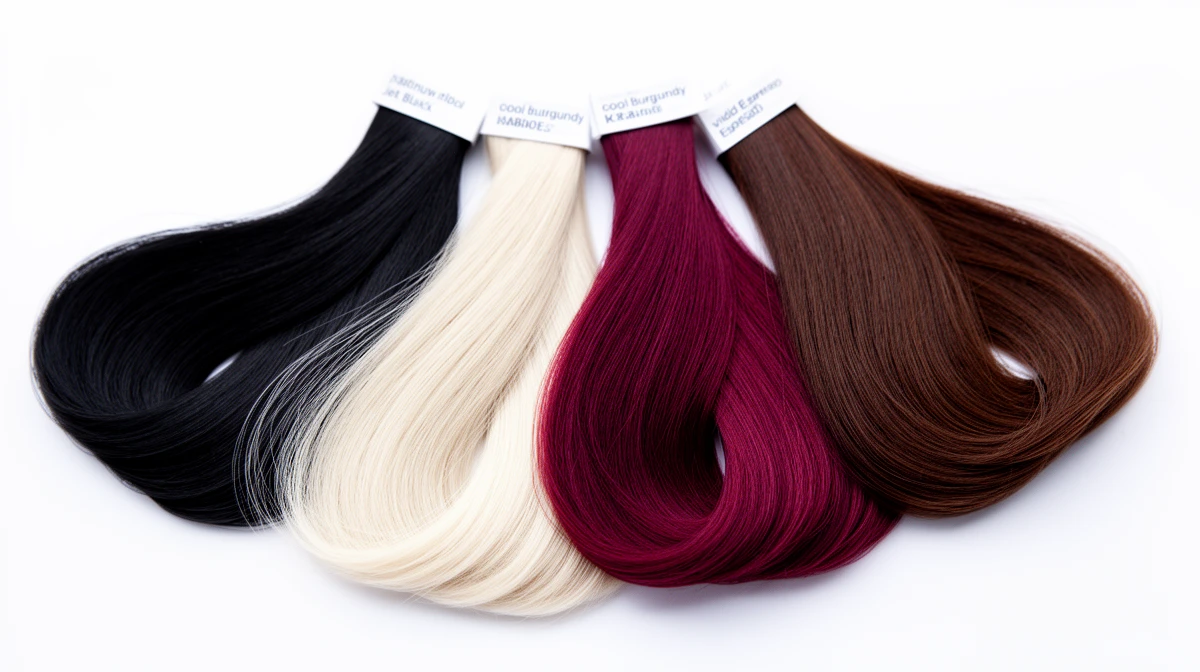
Best Brunette Shades for Bright Winter
Dark hair is incredibly flattering on Bright Winters, creating the high contrast that defines your coloring. The key is choosing cool-toned browns and blacks that don't skew warm or brassy.
Jet Black / Blue-Black (Level 1)
True black or black with blue undertones. This is the most dramatic option for Bright Winter and creates stunning contrast with fair or medium skin.
✓ Perfect for:
- • Fair to medium skin tones
- • Creating maximum drama and contrast
- • Those with naturally dark hair
Recommended dyes:
- • Garnier Nutrisse 12 (Blue Black)
- • Ion Color Brilliance 1N (Neutral Black)
- • Madison Reed Giulietta (True Black)
Cool Espresso (Level 2-3)
A deep, rich brown with cool undertones—almost black but with subtle brown depth. Ideal for those who want dark hair without going full black.
✓ Perfect for:
- • All Bright Winter skin tones
- • Professional settings
- • Softening black hair slightly
Recommended dyes:
- • Wella Koleston Perfect 3/0
- • L'Oréal Excellence 3 (Natural Darkest Brown)
- • Clairol Perfect 10 3 (Dark Brown)
Cool Chocolate (Level 4-5)
A medium-dark brown with neutral to cool undertones. This is the lightest brown that still maintains good contrast for Bright Winter.
✓ Perfect for:
- • Transitioning from blonde
- • Medium to deep skin tones
- • Adding dimension with highlights
Recommended dyes:
- • dpHUE Gloss+ 4N (Medium Brown)
- • Madison Reed Ravenna (Soft Black)
- • Schwarzkopf Simply Color 5.0
Ash Brown (Level 5-6)
Medium brown with gray/ash undertones. This is the lightest brunette shade most Bright Winters should go—any lighter and you'll lose the contrast that makes your coloring striking.
✓ Perfect for:
- • Lighter-skinned Bright Winters
- • Transitional color
- • Softening very dark hair
Recommended dyes:
- • Wella Color Charm 6A (Light Ash Brown)
- • Clairol Natural Instincts 5A
- • Garnier Nutrisse 60 (Light Natural Brown)
💡 Pro Tip: When choosing a brunette shade, go for colors described as "cool," "ash," "neutral," or "natural." Avoid anything labeled "warm," "golden," "caramel," or "chestnut"—these will have warm undertones that clash with your cool coloring.
Best Red & Auburn Shades for Bright Winter
Red hair can be stunning on Bright Winter—but only in cool-toned, vivid shades. Think cool burgundy, wine red, and magenta rather than copper or warm auburn.
Vivid Burgundy
Deep, wine-red with cool purple undertones. This is a show-stopping color that perfectly suits Bright Winter's vivid coloring.
Dye: Manic Panic Vampire Red or Pulp Riot Velvet
For a complete guide, see our Auburn Hair Color Guide
Cool Cherry Red
Bright, true red with cool undertones. Less purple than burgundy, more vivid and eye-catching.
Dye: L'Oréal HiColor Red or Arctic Fox Wrath
Wine / Plum
Deep red-purple with strong cool undertones. More subtle than vivid burgundy but still dramatic.
Dye: Madison Reed Trastevere (Soft Burgundy) or Garnier Nutrisse R3
Magenta / Berry
Fashion-forward pink-red with cool purple undertones. Bold and modern, perfect for adventurous Bright Winters.
Dye: Pulp Riot Barcelona or Manic Panic Hot Hot Pink
❌ Red Shades to Avoid:
- • Copper Red (too warm and orange)
- • Warm Auburn (brings out sallowness)
- • Ginger (clashes with cool undertones)
- • Orange-Red (makes skin look muddy)
- • Golden Red (too yellow-toned)
If you love the idea of red hair but aren't ready for full commitment, consider burgundy balayage on a dark brown or black base. This gives you the drama of red while maintaining your natural high contrast. For more red hair inspiration and techniques, check out our Copper Hair Color Guide.
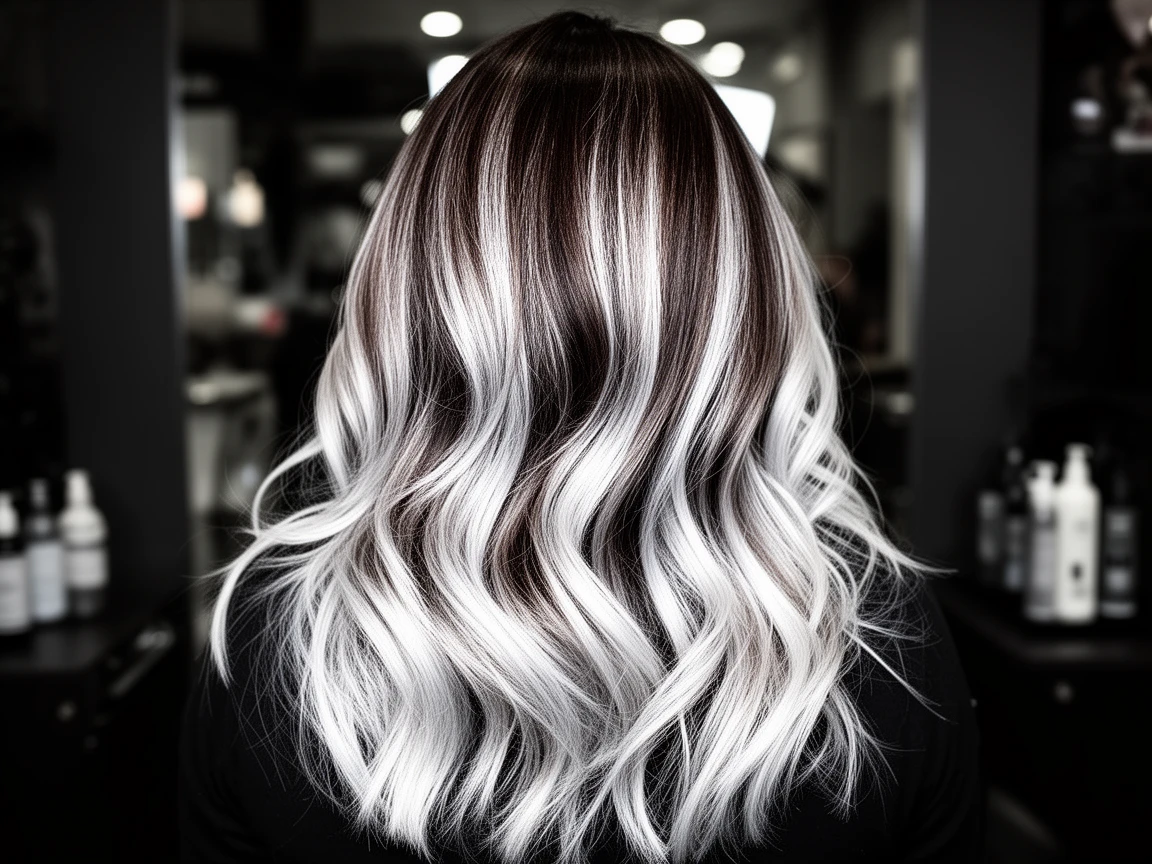
Bright Winter Balayage & Highlights Guide
Balayage and highlights can add stunning dimension to Bright Winter hair—when done with cool tones and high contrast. Here's your complete guide to highlighting techniques that enhance your natural coloring.
Platinum Highlights on Dark Base
The ultimate Bright Winter balayage: icy platinum or silver highlights on jet black or dark espresso base. This creates maximum drama and contrast.
Best placement: Face-framing pieces, crown, or full balayage
Maintenance: Purple shampoo weekly, tone every 4-6 weeks
Salon technique: Balayage with Wella Blondor + Violet toner
Best for: Fair to medium skin, dramatic looks
Ash Blonde on Cool Brown
Cool ash blonde highlights on a medium ash brown base. Less dramatic than platinum on black, but still high-contrast and flattering.
Best placement: All-over balayage or heavy highlights
Maintenance: Purple shampoo bi-weekly, gloss every 6-8 weeks
At-home option: Clairol Frost & Tip in Medium to Light Brown
Best for: All skin tones, everyday wear
Icy Money Pieces
Two thick, face-framing platinum or icy blonde pieces on a dark base. Trendy, bold, and requires less maintenance than full highlights.
Best placement: Two front sections framing the face
Maintenance: Root touch-up every 8-10 weeks
Salon technique: Babylights with heavy bleach application
Best for: Those wanting a bold statement with less commitment
Cool Burgundy Balayage
Wine or burgundy red balayage on a black or dark brown base. Adds vivid color while maintaining your natural dark base.
Best placement: Subtle face-framing or all-over balayage
Maintenance: Color-depositing conditioner weekly, refresh every 6-8 weeks
DIY option: Pulp Riot Velvet on pre-lightened sections
Best for: Adding color without extreme contrast
💡 Highlighting Best Practices for Bright Winter:
- • Go for high contrast: The difference between your base and highlights should be dramatic—at least 3-4 levels
- • Keep it cool: Always choose ash, platinum, icy, or violet-toned highlights—never golden or warm
- • Consider placement: Face-framing pieces create maximum impact with minimal maintenance
- • Use quality toner: Cool toners (purple, violet, blue) are essential to prevent brassiness
- • Invest in purple shampoo: This is non-negotiable for maintaining cool blonde tones
Hair Colors Bright Winter Should Avoid
Just as important as knowing what works is understanding what doesn't. These hair colors will clash with Bright Winter's cool, vivid coloring:
❌ Golden Blonde & Honey Tones
Why it's wrong: These warm, yellow-based blondes clash with your cool undertones, making your skin look sallow or yellowish. They also reduce your natural high contrast.
Examples to avoid: Honey blonde, butter blonde, golden blonde, warm beige
❌ Copper & Orange-Red
Why it's wrong: These warm reds bring out any sallowness in your skin and make your complexion look muddy. They completely clash with cool undertones.
Examples to avoid: Copper, ginger, warm auburn, orange-red, rust
❌ Warm Caramel & Toffee Browns
Why it's wrong: These warm, golden browns make your skin tone look off and diminish your natural contrast. They lack the coolness that harmonizes with your coloring.
Examples to avoid: Caramel, toffee, warm chestnut, golden brown
❌ Warm Red-Browns & Mahogany
Why it's wrong: While cool mahogany can work, warm red-browns with orange or golden undertones will clash. These make your skin look dull.
Examples to avoid: Warm mahogany, auburn with gold, red-brown with copper
❌ Muted, Dusty Colors
Why it's wrong: Bright Winter needs vivid, clear colors. Muted, dusty shades (like mushroom brown or dusty rose) make you look washed out and tired.
Examples to avoid: Mushroom brown, dusty rose, muted mauve, greige
❌ Medium Brown Without Depth
Why it's wrong: Bright Winter needs high contrast. Medium browns (levels 5-7) without darker or lighter dimension reduce your natural contrast and make you look flat.
What to do instead: If you want brown, go dark (level 3-4) or add platinum highlights for contrast
Quick Test: When considering a hair color, ask yourself: "Is this cool-toned or warm-toned?" and "Does this create high contrast or reduce it?" If the answer is warm or reduces contrast, it's not for you.
At-Home vs Salon: Dyeing Tips for Bright Winter
Choosing between DIY and professional hair coloring depends on your goals, budget, and the complexity of the color change. Here's what you need to know:
✓ Safe to DIY At Home:
Darkening Hair
Going from light/medium to dark brown or black is easy at home. Use permanent dye 1-2 shades darker than your goal for natural results.
Products: Garnier Nutrisse, L'Oréal Excellence, Madison Reed
Root Touch-Ups
If you're maintaining an existing color, root touch-ups are simple. Apply only to new growth.
Products: Root touch-up kits from any major brand
Same-Level Color Changes
Going from warm brown to cool brown at the same darkness level is doable with semi-permanent or demi-permanent dye.
Products: Clairol Natural Instincts, dpHUE Gloss+
Toning Blonde Hair
If you already have blonde hair, maintaining cool tones with purple/blue toner is easy at home.
Products: Wella T18 toner, dpHUE Cool Blonde Gloss, Fanola No Yellow Shampoo
⚠️ Best Left to Professionals:
Lightening Dark Hair
Going from dark brown/black to blonde requires multiple bleaching sessions. DIY attempts often result in orange, brassy, or damaged hair.
Why: Multiple sessions, toning expertise required, high damage risk
Platinum / Icy Blonde
Achieving true platinum requires lifting hair to the palest yellow, then toning perfectly. This is nearly impossible to do evenly at home.
Why: Requires professional-grade bleach, expert toning, even application
Balayage & Highlights
Hand-painted balayage and strategic highlight placement require artistic skill and an outside perspective. DIY highlights often look stripey.
Why: Technique-intensive, requires seeing the back of your head, blending expertise
Corrective Color
If your previous color went wrong (brassy, patchy, too dark), fixing it requires professional color correction. Don't compound the problem.
Why: Complex chemistry, risk of further damage, requires professional products
What to Tell Your Stylist
When visiting a salon, communicate your Bright Winter needs clearly:
Emphasize cool tones:
"I need cool, ash tones—nothing warm or golden. I have cool undertones and warm colors wash me out."
Request high contrast:
"I want to maintain high contrast. If we're adding highlights, let's make them dramatic—at least 3-4 levels lighter than my base."
Show reference photos:
Bring photos of celebrities like Anne Hathaway, Megan Fox, or Zooey Deschanel and point out the cool tones in their hair.
Mention your season:
"I'm a Bright Winter in seasonal color analysis, so I need cool, vivid colors with high contrast."
Discuss toning:
"Please use a cool-toned toner—purple, violet, or blue-based. No gold or neutral toners."
Box Dye Recommendations by Goal
Goal: Jet Black
- • Garnier Nutrisse 12 (Blue Black) - Cool-toned, no red undertones
- • L'Oréal Feria Power Black - True black with shine
- • Madison Reed Giulietta - Premium box dye, ammonia-free
Goal: Dark Cool Brown
- • Wella Koleston Perfect 3/0 - Professional quality, dark brown
- • L'Oréal Excellence Creme 3 - Natural darkest brown
- • Clairol Perfect 10 3 (Dark Brown) - Quick processing
Goal: Ash Brown
- • Clairol Natural Instincts 5A - Semi-permanent, medium ash
- • Garnier Nutrisse 60 (Light Natural Brown) - Leans ash
- • dpHUE Gloss+ 6A - Premium gloss treatment, ash brown
Goal: Cool Burgundy
- • Madison Reed Trastevere - Soft burgundy, ammonia-free
- • Garnier Nutrisse R3 (Light Intense Auburn) - Cool red
- • L'Oréal Féria Power Violet - Intense, cool-toned
Maintaining Bright Winter Hair Color
Once you've achieved your perfect Bright Winter hair color, maintaining it requires the right products and routine. Here's your complete maintenance guide:
For Dark Hair (Black, Dark Brown)
Color-Safe Shampoo
Use sulfate-free shampoo to prevent fading and maintain color vibrancy.
Try: Redken Color Extend Magnetics, Olaplex No. 4
Blue Shampoo (for black hair)
Prevents orange/brassy tones if your black hair starts to fade. Use weekly.
Try: Fanola No Orange Shampoo, Matrix Dark Envy
Gloss Treatments
Add shine and refresh color between dye sessions. Use every 4-6 weeks.
Try: dpHUE Gloss+, Redken Shades EQ
Touch-Up Schedule
Roots: Every 4-6 weeks
Full color refresh: Every 8-10 weeks
Glossing: Every 4-6 weeks
For Blonde Hair (Platinum, Ash, Icy)
Purple Shampoo (ESSENTIAL)
Neutralizes yellow/brassy tones. Use 1-3 times per week depending on brassiness level.
Try: Fanola No Yellow, Olaplex No. 4P, Redken Color Extend Blondage
Bond-Building Treatments
Blonde hair is bleached, so it needs extra care. Use weekly to prevent breakage.
Try: Olaplex No. 3, K18 Leave-In Mask, Redken Acidic Bonding Concentrate
Cool-Toned Toner
Professional toning every 4-6 weeks maintains icy, cool tones and prevents warmth.
Salon: Wella T18, Redken Shades EQ 09V
At-home: dpHUE Cool Blonde Gloss
Touch-Up Schedule
Root bleach: Every 6-8 weeks
Toning: Every 4-6 weeks
Purple shampoo: 1-3x weekly
Bond treatment: Weekly
For Vivid Colors (Burgundy, Magenta, Wine)
Vivid colors fade faster than natural shades. Maintenance is key:
- •Wash less frequently: 2-3 times per week maximum. Use dry shampoo in between.
- •Cold water only: Hot water opens the cuticle and releases color. Rinse with cold water.
- •Color-depositing conditioner: Use weekly to refresh color between dye sessions. Try Overtone, Viral Colorwash, or Celeb Luxury.
- •Refresh schedule: Plan to re-dye every 4-6 weeks, or use color-depositing products every 1-2 weeks to extend time between dye sessions.
💡 Universal Maintenance Tips for All Bright Winter Hair Colors:
- • Heat protection: Always use heat protectant spray before styling with hot tools. Heat fades color faster.
- • UV protection: Sun exposure fades color and adds warmth. Wear hats or use UV-protectant hair products.
- • Chlorine/saltwater: Both strip color. Wet hair with clean water before swimming and wear a cap when possible.
- • Deep condition weekly: Color-treated hair needs extra moisture. Use a deep conditioner or mask once a week.
- • Avoid clarifying shampoos: These strip color quickly. Only use if you have significant product buildup.
FAQ: Bright Winter Hair Color Questions
Can Bright Winter have red hair?
Yes, but only cool-toned reds. Bright Winter looks stunning in vivid burgundy, cool cherry red, wine, plum, and magenta. Avoid warm reds like copper, ginger, orange-red, or warm auburn—these clash with your cool undertones. The key is choosing reds with blue or purple undertones rather than orange or golden undertones. Check out our Auburn Hair Color Guide for more on cool-toned reds.
What's the most flattering hair color for Bright Winter?
For most Bright Winters, jet black or deep espresso creates the most striking, flattering look. These colors create maximum contrast with your skin and make your eyes pop. If you have very fair skin and want to go blonde, platinum or icy blonde is equally dramatic and flattering. The common thread is high contrast and cool tones—whatever creates the most dramatic difference between your hair and skin will be most flattering.
How do I prevent my blonde hair from turning brassy?
Preventing brassiness in blonde hair requires consistent maintenance:
- • Use purple shampoo 1-3 times per week (Fanola No Yellow, Olaplex 4P)
- • Get professional toning every 4-6 weeks with violet or blue-based toner
- • Avoid heat styling when possible; always use heat protectant
- • Protect hair from sun, chlorine, and hard water (all add warmth)
- • Use sulfate-free, color-safe shampoo between purple shampoo days
- • Consider installing a shower filter to remove minerals that cause brassiness
Is balayage or full highlights better for Bright Winter?
Both can work beautifully, but the choice depends on your goals. Balayage creates a more natural, sun-kissed effect with softer transitions—ideal if you want subtle dimension. Full highlights (foil highlights) create more dramatic, even contrast—perfect for Bright Winter's high-contrast aesthetic. For maximum drama, opt for full highlights or heavy balayage with platinum pieces on a dark base. For something more wearable day-to-day, choose subtle balayage or face-framing highlights. Either way, ensure the highlight color is cool-toned (ash, platinum, icy) and creates at least 3-4 levels of contrast from your base.
Can I pull off pastel hair colors as a Bright Winter?
Pastel hair colors (like pastel pink, lavender, or mint) are technically cool-toned, but they're very soft and muted—not the vivid, clear colors Bright Winter typically wears. If you want to try pastels, choose vivid pastel versions (like bright lilac or hot pink-toned pastel) rather than dusty, muted pastels. However, you'll likely find that vivid, saturated colors (like magenta, deep burgundy, platinum, or jet black) are more striking and flattering for your high-contrast coloring. Pastels can make Bright Winter look washed out unless paired with very dramatic makeup.